 Inspire
Which Isotonix Antioxidant Should You Take? OPC-3 vs Astaxanthin vs Resveratrol and More
The Isotonix store sells more than ten products we’d file under antioxidants, and the names alone (OPC-3, Astaxanthin, Resveratrol, Maximum ORAC) don’t tell you which one you need. For most people the answer is one product (OPC-3), not a stack. Here’s how to choose using each official label and our reviews, what each costs per serving, and what we couldn’t find tested about taking them together.
Key takeaways
- Start with OPC-3 (4.8 out of 5 in our review) unless you have a specific reason to pick another. Every other antioxidant here answers a narrower question.
- Cost per serving runs from $0.43 (Vitamin C) to $2.43 (Thymenol). Standard OPC-3 is $0.83 or $1.17 a serving depending on bottle size, and its label allows up to three servings a day.
- Resveratrol, Astaxanthin and Maximum ORAC each come with a catch: the Resveratrol label prints extract weights but no single resveratrol total, we found no published study of Isotonix Astaxanthin itself, and Maximum ORAC leans on an ORAC number the maker states (USDA withdrew its own ORAC table for foods in 2012).
- A PubMed search found no study of OPC-3 together with astaxanthin, so stacking is a judgment call, not a proven upgrade. Vitamin C, vitamin E and Pycnogenol overlap across products, so add them up.
- NCCIH says current evidence doesn’t support antioxidant supplements preventing cancer or cardiovascular disease. On blood thinners or any other medication, ask your pharmacist first.
Which Isotonix antioxidant fits what you want
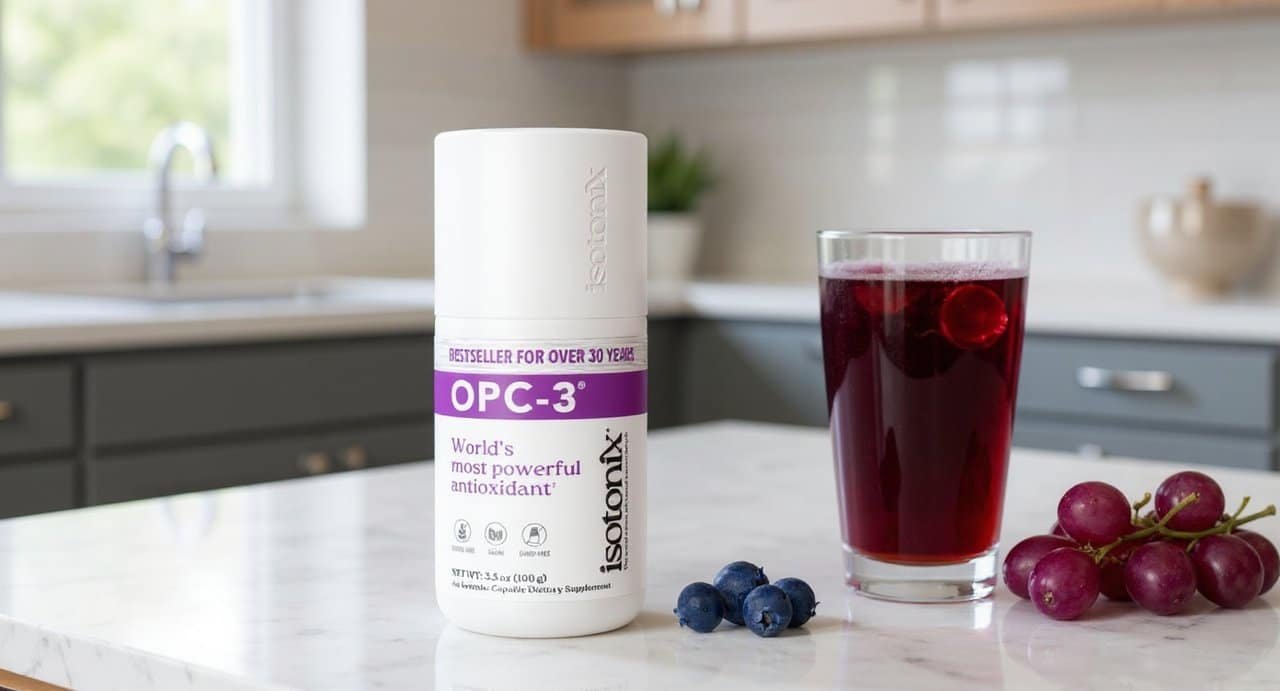
Start with OPC-3 unless one of the reasons below applies to you. It has the highest score we’ve given an antioxidant in this line, 4.8 out of 5, and it’s the only one in this group where our reviews cite studies run on the finished formula.
- One daily antioxidant, no fuss: OPC-3. Grape seed, pine bark (Pycnogenol), red wine and bilberry extracts, plus a citrus bioflavonoid complex, 25 mg of each per capful. The catch: our Burst review cites a Pycnogenol trial at 200 mg a day, while the label allows one to three capfuls a day, or 25 to 75 mg of Pycnogenol.
- Skin, hair and nails as the goal: OPC-3 Beauty Blend (4.4). The OPC-3 base plus hyaluronic acid, biotin, vitamin E and minerals.
- Nothing to mix: OPC-3 Burst, a raspberry chew with the same five ingredients at 25 mg each (we haven’t scored it yet), or Thymenol (4.2), a capsule that pairs Pycnogenol with black cumin extract oil.
- One named carotenoid at a printed dose: Astaxanthin (3.5), 6 mg of AstaReal per serving, a dose small human trials have used. We found no published study of the finished product. Prime Astaxanthin, from the same maker, is a softgel with the same 6 mg.
- Resveratrol specifically: Resveratrol (3.2), our lowest score in this group. The label prints extract weights but no single resveratrol total, and it tells anyone on warfarin or another antiplatelet or anticoagulant drug not to use it. Women with a history of estrogen-sensitive cancers are told to consult their provider first.
- Breadth over depth: Maximum ORAC (4.4), a fruit-concentrate blend built around the maker’s 3,000 ORAC-unit headline number.
- Antioxidants plus a little caffeine: Acai Advanced Energy (4.1), with 24 mg of caffeine. Its label says not to use it with MAOI or ACE-inhibitor drugs, or with high blood pressure, thyroid disease, PKU, schizophrenia or bipolar disorder.
- Vitamin C as the goal: Vitamin C (4.4), 500 mg per serving, with 2 g of sugar (1 g of it added).
- CoQ10 as the main goal: Coenzyme Q10 (4.0). It’s the one drink here whose label says to take it with a meal instead of on an empty stomach.
Not antioxidant picks: Complete Greens (3.7) is a vegetable top-up, Prime NAD+ (3.9) contains no NAD+ (it has 250 mg of nicotinamide riboside and 50 mg of pterostilbene), and the VitaShield OPC-3 Triple Serum is a skin serum you apply, not drink.
The comparison table
Scores are ours, copied from each review. Amounts are per serving, from each Supplement Facts panel. Prices are in the next section.
| Key ingredients (label amounts) | Our score | |
|---|---|---|
| OPC-3 (drink) | 25 mg each of grape seed, pine bark (Pycnogenol), red wine and bilberry extracts and citrus bioflavonoid complex | 4.8 |
| OPC-3 Beauty Blend (drink) | The five OPC-3 ingredients (40 mg pine bark, 25 mg each of the rest), 15 mg hyaluronic acid, 200 mg vitamin C, 22 mg vitamin E, 400 mg calcium, 150 mg magnesium, plus biotin and vitamin D3 | 4.4 |
| OPC-3 Burst (chew) | 25 mg each of the same five ingredients as OPC-3, in one 3.6 g chew | Not scored yet |
| Astaxanthin (drink packet) | 6 mg AstaReal astaxanthin, 7 mg natural vitamin E, 120 mg acerola (25% vitamin C) | 3.5 |
| Prime Astaxanthin (softgel) | 6 mg AstaReal astaxanthin in an olive oil base; the label says take 1 softgel with food | Not reviewed |
| Resveratrol (drink) | 200 mg French red grape extract (5% resveratrol), 50 mg blueberry extract, 10 mg grapevine extract. No single resveratrol total printed. | 3.2 |
| Maximum ORAC (drink) | 3,000 ORAC units (per the page); nine fruit and berry ingredients at 20 to 200 mg each, 100 mg vitamin C, 30 mg vitamin E, 20 mg tocotrienols, 56 mcg BioPerine | 4.4 |
| Acai Advanced Energy (drink) | 24 mg caffeine; 300 mg acai, 160 mg guarana, 100 mg mangosteen, 50 mg pomegranate, 25 mg green tea, 100 mg vitamin C | 4.1 |
| Thymenol (capsule) | 500 mg black cumin extract oil (3% thymoquinone) and 25 mg Pycnogenol per two capsules | 4.2 |
| Vitamin C (drink) | 500 mg vitamin C, plus beta-carotene and potassium | 4.4 |
| Coenzyme Q10 (drink, taken with a meal) | 100 mg CoQ10 (Taiwan’s label prints 30 mg), 134 mg vitamin E, 5 mg lipase | 4.0 |
What each one costs per serving
This is price divided by servings per bottle, cheapest first, using the US retail prices at the official store, checked November 4, 2026. Other countries price differently.
| Price and servings | Per serving | |
|---|---|---|
| Vitamin C | $38.95, 90 servings | $0.43 |
| OPC-3, large bottle | $74.95, 90 servings | $0.83 |
| Maximum ORAC | $81.95, 90 servings | $0.91 |
| OPC-3, small bottle | $34.95, 30 servings | $1.17 |
| Acai Advanced Energy | $59.95, 45 servings | $1.33 |
| OPC-3 Burst | $39.95, 30 servings | $1.33 |
| Prime Astaxanthin | $44.95, 30 servings | $1.50 |
| Resveratrol | $51.95, 30 servings | $1.73 |
| Astaxanthin | $52.95, 30 packets | $1.77 |
| OPC-3 Beauty Blend | $79.95, 45 servings | $1.78 |
| Coenzyme Q10 | $59.95, 30 servings | $2.00 |
| Thymenol | $72.95, 30 servings | $2.43 |
Vitamin C costs $0.43 a serving: one main nutrient, 90 servings a bottle. At the other end, CoQ10 and Thymenol run $2.00 and $2.43, and both US labels print their main dose: 100 mg of CoQ10 (Taiwan’s label prints 30 mg), and 500 mg of black cumin extract oil.
Beauty Blend is $1.78 a serving against $0.83 to $1.17 for standard OPC-3, about 1.5 to 2 times as much (its serving is two capfuls, OPC-3’s is one). The Prime Astaxanthin softgel is $1.50 against $1.77 for the Isotonix packet; both labels show 6 mg of AstaReal, and the packet adds vitamin E and acerola vitamin C.
Serving sizes aren’t uniform: Beauty Blend and Acai are two capfuls, Thymenol is two capsules, and Burst is one 3.6 g chew. OPC-3’s label allows up to three capfuls a day, so its daily cost can triple.
Our pick for three common situations
You want one antioxidant and don’t want to think about it
Standard OPC-3, in the 90-serving bottle if you’ll stick with it. It’s mildly tart and won’t fully dissolve, a capful has 2 g of added sugar, the label shows 25 mg of each extract with no way to adjust one without the others, and the evidence is modest: the two studies our review cites ran on OPC-3 itself, one in 61 people with metabolic-syndrome risk factors, and both came from the same research group. A basic grape-seed capsule costs less if price is your only filter.
You already take OPC-3 and you’re eyeing a second product
Our pick is to wait. Nothing we found shows two antioxidants beating one. If you add one anyway, choose on purpose. Maximum ORAC if you want breadth (the downside is a headline number that is only a lab measure). Astaxanthin if you want one named compound at a printed dose (the downside is that we found no published study of the finished product). Resveratrol goes last: lowest score, no single resveratrol total on the label, and a warning not to use it with warfarin or other antiplatelet or anticoagulant drugs.
You skip anything that needs mixing
OPC-3 Burst, if what you like is OPC-3’s formula. One chew carries 25 mg of each of the same five ingredients as a capful of the drink, at $1.33 a serving against $0.83 to $1.17. The catch: it’s a chew, not an isotonic drink, so the drink’s absorption story doesn’t carry over, and we haven’t scored it. Thymenol is the capsule option and has a review behind it, but it’s a different formula (black cumin extract oil plus Pycnogenol) at $2.43 a serving.
Can you take them together?
Nothing we found shows that stacking these is safe or that it works better.
What the product pages say
- The Astaxanthin page says you can take it with a meal and suggests pairing it with Resveratrol, Vision Formula, CoQ10 and OPC-3. The Resveratrol page calls OPC-3 plus Resveratrol a smart choice, the Thymenol page calls OPC-3 a complement, and the Acai page says it can safely be taken with other Isotonix products. Those are the maker’s statements, and we found no study behind any of them.
- OPC-3’s directions say to take it on an empty stomach for maximum absorption. CoQ10’s say to take it with a meal. Follow both and they can’t share a time slot. Prime Astaxanthin’s label also says to take its softgel with food, while the Isotonix Astaxanthin label sets no empty-stomach rule.
- Beauty Blend already contains the OPC-3 base, so taking both just doubles it, according to our review.
What we couldn’t find tested
A PubMed search on October 17, 2026 for OPC-3 together with astaxanthin returned no published study. The US National Center for Complementary and Integrative Health (NCCIH) also says that large amounts of antioxidants may interfere with normal cell functions, that different types aren’t necessarily interchangeable, and that “Combinations of antioxidants may have undesirable effects.” Its example was a mix of vitamin E, vitamin C, selenium and beta-carotene that reduced the cholesterol-lowering effect of two drugs. None of these products lists selenium, but vitamins C and E and beta-carotene all appear across them, so a stack can contain the rest of that mix.
Overlaps to add up
- Pycnogenol (pine bark): OPC-3 has 25 mg, Beauty Blend 40 mg, Burst 25 mg and Thymenol 25 mg a serving, so OPC-3 plus Thymenol is 50 mg from two bottles.
- Vitamin C: 500 mg in the Vitamin C product, 200 mg in Beauty Blend, 100 mg each in Maximum ORAC and Acai, and about 30 mg through the acerola in Astaxanthin, roughly 930 mg for all five. NIH’s Office of Dietary Supplements puts the adult upper limit at 2,000 mg a day from food and supplements combined, and NCCIH says high doses can cause diarrhea, nausea and stomach cramps.
- Vitamin E: the labels show 134 mg in CoQ10 (893% of the Daily Value), 30 mg in Maximum ORAC (as mixed tocopherols, plus 20 mg of mixed tocotrienols), 22 mg in Beauty Blend and 7 mg in Astaxanthin. NCCIH says high doses of vitamin E supplements may raise bleeding risk.
Ask first if you take medication
If you take blood thinners, ask your pharmacist before adding any of these, and ask again each time you add another. Memorial Sloan Kettering’s patient pages tell people on warfarin to talk with their provider about grape seed extract, pine bark extract, resveratrol and CoQ10, because each may raise bleeding risk (for grape seed, MSK notes the evidence is lab data and the clinical relevance isn’t yet known; for CoQ10, MSK’s clinician section says it may work against warfarin, so the direction isn’t settled). That’s a reason to check, not proof of harm.
Same rule for chemotherapy or radiation: NCCIH says antioxidants might interact badly with some cancer treatments, so check with the team managing yours. If you’re pregnant, breastfeeding or managing a medical condition, ask your clinician first. The Acai label says not to use that product while pregnant or breastfeeding, and to take it separately from prescription drugs.
What antioxidant does and doesn’t mean
Your cells make reactive, oxygen-containing molecules as part of normal activity. Too many can cause oxidative stress, which may damage cells.
NCCIH adds two points that matter when you shop. First, the body’s own antioxidant enzymes are the most important part of its defense. Second, for cancer, heart disease, cataracts and Alzheimer’s there is currently no evidence that antioxidant supplements help. The one exception is age-related macular degeneration, where specific vitamin-and-zinc formulas from the AREDS trials may slow progression in people who already have it. If that’s you, ask your eye doctor; those formulas are a separate category from the products here.
People who eat more fruit and vegetables do have lower risks of heart disease and cancer in observational studies, which is a different thing from taking a supplement.
Where the ORAC number fits
ORAC, oxygen radical absorbance capacity, is a test-tube measurement. USDA published an ORAC table for foods, then withdrew it in 2012. Its notice says test-tube antioxidant data cannot be extrapolated to in vivo (human) effects, and that ORAC values are “routinely misused” by food and supplement companies. Maximum ORAC’s page still says 3,000 ORAC units per serving. Treat that as a formulation detail and judge the product by its ingredients, dose and price.
For vitamin C, vitamin E, CoQ10, glutathione and astaxanthin one by one, see our antioxidant supplements guide. For what isotonic means, see what is an isotonic supplement.
Frequently asked questions
Which Isotonix antioxidant is the best one?
Astaxanthin vs Isotonix OPC3: which is better?
Can I take astaxanthin with OPC-3, or with food?
What’s the difference between original OPC-3 and OPC-3 Beauty Blend?
Which is better, OPC-3 or resveratrol?
Maximum ORAC or OPC-3: which should I pick?
Which is better for heart health, OPC-3 or Prime Astaxanthin?
What does an isotonic antioxidant or OPC mean?
“Pick one antioxidant, make it OPC-3 unless you have a specific reason not to, and treat every add-on as optional.”
OPC-3 is the best-scored of the group and the only one where our reviews cite studies on the finished formula, though those studies are modest and current evidence doesn’t support antioxidant supplements preventing cancer or heart disease. Nothing we found shows that stacking is safe or works better, so give one product a fair run, add up the overlaps, and ask your pharmacist if you take blood thinners.

See OPC-3 on the official store →
Sources
- NCCIH (NIH), Antioxidant Supplements: What You Need To Know, last updated July 2023.
- USDA Agricultural Research Service, Oxygen Radical Absorbance Capacity (ORAC) of Selected Foods, Release 2 (2010): withdrawal notice (archived copy; page last modified May 16, 2012).
- NIH Office of Dietary Supplements, Vitamin C Fact Sheet for Health Professionals (upper intake levels).
- Memorial Sloan Kettering Cancer Center, About Herbs: Grape Seed, Pine Bark Extract, Resveratrol and Coenzyme Q10.
- EFSA Panel on Dietetic Products, Nutrition and Allergies, Scientific Opinion on the substantiation of health claims related to astaxanthin (joints, oxidative damage, visual acuity, blood cholesterol and CRP), EFSA Journal 7(9):1253, 2009.
- Astaxanthin at 6 mg a day in humans (two examples; neither tested this product): Tominaga K, et al. “Cosmetic benefits of astaxanthin on humans subjects.” Acta Biochim Pol 59(1):43-7, 2012 (PMID 22428137); and Miyawaki H, et al. “Effects of astaxanthin on human blood rheology.” J Clin Biochem Nutr 43(2):69-74, 2008 (PMID 18818755).
- OPC-3 formula-specific research: Cesarone MR, et al. “Improvement in circulation and in cardiovascular risk factors with a proprietary isotonic bioflavonoid formula OPC-3.” Angiology 59(4):408-14, 2008 (PMID 18628275); and Cesarone MR, et al. “Accelerated antioxidant bioavailability of OPC-3 bioflavonoids administered as isotonic solution.” Phytotherapy Research 23(6):775-7, 2009 (PMID 19172583).
- PubMed searches run October 17, 2026: OPC-3 together with astaxanthin (0 results) and Isotonix together with astaxanthin (0 results).
- Ingredients, amounts, servings, prices and directions (official product pages and their Supplement Facts images; label amounts read October 17, 2026, prices rechecked November 4, 2026): OPC-3, OPC-3 Beauty Blend, OPC-3 Burst, Astaxanthin, Prime Astaxanthin, Resveratrol, Maximum ORAC, Acai Advanced Energy, Thymenol, Vitamin C, Coenzyme Q10; Taiwan’s Coenzyme Q10 label at Market Taiwan.
Related reading
-
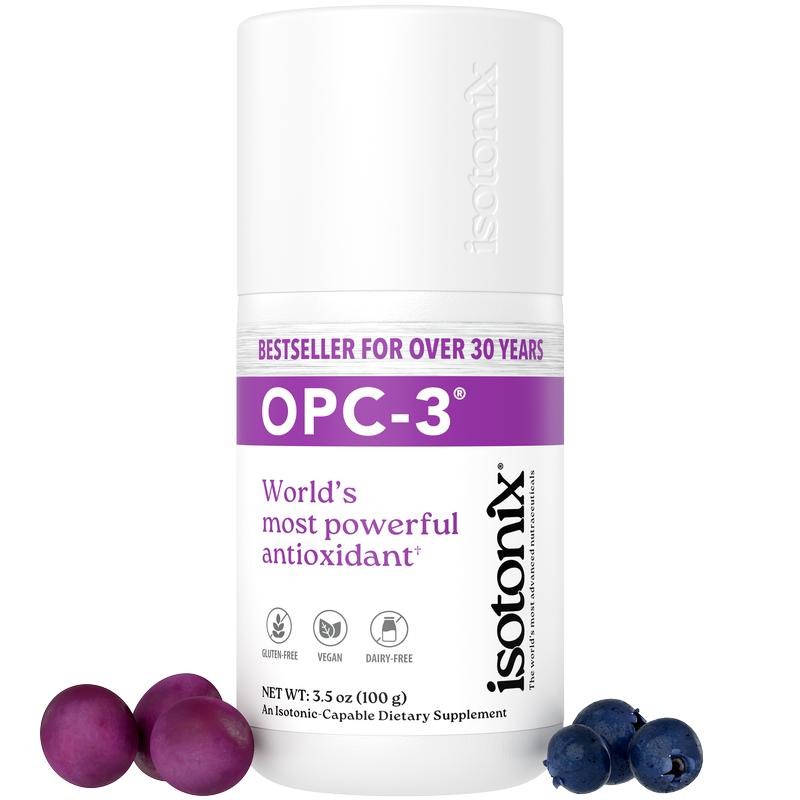 ReviewIsotonix OPC-3 Review: Is This Isotonic Antioxidant Worth It?The flagship: grape seed, pine bark, red wine and bilberry extracts in an isotonic drink.
-
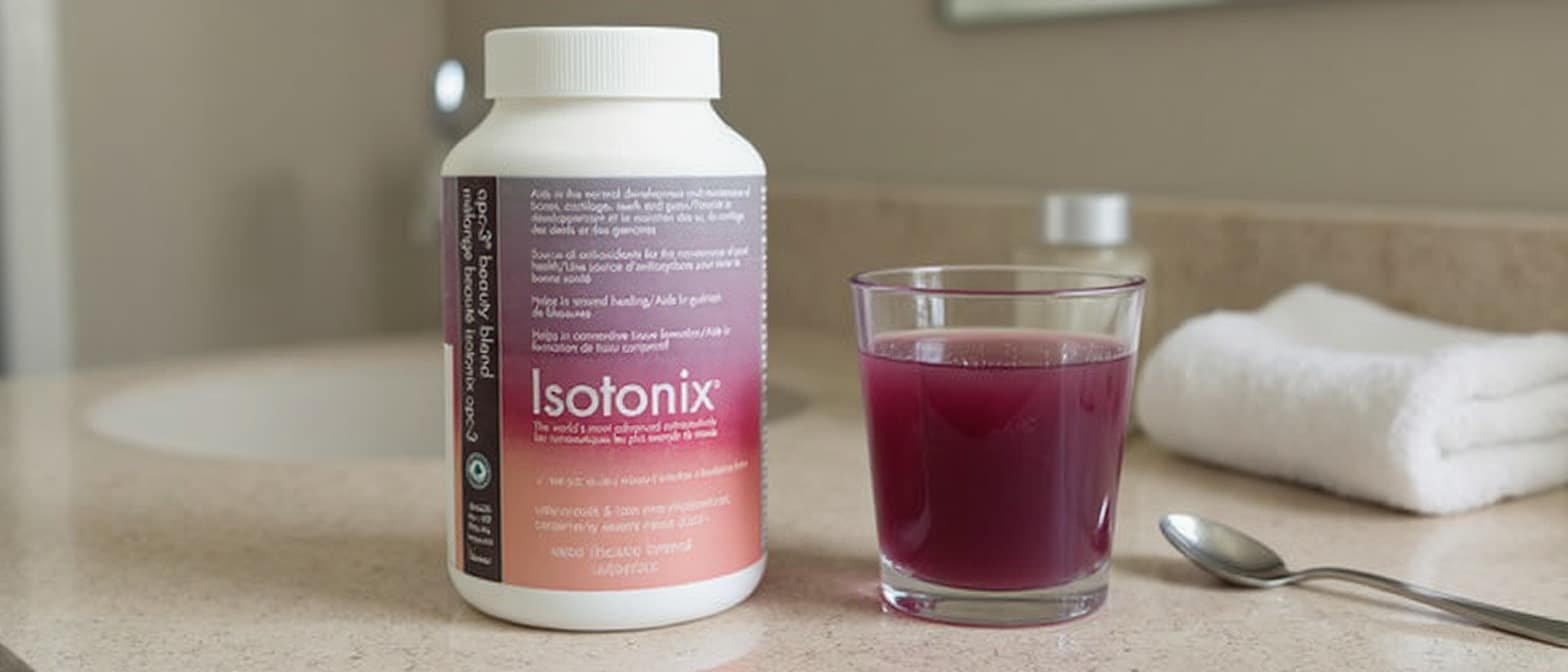 ReviewIsotonix OPC-3 Beauty Blend ReviewThe OPC-3 base plus hyaluronic acid, biotin and minerals, at a higher price per serving.
-
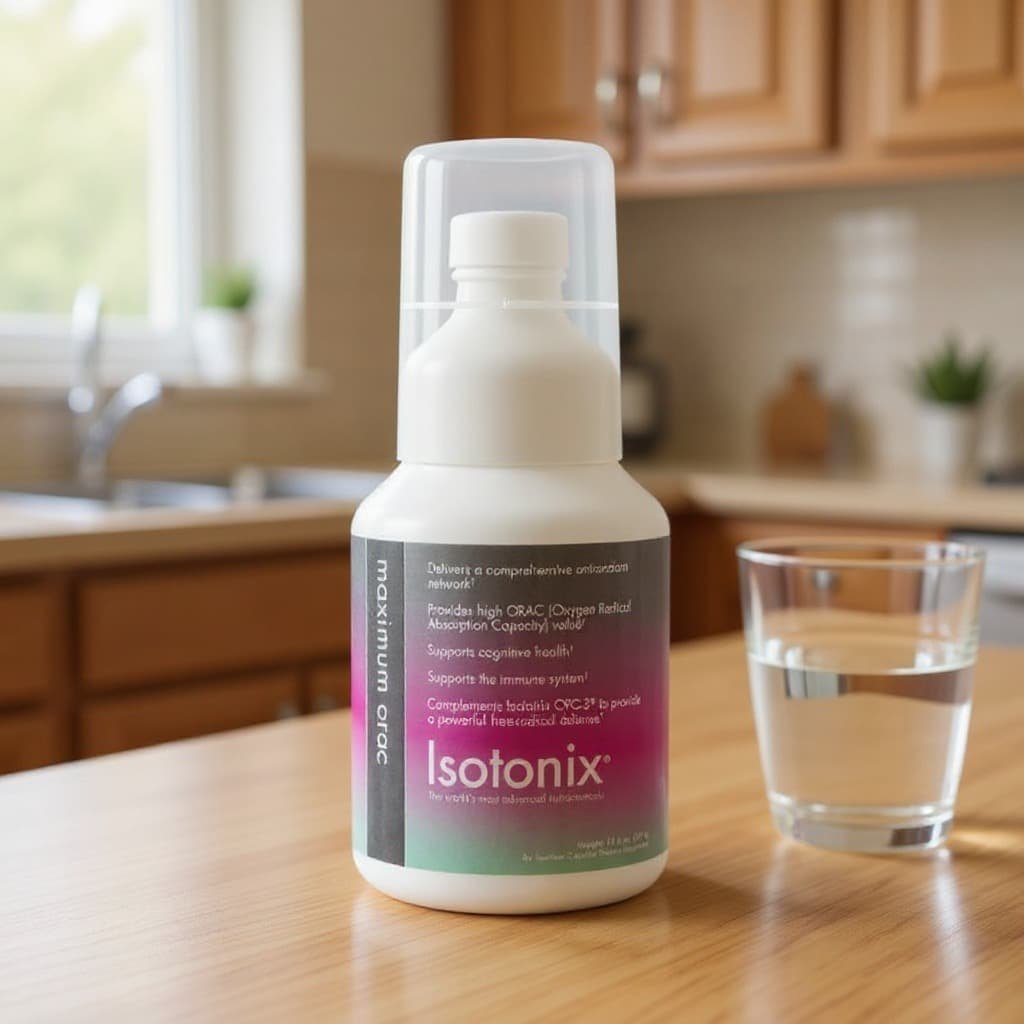 ReviewIsotonix Maximum ORAC ReviewA broad fruit blend built around one lab number. Does the number mean anything?