Inspire
Isotonix Astaxanthin Review
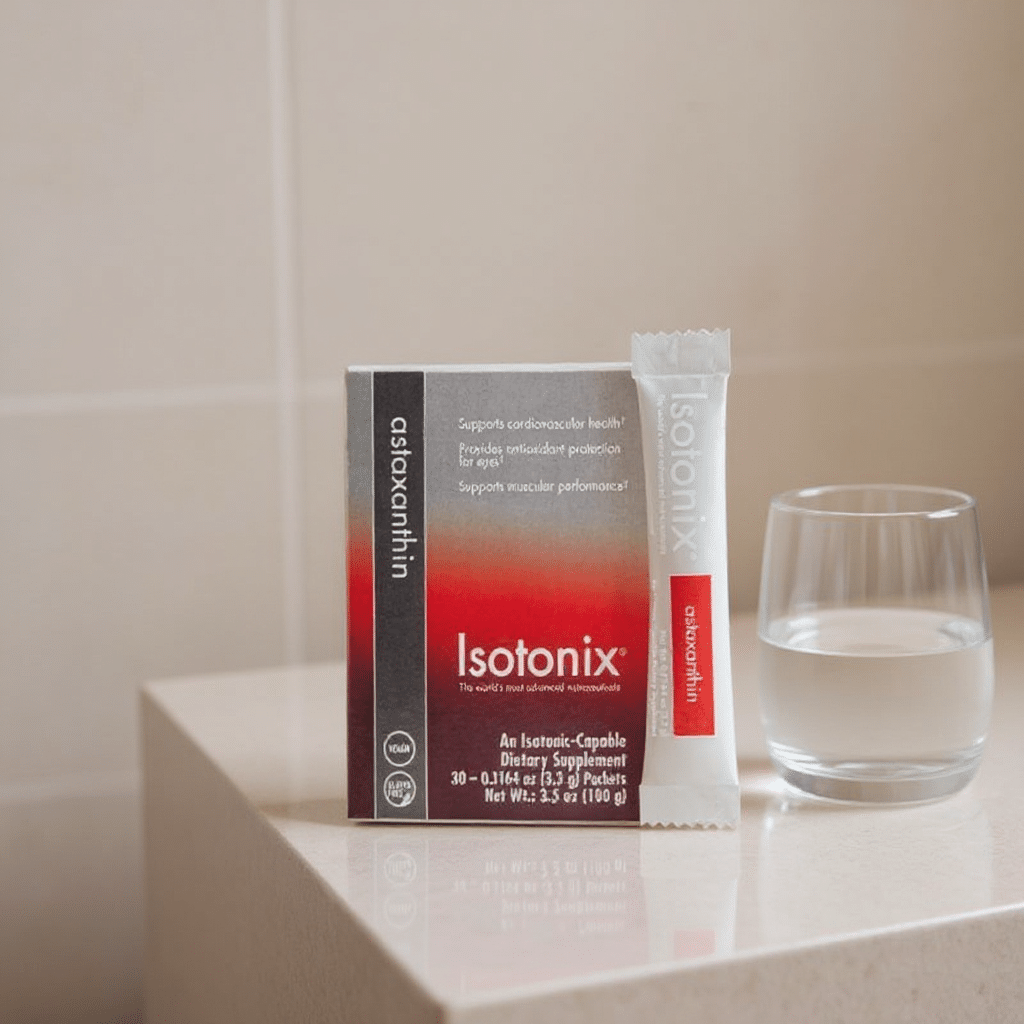
Astaxanthin gets called “the strongest antioxidant” on a lot of labels, and most don’t say compared to what, or how much you’re actually getting. This one states a real number — 6 mg of a named, branded source — which makes it worth an honest look.
our rating
What we liked
- 6 mg of AstaReal® per serving, a named, independently branded astaxanthin source rather than an unspecified extract
- Label states this is 50% more than the “typical” 4 mg formula, a real, checkable comparison
- Includes vitamin E and acerola-sourced vitamin C alongside the astaxanthin
- AstaReal is genuinely one of the more established astaxanthin brands in the supplement industry
What to know
- The 6 mg dose doesn’t actually match most of the research this ingredient category cites. Published studies mostly use 4, 8, 9, 12, or 20 mg, not 6
- The EU food safety authority (EFSA) formally declined to approve most of the health-claim categories astaxanthin products in this category use (2009/2011 reviews)
- The largest available meta-analysis found no significant effect on blood pressure at typical supplemental doses
- “Superior to CoQ10 and green tea” is the manufacturer’s own comparison, not an independent head-to-head study we could verify
Key takeaways
- The active dose is 6 mg of AstaReal® astaxanthin per serving — a named, branded ingredient, not a generic unlabeled extract.
- That 6 mg dose doesn’t directly match most published astaxanthin research, which mostly uses 4, 8, 9, 12, or 20 mg — worth knowing before assuming it replicates any specific study’s results.
- The EU’s food safety authority (EFSA) reviewed astaxanthin health claims in 2009 and 2011 and declined to approve most of the claim categories this ingredient is commonly marketed around.
- The “superior to CoQ10” framing on the label is the manufacturer’s own positioning; we treat it as marketing comparison, not an independently verified head-to-head result.
Who it’s for (and who should skip it)
Astaxanthin has a genuine, if still-developing, research base. Here’s the honest fit.
Buy it if…
- You want a dosed, named-source astaxanthin supplement rather than guessing at an unlabeled extract elsewhere
- You’re interested in the eye, skin, and muscular-endurance angles astaxanthin research explores
- You already take other Isotonix products and want to add this to an existing routine
Skip it if…
- You’re buying it specifically because it’s marketed as “stronger than CoQ10” — that framing isn’t something we could independently verify
- You take it consistently on a completely empty stomach with zero dietary fat — absorption may be lower that way
- Budget matters and you haven’t compared regional pricing first — it varies meaningfully by storefront
What’s actually in it
Here’s the simple version: the headline ingredient is AstaReal®, a specific, branded astaxanthin source, dosed at 6 mg per serving. The label itself draws the comparison directly: “typical astaxanthin formulas contain 4 mg per serving,” positioning this one at 50% more.
One scoop in water, standard Isotonix isotonic-delivery instructions. Because astaxanthin is fat-soluble, taking it alongside a meal that contains some dietary fat may support absorption better than on a fully empty stomach. That’s a general principle for fat-soluble compounds, not a claim specific to this product.
What astaxanthin actually is
Astaxanthin is a carotenoid, the same broad pigment family as beta-carotene and lutein, and it’s what gives salmon, shrimp, and flamingos their pink-red color. It’s most commonly sourced from the microalgae Haematococcus pluvialis, which produces it as a defense compound against oxidative stress and UV exposure.
That natural role is part of why it’s been studied as an antioxidant in humans, with research exploring effects on eye health, skin, and exercise-related muscular endurance.
There’s a regulatory data point worth knowing too. When the EU’s food safety authority (EFSA) reviewed astaxanthin health claims in 2009 and 2011, it declined to approve most of the claim categories this ingredient is commonly marketed around. That’s not the same as saying astaxanthin does nothing, but it reflects a genuinely cautious independent read on the evidence at the time.
More recent research has continued since those reviews, though the cardiovascular angle specifically remains weak: the largest available meta-analysis found no significant blood-pressure benefit at the doses typically used in supplements.
Where this leaves the evidence
What’s more solidly established: astaxanthin is a real, legitimately studied carotenoid antioxidant. And 6 mg is a meaningful, clearly stated dose rather than a token amount, even if it doesn’t map exactly onto any single published trial. That’s a reasonable basis to try it on, without needing the “beats CoQ10” framing or the blood-pressure angle to be true.
Frequently asked questions
This section contains affiliate links — we may earn a commission at no extra cost to you. See our full evaluation policy at the end of this guide.
How much astaxanthin is actually in one serving?
Is astaxanthin really stronger than CoQ10?
Has astaxanthin been independently reviewed for its health claims?
What is AstaReal?
When’s the best time to take it?
“A clearly dosed, named-source astaxanthin supplement, held back by a dose that doesn’t match the research and a regulatory record that’s more cautious than the marketing suggests.”
6 mg of AstaReal is a real, stated dose from an established branded source, which is more transparent than most competitors. But it sits between the doses actual research has tested. EFSA declined to approve most of the claim categories this ingredient is marketed around, and the cardiovascular angle specifically isn’t backed by the largest available meta-analysis. Reasonable to try, not a slam dunk.