 Inspire
What Is an Isotonic Supplement?
You’ve probably taken the same vitamin as a pill, a gummy, and a mix-with-water powder without ever asking whether the format actually matters. For some nutrients, it changes how much of the dose your body actually absorbs. That difference comes down to a property called osmolarity, and it’s why Isotonix products are mixed rather than swallowed.
What we liked
- Osmolarity is well-understood, textbook physiology
- Clear absorption advantage for water-soluble compounds
- Easy to verify: marked water line on the bottle cap
- Compatible with all Isotonix products
What to know
- Must mix with precise water amount
- No advantage for fat-soluble vitamins
- Cost premium over standard forms
- Won’t work in juice or hot water
Key takeaways
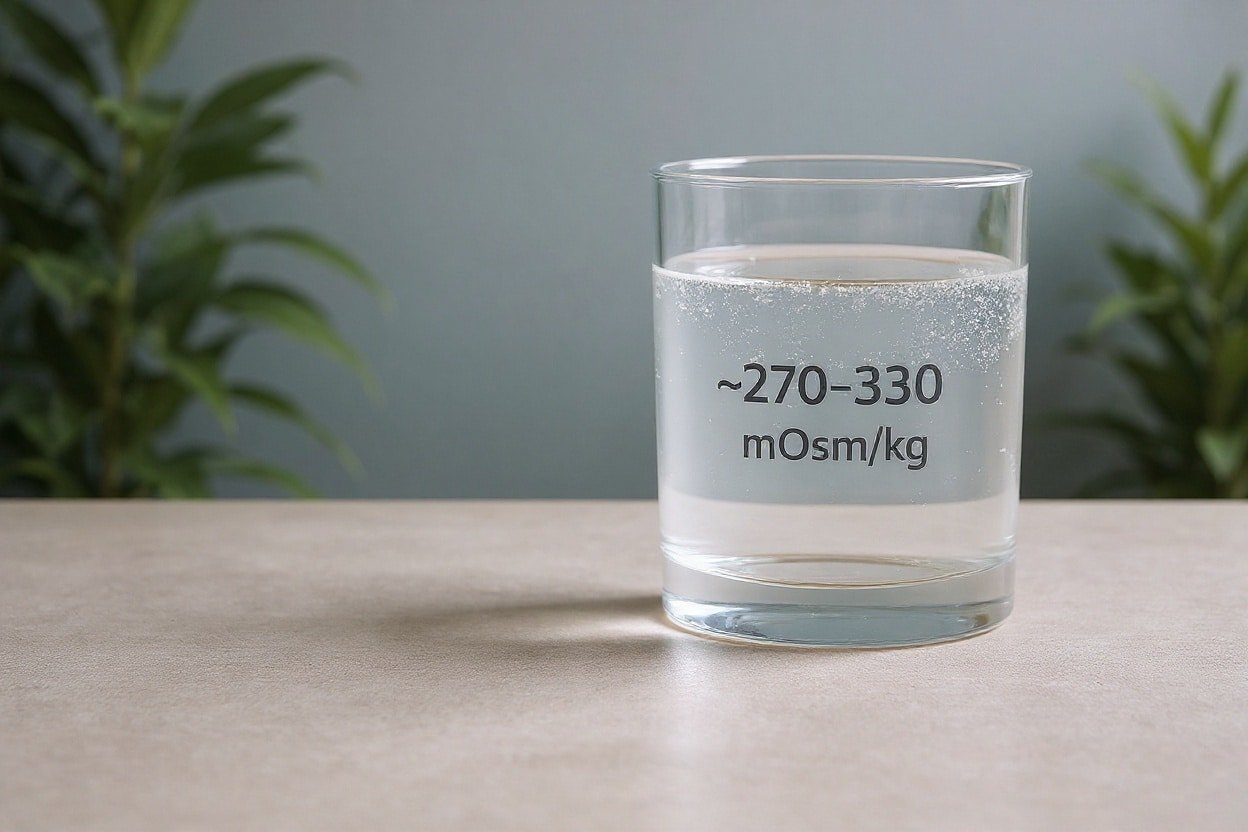
- Isotonic means the solution is the same concentration as your blood plasma (~300 mOsm/kg, a measure called osmolarity), so the intestine absorbs it with minimal adjustment.
- Using the correct amount of water is essential — too little makes it hypertonic, too much makes it hypotonic.
- The advantage is strongest for water-soluble compounds: antioxidants, B vitamins, vitamin C.
- Fat-soluble vitamins (A, D, E, K) are less affected by this concentration-matching effect — they need fat for absorption, not an isotonic mix.
Osmolarity: the one number that matters
Here’s the plain-English version before the science: your body absorbs liquids best when they’re at roughly the same concentration as your own blood, and osmolarity is just the name for that concentration. Every solution has an osmolarity — a measure of how many dissolved particles it contains per litre. Your blood plasma maintains about 300 milliosmoles per kilogram (mOsm/kg). Your intestinal cells are built to absorb fluid at that concentration most efficiently.
When you swallow an isotonic supplement, the liquid arrives at the small intestine at the right concentration to absorb immediately. No water has to flow across the intestinal wall first. The solutes move into the bloodstream without delay.
This is why Isotonix products come with a marked water line on the cap, not simply “take with water.” The calibration is the mechanism.
Isotonic vs hypotonic vs hypertonic
Tonicity describes how a solution compares to blood plasma. Most people encounter it in sports drinks, but it applies equally to any oral supplement.
| Tonicity | Osmolarity | What happens at the intestine | Example |
|---|---|---|---|
| Isotonic | ~300 mOsm/kg | Matches blood plasma — absorbed with minimal osmotic adjustment | Isotonix mixed as directed |
| Hypotonic | <300 mOsm/kg | Dilute. Water is absorbed, but the solute concentration is low | Plain water, over-diluted sports drink |
| Hypertonic | >300 mOsm/kg | More concentrated than plasma. Body draws water in to dilute, slowing absorption of the solute | Concentrated juice, undiluted sports drink |
Does it actually matter for your supplement?
For water-soluble compounds — the OPCs in OPC-3, B vitamins, vitamin C — the isotonic format provides a measurable delivery advantage. These absorb in the upper small intestine, and an isotonically-matched solution reduces acid-phase exposure and osmotic adjustment time.
For fat-soluble vitamins: osmolarity is less relevant. Vitamins A, D, E, and K require dietary fat for absorption. They travel through the lymphatic system, not the bloodstream directly. A softgel in oil, taken with a meal, is highly effective for these — and isotonic concentration adds little.
Isotonic vs mixing your supplement in plain water
| Isotonic supplement (mixed correctly) | Powder or tablet in water (uncontrolled) | |
|---|---|---|
| Osmolarity at ingestion | ~300 mOsm/kg (calibrated) | Varies, often hypertonic |
| Osmotic adjustment needed | Minimal | Possibly significant |
| Absorption onset | Faster upper-intestine onset | Depends on formulation |
| Water amount matters | Yes — must use marked amount | Any amount of water |
| Consistent results | High when mixed correctly | Variable |
Which nutrients benefit most from isotonic delivery
Isotonic helps most for…
- Water-soluble antioxidants (OPCs, vitamin C)
- B vitamins — especially B12 and folate
- Minerals in ionic form
- Compounds with acid-sensitivity
Isotonic matters less for…
- Fat-soluble vitamins (A, D, E, K)
- Probiotics (best in enteric-coated capsules)
- Nutrients with no osmotic or acid-phase concern
Frequently asked questions
This section contains affiliate links — we may earn a commission at no extra cost to you. See our full evaluation policy at the end of this guide.
Do I need to use exactly the right amount of water?
Can I mix isotonic supplements in juice?
What’s the difference between ‘isotonic’ and ‘Isotonix’?
Do all supplements benefit from isotonic delivery?
Is Gatorade isotonic?
“Isotonic = no dilution step needed. The supplement enters your intestine ready to absorb. No waiting for a capsule to dissolve.”
The mechanism is well-understood physiology, not marketing. For water-soluble, acid-sensitive compounds the advantage is real. For fat-soluble vitamins, standard forms with food work fine.

Related reading
-
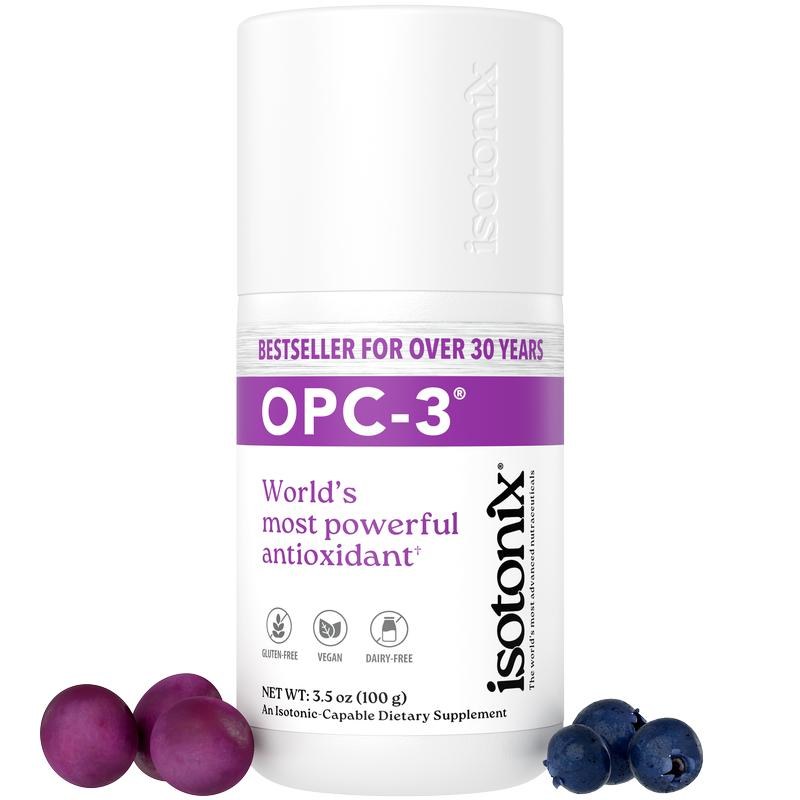 ReviewIsotonix OPC-3 reviewThe flagship antioxidant formula. Four extracts, isotonic form, strong research base.
 -
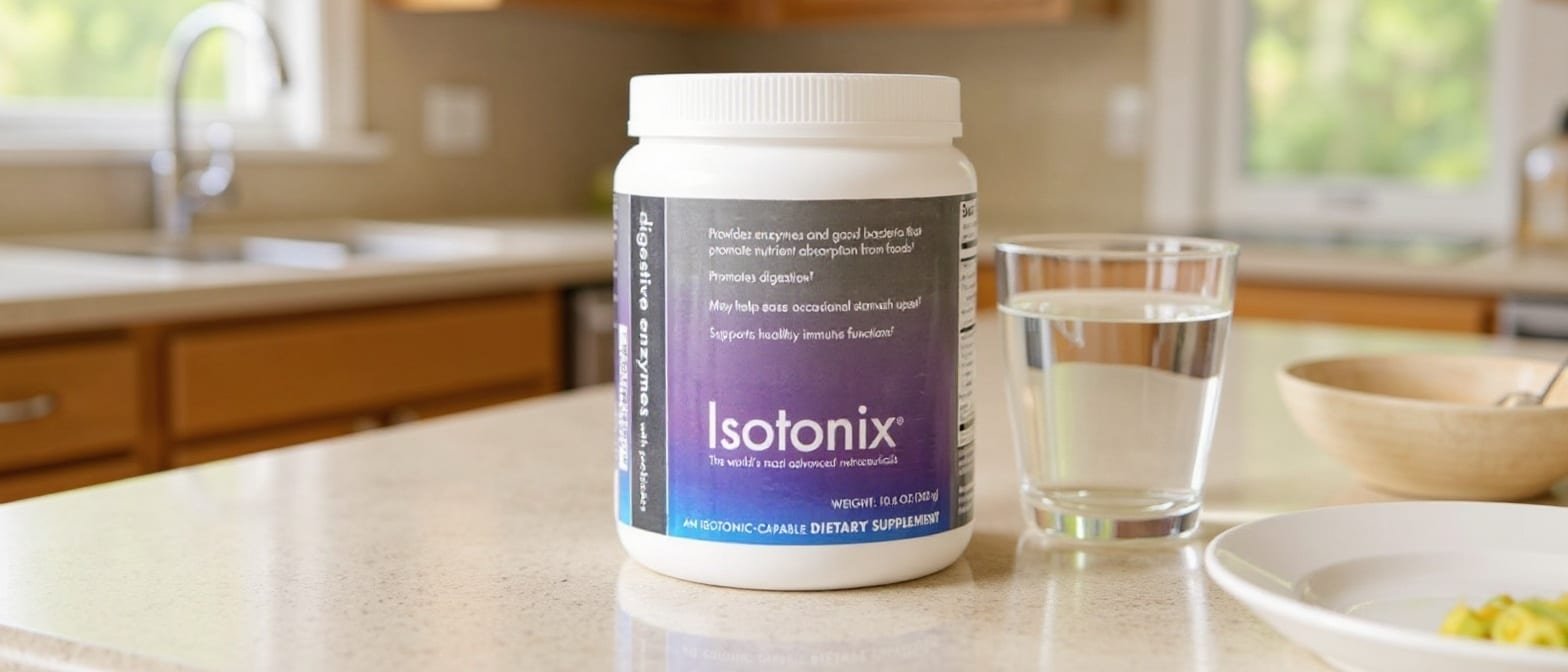 ReviewIsotonix Digestive Enzymes reviewFive enzyme classes in isotonic form. Does the delivery advantage hold up for digestion?
 -
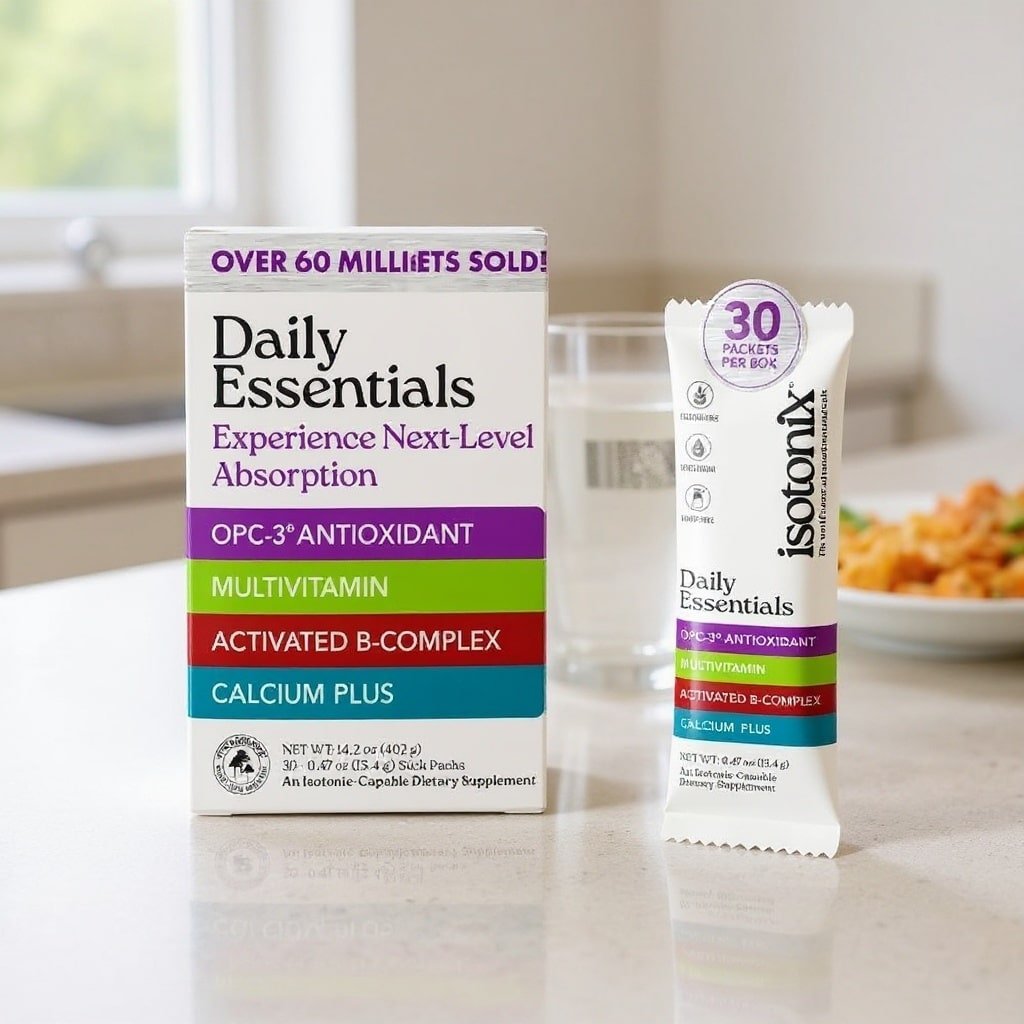 ReviewIsotonix Daily Essentials reviewFour Isotonix products bundled at a 15% discount. Is the stack worth buying together?
 -
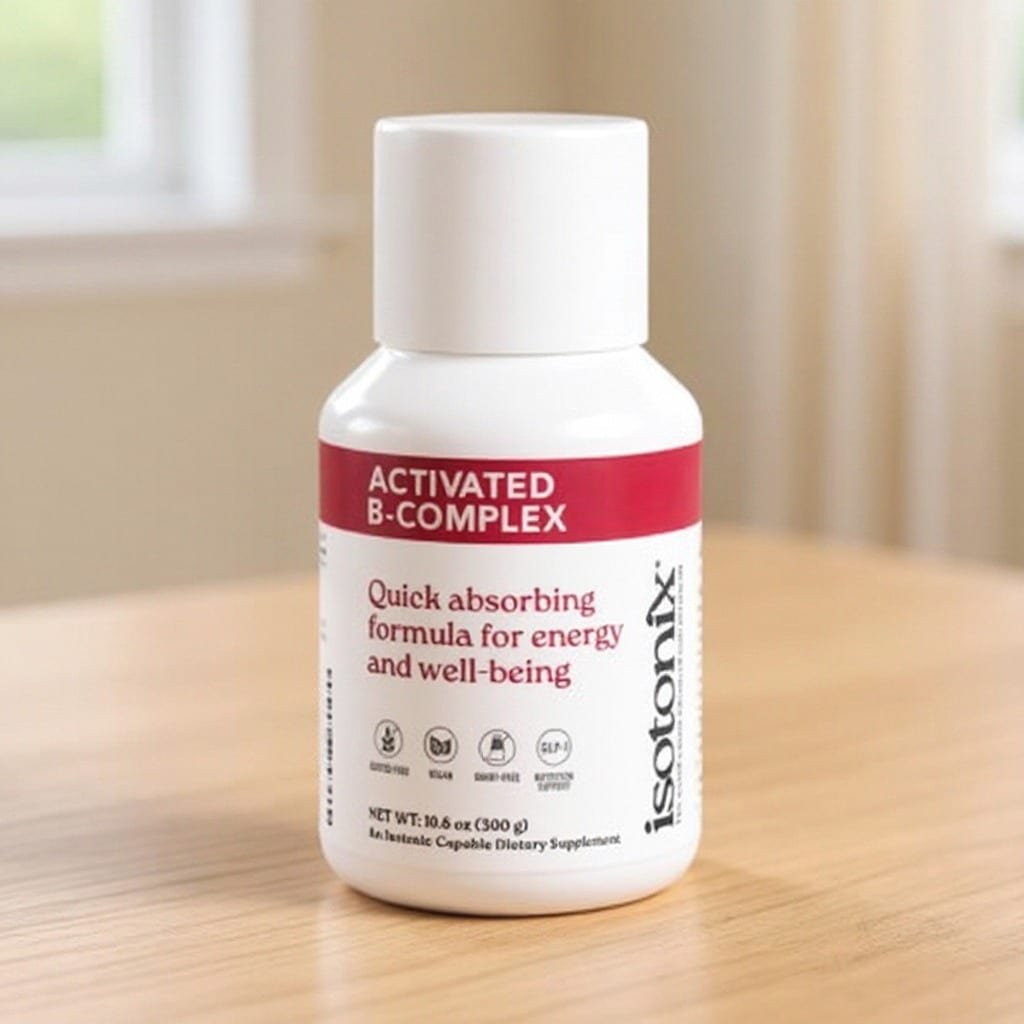 ReviewIsotonix Activated B-Complex reviewEight B vitamins in methylated forms. Are the activated versions worth paying more for?
 -
 ComparisonIsotonix vs capsules: what actually mattersMost capsule buyers absorb less than they paid for. Here’s what isotonic actually changes.
 -
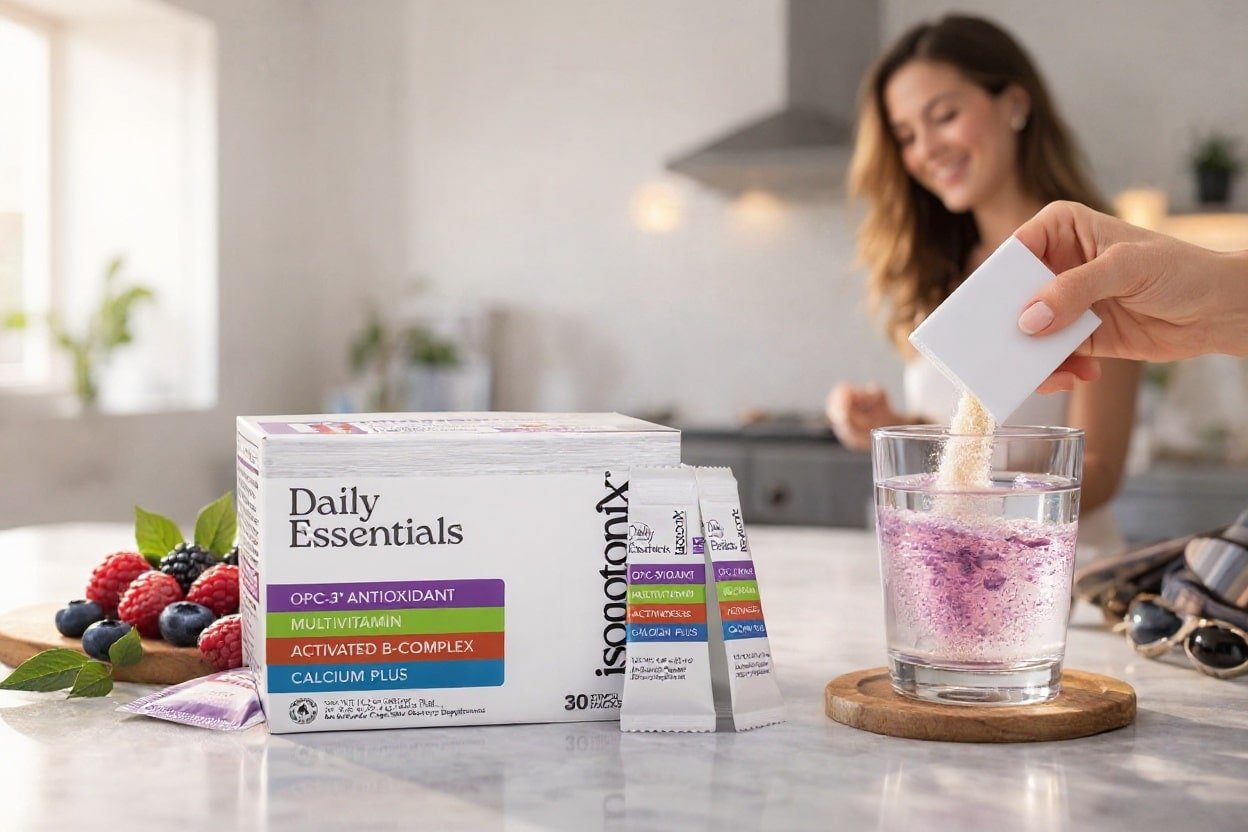 ReviewIsotonix Daily Essentials Packets reviewSame formula as the bottles, in single-serve sachets. Worth the size premium for travel?
Sources
- Osmolarity and absorption: NIH Bookshelf.
- Supplement bioavailability: Examine.com.