 Inspire
Isotonix Activated B-Complex Review
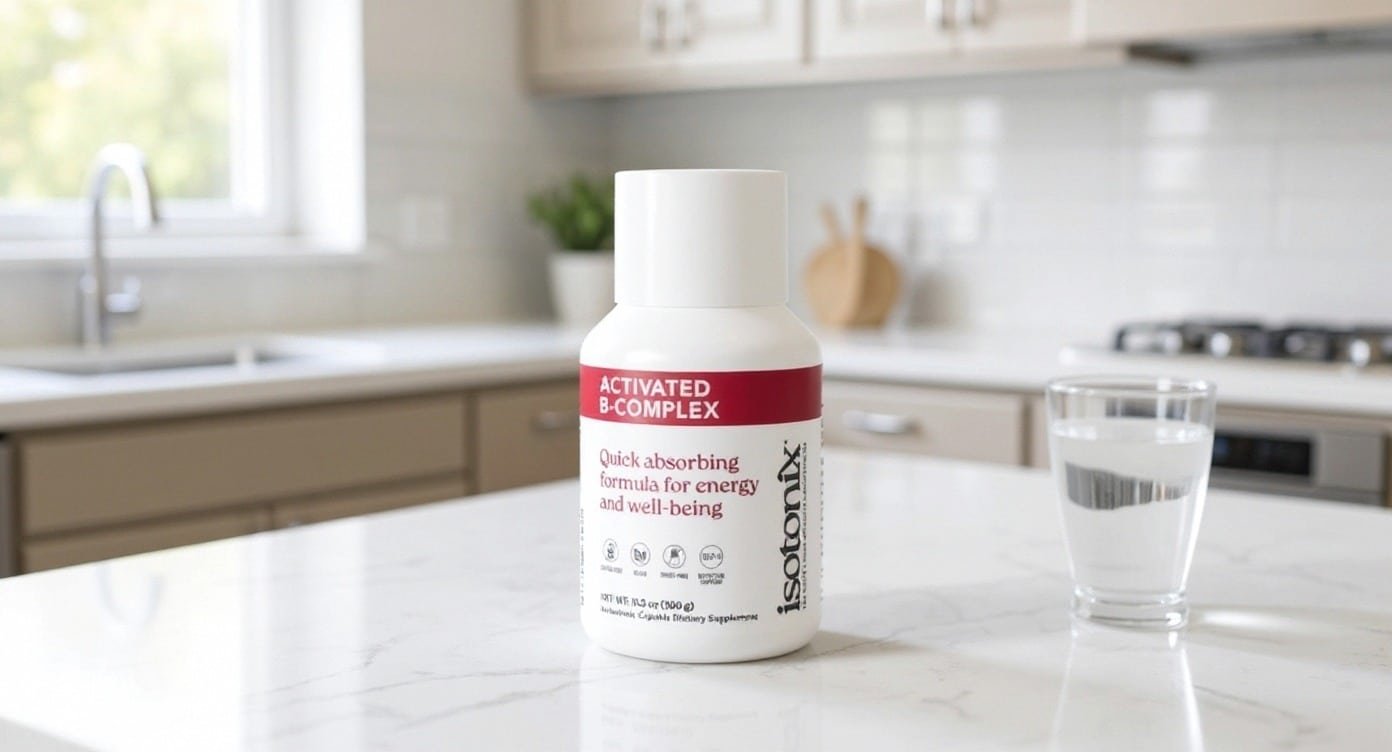
Most B-complex pills use forms your body has to convert before it can use them. For a lot of people, that conversion doesn’t work well. Isotonix skips the step with methylcobalamin and methylfolate, and this Isotonix B-Complex review tests whether the upgrade is worth paying more for.
our rating
What we liked
- B12 as methylcobalamin, an active form
- B9 that skips the MTHFR bottleneck (methylfolate)
- All 8 B vitamins in one product
- Pairs naturally with OPC-3 in a morning routine
What to know
- Premium cost vs standard B-complex tablets
- Foundational, not a stimulant: benefit is most noticeable if your B levels were actually low to start
- Once-daily on empty stomach required
Key takeaways from this Isotonix B-Complex review
- This Isotonix B-Complex review found all 8 B vitamins, with four of them (B2, B6, folate and B12) in active forms on the US and Hong Kong labels, so they need no conversion step. The other four (B1, B3, B5 and biotin) are standard forms. The Canada label we read lists amounts but not the forms.
- Especially useful if you have the MTHFR gene variant (about 40% of people do) or know standard folic acid doesn’t seem to work for you.
- Isotonic delivery: begins absorbing in about 5 minutes on an empty stomach, the same mechanism as OPC-3.
- Pairs naturally with OPC-3 in a morning routine.
Isotonix B-Complex Review: Who it’s for (and who should skip it)
This Isotonix B-Complex review breaks down exactly who benefits most, and who can skip it.
Buy it if…
- You know or suspect you have an MTHFR variant
- You follow a plant-based diet (B12 risk)
- You want active forms of B2, B6, folate and B12 rather than inactive precursors
- You already take OPC-3 and want a complete morning routine
Skip it if…
- You get comprehensive B vitamins from a varied diet with meat and dairy
- You want the lowest cost per dose
- You’re not interested in the activated/methylated distinction
What’s in it: all 8 B vitamins
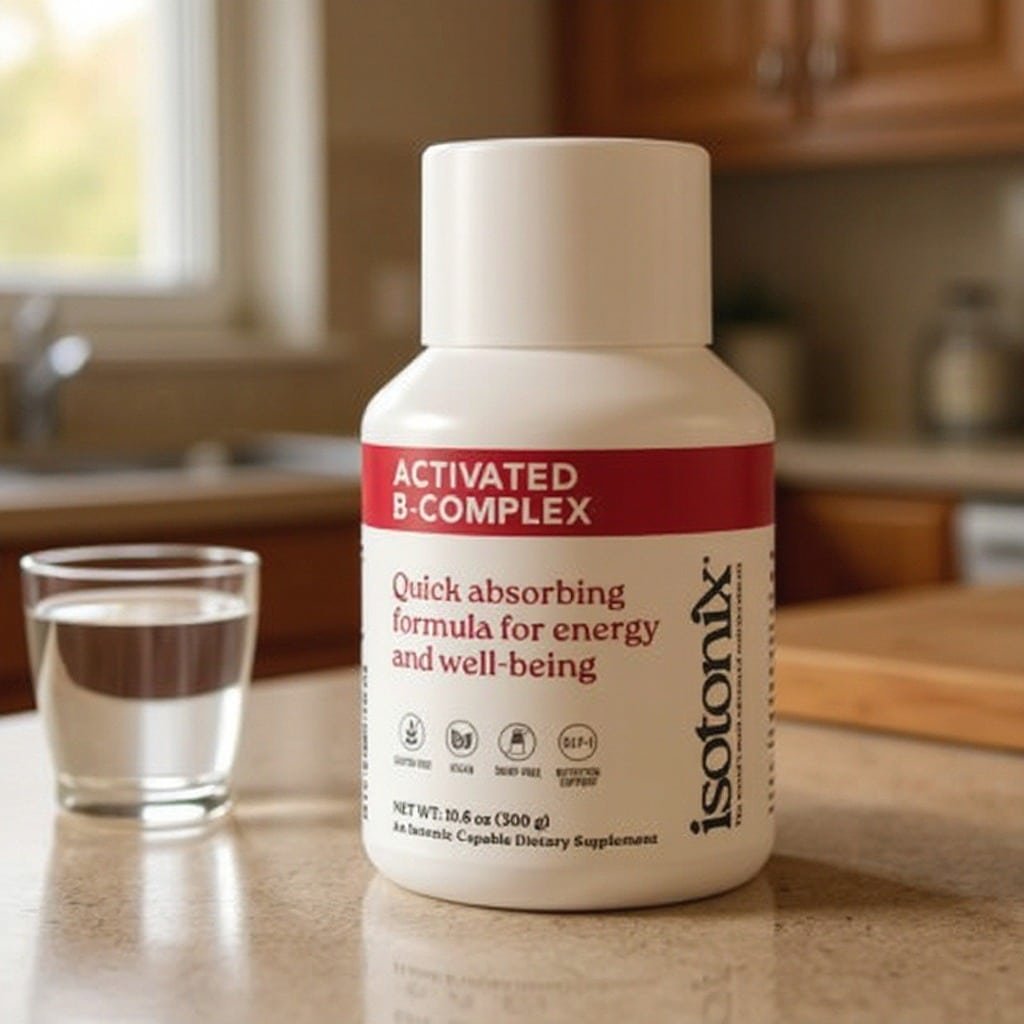
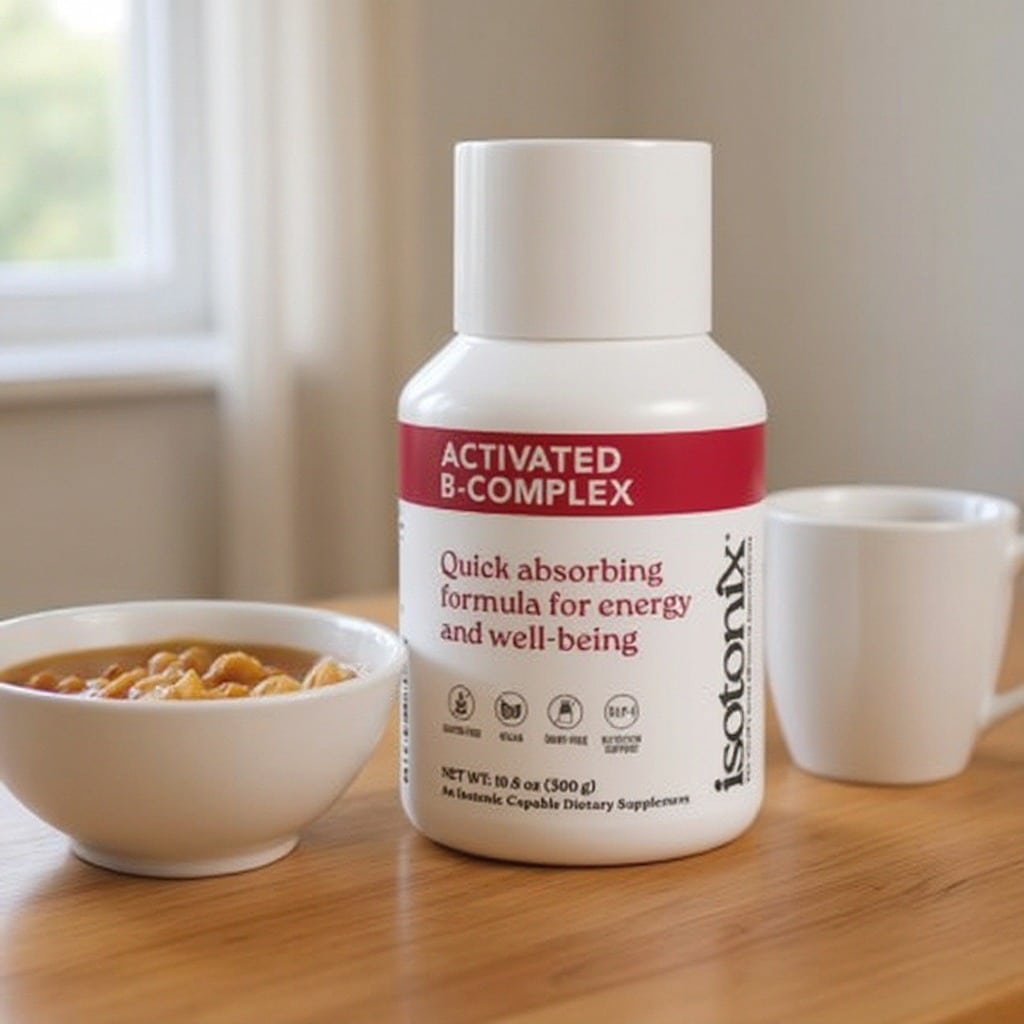
The formula covers the complete B vitamin family. Here’s the simple version: some vitamin forms your body can use right away. Others need an extra conversion step first, and that’s exactly where things can go wrong for a lot of people. What distinguishes this formula is the forms chosen. Most budget B-complex supplements use the cheapest forms: cyanocobalamin for B12, folic acid for B9. These require your body to convert them to the active versions before use. On the US label, four of the eight are active forms: riboflavin-5-phosphate (B2), P5P (B6), methylfolate and methylcobalamin. Thiamin is thiamin HCl, niacin is niacinamide, pantothenic acid is calcium pantothenate, and biotin is plain biotin.
Activated forms: why they matter
The key issue is B12 and B9. Standard supplements use inactive precursor forms that require an enzymatic conversion step before your cells can use them. For a significant portion of the population, that step is unreliable.
| Factor | Standard B-Complex (cheap) | Isotonix Activated B-Complex |
|---|---|---|
| B12 form | Cyanocobalamin: requires liver conversion to methylcobalamin | Methylcobalamin (already an active form, no conversion needed) |
| B9 form | Folic acid: MTHFR enzyme converts to active folate; ~40% of people have reduced MTHFR activity | Methylfolate: already the active form, no conversion needed |
| Other B vitamins | Usually standard forms | B2 and B6 in active forms (riboflavin-5-phosphate, P5P); B1, B3, B5 and biotin in standard forms |
| Delivery | Tablet or capsule; absorbs over 30–60 min | Isotonic liquid; begins absorbing in upper small intestine in ~5 min |
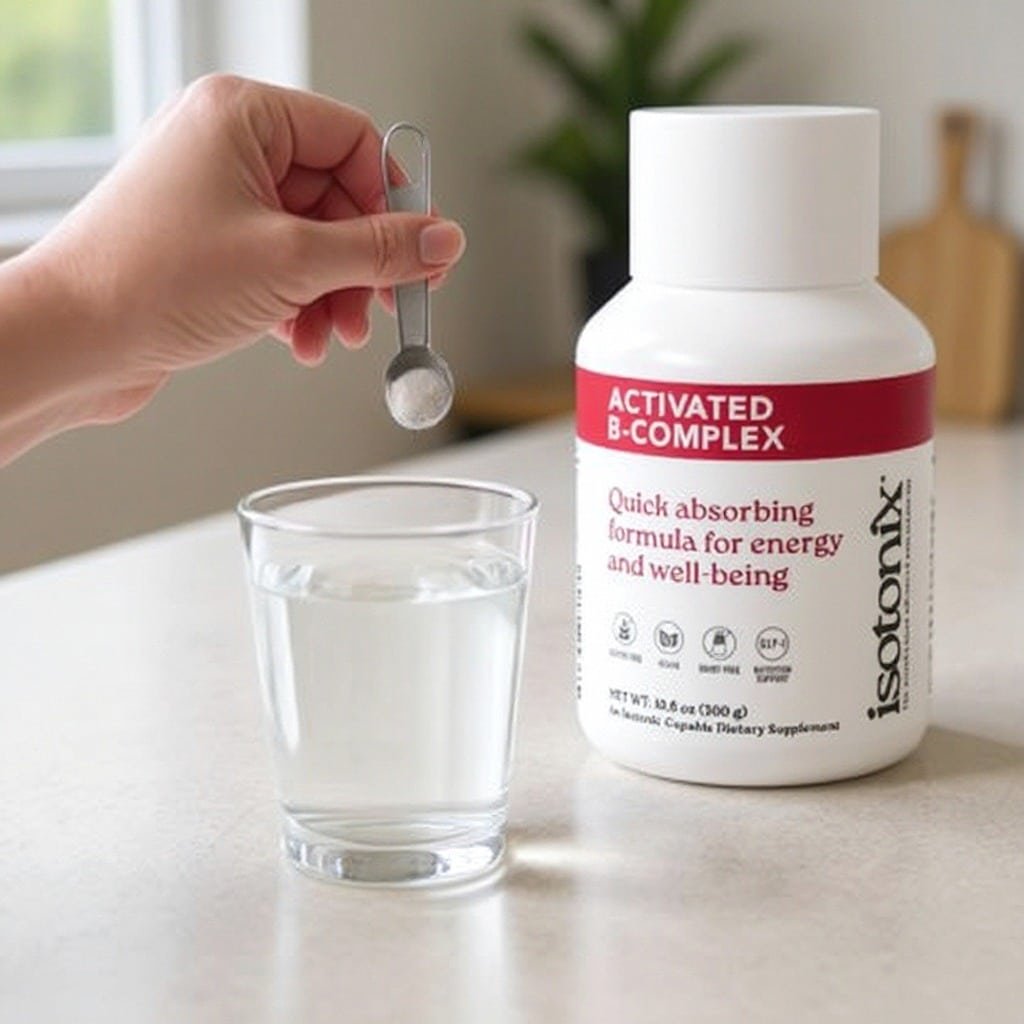
In practice: mix one capful with the marked water on an empty stomach, once daily. Morning works well, and most people take it alongside OPC-3.
Energy, nerves, and metabolism
B vitamins do the unglamorous work of converting food into ATP, the cell’s basic energy currency. B12 and folate matter most for neurological function and red blood cell production; B3 (niacin) feeds into NAD+, a molecule involved in hundreds of metabolic reactions. Skip any one of them and the effects show up somewhere else in the chain.
vs a standard B-Complex tablet
| Isotonix Activated B-Complex | Standard B-Complex tablet | |
|---|---|---|
| MTHFR-friendly | Yes (methylated forms) | Often not |
| Number of Bs | All 8 (4 in active forms) | Varies |
| Cost | Premium | Budget-friendly |
Frequently asked questions
This section contains affiliate links. We may earn a commission at no extra cost to you. See our full evaluation policy at the end of this guide.
What makes this B-Complex ‘activated’?
Will it give me an energy boost?
Can I take B-Complex with OPC-3?
“All eight B vitamins, with four of them (B2, B6, folate and B12) already in the active forms your cells use, on the US and Hong Kong labels.”
The methylated forms cost more than a basic B pill but address a real limitation. For MTHFR-variant users or plant-based eaters, the upgrade is meaningful.

See the Subscribe and Save option →
Related reading
-
 ReviewIsotonix OPC-3 reviewThe flagship antioxidant formula. Four extracts plus a citrus bioflavonoid complex, isotonic form, strong research base.
-
 ReviewIsotonix Digestive Enzymes reviewFive enzyme classes in isotonic form. Does the delivery advantage hold up for digestion?
-
 ReviewIsotonix Daily Essentials reviewFour Isotonix products bundled at a small discount (about 1% to 5% in most stores). Is the stack worth buying together?
-
 ReviewIsotonix Daily Essentials Packets reviewThe Daily Essentials stack in single-serve stick packs, one a day. Worth the size premium for travel?
-
 ComparisonIsotonix vs capsules: what actually mattersMost capsule buyers absorb less than they paid for. Here’s what isotonic actually changes.
-
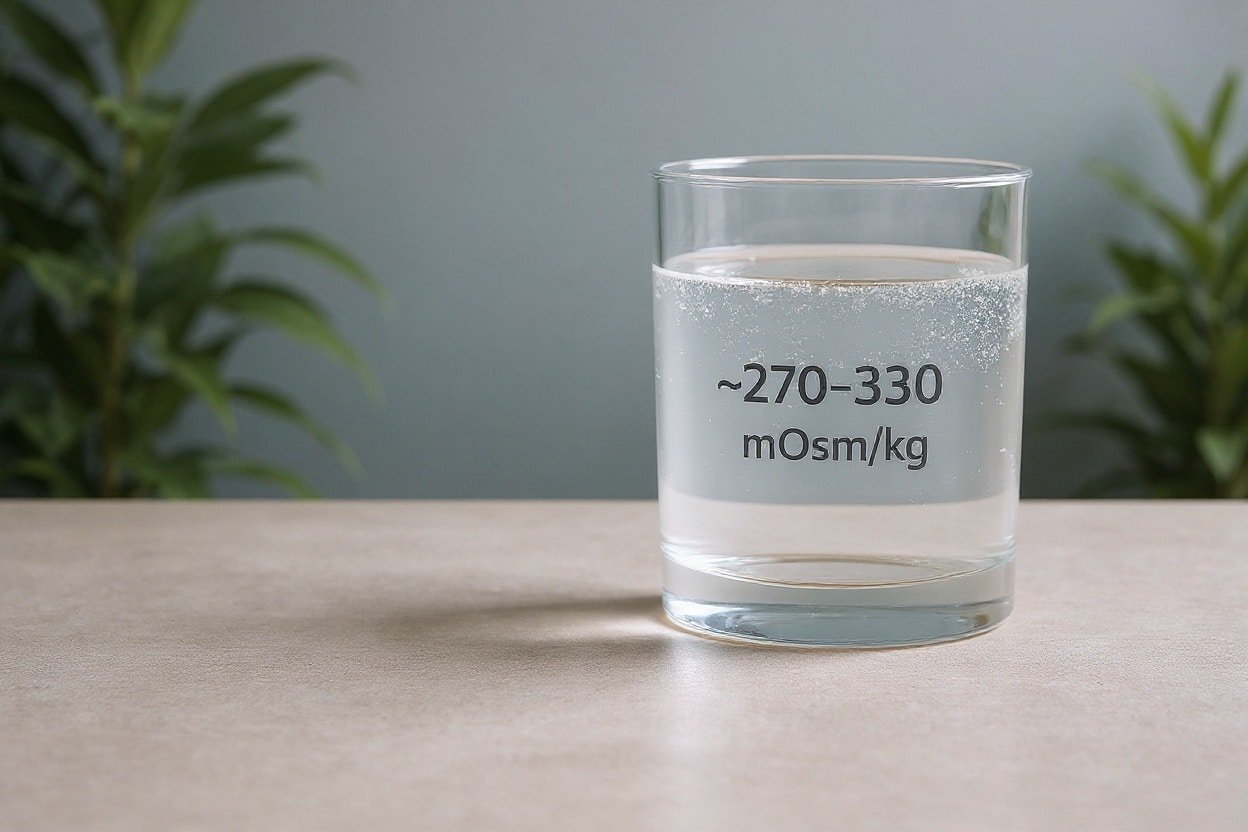 ExplainerWhat is an isotonic supplement?The osmolarity science behind why isotonic delivery is faster, explained simply.
Sources
- B12 research: Examine.com on B12.
- Folate and MTHFR: NIH ODS on Folate.
- Forms of each B vitamin: Supplement Facts panel on the official US Isotonix Activated B-Complex product page.