 Inspire
Isotonix vs Capsules: What Actually Changes
The isotonic format promises faster, more consistent absorption than capsules. Here’s what actually holds up, and where capsules still win.
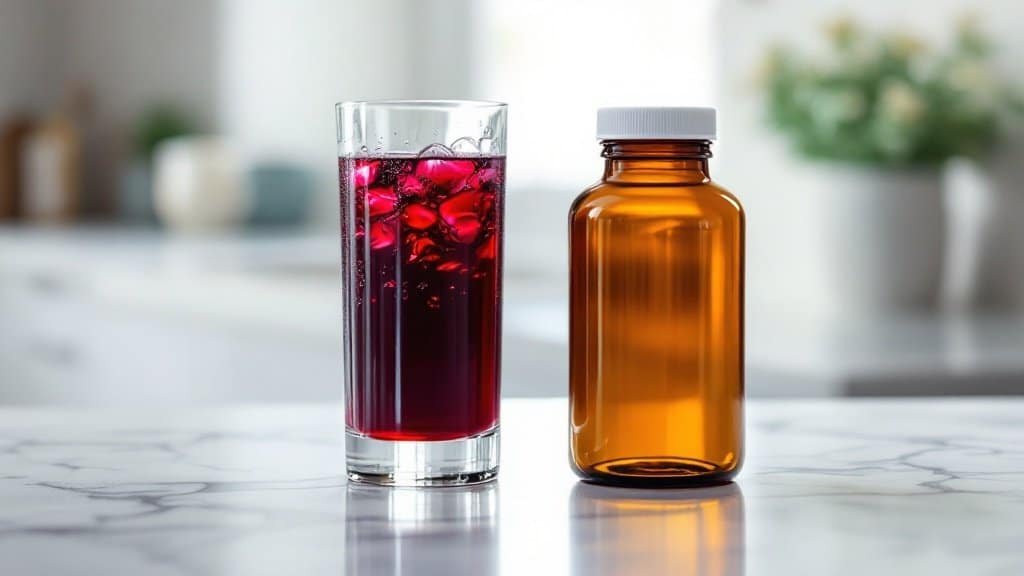
What we liked
- Genuine absorption edge for nutrients that dissolve in water (like OPCs)
- No capsule-dissolution delay
- Fast, consistent absorption when mixed correctly
- Useful for OPCs, B vitamins, antioxidants
What to know
- Less advantage for fat-soluble vitamins (A, D, E, K)
- Requires precise water mixing
- More expensive than equivalent capsule
- Must be taken on an empty stomach for best effect
Key takeaways: Isotonix vs capsules
- Isotonic supplements match blood plasma osmolarity (~300 mOsm/kg), so the intestine absorbs them with minimal osmotic adjustment.
- The isotonic edge matters most for compounds that break down in stomach acid or need to be dissolved in water — OPCs and B vitamins are the clearest examples.
- For fat-soluble vitamins (A, D, E, K), capsules with a fatty meal can be comparably effective.
- The water amount matters: using too much or too little changes the concentration and reduces the delivery advantage.
How isotonic delivery works
Here’s the short version before the technical part: your gut absorbs liquids fastest when they’re already at the same concentration as your blood, so an isotonic drink skips a step your body would otherwise have to do first. Your body maintains blood plasma at roughly 300 mOsm/kg. When you consume a solution that matches this concentration, your intestinal cells absorb it efficiently, with minimal water movement required on either side of the intestinal wall.
A capsule dissolves first in the stomach, exposes its contents to acid, then passes through to the intestine as a solution with unpredictable osmolarity. If too concentrated or too dilute relative to plasma, your body adjusts the water balance before absorbing — adding time and potentially wasting some of the dose.
| Step | Capsule/tablet | Isotonic (e.g. OPC-3) |
|---|---|---|
| ① | Swallowed whole | Mixed with 240 ml water to isotonic concentration |
| ② | Capsule shell dissolves in stomach — variable time depending on coating | Liquid bypasses most stomach activity; goes directly to upper small intestine |
| ③ | Nutrients dissolve in stomach acid — some degradation possible for acid-sensitive compounds | Nutrients arrive at intestinal wall in solution at body-matching osmolarity |
| ④ | Intestinal absorption begins — osmolarity difference may require water movement first | Absorption begins immediately — no osmotic adjustment required |
| ⌛ | Typically 30–60 min to peak | ~5 min to begin absorbing |
The practical upshot: isotonic supplements begin absorbing in the upper small intestine within about five minutes. Capsule absorption typically takes 30 to 60 minutes, depending on coating, stomach conditions, and what else is in the stomach.
Where capsules fall short
Capsule absorption isn’t broken — it just has more variables. Acid-sensitive compounds lose some potency during the stomach phase. Enteric coating helps, but adds another variable (coating integrity and dissolution site). For antioxidant extracts like OPCs, where oxidation during the acid phase is a real concern, getting through the stomach faster is a genuine win.
When capsules are perfectly fine
Not every nutrient benefits equally from isotonic delivery. Fat-soluble vitamins — A, D, E, K — need dietary fat for absorption. A softgel in an oil base, taken with a meal containing fat, is highly effective. Osmolarity matters little here because fat-mediated absorption via the lymphatic system bypasses the water-solubility question entirely.
Isotonic vs Capsule: the full comparison
| Isotonic supplement | Capsule supplement | |
|---|---|---|
| Delivery mechanism | Pre-dissolved; bypasses stomach dissolution | Must dissolve in stomach first |
| Stomach-acid exposure | Minimal | Moderate to significant |
| Absorption onset | ~5 min | 30–60 min |
| Fat-soluble nutrients | Less advantage vs capsules with a fatty meal | Fat improves absorption of A, D, E, K |
| Convenience | Requires mixing with precise water amount | Swallow anywhere |
| Cost | Premium | Often lower |
When to choose isotonic, when capsules are fine
Isotonic wins for…
- Water-soluble antioxidants (OPCs, vitamin C)
- B vitamins
- Acid-sensitive compounds
- Situations where fast, consistent absorption matters
Capsules are fine for…
- Fat-soluble vitamins (A, D, E, K) taken with food
- Probiotics (best in enteric-coated capsules)
- Nutrients with no acid-sensitivity concern
- Budget-first purchasing
Frequently asked questions
This section contains affiliate links — we may earn a commission at no extra cost to you. See our full evaluation policy at the end of this guide.
Does isotonic actually absorb better than a capsule?
What does ‘isotonic’ actually mean?
Is it important to use exactly the right amount of water?
Are all Isotonix products genuinely isotonic?
Is a premium isotonic supplement always worth it?
“Isotonic wins on absorption speed and consistency for water-soluble nutrients. Capsules are fine (and sometimes better) for fat-soluble vitamins.”
The absorption advantage is real and well-supported for OPCs, B vitamins, and vitamin C. Less relevant for fat-soluble nutrients. Worth paying for in the right context.

Related reading
-
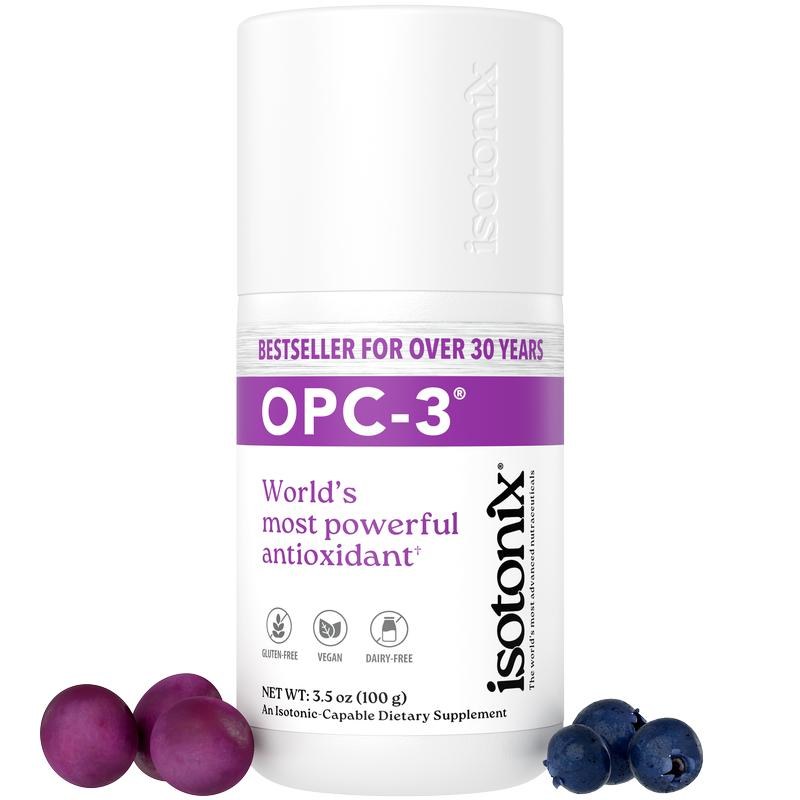 ReviewIsotonix OPC-3 reviewThe flagship antioxidant formula. Four extracts, isotonic form, strong research base.
 -
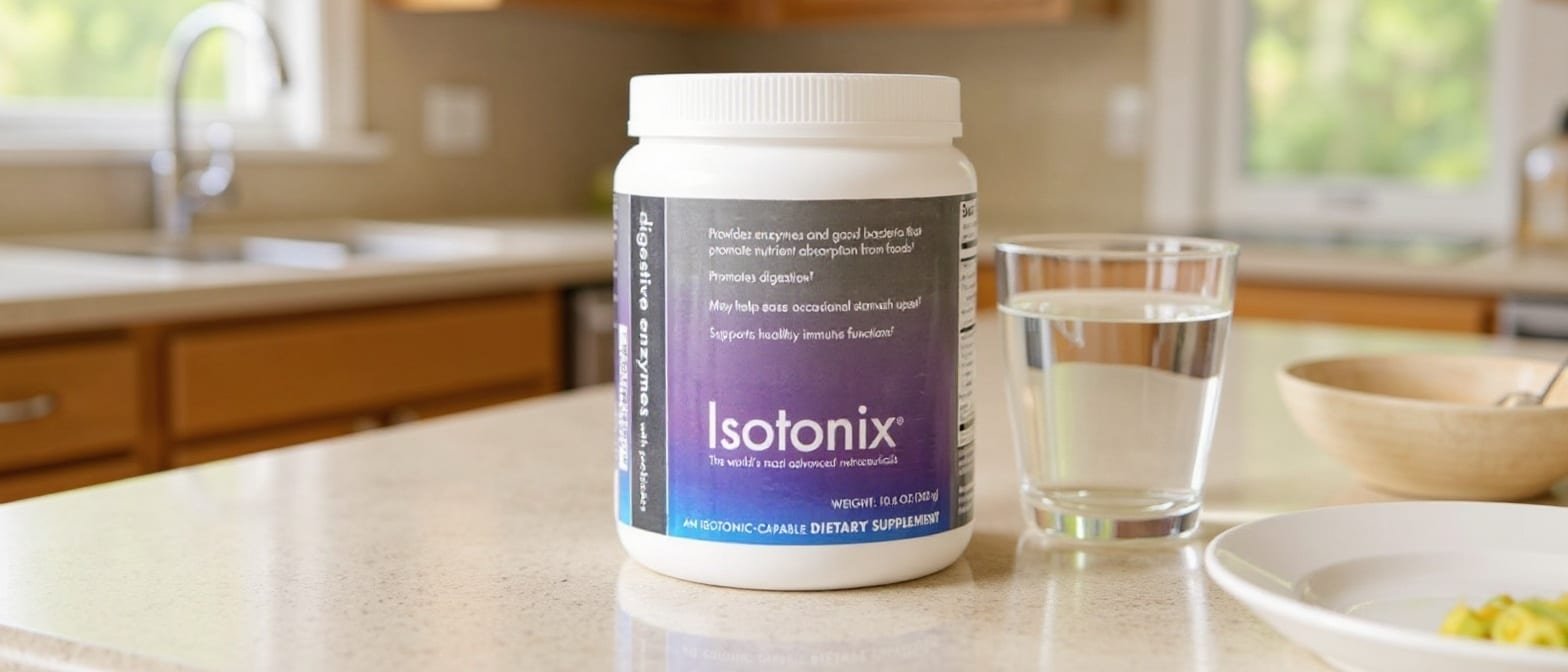 ReviewIsotonix Digestive Enzymes reviewFive enzyme classes in isotonic form. Does the delivery advantage hold up for digestion?
 -
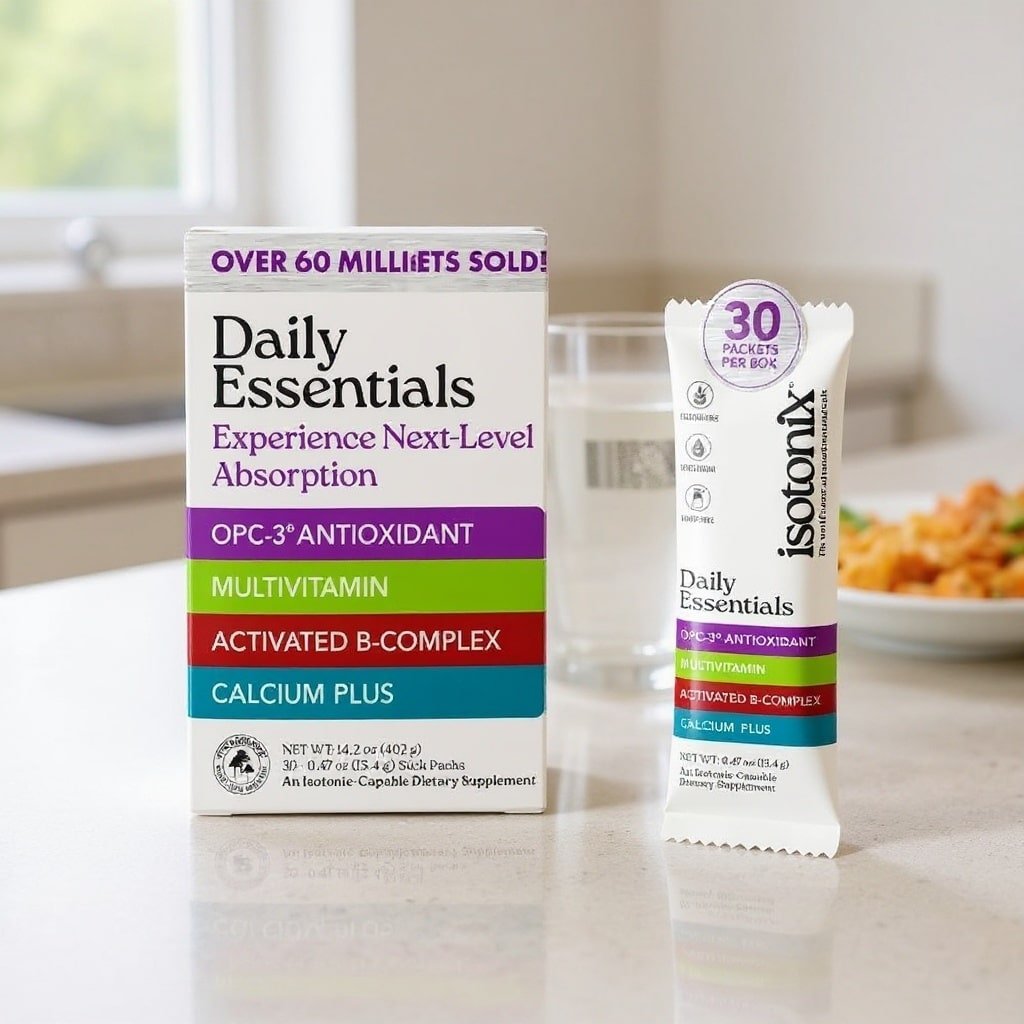 ReviewIsotonix Daily Essentials reviewFour Isotonix products bundled at a 15% discount. Is the stack worth buying together?
 -
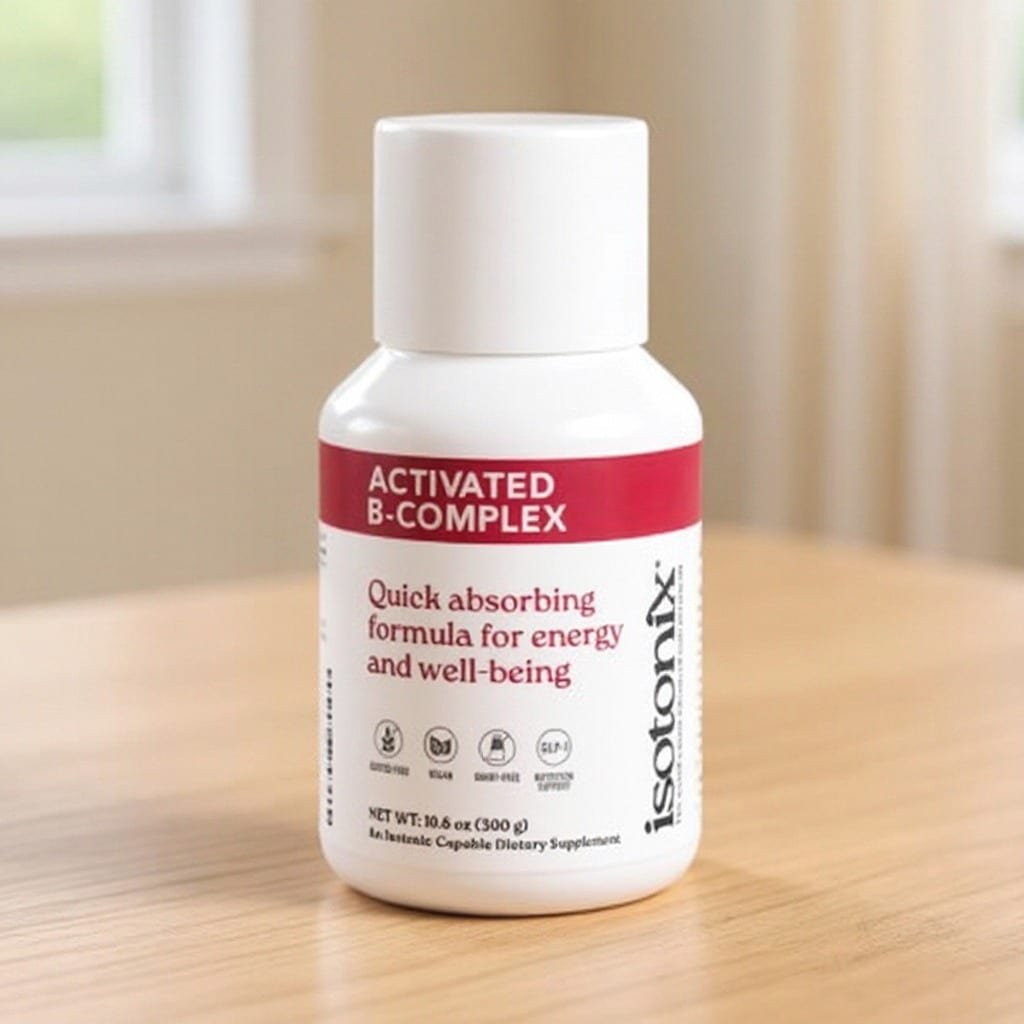 ReviewIsotonix Activated B-Complex reviewEight B vitamins in methylated forms. Are the activated versions worth paying more for?
 -
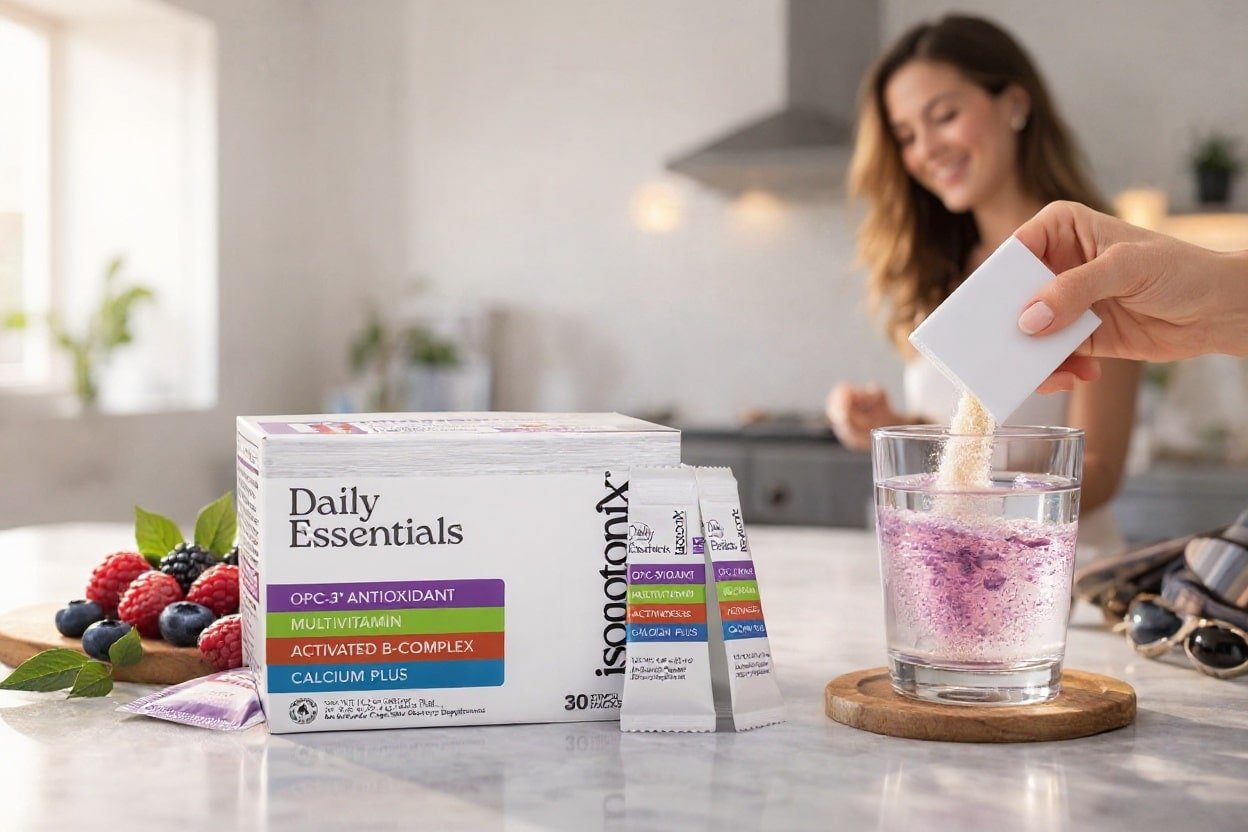 ReviewIsotonix Daily Essentials Packets reviewSame formula as the bottles, in single-serve sachets. Worth the size premium for travel?
 -
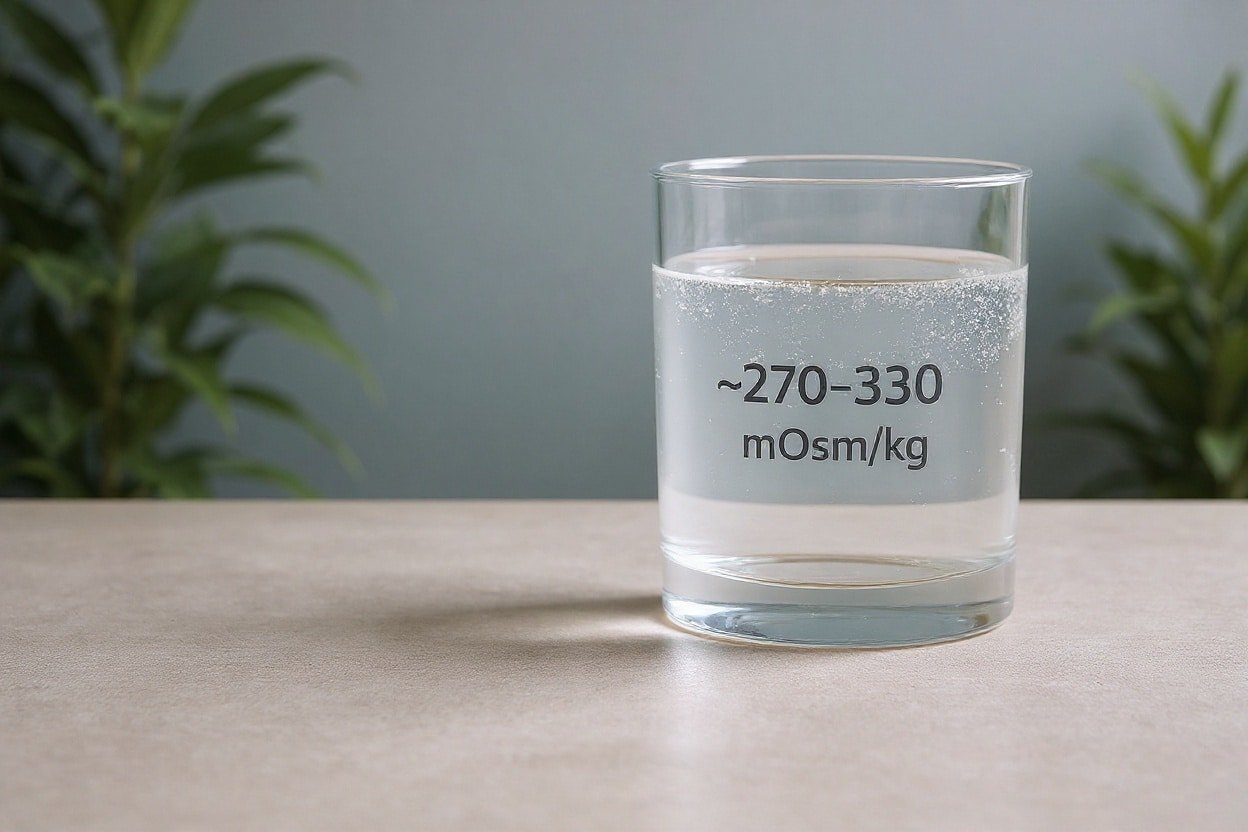 ExplainerWhat is an isotonic supplement?The osmolarity science behind why isotonic delivery is faster, explained simply.
 -
 ReviewPrime Joint Support ReviewDoes hyaluronic acid beat standard chondroitin? One more isotonic format in practice.
 -
 ReviewHeart Health Essential Omega III ReviewReal EPA/DHA dose or marketing? Fish oil in isotonic drink form.
 -
 ReviewIsotonix Ultimate Aloe ReviewIs the 200x concentrate worth it in isotonic drink form?
Sources
- Bioavailability and delivery systems: Examine.com.
- Intestinal absorption physiology: NIH Bookshelf.