 Inspire
Thymenol Review
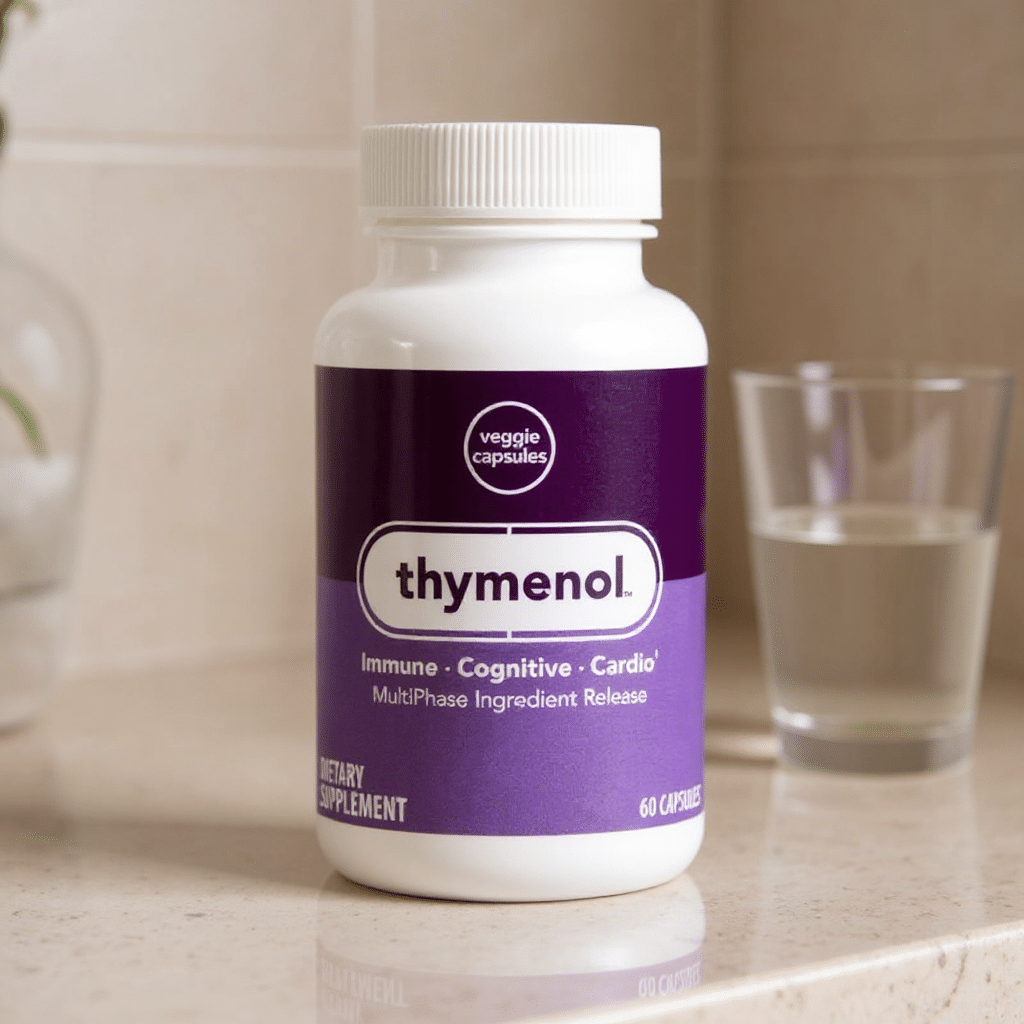
A capsule-in-a-capsule delivering two patented antioxidants, black cumin seed’s ThymoQuin and pine bark’s Pycnogenol, rated 4.8 stars across 42 reviews. Despite the name, it has nothing to do with your thymus gland — here’s what it actually is.
our rating
What we liked
- A genuine “cap-in-cap” delivery system — a small powder capsule inside a larger liquid-filled one, built for multiphase release
- Two recognizable, patented ingredients (ThymoQuin from black cumin seed, Pycnogenol from pine bark) instead of a vague proprietary blend
- Strong 4.8-star rating across 42 reviews
- Capsule format, unlike most of this lineup — useful if you’re tired of mixing powders
What to know
- Exact milligram doses of ThymoQuin and Pycnogenol aren’t disclosed on the official page — only percentage standardizations (3% thymoquinone)
- “Thymenol” sounds like it targets the thymus gland; it doesn’t — the name derives from thymoquinone, an active compound in black cumin seed oil
- $72.95 for 30 servings is a mid-to-premium price for a capsule supplement
- Only confirmed sold through the US, Taiwan, Hong Kong, and Singapore Isotonix/GoTrim stores
Key takeaways
- The two active ingredients are ThymoQuin™ (standardized to 3% thymoquinone, from black cumin seed) and Pycnogenol® (French maritime pine bark extract).
- It uses a cap-in-cap delivery system — a smaller powder-filled capsule nested inside a larger liquid-filled capsule — designed for multiphase release of both a fat-soluble and water-soluble antioxidant together.
- Despite the name, it has no connection to the thymus gland — “Thymenol” derives from thymoquinone, one of its two active compounds.
- The official page does not disclose exact milligram amounts for either active ingredient, only their percentage standardization — worth knowing before you buy.
What’s actually in it
Thymenol is built around a real, if less commonly known, delivery-system idea: combining a fat-soluble antioxidant with a water-soluble one so a single capsule can cover both types of tissue.
How it’s taken: as a capsule, once daily or as directed by your health care provider — 30 servings per bottle. Unlike most of this batch, this isn’t a mixed drink.
Why “Thymenol” isn’t about your thymus gland
Thymenol is not a thymus-support supplement, despite what the name suggests. The name comes from thymoquinone, the standardized active compound in ThymoQuin™ black cumin seed extract, one of the product’s two active ingredients. No thymus gland extract, peptide, or targeted thymus-support claim anywhere in the formula or on the official product page.
The one thing not disclosed
The official Thymenol page states each active ingredient’s percentage standardization (ThymoQuin at 3% thymoquinone), but it doesn’t publish an absolute milligram amount for either ThymoQuin or Pycnogenol. That’s a real gap if you’re trying to compare this product’s dose against a specific published clinical trial, though it doesn’t mean the product doesn’t work: both ingredients have a genuine research base at the ingredient level. We’d rather tell you the number isn’t public than guess at one.
“Two legitimately well-regarded patented ingredients in one capsule, held back only by an undisclosed dose.”
ThymoQuin and Pycnogenol both have real research bases individually, and the cap-in-cap system delivers on its premise: a fat-soluble antioxidant and a water-soluble one from the same capsule, not just a marketing label. The one thing we’d want fixed is publishing an actual milligram dose for both actives, not just a percentage standardization.

Related reading
Sources
- Black cumin seed (thymoquinone) research: Examine.com on Black Seed.
- Pine bark extract (Pycnogenol) and proanthocyanidins: Examine.com.