 Inspire
Antioxidant Supplements: What Actually Works (A Practical Guide)
Which ones are worth taking — and why the form you take them in changes how much you actually absorb.
Independent Isotonix distributor (Inspire Company). We stock & ship this product, and this page has affiliate links — we may earn a commission; our opinions are our own.
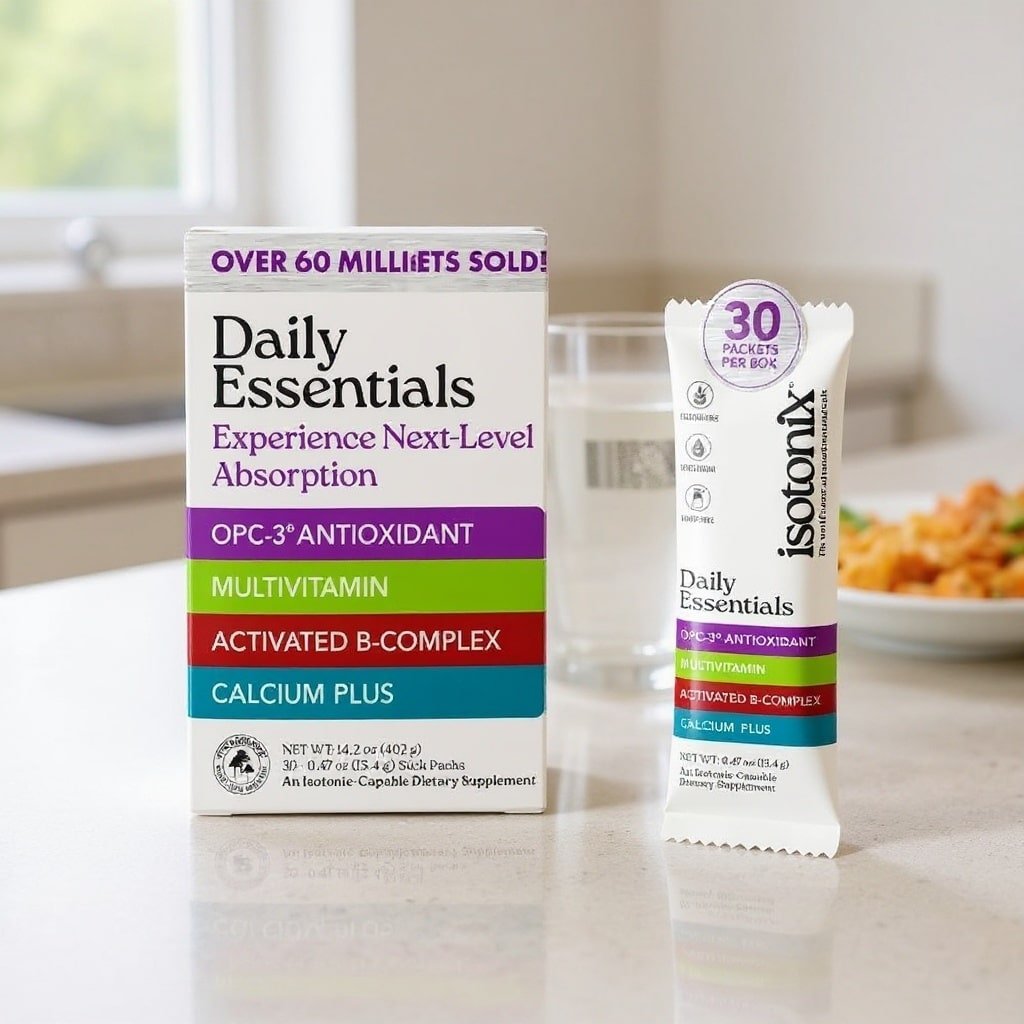
Antioxidant supplements get talked about everywhere, but most guides skip the two questions that actually matter: which ones are worth taking, and does the form you take them in change how much your body absorbs? This guide answers both, plainly.
What antioxidants actually do
Your body produces free radicals as a normal by-product of turning food into energy — and more of them under stress, pollution, and intense exercise. Antioxidants help neutralize the excess. The goal isn’t to chase a trend; it’s steady, daily support from a few well-studied compounds.
The antioxidants worth knowing
Here’s the practical rundown on six antioxidants people actually search for: what each one is, a typical dose, anything worth flagging with your doctor, and where it shows up in food.
OPC (grape seed and pine bark extract)
OPC stands for oligomeric proanthocyanidins, plant compounds concentrated in grape seed, pine bark, red wine and bilberry that give many fruits and berries their deep color. Clinical trials have tested doses from 150 mg up to 2,000 mg a day, and most standardized grape seed extract supplements on the market are dosed in the 100-300 mg range. It has a mild antiplatelet (blood-thinning) effect, so check with your doctor before combining it with warfarin or other blood thinners, and stop taking it at least a week before any scheduled surgery. There’s no everyday food that gets you a meaningful amount; grapes and berries contain some, but nowhere near supplement-level doses, which is why it’s taken as a concentrated extract.
Vitamin C
Vitamin C is the water-soluble vitamin your body needs for collagen production and immune function, and it can’t make on its own. The RDA is 90 mg a day for men and 75 mg for women (add 35 mg if you smoke), and the tolerable upper intake level for supplements is 2,000 mg a day. If you’re in cancer treatment, ask your oncologist before adding vitamin C or any other antioxidant supplement, since high-dose antioxidant use during chemotherapy or radiation has been linked to worse outcomes in some studies. Good food sources include citrus fruits, red and green peppers, kiwifruit and broccoli.
Vitamin E
Vitamin E is a fat-soluble vitamin that protects cell membranes from oxidative damage. The RDA is 15 mg (about 22 IU) a day, and the upper limit for supplements is 1,000 mg a day. At high doses it can thin the blood by interfering with normal clotting, so it shouldn’t be combined with warfarin or other blood thinners without your doctor’s OK, and long-term high-dose use has been linked to a higher risk of bleeding, including hemorrhagic stroke. You’ll find it naturally in sunflower seeds, almonds, and oils like sunflower and wheat germ oil.
CoQ10
CoQ10 (coenzyme Q10) is a compound your cells use to produce energy, and levels decline naturally with age and with statin use, since statins block an earlier step in the same pathway your body uses to make it. Most supplements are dosed at 100-200 mg a day, and clinical trials have used amounts up to 1,200 mg a day without safety issues. The one interaction worth knowing: CoQ10 can reduce the blood-thinning effect of warfarin, so anyone on that medication should only combine the two under medical supervision. Small amounts occur naturally in organ meats and fatty fish like salmon and mackerel, though nowhere near a supplemental dose.
Glutathione
Glutathione is the antioxidant your own cells make from three amino acids, and it’s central to how your body detoxifies. Oral supplements are typically dosed at 250-1,000 mg a day in the studies that have tested it, but a swallowed dose is broken down in the gut before much of it reaches your bloodstream, so oral absorption is limited. Even with that limit, a 2015 trial using this same dose range found a real, measurable rise in body glutathione stores over six months. It’s generally well tolerated at those doses; the inhaled or nebulized form is a separate matter and has been reported to trigger bronchospasm in people with asthma, and it hasn’t been well studied in pregnancy. Rather than supplementing directly, many people support their body’s own glutathione production with sulfur-rich foods like garlic, onions, and cruciferous vegetables such as broccoli and Brussels sprouts.
Astaxanthin
Astaxanthin is the red-pink carotenoid pigment that gives wild salmon, trout, shrimp and krill their color. Typical supplement doses run from about 4 mg to 12 mg a day, and research has followed doses up to 6 mg a day long-term without adverse effects on blood markers; higher doses are less studied. At 16 mg a day combined with warfarin, bruising has been reported, so check with your doctor if you’re on blood thinners. Wild sockeye salmon is the richest dietary source, at roughly 1 mg per ounce of flesh, though most people only get a meaningful amount through a supplement.
The part most guides miss: absorption
A supplement only helps if your body actually absorbs it. Many tablets have to be broken down in the stomach first, and a chunk is lost along the way. Isotonic delivery — taking the nutrients in a fluid matched to your body’s own concentration — is designed to move nutrients to the small intestine quickly for absorption. This is the whole idea behind the Isotonix line, and it’s why we rate it well for daily antioxidant support.
If you want the deep dive on the most popular option, see our Isotonix OPC-3 Review: Is It Worth It? (2026).
A simple daily approach
Start with one well-formulated antioxidant you’ll actually take every day. Consistency beats complexity.
Frequently asked questions
Do antioxidant supplements actually work?
A few well-studied compounds (OPC, vitamin C, CoQ10) have good evidence; the bigger variable is whether you absorb them and take them consistently.
Does the form really change absorption?
Yes — tablets must break down in the stomach first and lose some along the way, while isotonic delivery moves nutrients to the small intestine quickly.
Which antioxidant should I start with?
One well-formulated daily option you'll actually keep taking beats a cabinet of bottles you forget.
 United States
 Canada
 Hong Kong
 Singapore
 Australia
 Malaysia
 Taiwan
 Indonesia
In this guide
Isotonix distributor, Inspire Company. We stock and ship the products we review.
Related reading
Sources & references
- Vitamin C — NIH Office of Dietary Supplements, Health Professional Fact Sheet
- Vitamin E — NIH Office of Dietary Supplements, Health Professional Fact Sheet
- Coenzyme Q10 (CoQ10) — Examine.com
- Grape Seed Extract (OPC) — Examine.com
- Astaxanthin — Examine.com
- Richie et al., "Randomized controlled trial of oral glutathione supplementation on body stores of glutathione," European Journal of Nutrition (2015) — PubMed