 Inspire
Isotonix Side Effects: A Product-by-Product Safety Guide (2026)
Is that cramp, that loose stool or that jittery afternoon coming from your Isotonix drink, or from something else? NIH says side effects are most likely at high doses or when you take many supplements at once, so this guide sets the US label doses beside the published limits and flags the few places they don’t line up.

Key takeaways
- Side effects follow the ingredient and the dose. The ones NIH, FDA and the labels list are diarrhea, nausea and cramping, caffeine effects, and medicine interactions.
- Three US label doses sit above NIH limits when you follow the directions: Magnesium (400 mg a day against 350 mg), Vitamin D with K2 (125 mcg against 100 mcg) and the niacin in Multivitamin With Iron (40 mg NE against 35 mg).
- Stacking is where limits get passed. Daily Essentials with iron is under the NIH limits for magnesium, vitamin D, calcium, vitamin B6 and iron but totals 60 mg NE of niacin against NIH’s 35 mg; adding standalone Magnesium and Vitamin D with K2 pushes magnesium and vitamin D over too.
- Check with a pharmacist first if you take blood thinners, levothyroxine, certain antibiotics, thiazide diuretics or MAOIs, and note that the Magnesium, Bromelain Plus, Acai, MochaTonix and Isochrome labels say not to use them if you’re pregnant or breastfeeding.
- To report a problem, use FDA MedWatch or its Safety Reporting Portal in the US, Health Canada’s reporting in Canada, and tell the manufacturer.
The short answer on Isotonix side effects
Across the NIH fact sheets the same problems keep coming back: loose stools, nausea and cramping from minerals, vitamin C and iron at high doses, and interactions with medicines, blood thinners above all. FDA adds the caffeine effects you’d expect from the energy products.
So the useful question isn’t whether Isotonix has side effects. It’s which product, at what dose, next to what else. We won’t label any product safe or dangerous. We’ll report what the labels and sources say.
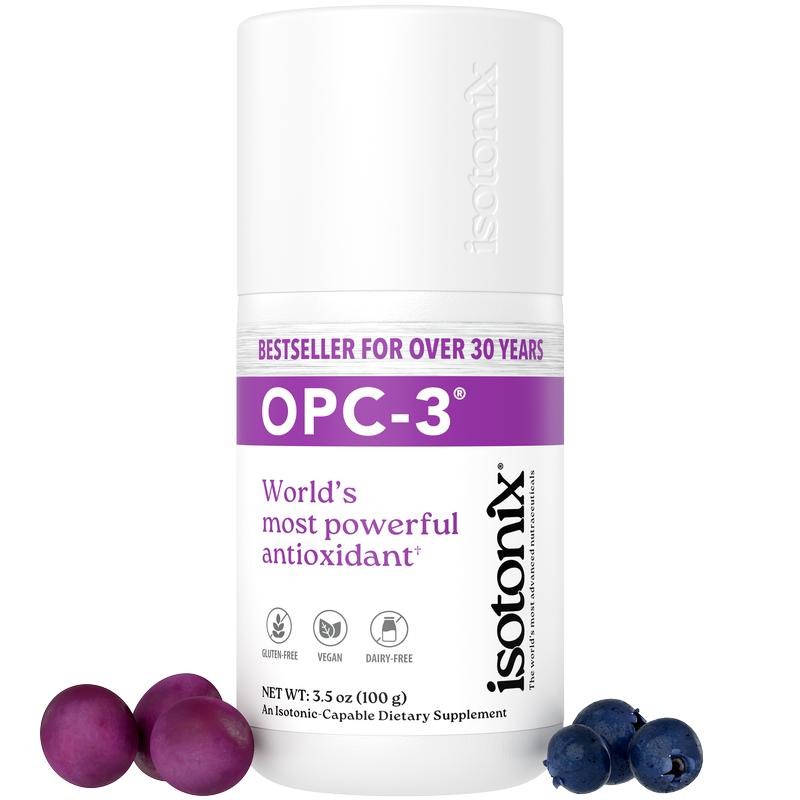
OPC-3 has its own page, OPC-3 benefits, ingredients and side effects, and dosing questions are on can you take OPC-3 every day. We only touch it here where it overlaps.
Product by product: label dose against the published limit
The table uses the amount you’d take following each US label’s directions. A limit isn’t a cliff. NIH defines the upper intake level (UL) as the maximum daily intake unlikely to cause adverse health effects, says the risk of side effects rises past it, and notes, for nutrients such as B6 and niacin, that the limits don’t apply to doses a clinician sets for treatment.
| Product | Label dose per day | Published limit | Where it sits |
|---|---|---|---|
| Magnesium | 400 mg (200 mg per capful, twice daily) | 350 mg from supplements (NIH) | Above |
| Vitamin D with K2 | 125 mcg (5,000 IU) D3, once daily | 100 mcg (4,000 IU) for adults (NIH) | Above |
| Multivitamin With Iron | 40 mg niacin equivalents (NE), as niacin and niacinamide, once daily | 35 mg for adults (NIH, supplemental niacin) | Above |
| Multivitamin Fifty Plus | 37.5 mg vitamin B6 | 100 mg (NIH); 12 mg (EFSA, 2023) | Between the two |
| Calcium Plus | 750 mg calcium (two capfuls) | 2,500 mg ages 19–50; 2,000 mg ages 51+ (NIH) | Below |
| Vitamin C | 500 mg | 2,000 mg for adults (NIH) | Below |
| Multivitamin With Iron / Prenatal | 15 mg / 20 mg iron | 45 mg (NIH) | Below |
| Heart Health Omega III | 900 mg EPA + 600 mg DHA (two softgels) | No UL set; see omega-3 below | Equals the IOM figure NIH cites |
| Astaxanthin | 6 mg | 8 mg a day judged acceptable for adults (EFSA; not a formal upper limit) | Below |
| MochaTonix | 216 mg caffeine per serving | 400 mg a day for most adults (FDA) | Over half, in one serving |
Magnesium
The Isotonix Magnesium label says one capful in the morning and one in the evening, which is 400 mg a day against a 350 mg limit. NIH says high supplemental doses can cause diarrhea, nausea and abdominal cramping, and that kidney problems raise the risk of magnesium building up.
The label agrees: use cautiously with reduced kidney function, do not use it if you’re pregnant or breastfeeding, and stop and call your provider for diarrhea, cramping or discomfort. NIH names carbonate, chloride, gluconate and oxide among the forms most linked to diarrhea; this product uses citrate and glycinate, but the label’s instruction still applies.
Calcium Plus and Vitamin D with K2
Calcium Plus is the milder of the two. NIH lists gas, bloating and constipation for calcium supplements, more often with calcium carbonate, which is one of the five calcium sources on this label. It also says higher supplemental calcium might raise kidney stone risk. The label also lists 200 mg a day of magnesium as oxide and carbonate, two of the forms NIH says are most commonly reported to cause diarrhea.
Vitamin D with K2 is the bigger flag. On the US label, one capful holds 125 mcg (5,000 IU) of D3 against NIH’s 100 mcg (4,000 IU) limit; the Singapore label lists 600 IU. NIH says too much vitamin D raises blood calcium, which can cause nausea, vomiting, muscle weakness and kidney stones, and that taking calcium and vitamin D supplements together may add to the risk. NIH also says signs of toxicity are unlikely below 250 mcg (10,000 IU) a day, though intakes under the limit might still have adverse effects over time.
The US label has the longest warning of the vitamin labels we read. It says not to use the product with digoxin, verapamil, diltiazem, calcipotriene or thiazide diuretics, or with conditions such as primary hyperparathyroidism, sarcoidosis, tuberculosis or lymphoma, and to ask first if you take warfarin. Our review’s advice still holds: get a 25-hydroxyvitamin D blood test before choosing a dose.
Vitamin C
The 500 mg in Isotonix Vitamin C is a quarter of the adult limit. NIH says the common complaints are diarrhea, nausea and abdominal cramps, because unabsorbed vitamin C pulls water into the gut. It flags two groups: people with hereditary hemochromatosis, since vitamin C increases iron absorption, and anyone having chemotherapy or radiation, who should ask their oncologist first.
B-Complex, multivitamins and iron
The Activated B-Complex label lists 6 mg of B6 per capful. The one to watch is the Multivitamin Fifty Plus, with 37.5 mg of vitamin B6 per serving. NIH’s limit is 100 mg. It describes severe nerve damage at far bigger doses (1 to 6 grams a day for a year or more) and notes some reports of nerve problems below 500 mg a day, though studies at an average of 200 mg a day for up to 5 years found none. It also reports that the European Food Safety Authority set a 12 mg limit in 2023. The practical point is overlap: add up B6 from every product. MochaTonix also lists 16 mg per scoop, above EFSA’s 12 mg and well under NIH’s 100 mg.
Niacin is the other overlap. The Multivitamin With Iron label lists 40 mg niacin equivalents (NE), as niacin and niacinamide, against NIH’s 35 mg limit for supplemental niacin, which NIH says applies to both forms. The Activated B-Complex adds 20 mg NE, so the Daily Essentials kit totals 60 mg.
NIH bases that limit on skin flushing. It says 30 to 50 mg or more of nicotinic acid typically causes flushing, with burning, tingling and itching that it calls unpleasant rather than toxic, though flushing can come with headache, rash, dizziness or a drop in blood pressure. Niacinamide doesn’t cause flushing, and the label doesn’t say how the 40 mg splits between the two forms, so we can’t say what you’d get.
The Multivitamin With Iron carries 15 mg of iron and the prenatal 20 mg. NIH lists constipation, nausea and stomach upset for high-dose iron, says food helps, and notes that the American Association for the Study of Liver Diseases recommends that hemochromatosis treatment include avoiding iron and vitamin C supplements. Keep iron away from children: the warning FDA requires on iron tablets and capsules (not powders) says accidental overdose is a leading cause of fatal poisoning in children under 6, and the Multivitamin With Iron and Prenatal labels both say to keep the product out of the reach of children.
Digestive Enzymes, probiotics and Bromelain Plus
Which Isotonix Digestive Enzymes bottle you get depends on your store. The US, Singapore, Australia, Hong Kong and Taiwan stores sell a probiotic version; Canada, Malaysia and Indonesia sell enzyme-only versions. The US label lists per capful a 100 mg multi-enzyme complex and 150 million CFU of Bacillus coagulans, taken with or right after a meal.
Cleveland Clinic lists constipation, nausea, stomach cramps and diarrhea for enzyme supplements. For versions with a probiotic, NCCIH says the risk of harm is greater with severe illness or weakened immune systems. Harvard Health says pregnant or breastfeeding women and young children should check with a doctor before a lactase product, and this blend contains lactase.
Bromelain Plus (544 mg bromelain, 100 mg white willow bark extract, 70 mg protease) carries a detailed label warning. The label says to ask your provider first if you take warfarin or any antiplatelet or anticoagulant, or have a bleeding disorder, or liver or kidney disease. Skip it if you’re allergic to pineapple or aspirin, have peptic ulcers, or are pregnant or breastfeeding.
NCCIH lists stomach upset and diarrhea for bromelain. Memorial Sloan Kettering adds allergic reactions, and says willow bark can cause aspirin-like effects such as stomach discomfort and rash and shouldn’t be given to children because of Reye syndrome.
Antioxidants: OPC-3, resveratrol, astaxanthin
The US OPC-3 label lists 25 mg each of grape seed, red wine, pine bark, bilberry and citrus bioflavonoid extracts per capful. The caution to carry over is bleeding: Memorial Sloan Kettering says pine bark extract may raise bleeding risk with blood thinners. NCCIH says to check with your provider if you take any medicine, and that little is known about grape seed extract in pregnancy. The full OPC-3 notes are on its own page.
Resveratrol is harder to size up because the label lists extract amounts (200 mg of a grape extract labeled 5% resveratrol, 10 mg of a grapevine extract) rather than a total resveratrol figure, so we have no dose to set against a limit. Memorial Sloan Kettering lists nausea, gas, abdominal pain and diarrhea at high doses, and bleeding risk with warfarin. The Isotonix label itself says not to use it if you take warfarin or any other antiplatelet or anticoagulant drug. It also asks women with a history of estrogen-sensitive cancers, such as breast, ovarian or uterine, to consult their provider before using it.
Astaxanthin is 6 mg a stick pack. EFSA’s 2020 opinion judged 8 mg a day from supplements acceptable for adults, but found children under 14 would exceed its intake guideline if that dose were added to a high-intake diet.
Caffeine products: MochaTonix, Acai, Turn Up
FDA cites 400 mg of caffeine a day as an amount not generally associated with negative effects for most adults. A serving of MochaTonix has 216 mg of caffeine before any coffee, plus bitter orange standardized to synephrine, guarana, green tea and yerba maté, per our review.
NCCIH says cases of abnormal heart rhythm, heart attack and stroke have been reported in people taking bitter orange products, mostly multi-ingredient ones, so the cause is unclear, and that studies disagree on blood pressure and heart rate. FDA’s too-much-caffeine list: increased heart rate, palpitations, high blood pressure, insomnia, anxiety, jitters, upset stomach, nausea and headache.
Acai and Turn Up have 24 mg of caffeine each, and both US labels carry the same do-not-use list: no use with MAOIs or ACE inhibitors, or with PKU, high blood pressure, thyroid disease, schizophrenia or bipolar disorder. Acai’s label also says none in pregnancy or breastfeeding, while Turn Up’s says to consult your provider first. Turn Up also carries 200 mg of magnesium per stick pack, with the same reduced-kidney-function caution as the Magnesium label, so count it with any other magnesium.
The MochaTonix Cappuccino and Vanilla labels say not to use it with MAOI drugs such as antidepressants, to avoid it if you have PKU, and that it’s for adult use only. They list milk and soy as allergens (Chocolate Mocha lists milk) and say not to use it if you’re allergic to any ingredient. The official photos don’t show a warning panel for Chocolate Mocha. Guarana is itself a stimulant, so Memorial Sloan Kettering says to talk to your provider if you take other stimulants. It also says guarana and ginkgo may raise bleeding risk with blood thinners. Guarana is in all three products and ginkgo is in MochaTonix, which is why they appear in the warfarin row of the medicines table.
Omega-3 and Ultimate Aloe
NIH lists unpleasant taste, bad breath, heartburn, nausea, stomach discomfort, diarrhea and headache for omega-3 supplements. The Heart Health Omega III serving is 900 mg EPA plus 600 mg DHA. Its label’s allergen line says it contains fish (sardines, anchovies, mackerel).
NIH says the Institute of Medicine noted that amount a day, or more, for several weeks might reduce immune function, and also reports that EFSA found no bleeding or immune effects shown at up to about 5 g a day, with FDA reaching a similar conclusion. Those positions differ, so ask your provider if you take it daily. The label itself says to consult your healthcare provider before using it if you take warfarin (Coumadin), other antiplatelet or anticoagulant drugs or any other prescription drug.
Most of NCCIH’s aloe cautions concern latex and whole-leaf extracts: abdominal pain, cramps and diarrhea from latex, and cases of hepatitis tied to leaf extracts.
The Ultimate Aloe label lists aloe from the inner leaf and says to stop use in the event of an allergic reaction, and our review notes the label says it’s tested low in aloin and emodin. NCCIH’s safety statement covers short-term use of oral aloe gel, up to 42 days. We couldn’t find a statement on daily use beyond that, so tell your provider if you plan to drink it for months.
Where the numbers add up: stacking products
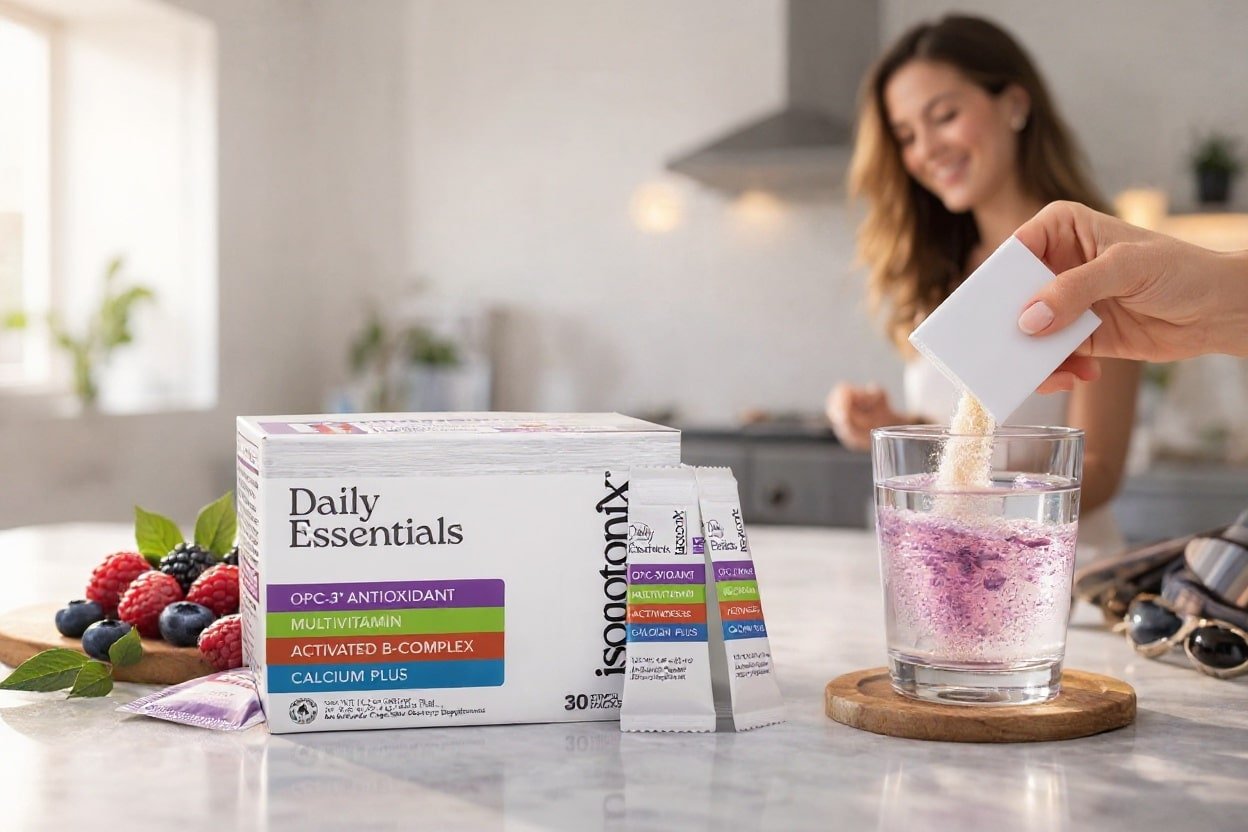
Taking more than one product is where totals creep up. The Daily Essentials kit with iron bundles OPC-3, Multivitamin With Iron, Activated B-Complex and Calcium Plus. On the US labels, at one capful each and two of Calcium Plus, the daily totals look like this, with and without standalone Magnesium and Vitamin D with K2 added.
| Nutrient | Kit alone | Kit + Magnesium + D with K2 | NIH limit |
|---|---|---|---|
| Magnesium | 225 mg | 625 mg | 350 mg |
| Vitamin D3 | 50 mcg | 175 mcg | 100 mcg |
| Calcium | 800 mg | 800 mg | 2,500 mg (19–50) / 2,000 mg (51+) |
| Vitamin B6 | 10 mg | 10 mg | 100 mg |
| Iron | 15 mg | 15 mg | 45 mg |
| Niacin | 60 mg NE | 60 mg NE | 35 mg |
The kit alone is under five of the six limits, with niacin the exception. Add the two standalone products and three of the six rows pass the line. Other supplements count toward these numbers too, and so do magnesium-containing medicines such as antacids; none of them are in the table. Whether food counts depends on the nutrient. NIH says its iron and B6 limits cover food as well as supplements, but the magnesium limit includes only magnesium from supplements and medicines, not from food and drink, and the niacin limit applies only to supplemental niacin. Its calcium and vitamin D sheets don’t state the scope. These limits are set for healthy people and aren’t a danger line; NIH says only that the potential risk of adverse effects increases above them. The separate Daily Essentials Packets have different totals: at one 13.4 g stick pack a day, the US label lists 125 mg magnesium, 37.5 mcg vitamin D3, 440 mg calcium, 10 mg vitamin B6 and 60 mg NE niacin, with no iron line, so only niacin is over the limits above.
Does the isotonic format add risk?
The NIH pages used here tie side effects to ingredients and doses, not to how a powder is delivered. We haven’t found a study comparing side effects of isotonic drinks with capsules, so we won’t say the format helps or hurts. Our isotonic explainer covers what it is, and the labels say the product is isotonic when the specified amounts are used.
Two practical points. Label doses are per serving, and a serving isn’t always one capful: it’s two for Multivitamin Fifty Plus, Prenatal and Acai, three small capfuls for Bromelain Plus, a stick pack for Turn Up and Astaxanthin, and a 20 g scoop for MochaTonix. A heaped scoop adds to the dose, and our multivitamin review notes the fine powder is easy to over-pour.
And timing: most labels say empty stomach for maximum absorption, while Vitamin D with K2, Digestive Enzymes and Heart Health Omega III say with a meal. Our mixing guide says food is fine if a product upsets your stomach, and NIH says food eases iron and calcium side effects. If a label gives a stop rule, as Magnesium’s does for diarrhea, cramping or discomfort, follow it. Otherwise change the timing, not the capful.
Medicines: who should check first
This table lists the interactions we could verify against NIH, Memorial Sloan Kettering or the US labels. It isn’t complete. Give your pharmacist the exact product names.
| If you take | Check these | What the source or label says |
|---|---|---|
| Warfarin or other blood thinners | Vitamin D with K2, Bromelain Plus, OPC-3, CoQ10 products, resveratrol, Heart Health Omega III (fish oil), MochaTonix, Acai, Turn Up | NIH: vitamin K can interact seriously with warfarin, so keep intake consistent. The D with K2, Bromelain Plus and Heart Health Omega III labels say to consult first, and the Resveratrol label says not to use it with warfarin or other antiplatelet or anticoagulant drugs. Memorial Sloan Kettering flags bleeding risk with pine bark, CoQ10, resveratrol, willow bark, guarana (in MochaTonix, Acai and Turn Up) and ginkgo (in MochaTonix). NIH: fish oil might raise INR, though most research at 3 to 6 g a day found no significant effect. |
| Levothyroxine (thyroid hormone) | Calcium Plus, Multivitamin With Iron, Prenatal | Calcium carbonate and iron can interfere with absorption. The FDA labeling NIH cites says to keep levothyroxine at least 4 hours apart from each. |
| Tetracycline or quinolone antibiotics | Magnesium, Calcium Plus, Bromelain Plus | NIH: take these antibiotics 2 hours before or 4 to 6 hours after magnesium, and quinolones 2 hours before or after calcium. Memorial Sloan Kettering: bromelain may raise tetracycline levels. |
| Osteoporosis pills (bisphosphonates) | Magnesium | NIH: take them at least 2 hours apart. |
| Thiazide diuretics, digoxin, verapamil, diltiazem | Vitamin D with K2 | The label says not to use it with these. NIH adds that thiazides plus vitamin D can raise blood calcium. |
| MAOIs, ACE inhibitors, other stimulants | Acai, MochaTonix, Turn Up | The Acai and Turn Up labels say not to use them with MAOIs or ACE inhibitors, and the MochaTonix Cappuccino and Vanilla labels say not to use it with MAOI drugs such as antidepressants. Memorial Sloan Kettering says to talk to your provider about guarana if you take stimulants. |
| Chemotherapy or radiation | Vitamin C and other antioxidants | NIH: antioxidant supplements might reduce the effectiveness of some chemotherapy. Ask your oncologist first. |
Pregnancy, nursing and children
NIH says to be cautious about supplements beyond a standard prenatal if you’re pregnant or nursing, and careful about giving them to a child unless a provider recommends it. Here is where the US labels land:
- Do not use: Magnesium, Bromelain Plus, Acai, MochaTonix (Cappuccino and Vanilla) and Isochrome. Each label says not to use the product if you’re pregnant or breastfeeding.
- Consult your provider first: every other label we read, including Turn Up, Resveratrol, Calcium Plus, Vitamin D with K2, B-Complex, Vitamin C, both multivitamins, Digestive Enzymes, Heart Health Omega III, Astaxanthin, Aloe and OPC-3.
- Source cautions: NCCIH says oral aloe may be unsafe in pregnancy and breastfeeding, that bitter orange may not be, and that little is known about bromelain and grape seed extract. FDA says to talk to your provider about caffeine if you’re pregnant, trying or breastfeeding.
The prenatal label lists 20 mg iron against the 45 mg limit, 810 mcg DFE folate, and vitamin A as beta-carotene. NIH says the birth-defect risk from excess vitamin A applies to retinol and other preformed forms, not beta-carotene. Don’t double up with a second prenatal, and see our ingredient-by-ingredient prenatal Q&A.
For children, the US OPC-3 label gives directions for ages 4 and older, and the MochaTonix label says adult use only. The other directions we read don’t mention an age, so ask a pediatric provider first. Astaxanthin, the willow bark in Bromelain Plus and iron have child-specific cautions above, and FDA notes that medical experts advise against energy drinks for children and teens.
When to stop, and how to report a problem
- Stop and call your provider for diarrhea, cramping or lasting stomach discomfort (the Magnesium label says this), a racing heart, or any reaction you think the product caused. NIH says to tell your provider about a bad reaction.
- Call 911 or your local emergency number for signs of anaphylaxis: hives, swelling of the lips or tongue, throat tightness, trouble swallowing or breathing, wheezing, chest tightness, a weak pulse or fainting.
- NIH ties very high magnesium doses, such as laxatives and antacids providing more than 5,000 mg a day, to low blood pressure, vomiting, trouble breathing and irregular heartbeat, and excess vitamin D to nausea, vomiting and muscle weakness. Label doses are far below the magnesium figure, but if you feel that way while taking either product, get medical help.
In the US, report to FDA through MedWatch or its Safety Reporting Portal (FDA’s consumer page points supplement reports to the portal), or call 800-FDA-1088. FDA says to contact your health care professional first. In Canada, Health Canada takes consumer reports on natural health products online or by mail to a Canada Vigilance office, and you can file with your doctor, nurse or pharmacist. Elsewhere, ask your local pharmacist or health authority; we haven’t verified those systems.
Tell the maker too. NIH says to report a reaction to the manufacturer using the contact details on the label, and the official store has a contact page (linked in Sources). Keep the bottle or box: several of the labels we read point to a lot number and best-when-used-by date printed on the packaging.
Frequently asked questions
What are the side effects of taking Isotonix products?
Does Isotonix Daily Essentials have side effects?
Does Isotonix Digestive Enzymes have side effects?
Does Isotonix Calcium Plus have side effects?
Is there a probiotic in Isotonix OPC-3, and are there side effects?
What are the side effects of an OPC supplement?
Can Isotonix cause diarrhea?
Can I take Isotonix with prescription medicine?
How do I report a bad reaction to Isotonix?
“Side effects here follow the ingredient and the dose, and three US label doses sit above NIH limits, so they deserve a conversation with your doctor.”
If you take Magnesium twice a day, Vitamin D with K2 or the Multivitamin With Iron, ask your provider whether that dose fits you (for vitamin D, ideally with a blood test). If you take blood thinners, thyroid pills or certain antibiotics, or you’re pregnant, nursing or managing a condition, show your pharmacist or provider the labels before you start. Otherwise add one product at a time, use the marked capful, and stop and call someone if your stomach, heart or skin reacts.

See the Subscribe and Save option →
Sources
- NIH Office of Dietary Supplements, Dietary Supplements: What You Need to Know.
- NIH Office of Dietary Supplements fact sheets for health professionals: Magnesium, Calcium, Vitamin D, Vitamin K, Vitamin C, Vitamin B6, Niacin, Iron, Omega-3 Fatty Acids, Multivitamin/Mineral Supplements.
- NCCIH: Aloe Vera, Bromelain, Grape Seed Extract, Bitter Orange, Probiotics: Usefulness and Safety.
- Memorial Sloan Kettering About Herbs: Pine Bark Extract, Resveratrol, Willow Bark, Bromelain, Coenzyme Q10, Guarana, Ginkgo.
- EFSA NDA Panel (2020), Safety of astaxanthin for its use as a novel food in food supplements, EFSA Journal 18(2):e05993 (PMID 32874213).
- FDA, Spilling the Beans: How Much Caffeine Is Too Much?.
- FDA reporting: FDA 101: How to Use the Consumer Complaint System and MedWatch and MedWatch: reporting serious problems.
- Health Canada, Consumers: report a side effect of a natural health product.
- MedlinePlus, Anaphylaxis.
- Cleveland Clinic, Digestive Enzymes: What They Are and Supplements; Harvard Health, Digestive enzymes: how supplements like Lactaid and Beano can help with digestion.
- US Supplement Facts and warning text, read from the label images on the official store pages: Magnesium, Calcium Plus, Vitamin D with K2, Activated B-Complex, Vitamin C, Multivitamin Fifty Plus, Multivitamin With Iron, Prenatal Activated Multivitamin, Digestive Enzyme with Probiotics, OPC-3, Astaxanthin, Ultimate Aloe, Daily Essentials Kit (With Iron), Daily Essentials Packets, Bromelain Plus, Acai Advanced Energy, Turn Up, MochaTonix, Resveratrol, Isochrome, Heart Health Omega III. Store contact page: marketamerica.com/pages/contact.
Related reading
-
 ExplainerWhat Is OPC-3? Benefits, Ingredients & Side Effects (2026)The OPC-3 side-effect notes, on their own page.
-
 ReviewIsotonix Daily Essentials Review: Is the 4-in-1 Stack Worth It? (2026)What the four-product kit contains and when the bundle math works.
-
 GuideIs Isotonix Prenatal Safe During Pregnancy? (Ingredient-by-Ingredient)Questions to bring to your OB before you start.