 Inspire
MYKOS Granular vs WP: Which One Should You Actually Buy?
Updated June 2026 · 6 min read · ✓ Fact-checked
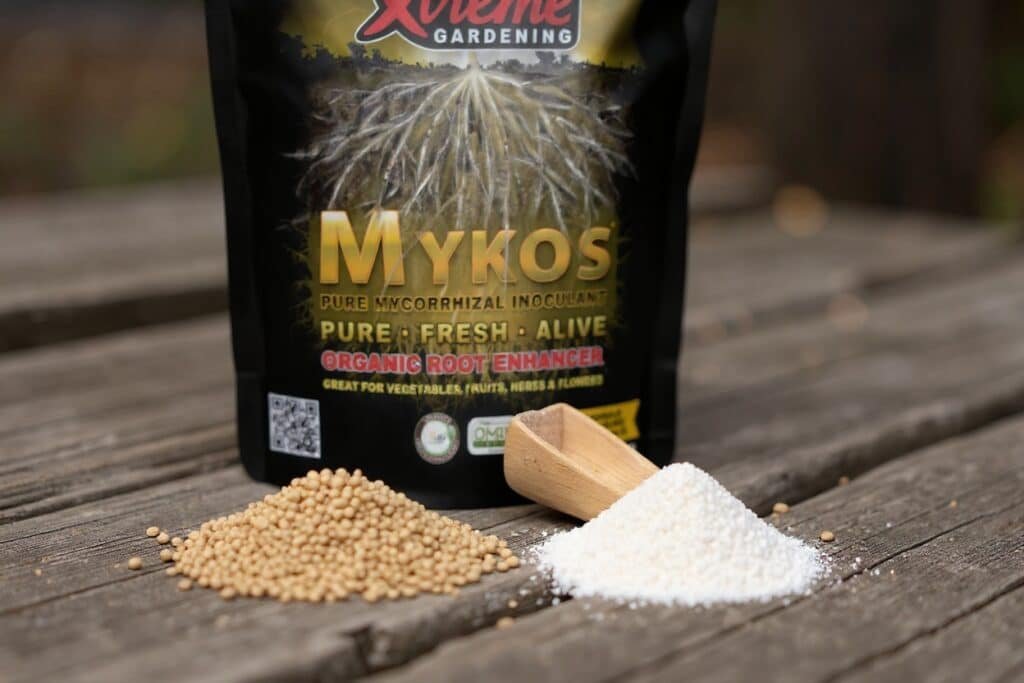
MYKOS Granular and MYKOS WP get treated like two versions of the same purchase, grab whichever’s cheaper and apply it however’s convenient. They’re not. The fungus inside both bags is identical, the format is the only real difference, and that format decides where the product is actually safe to use. Treat WP like a fully soluble nutrient in a recirculating reservoir, and you’re the one scrubbing residue out of a bucket a week later.
MYKOS Granular vs MYKOS WP: If you mostly transplant into soil, coco, or potting mix, MYKOS Granular is the safer, more forgiving choice because it’s designed to be placed right on roots. If you need something you can mix into water for drenches, drip, or occasional reservoir use (with some caution), MYKOS WP is the more flexible option. The biggest difference is simple: Granular is “root contact at transplant.” WP is “water delivery with more clog risk.”
We’re writing this like we’d explain it at a hydro shop counter. Not hype. Just what actually matters when you’re spending real money and you don’t want to mess up a run. If you only remember one thing from this MYKOS Granular vs MYKOS WP comparison, remember this: mycorrhizae works best when it touches roots early.
Key takeaways
- The fungus itself is identical between the two. The delivery method, granular versus wettable powder, is the entire difference.
- Granular wins for a simple transplant-and-forget habit. WP earns its keep for drenches, drip systems, or when you want to measure precisely.
- Mixed WP shouldn’t sit around once prepared. Use small batches quickly rather than mixing a big batch in advance.
- Granular tends to feel like better value in practice, not on paper, because it wastes less product per use.
Our picks
Comparison table (fast decision)
| Feature | MYKOS Granular | MYKOS WP |
|---|---|---|
| Best for transplant hole | Excellent. Easiest “drop it where roots sit” method. | Good, but you are mixing and measuring instead of sprinkling. |
| Best for hydro drip | Not ideal. | Better fit for drip and drenches if you manage residue. |
| Beginner friendly | Very high. Hard to overthink. | Medium. Needs mixing and a little common sense. |
| Mess factor | Low. Sprinkle and move on. | Medium. Powder + mixing can be annoying when you are in a rush. |
| Cost per transplant | Usually feels cheaper because you use tiny amounts with intent. | Can be efficient, but only if you are consistent and do not waste mix. |
| Risk of misuse | Low. Root contact is straightforward. | Higher. People treat it as fully soluble and then hate the residue. |
| Propagule concentration | ~300 propagules/gram (Rhizophagus intraradices) | ~250 propagules/gram (Rhizophagus intraradices) |
| Sizes available | 100 g, 1 lb, 2.2 lb, 20 lb, 50 lb | 12 oz, 2.2 lb, 15 lb, 50 lb |
MYKOS Granular vs MYKOS WP: quick pick (which one should you buy)
- Buy MYKOS Granular if you transplant into soil, coco, or potting mix and you want a routine you will actually repeat.
- Buy MYKOS WP if you want a water-mix option for drenches or drip, and you’re willing to manage residue risk.
- If you run true recirculating hydro (DWC/RDWC), read the hydro section before you assume WP is “set and forget.”
What actually changes between MYKOS Granular and MYKOS WP
The fungus isn’t the “wow” part here. The delivery method is.
Granular is built for direct placement during transplant. That’s the easiest way to guarantee root contact. It’s hard to mess up.
WP (wettable powder) is built for mixing and applying through water. That convenience is real, but it comes with a tradeoff. If you treat it like a perfectly soluble nutrient, you can get buildup or clogging issues.
There is one hard spec difference beyond delivery format, and it’s worth knowing before you assume the two bags are otherwise interchangeable. Per Xtreme Gardening’s own product specifications, MYKOS Granular is manufactured at roughly 300 propagules per gram, while MYKOS WP is formulated at roughly 250 propagules per gram. Both are the same single species, Rhizophagus intraradices, so neither bag is diluted with a different fungus. Gram for gram, though, Granular is carrying a bit more inoculant per dose, which is worth factoring into any value comparison.
If you want a neutral explainer on mycorrhizae basics, this is a decent overview: What mycorrhizae are (overview).
MYKOS Granular vs MYKOS WP: application method comparison table
| Feature | MYKOS Granular | MYKOS WP |
|---|---|---|
| Best for transplant hole | Excellent. Easiest “drop it where roots sit” method. | Good, but you are mixing and measuring instead of sprinkling. |
| Best for hydro drip | Not ideal. | Better fit for drip and drenches if you manage residue. |
| Beginner friendly | Very high. Hard to overthink. | Medium. Needs mixing and a little common sense. |
| Mess factor | Low. Sprinkle and move on. | Medium. Powder + mixing can be annoying when you are in a rush. |
| Cost per transplant | Usually feels cheaper because you use tiny amounts with intent. | Can be efficient, but only if you are consistent and don’t waste mix. |
| Risk of misuse | Low. Root contact is straightforward. | Higher. People treat it as fully soluble and then hate the residue. |
| Propagule concentration | ~300 propagules/gram (Rhizophagus intraradices) | ~250 propagules/gram (Rhizophagus intraradices) |
| Sizes available | 100 g, 1 lb, 2.2 lb, 20 lb, 50 lb | 12 oz, 2.2 lb, 15 lb, 50 lb |
Hydro (DWC/RDWC/drip): the clogging reality check
Here’s where we get blunt. The phrase “works in hydro” is doing a lot of work.
In drip systems or coco with drip feeding, MYKOS WP can make sense because you still have a medium for colonization and the irrigation path isn’t always as sensitive as a tiny recirculating valve.
In DWC/RDWC, you are asking a powder product to behave perfectly in a bucket that recirculates. Some buyers report a ring of buildup or residue. That doesn’t mean WP “doesn’t work,” it means you have to use it in a way that doesn’t turn your system into a science project.
Our shop-counter rule is simple: if you run DWC/RDWC and hate cleaning, don’t add anything that leaves residue unless the payoff is worth the maintenance.
How we use it (simple routine that actually gets repeated)
We keep it boring on purpose. Boring gets done.
- At transplant: Granular goes in the hole or lightly on the root ball.
- If using WP: mix small batches and use it quickly. Do not let it sit forever in a bucket like it’s plain water.
- Do not chase perfection: root contact matters more than doing a complicated ritual.
If you were expecting instant fireworks, sorry. This is fungi. It is more “steady improvement” than “overnight glow up.”
Cost per transplant: why people still pay for this
Most growers aren’t trying to be cheap. They are trying to reduce risk. Losing plants to transplant shock is expensive and annoying.
Granular tends to feel like the better value for most people because it’s so easy to use correctly that you actually keep using it.
WP can be a great value too, especially if you are doing lots of plants and you like water-based application. The catch is you have to use it in a way that doesn’t create maintenance issues.
To make that concrete: Xtreme Gardening’s own dosing chart calls for about 1-2 tablespoons of Granular per 1-3 gallon container, scaling up to roughly 1 cup for a 25-50 gallon container (rock wool cubes and in-ground holes need even less, around 1-2 teaspoons or tablespoons per plant). WP is dosed by the gallon of mixed water instead, around 1 tablespoon per gallon for a reservoir or root drench, scaling to about 1 cup per 100 gallons. Because Granular’s dose sits directly on the roots you’re already digging into, there’s no water volume to calculate and no leftover mix to waste. That’s the real source of the “feels cheaper” reputation, not a lower shelf price.
Real review patterns (what buyers keep repeating)
Across both versions, the themes are extremely consistent:
- When people apply it early and close to roots, they report stronger root development and faster recovery after transplant.
- People love WP convenience, but some complain it’s “not fully soluble” and they see buildup in buckets.
- Granular is praised for being simple and repeatable. It is the “I will actually use it” product.
Frequently asked questions
Is MYKOS WP better than MYKOS Granular?
Not automatically. MYKOS WP is better when you need water-mix flexibility. MYKOS Granular is better when you want the simplest transplant routine with the lowest chance of messing it up.
Can I use MYKOS WP in DWC or RDWC?
You can, but use it carefully. Some users report residue or buildup in buckets. If your system clogs easily or you hate cleaning, you may want to skip it or use it only in small, fast-used batches.
Do I need to reapply mycorrhizae every watering?
Usually no. Most growers get the best “bang for effort” by applying at transplant moments so you guarantee root contact.
Which is better for flowering plants?
Both can work, but the timing matters. Apply early (during transplant or early veg) so the relationship is established before heavy flowering.
The Bottom Line
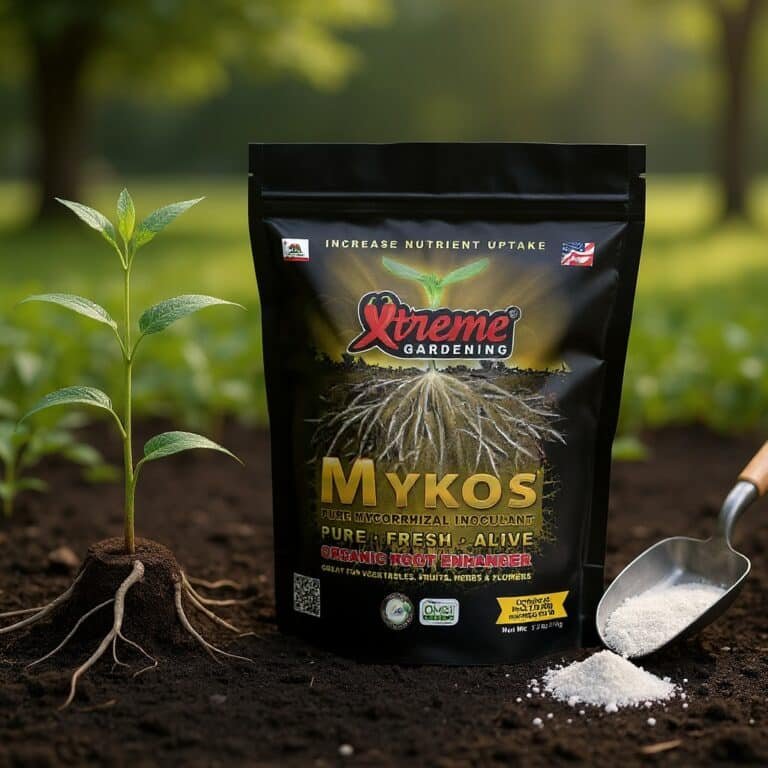
If you are transplanting into soil, coco, or potting mix, MYKOS Granular is the safer, more forgiving choice, it is built to be placed right on roots. Reach for MYKOS WP only when you specifically need a water-mixed drench or drip application, and accept the extra clog risk that comes with it.
One more number worth remembering: gram for gram, Granular carries more propagules, about 300/g versus WP’s roughly 250/g, so if you end up comparing bags by weight rather than by price tag, that’s a small tilt in Granular’s favor too.
Related reading
-
 Plant Care & GardeningGaia Green 4-4-4 vs 2-8-4: Which Fertilizer Should You Use First?Gaia Green 4-4-4 vs 2-8-4: which organic fertilizer is right for your garden? The key difference is phosphorus, and when you switch matters more than most guides admit.
 -
 Plant Care & GardeningMosquito Dunks for Standing Water: 6 Pack vs 20 Pack (What We’d Buy)Mosquito Dunks for standing water: 6-pack vs 20-pack compared — which size to buy, how many you need per season, and how to apply them without wasting product.
 -
 CanadaBest Mosquito Control for Standing Water in Canada (Homeowner Guide)Best mosquito control for standing water in Canada: 5 tested options ranked by effectiveness, safety near wildlife, and value. Includes biocontrol and chemical picks.