 Inspire
Best Faucet Water Filter 2026 (US & Canada Picks)
4 faucet-mount filters compared on real flow rate, filter life, and what their NSF numbers actually certify, not what the box implies.
July 13, 2026 · 10 min read · Contains affiliate links
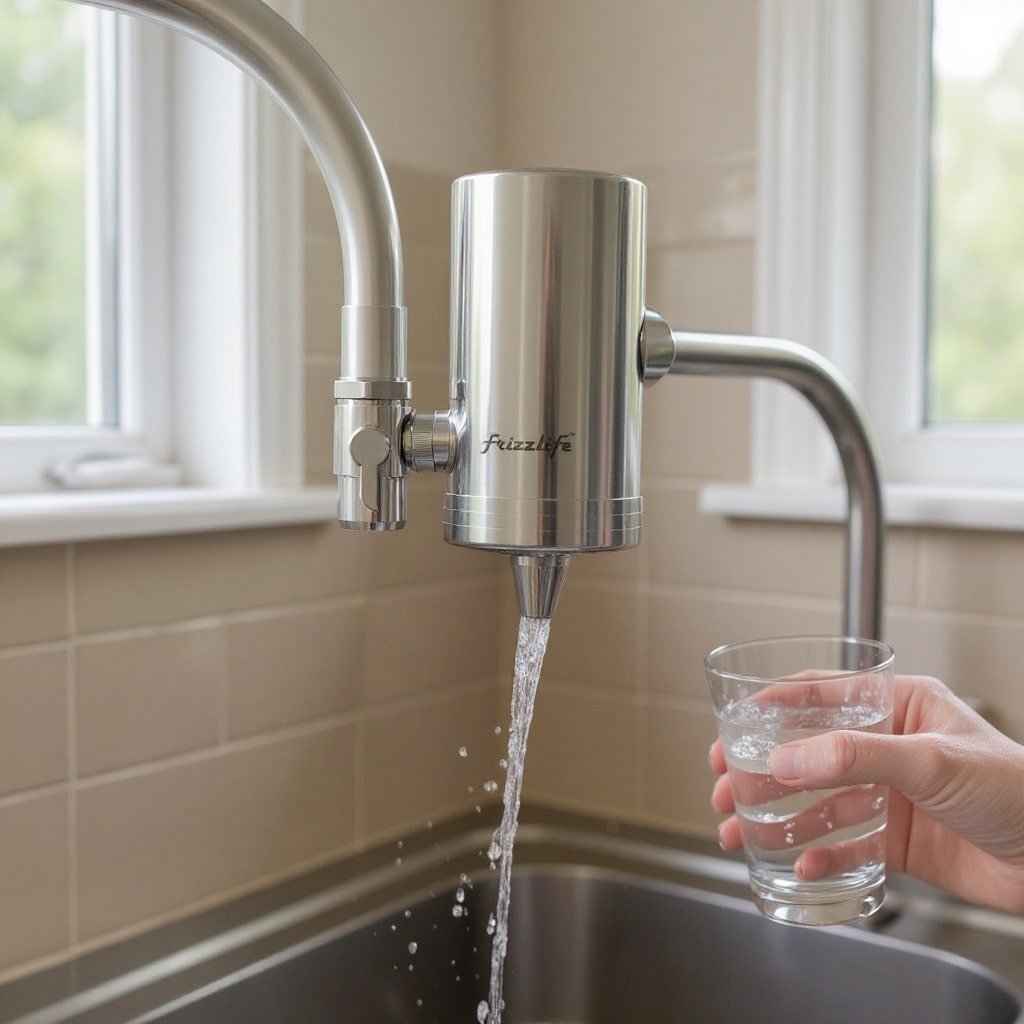
Check which specific NSF standard covers the contaminant you actually care about, not just whether “NSF” appears on the box.
- Waterdrop WD-FC-01: best overall, NSF 42 certified with the longest certified filter life here.
- Frizzlife FS99: fastest flow and longest raw filter life, but no published NSF certification for this model.
- Brita Basic: best budget, the most-reviewed and most recognized of the four.
Some links below pay us a referral fee. Doesn’t change our picks.
Key takeaways
A faucet-mount filter is the cheapest, fastest way to get filtered water at one tap, no plumber, no under-sink space needed. But “certified” and “certified for what you actually care about” are two different claims, and the four filters here range from a fully NSF 42-certified pick to one with no published third-party certification at all. We compared real flow rate, real filter capacity, and what each brand’s certification actually covers, not just whether the word “NSF” shows up in the marketing copy.
Compare all 4 at a glance
| Model | Filter life | Flow rate | NSF certified | Price |
|---|---|---|---|---|
| Waterdrop WD-FC-01 | 320 gal / ~3 mo | 1.3 GPM | NSF 42 (chlorine); NSF 372 (lead-free housing, not lead removal) | ~$25–40 |
| Frizzlife FS99 | 350 gal / ~3 mo | 2.0 GPM | Not published for this model | ~$38 |
| Brita Basic | 100 gal / 4 mo | Not published | NSF 42, 53, 401 | ~$20–27 |
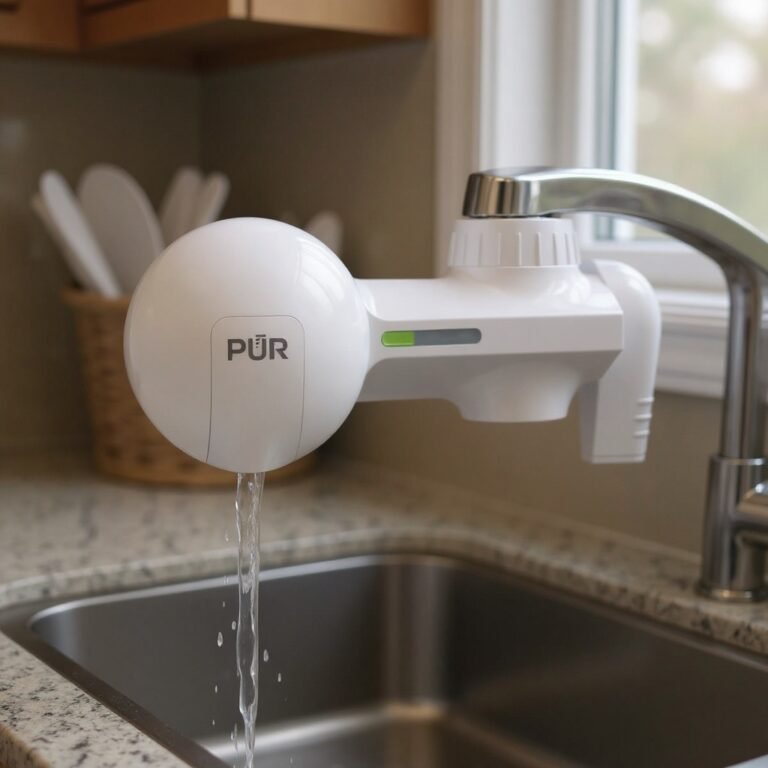
| PUR PFM150W | 100 gal / 3 mo | 0.44 GPM | Manufacturer claims 70+ contaminants incl. lead (see caveat below) | ~$25–40 |
Prices fluctuate; figures above are a recent snapshot, not a locked-in claim.
NSF 42 vs. NSF 53: the distinction the box doesn’t explain
NSF 42 certifies aesthetic effects only: chlorine taste and odor. It says nothing about lead, nothing about any contaminant that could actually make you sick. Almost every decent filter carries it.
NSF 53 certifies health effects: lead, VOCs, cysts, and other specific contaminants, but only the ones actually listed on that model’s certification sheet. A filter certified to NSF 53 for cyst reduction isn’t necessarily certified for lead reduction. You have to check the specific contaminant list, not just the standard number.
The trap: a box that says “NSF certified” with no further detail is technically accurate whether it means “certified for chlorine taste” or “certified for lead.” Those are very different claims wearing the same three letters. Before you buy for a specific concern (lead in older plumbing, for instance), check the manufacturer’s actual certification sheet or NSF’s own product listing at nsf.org, not just the box copy.
Our picks
This section contains affiliate links — we may earn a commission at no extra cost to you. See our full evaluation policy at the end of this guide.
Ranked on real flow rate, filter capacity, and what’s actually certified, not just what’s claimed.
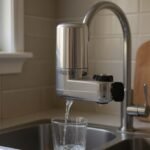
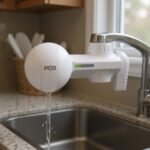
Faucet filter vs. under-sink vs. pitcher, honestly
All three filter on different terms. A pitcher has zero line pressure, pure gravity, batch by batch, the slowest of the three but needs no installation. A faucet filter runs off your actual water pressure, so it’s fast enough for real use but limited to one small cartridge, which caps how much it can certify for. An under-sink unit also runs off line pressure but has room for a larger, multi-stage cartridge, which is why under-sink systems typically carry a broader certified contaminant list than any faucet filter.
On cost, faucet filters are the cheapest to buy ($20–40) but not always the cheapest to run, small cartridges need replacing more often. Under-sink systems cost more upfront (often $150–250) but frequently win on cost-per-gallon at real household volume.
The honest bottom line: a faucet filter is a good fix for chlorine taste and basic lead reduction in a rental or small household. It is not a substitute for a certified under-sink or whole-house system if you’re dealing with well-water-specific issues like iron, hardness, or bacteria, no $25–40 faucet cartridge is doing that job. If that’s your situation, see our well water testing guide and under-sink filter picks instead.
Frequently asked questions
Does a faucet filter actually remove lead?
Only if it’s certified to NSF 53 with lead specifically listed on its certification sheet, not just “NSF certified” generally. Of the four here, Brita’s NSF 53 certification covers lead; PUR claims lead reduction but we couldn’t independently verify the certificate; Waterdrop and Frizzlife are certified or marketed for chlorine, not lead specifically. Check the manufacturer’s actual certification listing before relying on any faucet filter for lead.
What does NSF 372 actually mean?
NSF 372 certifies that a product’s wetted surfaces meet “lead-free” material requirements, meaning the filter housing itself doesn’t leach lead into your water. It says nothing about whether the filter removes lead that’s already in your water supply. Those are two different claims that get conflated constantly in marketing copy.
How often do I really need to change the cartridge?
Whichever comes first: the stated gallon capacity or the stated month range, both are real limits, not just marketing suggestions. A cartridge run well past its rated capacity stops filtering effectively and can become a place where bacteria grows, since it’s no longer being flushed through active media at the same rate.
Will a faucet filter slow down my water pressure?
Yes, some. All four filters here have a published flow rate well under a typical unfiltered faucet’s output, that’s inherent to forcing water through a filter cartridge. Frizzlife’s 2.0 GPM is the fastest of the four; PUR’s 0.44 GPM is noticeably slower for filling a pot or large glass.
Is a faucet filter enough if I’m on well water?
Usually not as your only treatment. Faucet filters are built to handle municipal-water-level chlorine and general taste issues. Well water often has iron, hardness, sulfur, or bacteria concerns that need dedicated treatment, a water softener, sediment filter, or UV system, not a $25–40 faucet cartridge. Get your well tested first.
Waterdrop WD-FC-01
NSF 42 certified, longest certified filter life, widely available
Want the fastest flow? The Frizzlife FS99 fills a glass noticeably quicker, no NSF cert published though.
Ships to the US and Canada. Coupon code INSPIRE for 10% off.
Just want the cheapest, most-trusted option? Brita Basic is NSF certified across 3 standards.
Related reading
-
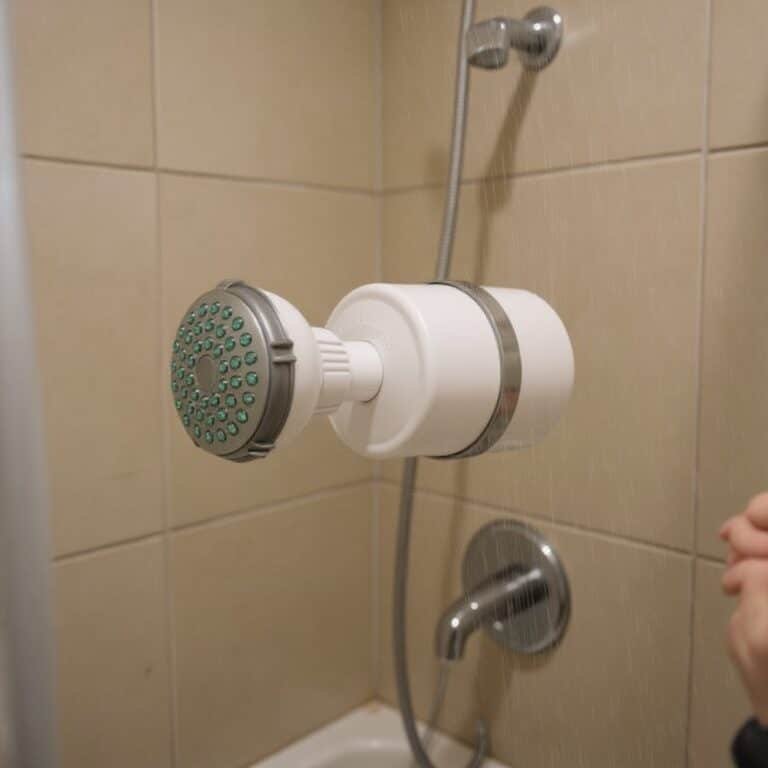 Water & AirBest Shower Filter 2026 (What’s Actually Tested)Same discipline applied to shower filters: what’s independently tested versus just claimed.
 -
 Water & AirBest Under-Sink Water FiltersWant a broader certified contaminant list than a faucet filter can carry? Start here.
 -
 Water & AirWell Water Testing: What It Actually ChecksOn a private well? A faucet filter isn’t your primary fix, here’s what actually is.
Last updated July 13, 2026 — we re-check specs and prices regularly.
As an Amazon Associate we earn from qualifying purchases.