 Inspire
Reverse Osmosis vs Carbon Filter: Which Is Better in 2026?
RO removes the most, including TDS and fluoride. Carbon keeps your minerals and wastes no water. Here’s the real decision, not the marketing version.
Updated July 2026 · 8 min read · ✓ Fact-checked · Includes affiliated links
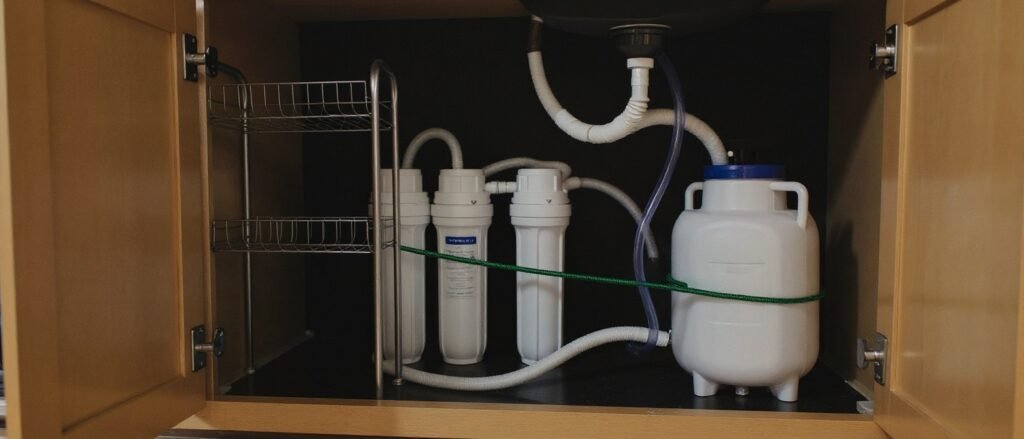
Reverse osmosis removes far more than carbon — including minerals, fluoride, and nitrates — but if your water’s only problem is taste, carbon does the job without wasting a drop.
Let your water test decide, not your budget. Reverse osmosis removes dissolved minerals, fluoride, and nitrates that carbon can’t touch, at the cost of wasted water and a remineralizing add-on if that matters to you. A carbon filter alone fixes chlorine taste and odor and wastes nothing, but won’t remove fluoride, nitrates, or arsenic. If your water is already safe and taste is the only complaint, carbon is enough — if a real water test flags something carbon can’t remove, you need RO.
Key takeaways
- RO strips dissolved minerals along with contaminants; that’s inherent to how it reduces total dissolved solids (TDS), not a fixable side effect.
- Carbon-block filters are certified to NSF/ANSI 42 (taste/chlorine) and often 53 (health contaminants like lead), but don’t touch fluoride, nitrates, or arsenic the way RO does.
- The old “RO wastes 3-4 gallons per 1 gallon produced” reputation still applies to basic tank-based units, but newer tankless systems now advertise 2:1 to 3:1 pure-to-drain ratios (much better efficiency).
- For private wells specifically, RO is the standard remedy for nitrate contamination; carbon alone doesn’t remove nitrates.
What each one actually removes
A carbon filter works by adsorption: contaminants stick to the carbon’s surface as water passes through. It’s very good at chlorine, chloramine, and the taste/odor compounds municipal water is treated with, and a quality carbon block can also reduce some health contaminants (lead, certain VOCs) if it’s certified to NSF/ANSI 53. What it doesn’t do: pull dissolved minerals, salts, fluoride, nitrates, or arsenic out of the water.
Reverse osmosis forces water through a membrane fine enough to block almost everything dissolved in it, including the minerals carbon leaves behind. That’s why RO systems reduce total dissolved solids (TDS) so effectively, and why they’re the standard fix for fluoride, nitrates, arsenic, and other dissolved inorganic contaminants that carbon can’t touch.
| Carbon Block | Reverse Osmosis | Ultrafiltration | |
|---|---|---|---|
| Removes TDS/minerals | No | Yes | No |
| Keeps beneficial minerals | Yes | No (unless remineralized) | Yes |
| Removes fluoride, nitrates, arsenic | No | Yes | No |
| Removes chlorine taste/odor | Yes | Yes | Yes |
| Wastes water | No | Some (varies by system) | No |
| Best when | Municipal water, taste is the only issue | A test flags TDS, fluoride, nitrates, or arsenic | Removing bacteria/cysts, keeping minerals |
Does RO strip healthy minerals, and does that matter?
Yes, it strips them, that part isn’t in dispute; removing dissolved minerals is inherent to how RO reduces TDS, not a side effect you can filter around. Whether it matters for your health is a more nuanced question than either side of this argument usually lets on.
The World Health Organization has published on this directly. Its own expert-authored chapter Nutrients in Drinking Water states plainly that drinking water is “not the major source of our calcium and magnesium intake”, food is, but argues the water contribution still matters because minerals dissolved in water are more bioavailable than the same minerals bound up in food. It cites mostly older observational studies (heavily from the former Soviet Union, plus Taiwan) linking long-term consumption of very soft or demineralized water to higher rates of cardiovascular disease and other conditions.
One important distinction: this is a WHO-published expert chapter, not WHO’s binding Guidelines for Drinking-Water Quality, which sets no minimum or maximum for calcium, magnesium, or hardness. So it’s a real, seriously-published concern, not settled regulatory consensus, and the evidence behind it is observational rather than from controlled trials.
Remineralization: worth adding?
A remineralizing add-on is a small cartridge placed after the RO membrane (it has to go after, or the minerals just get filtered back out) that slowly dissolves calcite or a calcium/magnesium carbonate blend into the water, typically adding back 20 to 40 ppm of TDS and nudging the pH up toward neutral.
This is an add-on, not standard equipment on most household systems. Even the WHO chapter cited above notes remineralization is routine at large-scale desalination plants but “usually not the case for water demineralised as a result of household treatment.” It’s also a partial fix at best: WHO’s own assessment is that typical remineralization cartridges target taste and pipe corrosivity, not nutrition, and “may be deficient in magnesium and other microelements.” If the mineral question genuinely concerns you, a remineralizing cartridge is a reasonable $20-40 add-on, just don’t expect it to fully replicate what came out of the water in the first place.
The real water-waste numbers
The old reputation, roughly 3 to 4 gallons wasted for every gallon produced, still holds for basic tank-based RO units still sold today. But newer tankless and permeate-pump designs have genuinely closed that gap. Two real examples pulled directly from current manufacturer spec pages: the Waterdrop G3P800 (tankless, rated 800 gallons/day) advertises a 3:1 pure-to-drain ratio, and the iSpring RO500-BN (also tankless, NSF/ANSI 58 certified) advertises 2:1.
One thing worth watching for when you compare specs yourself: manufacturers usually state the ratio as “pure-to-drain”, meaning product water to wasted water, which is the opposite direction from the old “waste-to-product” framing. A stated 3:1 pure-to-drain ratio is good (75% of the water going in comes out as drinking water), not bad. It’s an easy way to misread a spec sheet if you’re not expecting the framing to be flipped.
Which one for well water
Private wells fall outside Safe Drinking Water Act regulation. Testing and treatment is the owner’s responsibility, and the EPA’s own list of common well contaminants (coliform bacteria, nitrates, iron, manganese, arsenic, hardness) looks quite different from what a typical municipal-water complaint is about.
For nitrate contamination specifically, RO (or anion exchange) is the standard remedy. Carbon alone does not remove nitrates. State agency guidance (New Jersey DEP’s private-well treatment matrix, and University of Nebraska Extension, which notes the state actually subsidizes RO systems for nitrate-hit wells) both point the same direction. Iron and manganese need oxidation or softening; bacteria needs UV or chlorination; none of that is carbon’s job either. If your well’s own test report shows nitrates, arsenic, or uranium, RO is the appropriate response, not an upsell.
Frequently asked questions
Is reverse osmosis water bad for you because it removes minerals?
Not in the sense of being unsafe. Most of your daily mineral intake comes from food, not water, and RO’s own governing standard (NSF/ANSI 58) doesn’t restrict it for that reason. A WHO-published chapter does raise the mineral question based mostly on older observational research, which is worth knowing about, but it’s not the same as a safety warning.Do I need a remineralization filter?
It’s optional. If you’re not concerned about the mineral question, plenty of people drink RO water without one. If you’d rather not think about it, a remineralizing cartridge is a low-cost add-on, just know it’s a partial fix aimed mostly at taste and pH, not full nutritional replacement.Does a carbon filter remove fluoride?
No. Standard carbon-block filtration doesn’t remove fluoride, nitrates, or arsenic. If a water test shows any of those, you need reverse osmosis or a specific fluoride-rated filter media, not carbon alone.How much water does a reverse osmosis system actually waste?
It depends heavily on the system. Older tank-based units can still run close to the old 3-4 gallons wasted per gallon produced. Current tankless systems advertise 2:1 to 3:1 pure-to-drain ratios, meaning roughly two-thirds to three-quarters of the water going in comes out as drinking water.The Bottom Line
If your water is already regulated and safe, and the only complaint is chlorine taste, a carbon-block filter does the job, keeps your minerals, and wastes nothing. If a real water test flags dissolved solids, fluoride, nitrates, or arsenic (common on private wells), reverse osmosis is the appropriate fix, not an upsell. Check a current tankless model’s real waste ratio before assuming the old reputation still applies.