 Inspire
Whole-House Water Filter vs. Water Softener: Which One Do You Actually Need?
A softener removes hardness. A whole-house filter removes something else entirely. Most people who buy one actually needed the other, or both, or neither.
Updated July 18, 2026 · 12 min read · ✓ Fact-checked · Includes affiliated links
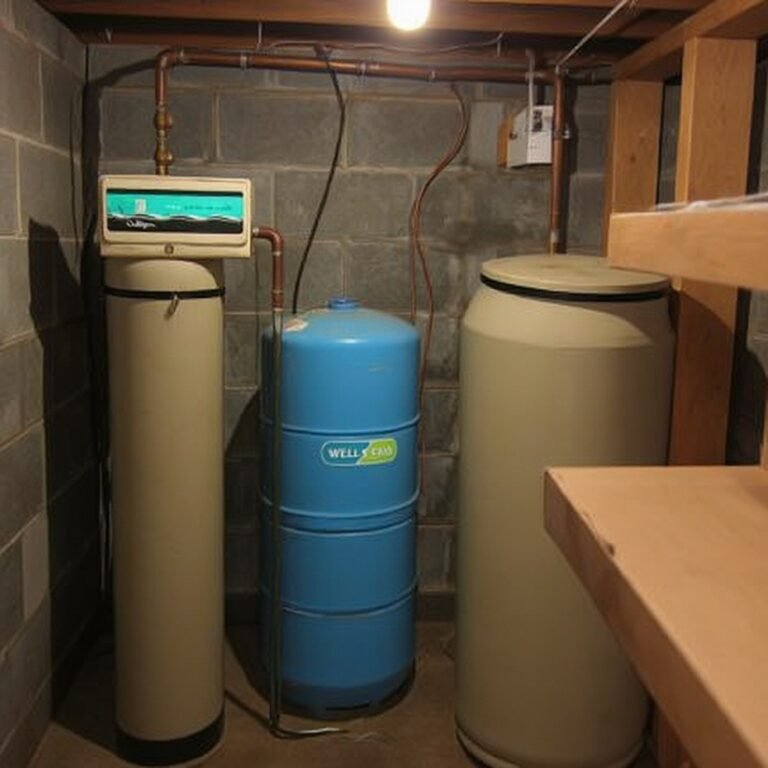
They’re not competing products, they’re different tools for different jobs. A softener removes only hardness minerals (calcium and magnesium). A whole-house filter removes aesthetic stuff like chlorine taste, or sediment, from every tap in the house. Neither one is the right tool for lead, that needs point-of-use treatment at the tap you actually drink from, and a whole-house filter can genuinely make lead worse, not better. Figure out which one you actually have before you buy either.
- A softener handles hardness only. A whole-house filter handles chlorine taste and sediment. They don’t overlap.
- EPA WaterSense and Consumer Reports both say softening isn’t automatic just because water is technically hard; there’s a real threshold.
- No whole-house filter is NSF-certified for lead, and one EPA-funded study found point-of-entry devices can make lead worse. Lead needs point-of-use treatment instead.
Key takeaways
- A water softener and a whole-house filter are not the same product and don’t substitute for each other, one handles hardness, the other handles chlorine taste, odor, or sediment.
- EPA WaterSense: softeners are “not necessary in all homes.” Consumer Reports puts the real worth-it threshold around 10 grains per gallon, not the point hardness first appears.
- No whole-house filter is NSF-certified for lead reduction, and an EPA-funded study found point-of-entry devices can make lead levels worse. Use point-of-use treatment at the tap instead.
- Softeners add sodium to your water and chloride to your wastewater; Health Canada’s aesthetic sodium guideline is 200 mg/L, and Ontario requires reporting at 20 mg/L and up.
- Ontario banned unsolicited door-to-door water treatment sales in 2018; the FTC won a $43.6 million judgment against a water-treatment financing company in 2024 for deceptive sales practices.
🔍Which one do you actually need
Tap what’s actually bothering you. We’ll tell you which one actually fixes it, and flag it clearly when the obvious answer is wrong.
Likely answer: a water softener, but check the number first
Scale on fixtures, soap that won’t lather, and film on shower glass are classic signs of hardness (calcium and magnesium), and a softener is the right tool for that specific problem.
But “hard water” isn’t automatically a softener sale. EPA WaterSense states plainly that softeners are “not necessary in all homes,” and Consumer Reports puts the real threshold at roughly 10 grains per gallon (about 171 mg/L), well into USGS’s “hard” to “very hard” range, not the point where hardness first becomes measurable.
Minnesota’s Department of Health goes further: there’s “no requirement to soften your water… it’s a personal choice.” Get an actual number (a test strip or your water utility’s annual report both work) before assuming you need one.
🔧 Worth a softener once you’re solidly in the “hard” range, not the moment hardness shows up at all
Likely answer: a whole-house carbon filter
This is one of the cleaner, more defensible reasons to install whole-house (point-of-entry) filtration: chlorine taste and odor is an aesthetic issue affecting every tap in the house, showers included, so treating it at the point of entry genuinely makes sense rather than treating one faucet at a time.
Look for NSF/ANSI 42 certification specifically (aesthetic effects: chlorine, taste, odor), not 53, which covers a different, health-related contaminant list.
🔧 A whole-house carbon filter, NSF/ANSI 42 certified
Read this one carefully: whole-house is the wrong tool here
This is the one case where a whole-house filter is the wrong answer, not just an unnecessary one. No whole-house (point-of-entry) product on the market is NSF-certified for lead reduction, and an EPA-funded study found point-of-entry treatment devices can actually make lead levels worse, not better.
Lead exposure risk comes from ingestion, drinking and cooking water specifically, so the right tool is point-of-use: a certified pitcher, faucet filter, or under-sink RO system, NSF/ANSI 53 certified for lead, installed at the one tap you actually drink and cook from.
The regulation hasn’t caught up to the newer federal guideline. If your home has a lead service line or was built before the 1950s, treat at the tap, and consider testing rather than assuming the legal minimum means the water’s fine.
🔧 A certified point-of-use filter at the tap (not whole-house) for lead specifically
Likely answer: a whole-house sediment prefilter
Cloudy or gritty water, especially right after a plumbing repair, main break, or nearby construction, usually means sediment working through aging pipes.
A whole-house sediment prefilter is the correct, proportionate fix, and it also protects any softener or carbon filter installed after it from clogging prematurely.
🔧 A whole-house sediment prefilter, ahead of any softener or carbon filter
Likely answer: both, but the order matters
A softener and a whole-house filter solve different problems and aren’t substitutes for each other, so if both bother you, you generally do need both.
The one detail installers sometimes skip: chlorine degrades softener resin over time, so the filter should sit before the softener in the water line, not after.
Combo units (filter and softener in one shared tank) are real and typically save some money and install complexity, but most independent installers still prefer separate units for easier servicing. Neither approach is backed by a formal standard either way, it’s a cost-versus-convenience call, not a performance one.
🔧 Sediment/carbon filter first, softener second, combo or separate is a cost call
Test before you buy anything
Guessing which of these you need from a hunch is exactly how people end up with an expensive combo system that only solves half their actual problem.
A real water test (through your utility’s annual report if you’re on municipal water, or a certified lab if you’re on a private well) tells you the actual hardness number and whether chlorine, sediment, or anything else is actually present, before you spend on equipment.
🔧 Test first, then match equipment to what the test actually shows
then match the result to the right tool ↓
(10+ GPG)
taste
risk
or cloudy
🪨Is your water actually hard enough to bother with
The USGS classifies water hardness on a real scale: soft (0–60 mg/L as calcium carbonate), moderately hard (61–120), hard (121–180), and very hard (over 180). Converted to grains per gallon, the unit most softener marketing uses, that's roughly 7–10.5 GPG for “hard.” None of that, on its own, means you need a softener.
EPA WaterSense states softeners are “not necessary in all homes” and specifically advises against installing one “when hardness levels do not indicate a need.” Consumer Reports puts the practical worth-it threshold closer to 10 GPG, solidly into “hard” to “very hard” territory, not the point hardness first becomes measurable.
Minnesota's Department of Health is blunter still: there's “no requirement to soften your water… it's a personal choice,” and Health Canada treats hardness as a purely aesthetic issue with no health basis for treatment at all.
None of this means softening is a bad idea if scale, spotting, and poor lather genuinely bother you, it's a legitimate quality-of-life upgrade. It means “your water is hard” isn't, by itself, a reason you're being sold correctly.
⚠️The lead exception nobody mentions
This is the one place a whole-house filter isn't just unnecessary, it's the wrong category of tool entirely. NSF's own certified-product database has no whole-house (point-of-entry) product certified for lead reduction.
An EPA-funded study went further and found that point-of-entry treatment devices can actually increase lead levels in some cases, not reduce them.
The reason comes down to exposure pathway, the same principle the Water Quality Association uses to guide its own POE-versus-POU recommendations: whole-house treatment makes sense for contaminants you're exposed to by breathing or skin contact across the whole house (chlorine vapor in a shower, for instance). Lead risk comes almost entirely from ingestion, drinking and cooking water specifically, so the right tool is a certified point-of-use filter (an NSF/ANSI 53 lead-certified pitcher, faucet filter, or under-sink RO system) installed at the one tap you actually use for drinking and cooking, not a system treating your whole house's water supply.
Health Canada's guidelines are recommendations; provincial regulations set the actual legal standard, and Ontario's hasn't caught up to the newer federal number. If your home has a lead service line or was built before the 1950s, treat at the tap, and consider testing rather than assuming the legal minimum means the water's fine.
🧂The softener downsides that don't make it into the sales pitch
Softening works by swapping calcium and magnesium for sodium (or potassium) ions, which means softened water carries more sodium than it started with, and the brine used to regenerate the resin goes down the drain as wastewater.
If sodium genuinely matters for your household, a potassium chloride alternative, or simply bypassing the softener at the kitchen tap, are both real options.
On the wastewater side, Canada's own federal guidance document on chloride specifically names residential water softeners as a contributing source. Some California municipalities have gone as far as banning self-regenerating softeners outright over chloride load in wastewater treatment; no Canadian jurisdiction (federal or provincial) currently regulates residential softener brine discharge the same way. That's a genuine difference, not a loophole to worry about, but it's worth knowing the concern is real enough that other jurisdictions have legislated around it.
🔬The corrosion myth, in both directions
You'll see softened water blamed for pipe corrosion, and just as often marketed as a fix for it. Neither claim holds up.
The Water Quality Association, citing EPA and international research, states that softened water neither causes nor prevents corrosion, actual corrosivity is driven by pH, dissolved oxygen, and alkalinity, not hardness. Health Canada adds a useful nuance: the Langelier Index, the number most often cited as “proof” one way or the other, isn't actually a validated corrosivity index at all.
🚪Watch the sales pitch, not just the water
Water treatment is one of the more aggressively sold home-improvement categories, and the regulatory record backs that up.
Ontario banned unsolicited door-to-door water treatment sales outright in 2018, a contract signed from an uninvited doorstep visit is void by law. Toronto's own water utility publishes a standing warning that it never conducts door-to-door water testing or sales, a tactic some companies use specifically to imply an official visit. In 2024, the FTC secured a $43.6 million judgment against a water-treatment financing company over deceptive sales and financing practices nationally.
None of that means every water treatment company is dishonest, most aren't. It means a real test result and a clear idea of which problem you're actually solving (see the tool above) is better protection than trusting whoever happens to be at your door.
🔁If you genuinely need both
Plenty of households legitimately have both hard water and a chlorine taste problem, and in that case, yes, you need both pieces of equipment; they're not substitutes for each other.
The one detail worth getting right: chlorine degrades softener resin over time, so a carbon filter should sit before the softener in the water line, not after.
Combo units (filter and softener sharing one tank) are real products and typically cost less than two separate systems, but most independent installers still prefer separate units for easier servicing down the line. There's no formal standard pointing either way, it's a cost-and-convenience decision, not a performance one.
📋The whole thing as one cheat sheet
Everything above, compressed to one table.
| What’s bothering you | Likely cause | Right tool |
|---|---|---|
| Scale, spots, poor lather | Hardness (confirm with a real number first) | Water softener |
| Chlorine smell or taste | Chlorine, aesthetic | Whole-house carbon filter (NSF/ANSI 42) |
| Worried about lead | Lead, ingestion risk | Point-of-use certified filter at the tap, not whole-house |
| Cloudy water, especially after repairs | Sediment | Whole-house sediment prefilter |
| Both hardness and chlorine | Two separate problems | Both, filter before softener in the line |
| Just moved in, never tested | Unknown | Test first, then match equipment to the result |
Frequently asked questions
Do I need a water softener if my water is technically “hard”?
Not automatically. EPA WaterSense says softeners are “not necessary in all homes,” and Consumer Reports puts the practical worth-it threshold around 10 grains per gallon, well into the “hard” to “very hard” range. Get an actual number before deciding.
Can a whole-house filter remove lead?
Don't count on it. No whole-house product is NSF-certified for lead reduction, and an EPA-funded study found point-of-entry devices can make lead levels worse in some cases. Use a certified point-of-use filter at the tap you drink and cook from instead.
Is softened water safe to drink if I'm on a low-sodium diet?
It adds some sodium, though usually not a large amount at typical hardness levels. If sodium intake genuinely matters for your health, bypass the softener at the kitchen tap or use a potassium chloride system instead, and check your water utility's reported sodium level, required at 20 mg/L and up in Ontario.
Does a water softener cause pipes to corrode?
No. The Water Quality Association states softened water neither causes nor prevents corrosion; actual corrosivity comes from pH, dissolved oxygen, and alkalinity. This claim gets made in both directions by different sales pitches, and neither version is accurate.
Should I get a combo filter-and-softener unit or two separate systems?
Either works. A combo unit usually costs less and takes less space; separate units are generally easier to service individually. No standard favors one over the other, it's a cost-and-convenience call. If you do run both, the filter should sit before the softener so chlorine doesn't degrade the softener's resin.
How do I know if someone knocking on my door about water treatment is legitimate?
Be skeptical by default. Ontario law voids contracts signed after an unsolicited door-to-door visit, and utilities like Toronto's publicly state they never do door-to-door water testing or sales. A legitimate need shows up in an actual water test, not a knock on the door.
The bottom line
A softener and a whole-house filter solve different problems, and the honest starting point for either one is a real water test, not a hardness guess or a sales visit. If the test shows hardness past roughly 10 GPG, a softener earns its cost. If it's chlorine taste or sediment, a whole-house filter is the right, proportionate fix. If lead is the actual concern, skip whole-house entirely and treat at the tap instead.
Related reading
-
 Water & AirWhat’s Wrong With Your Well Water? A Symptom-by-Symptom Diagnostic GuideA symptom-by-symptom diagnostic tool for well water problems: what causes the smell, stain, or taste, and what actually treats it.
 -
 Water & AirBest Water Softener for Hard Water in Canada (2026)The best water softeners for hard water in Canada, compared on grain capacity, real reports, and what each one actually costs to own.
 -
 Water & AirEpic Water Pure XP Pitcher Review (2026): What “Certified” Actually Means HereAn honest look at the Epic Water Pure XP pitcher: what’s certified versus tested, real owner complaints, and how it compares to Brita and PUR.