 Inspire
What’s Wrong With Your Well Water? A Symptom-by-Symptom Diagnostic Guide
Rotten egg smell, orange stains, or water that looks completely normal: each points to a different problem, with a different fix. Here’s how to tell which one you’ve got.
Updated July 18, 2026 · 11 min read · ✓ Fact-checked · Includes affiliated links
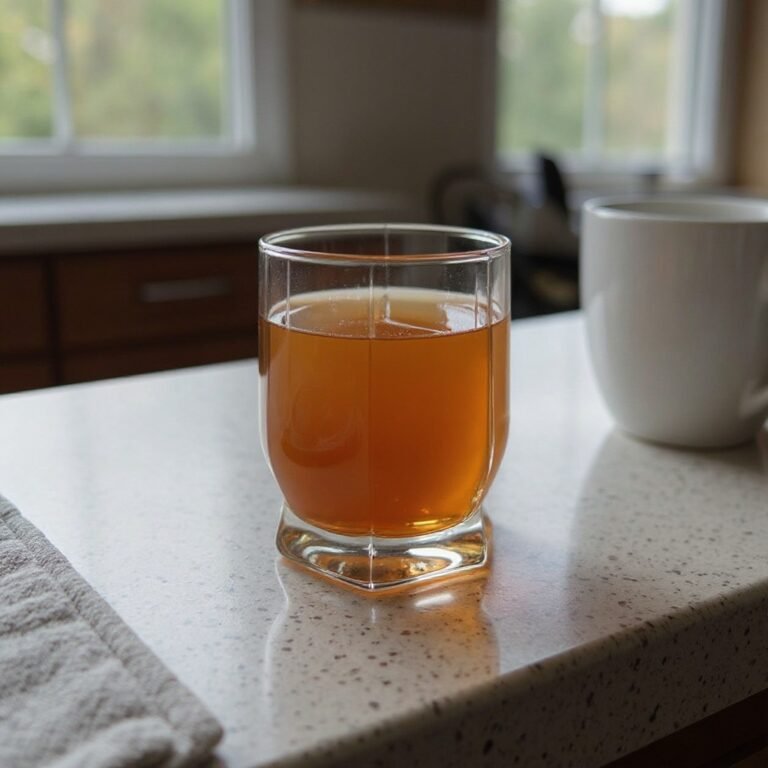
Test first, treat second. Every symptom below points to a specific, fixable problem, but two of the most consequential well-water contaminants (bacteria and nitrates) produce zero smell, taste, or color change. If your water looks and smells completely normal, that’s not a reason to skip testing, it’s the reason testing matters. Pick your symptom below to see what’s likely going on and what actually fixes it.
- Rotten-egg smell, orange stains, and cloudy water are all real, treatable problems with well-established fixes.
- Bacteria and nitrates are invisible and need an actual test regardless of how the water looks.
- Get the treatment order right (sediment before everything else) or you’ll foul out a softener or filter that was never the actual problem.
Key takeaways
- Color and smell are real diagnostic clues: reddish stains usually mean iron, rotten-egg smell usually means hydrogen sulfide, tea-colored water usually means tannins.
- Bacteria and nitrates don’t change how water looks, smells, or tastes. The EPA recommends testing for both at least once a year regardless.
- A water softener only removes hardness (and a little dissolved iron). It does not remove sulfur, bacteria, or tannins, that needs a different resin or process entirely.
- Treatment order matters: sediment filtration has to come before a softener, carbon filter, UV light, or RO membrane, or it’ll foul or shield everything downstream.
- Boiling water makes nitrate contamination worse, not better: it concentrates the nitrate as the water evaporates.
🔍Diagnose your water
Tap whatever you’re noticing below. We’ll scan it against EPA, Health Canada, and university extension data and tell you the most likely cause, and what actually treats it.
Hydrogen sulfide gas
That rotten-egg smell is dissolved hydrogen sulfide, usually from sulfur bacteria in the aquifer.
If it only shows up in hot water, it’s more likely your water heater’s magnesium anode rod reacting with sulfate (swap it for an aluminum or zinc rod to check).
A real test tells you the actual concentration, but treatment scales with how much is there: under about 1 mg/L, activated carbon can handle it; up to 2–3 mg/L, an oxidizing filter; above roughly 6 mg/L, chlorination or potassium permanganate. It also reacts with any dissolved iron to form iron sulfide, which clogs pumps and screens, so if you smell sulfur, test for iron too.
🔧 Activated carbon (low levels) or an oxidizing filter / chlorination (higher levels)
Iron (and possibly manganese)
Two different problems wear the same color. Water that’s clear from the tap but turns orange after sitting out is dissolved (“ferrous”) iron, oxidizing in the air. Water that’s already reddish the moment it hits the glass is already-oxidized (“ferric”) iron.
That distinction matters for treatment: a water softener can sometimes handle dissolved iron under about 5 mg/L, but it will foul on ferric iron or higher concentrations, which need an oxidizing filter instead. Above roughly 10 mg/L, that usually means chlorination plus filtration.
Black or dark brown staining, rather than orange, is more likely manganese, iron’s frequent companion in the same well.
🔧 A water softener (low, dissolved iron only) or an oxidizing filter (higher or already-oxidized iron)
Hardness (calcium and magnesium)
Scale on fixtures, soap that won’t lather, film on shower glass: classic hard water.
The USGS scale runs soft (0–60 mg/L as CaCO₃), moderately hard (61–120), hard (121–180), and very hard (over 180). Most households soften once they’re solidly in the “hard” range. There’s no EPA health limit on hardness: it’s a nuisance and appliance-lifespan issue, not a safety one.
The one thing to get right: sediment and iron need to be filtered out before the water reaches a softener, or they’ll clog and damage the resin bed.
🔧 An ion-exchange water softener (after sediment/iron pre-treatment, not before)
Sediment or turbidity
Cloudy, hazy, or gritty water is usually sand, silt, or clay, especially common right after a new well, nearby excavation, or heavy rain.
This is the one contaminant that’s almost always a sequencing issue: sediment filtration needs to sit first in line, ahead of a softener, carbon filter, UV light, or RO membrane, both to protect that equipment from fouling and because suspended particles can physically shield bacteria from UV light, letting them pass through untreated.
🔧 A cartridge sediment filter (light/occasional) or a backwashable media filter (heavy/continuous)
Tannins
Tea- or yellow-brown-colored water, sometimes with a musty taste, usually means organic tannins leaching from decaying vegetation, common in shallow wells or marshy areas.
A quick way to tell tannins from iron at home: fill a clear glass and let it sit overnight. If the color settles to the bottom, that’s iron; if it stays evenly suspended, that’s tannins.
Tannins need their own anion exchange resin (chemically the opposite of a softener’s cation resin), and hardness should be removed before the tannin resin, not left for it to handle.
🔧 A tannin-specific anion exchange resin (installed after a softener, if you also have hardness)
Iron or sulfur bacteria
A reddish, yellow, or gray slime, especially visible inside a toilet tank, plus a swampy, musty, or oily odor, points to iron or sulfur bacteria: a biofilm growing in the well or plumbing.
It’s not usually a health hazard, but it’s genuinely hard to eliminate and can damage well equipment over time. This is the one case where a standard filter or softener won’t touch the problem: it needs shock chlorination, often more than once, sometimes paired with physically cleaning the well itself.
🔧 Shock chlorination, repeated as needed, not a standard filter or softener
Dissolved iron or manganese
A metallic taste with no visible color usually means dissolved iron or manganese at a level too low to stain yet, or before it’s had a chance to oxidize.
It’s worth an actual test to get a real number instead of guessing: under about 5 mg/L dissolved iron, a water softener can often handle it (best above pH 6.7); higher than that, or if it’s manganese-heavy, you’re looking at an oxidizing filter instead.
🔧 A water softener (low dissolved levels) or an oxidizing filter (higher levels)
This is the one that actually matters most
Looking, smelling, and tasting normal proves nothing about bacteria, nitrates, or arsenic. All three are undetectable by your senses even at hazardous concentrations. That’s precisely why testing exists as a separate step from “the water seems fine.”
The EPA recommends testing every private well annually for total coliform bacteria, nitrates, TDS, and pH, no matter how the water looks. Health Canada sets nitrate at 45 mg/L (as nitrate), and infants are the highest-risk group.
One myth worth killing outright: boiling does not help with nitrate. It makes it worse, since the water evaporates and the nitrate stays behind and concentrates. If you’ve never had your well tested, or it’s been over a year, that’s the actual next step, before buying anything.
🔧 Shock chlorination or UV (bacteria); anion exchange or reverse osmosis (nitrates); test first to confirm either is actually present
🦠The two problems you can't see, smell, or taste
Sensory cues are real for iron, sulfur, hardness, sediment, and tannins. They're worthless for the two contaminants most likely to actually make someone sick.
Bacteria (total coliform and E. coli)
Private wells aren't covered by the Safe Drinking Water Act, the regulation that governs municipal water. Nobody is testing yours but you.
The EPA's baseline recommendation is an annual test for total coliform bacteria at minimum, with extra tests after any flooding, well repair, nearby land disturbance, or a noticeable change in taste, odor, or color. Public Health Ontario offers free bacterial testing (E. coli and total coliform) to any private well owner in the province, and recommends testing three to four times a year, spring, summer, and fall, since bacteria levels shift with the seasons and groundwater conditions, not just once.
A whole-house sediment or carbon filter does not disinfect. Bacteria needs an active disinfection step: shock chlorination (typically after a flood, repair, or a positive test), continuous chlorination, or a UV system for ongoing protection. UV specifically only works on water that's already been sediment-filtered first: suspended particles shield bacteria from the UV light and let them pass through untreated.
Nitrates
Nitrate contamination usually comes from agricultural runoff, septic systems, or fertilizer, and like bacteria, it changes nothing about how the water looks, smells, or tastes.
Infants under six months are the highest-risk group, which is why testing matters more, not less, in a household with a baby on the way or already home.
One specific myth worth killing: boiling makes nitrate contamination worse, not better. Boiling evaporates water molecules while the nitrate itself stays behind, concentrating it further. If a nitrate test comes back high, the real fixes are anion exchange (upward of 99% removal in EPA testing) or reverse osmosis (typically 83–92%, somewhat less complete for nitrate specifically than for most other contaminants).
❓6 well water myths that cost people money
Well water advice online is a mix of real engineering and stuff that just sounds right. Six of the most common claims, checked against EPA, Health Canada, Penn State Extension, and other primary sources.
✕Myth: A sediment or carbon filter protects against bacteria.
✓Fact: Neither disinfects. You need shock chlorination, continuous chlorination, UV, or ozonation, and UV itself needs a sediment pre-filter to actually work.
✕Myth: If it tastes, smells, and looks fine, it's safe.
✓Fact: Nitrate, arsenic, and bacteria are all undetectable by taste, smell, or color, even at hazardous levels.
✕Myth: Test once, when you move in, and you're covered.
✓Fact: The EPA recommends annual testing at minimum, plus retesting after flooding, a well repair, nearby land disturbance, or any change in taste, odor, or color.
✕Myth: A water softener removes iron, sulfur, and bacteria too.
✓Fact: A softener removes hardness minerals and, at best, a little dissolved iron under about 5 mg/L. It does nothing for hydrogen sulfide or bacteria, and oxidized iron actually fouls the resin.
✕Myth: Boiling water makes it safe from everything.
✓Fact: Boiling kills most pathogens but does nothing for chemical contaminants, and it makes nitrate levels worse, not better.
✕Myth: Private wells are inspected by the government, like city water is.
✓Fact: Private wells are explicitly excluded from the Safe Drinking Water Act. No agency tests, treats, or monitors them, it's entirely on the homeowner, indefinitely.
🔁Why the order of treatment matters
Almost every well-water treatment mistake is a sequencing mistake, not an equipment mistake. The right order, confirmed consistently across university extension sources:
Sediment goes first because mud, clay, and any already-oxidized iron will clog or damage everything downstream: a softener resin bed, a carbon filter, an RO membrane. It also has to happen before UV, since suspended particles can shield bacteria from the light.
Oxidation (aeration, chlorination, or an oxidizing filter) converts dissolved iron and sulfur into a form that can actually be filtered out. Softening comes next, and needs to happen before a dedicated tannin resin, since tannins use anion exchange chemistry (the opposite of a softener's cation exchange), and hardness will foul that resin if it isn't removed first.
Carbon, UV, and RO are polishing steps at the end of the line, not a substitute for getting the earlier steps right.
🧪How to actually get tested
Skip the online “comprehensive” test strips that check 50 things with a color chart. They're fine for a rough hardness or pH read, not for bacteria or nitrate. For anything that actually matters, use a certified lab.
🇨🇦 In Canada
Public Health Ontario provides free bacterial testing (E. coli and total coliform) to any private well owner in the province; sample bottles are available through local Public Health Units, with results typically back in 2–4 days.
Testing three to four times a year (spring, summer, fall) is the specific recommendation, not once. Chemical testing (nitrate, arsenic, hardness, and the rest) requires a separate accredited private lab and isn't covered by the free program. Well construction and maintenance in Ontario falls under Regulation 903 (Wells) under the Ontario Water Resources Act.
🇺🇸 In the US
The EPA recommends annual testing for total coliform bacteria, nitrates, total dissolved solids, and pH at minimum, through a state-certified laboratory (your state or county health department can point you to one), plus arsenic, lead, and radon every three to five years depending on your region.
Retest sooner after flooding, a well repair or replacement, new construction or land disturbance nearby, or a noticeable change in the water itself.
📋The whole thing as one cheat sheet
Everything above, compressed to one table.
| Symptom | Likely cause | Typical fix |
|---|---|---|
| Rotten egg smell | Hydrogen sulfide | Carbon (low) / oxidizing filter or chlorination (high) |
| Orange/red/brown stains | Iron (ferrous or ferric) | Softener (low, dissolved) / oxidizing filter (higher, ferric) |
| White scale, poor lather | Hardness | Ion-exchange water softener |
| Cloudy or gritty water | Sediment / turbidity | Cartridge or backwashable media filter |
| Tea-colored water | Tannins | Tannin-specific anion exchange resin |
| Slimy film in toilet tank | Iron/sulfur bacteria | Shock chlorination, repeated as needed |
| Metallic taste, clear water | Dissolved iron/manganese | Softener (low) / oxidizing filter (higher) |
| Looks/smells/tastes normal | Can't rule out bacteria or nitrates | Annual lab test, not equipment |
Frequently asked questions
How much does it cost to get well water tested?
Bacterial testing is free for any private well owner in Ontario through Public Health Ontario. In the US, a state-certified lab typically charges $20–$150 depending on the panel; a comprehensive private-lab test covering bacteria, nitrate, and metals together often runs $100–$300.
Can I just use a home test kit instead of a lab?
For hardness, pH, or a rough screen, a home strip is fine. For bacteria or nitrate specifically, use a certified lab: a false negative on either has real consequences, and color-changing strips aren't reliable enough to rule them out.
Does a whole-house filter remove everything?
No single piece of equipment handles every contaminant. Treatment has to be matched to what's actually in the water: an iron filter doesn't touch bacteria, a softener doesn't touch sulfur, and so on. That's the entire point of testing before buying.
My water softener is old, could it be making things worse?
A fouled or failing softener can let hardness, and any dissolved iron it used to tolerate, back through. But it was never designed to handle sulfur, bacteria, or tannins, regardless of its condition, that was never part of the job.
How often should I actually retest, not just in the first year?
Annually at minimum in the US, per EPA guidance. Canadian public-health guidance leans toward more frequent bacterial testing specifically (several times a year), even in a well that's been established for decades, since bacteria levels shift with the seasons.
Is well water regulated at all?
No. Private wells are explicitly excluded from the Safe Drinking Water Act in the US, and municipal-style oversight doesn't apply to them in Canada either. Testing and treatment are entirely the homeowner's responsibility, indefinitely.
The bottom line
Every symptom above has a real, fixable cause, but the fix only works if it matches what's actually there. Guessing from the smell alone gets you most of the way for iron, sulfur, hardness, and tannins; it gets you nowhere for bacteria and nitrates, the two that actually matter for health, and both need a real test to rule in or out. If you haven't tested in the last year, that's the actual first step, not a new filter.
Related reading
-
 Water & AirBest Water Softener for Hard Water in Canada (2026)The best water softeners for hard water in Canada, compared on grain capacity, real reports, and what each one actually costs to own.
 -
 Water & AirEpic Water Pure XP Pitcher Review (2026): What “Certified” Actually Means HereAn honest look at the Epic Water Pure XP pitcher: what’s certified versus tested, real owner complaints, and how it compares to Brita and PUR.
 -
 Water & AirWhole-House Water Filter vs. Water Softener: Which One Do You Actually Need?A decision framework for whole-house water filters vs. water softeners: what each actually does, when you need one, both, or neither, and the one contaminant a whole-house filter can make worse.