 Inspire
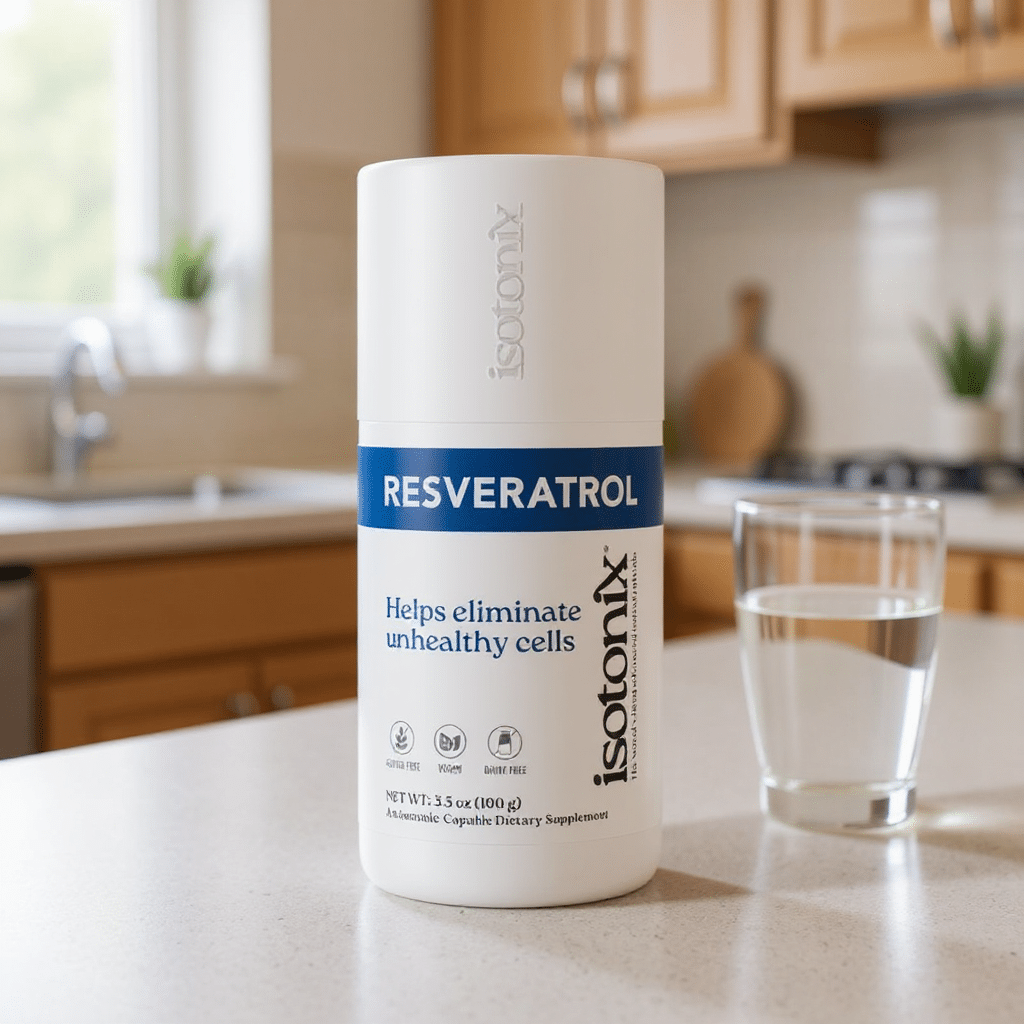
Isotonix Resveratrol Review
Resveratrol got famous through headlines about red wine and longevity, and most of that research was done in mice. Here’s what’s actually in this formula and an honest read on how far the human evidence really goes.
our rating
What we liked
- Three named, patented ingredients (Resveravine®, VitaBlue®, BioVin®) instead of one generic resveratrol extract
- Resveravine is stated as a highly concentrated trans-resveratrol source, the form most studied in research
- VitaBlue wild blueberry extract adds a second, independently useful antioxidant compound (anthocyanins)
- The product’s own spec sheet correctly discloses the real contraindications (blood thinners, MAOIs, hormone-sensitive conditions, pregnancy)
What to know
- The exact resveratrol milligram dose isn’t published anywhere, official site included. Only extract percentages are shown.
- Oral resveratrol is very poorly absorbed intact, under roughly 1% even at gram-level doses in pharmacokinetic studies
- A 52-week human trial in Alzheimer’s patients at high dose found more brain volume loss on resveratrol than on placebo, a real finding worth knowing and not just a “needs more research” caveat (Turner et al., Neurology, 2015, PMID 26362286)
- Memorial Sloan Kettering’s own reference summary states meta-analyses have found no confirmed cardiovascular or cognitive benefit in humans
Key takeaways
- The formula combines 3 named, patented ingredients: Resveravine® (concentrated trans-resveratrol), VitaBlue® (wild blueberry extract, 12.5% anthocyanins), and BioVin® (a grape-derived polyphenol source).
- Trans-resveratrol is the specific molecular form most of the actual research is built around, and Resveravine is positioned as a high-concentration source of it.
- Resveratrol’s most eye-catching claims (mimicking calorie restriction, dramatic longevity effects) come overwhelmingly from animal and cell studies, not confirmed human trials at achievable doses.
- A real, documented interaction exists between resveratrol and blood-thinning medication — worth a conversation with your doctor if that applies to you.
Who it’s for (and who should skip it)
Resveratrol is one of the more hyped ingredients in the supplement world, which makes the honest framing especially important here.
Buy it if…
- You’re specifically interested in resveratrol and want a concentrated, multi-source formula rather than a single generic extract
- You understand the “longevity molecule” framing rests mostly on animal research, not proven human outcomes
- You already take other Isotonix cellular-health products and want to add this to the routine
Skip it if…
- You’re on blood-thinning medication and haven’t checked with your doctor about resveratrol interactions
- You’re buying it expecting the calorie-restriction-mimicking effect to be a settled, proven human result — it isn’t yet
- Budget is tight and you want to prioritize ingredients with a stronger, more established human evidence base first
The 3 patented ingredients
Here’s the simple version: instead of one generic “resveratrol extract” line, this formula names three separate, individually branded ingredients, each contributing something specific.
| Ingredient | Code | What it is |
|---|---|---|
| Resveravine® | RSV | Concentrated trans-resveratrol source, stated up to 300× more concentrated than standard extracts (manufacturer comparison, not independently verified); exact mg dose not published |
| VitaBlue® Wild Blueberry Extract | BLU | Standardized to 12.5% anthocyanins, the antioxidant pigment compounds behind blueberries’ color |
| BioVin® | VIN | Grape-derived polyphenol extract, contributing additional plant compounds from the same broad family as resveratrol |
One scoop in water, standard Isotonix isotonic-delivery format. Because trans-resveratrol specifically is the form most research has focused on, the Resveravine inclusion is the more scientifically relevant part of this formula, with VitaBlue and BioVin functioning as complementary polyphenol sources.
What the human evidence actually shows
Resveratrol became famous through the “French paradox” narrative around red wine. A lot of its most dramatic findings, including the calorie-restriction-mimicking effect this product’s marketing references, come from mouse and cell-culture studies, not confirmed human trials at doses people would realistically take from a supplement.
The Alzheimer’s trial finding
The finding we think matters most, and most resveratrol product pages don’t mention. A well-controlled, 52-week human trial in Alzheimer’s patients using high-dose resveratrol found more brain volume loss in the resveratrol group than in the placebo group (Turner et al., Neurology, 2015, PMID 26362286).
That’s one trial, in a specific patient population, at a specific high dose, and it doesn’t mean this product causes that outcome at its own dose.
But it’s a real, published result that runs directly against the “longevity molecule” framing, and we think it’s more honest to name it than to leave it out.
On safety: resveratrol has documented interactions with blood-thinning medication, MAOIs, and hormone-sensitive conditions (since it has mild estrogen-like activity), and it’s not recommended during pregnancy. To its credit, the manufacturer’s own product documentation already discloses these contraindications accurately — check with your doctor first if any apply to you.
Frequently asked questions
This section contains affiliate links — we may earn a commission at no extra cost to you. See our full evaluation policy at the end of this guide.
Does resveratrol actually mimic calorie restriction or extend life?
What else is in the formula besides resveratrol?
“A well-formulated answer to resveratrol’s real absorption problem, for an ingredient whose human evidence is genuinely weaker than its reputation.”
The three-ingredient approach is a sound response to resveratrol’s poor natural bioavailability. But the underlying evidence in humans is thinner than the “longevity molecule” marketing implies, the exact dose isn’t disclosed, and one human trial found a concerning result at high dose. Worth knowing all of that before you decide this is the antioxidant to prioritize.

Related reading
- Health Canada — Licensed Natural Health Products Database
- Resveratrol/Alzheimer’s brain-volume finding: Turner RS, et al. “A randomized, double-blind, placebo-controlled trial of resveratrol for Alzheimer disease.” Neurology 85(16):1383-91, 2015 (PMID 26362286).