 Inspire
MYKOS vs DYNOMYCO: Which Mycorrhizae Is Worth Buying in 2026?
Updated June 2026 · 6 min read · ✓ Fact-checked
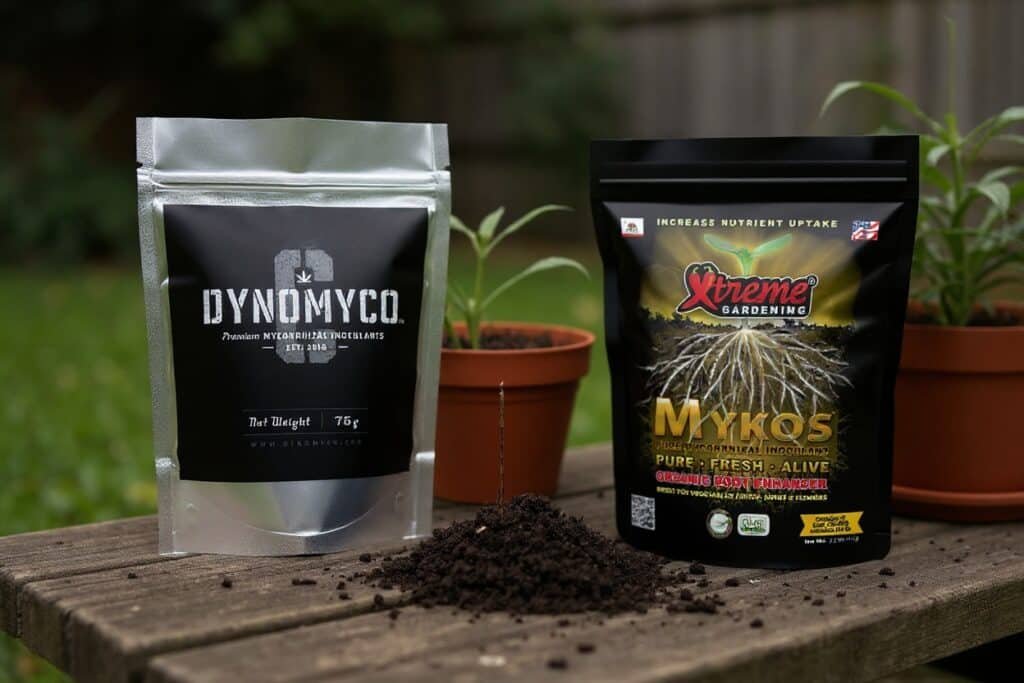
DYNOMYCO lists three times the propagules per gram of MYKOS, and it’s tempting to treat that number like the whole verdict. It isn’t. Both products fail the exact same way when the granules never reach a root, so a bigger spec on the bag buys you nothing by itself. The one that actually works is whichever one you get onto the root ball, not whichever one wins the label comparison.
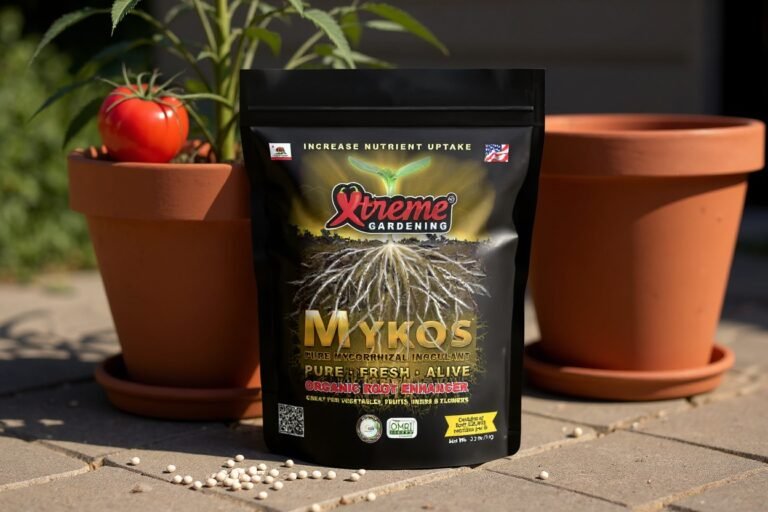
MYKOS vs DYNOMYCO: If you want the easiest, most forgiving transplant inoculant you’ll actually use every time, Xtreme Gardening MYKOS is the safer “default” pick. If you’re a precision-minded grower optimizing for a higher concentration spec and you don’t mind measuring and applying carefully, DYNOMYCO is the stronger “power user” option. Either way, the real key is simple: it only works when it touches the roots. If you’re trying to choose the best mycorrhizae for transplants, treat this like a root-contact tool, not a sprinkle-and-hope product.
Our bias is pretty straightforward: we’ll pay more when it saves time or reduces risk (especially transplant shock). This comparison is written for container growers, raised-bed gardeners, and flowering plants. Basically people who want repeatable results, not hype. If you’re comparing MYKOS vs DYNOMYCO for transplant season, the real difference comes down to application method and consistency.
Key takeaways
- Concentration (propagules per gram) is the real spec difference between these two, not brand reputation. DYNOMYCO’s higher concentration matters for precision growers, not casual ones.
- Cost per transplant, not price per bag, is the number that actually predicts value.
- Both fail the exact same way: no root contact means no colonization, regardless of which one you bought.
- Containers and raised beds show the benefit most clearly since root zones are constrained and transplant stress is obvious.
Our picks
Comparison table (fast decision)
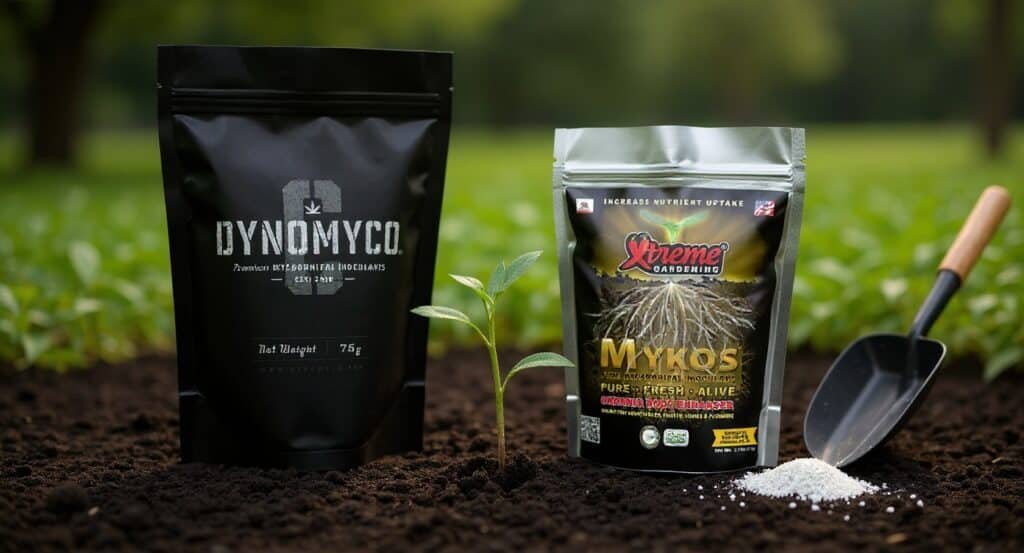
| Best for | MYKOS: set-and-forget transplant routine | DYNOMYCO: precision-minded “power user” routine |
|---|---|---|
| Concentration (spec) | MYKOS product specs list ~300 propagules/gram. | DYNOMYCO markets 900 propagules/gram. |
| Ease of use | More forgiving if you’re not measuring perfectly. | Rewards careful dosing + placement. |
| Most important “success factor” | Root contact. Place it where roots touch, remember not just sprinkle randomly. | |
| Media | Works across common growing media; great for containers. | Most reliable when there’s a moist medium with surface area for colonization (soil/coco style setups). |
| Value mindset | “I want to actually use it every transplant.” | “I want more concentration per gram and I’ll apply accurately.” |
| Our split verdict | Best for most home growers. | Best for optimizers. |
Quick pick: who should buy which
- Buy MYKOS if you want the simplest transplant habit you’ll actually stick to (and you don’t want to overthink dosing).
- Buy DYNOMYCO if you transplant a lot and you like being precise, especially if you’re building a “dialed-in” routine.
- Skip both if you won’t apply it at the root zone. Mycorrhizae isn’t magic dust, it’s just a contact game.
What mycorrhizae actually does (in plain English)
If you want a neutral science overview of mycorrhizal fungi, this is a solid explainer: What mycorrhizae are (overview).
Both products are mycorrhizal inoculants: beneficial fungi that form a relationship with plant roots. When it “takes,” growers usually describe the same outcomes: less transplant sulking, stronger root development, and steadier growth – especially in containers where the root zone is limited. In this MYKOS vs DYNOMYCO mycorrhizae comparison, we’re focusing on real transplant performance and not marketing claims.
The non-negotiable: mycorrhizae needs root contact. If it never touches roots, it can’t colonize where it matters.
MYKOS vs DYNOMYCO: 7 real differences (table)
| Best for | MYKOS: set-and-forget transplant routine | DYNOMYCO: precision-minded “power user” routine |
|---|---|---|
| Concentration (spec) | MYKOS product specs list ~300 propagules/gram. | DYNOMYCO markets 900 propagules/gram. |
| Ease of use | More forgiving if you’re not measuring perfectly. | Rewards careful dosing + placement. |
| Most important “success factor” | Root contact. Place it where roots touch, remember not just sprinkle randomly. | |
| Media | Works across common growing media; great for containers. | Most reliable when there’s a moist medium with surface area for colonization (soil/coco style setups). |
| Value mindset | “I want to actually use it every transplant.” | “I want more concentration per gram and I’ll apply accurately.” |
| Our split verdict | Best for most home growers. | Best for optimizers. |
How we apply it (what actually worked for us)
We keep this dead simple because simple gets repeated:
- Transplant hole method: put a small amount in the hole where the root ball will sit.
- Root ball method: lightly dust the outside of the root ball so granules stick.
- Water in normally: consistent moisture helps colonization, no need to flood the pot.
One rule: if it doesn’t touch roots, you just paid for expensive grit.
Price & value: why “cost per transplant” is the only comparison that matters
Premium DIY growers don’t mind paying more, as long as it reduces risk (losing plants to transplant shock) or saves time (faster recovery, steadier growth).
- MYKOS wins if you want a routine you’ll use without measuring stress.
- DYNOMYCO wins if you transplant a lot and you’re disciplined about accurate placement/dosing.
Best use cases: containers, raised beds, and flowering plants
Where mycorrhizae feels most “worth it” is usually where roots are constrained or plants are moved around:
- Containers: strongest perceived benefit (tight root zone, obvious transplant stress).
- Raised beds: still useful, but the “wow” factor depends on soil quality and transplant frequency.
- Flowering plants: best applied early (during transplant/veg stage) so the relationship is established before heavy flowering.
Real-world review patterns (what people consistently say)
Across both products, the review pattern is pretty consistent:
- People who apply it at the root zone often report better rooting, stronger early growth, and less transplant stress.
- Some buyers feel underwhelmed when they sprinkle it generally into soil (that’s usually a placement issue).
- Value feedback tends to hinge on bag size vs expectations – these products do go farther when you dose with intention.
Frequently asked questions
Do I need to reapply MYKOS or DYNOMYCO every watering?
Usually no. The best time is at transplant moments (seedling → pot-up, pot-up → final container). That’s when you can guarantee root contact.
Can I use mycorrhizae with bottled nutrients or dry organic fertilizer?
Generally yes. Think of mycorrhizae as a root-zone helper that complements your normal feeding plan. Placement still matters more than stacking products.
Is DYNOMYCO “better” because the concentration spec is higher?
Higher concentration can be an advantage, but it only translates into results if you apply it correctly (root contact) and your medium supports colonization.
Which one is the safest first buy if I only choose one?
If you want the most forgiving, easiest routine for everyday home transplants, MYKOS is usually the smarter first buy.
The Bottom Line
If you want the easiest, most forgiving inoculant you will actually use every time, Xtreme Gardening MYKOS is the safer default. If you are a precision-minded grower who does not mind measuring carefully, DYNOMYCO’s higher concentration spec makes it the stronger power-user option. Either way, it only works when it touches the roots.
Related reading
-
 CanadaBest Mosquito Control for Standing Water in Canada (Homeowner Guide)Best mosquito control for standing water in Canada: 5 tested options ranked by effectiveness, safety near wildlife, and value. Includes biocontrol and chemical picks.
 -
 Plant Care & GardeningBest Mycorrhizae for Tomatoes in Containers (2026): MYKOS vs DYNOMYCOBest mycorrhizae for tomatoes in containers: our top picks after testing in grow bags and pots. Only the ones that actually improved root uptake — no filler products.
 -
 CanadaBlossom End Rot on Tomatoes: Why It Happens (and the Fastest Fix)Blossom end rot is a calcium delivery problem, not usually a soil shortage. What causes it, how to stop it in about two weeks, and when a cal-mag supplement actually helps.