 Inspire
NSF/ANSI 42, 53, 58, 401 and 372 Explained, With a How-to-Verify Table
A plain reference for the numbers on a water filter box: what each standard certifies, what it leaves out, and how to confirm a claim in the certifier’s own database.
Updated November 2026 · 12 min read · ✓ Fact-checked
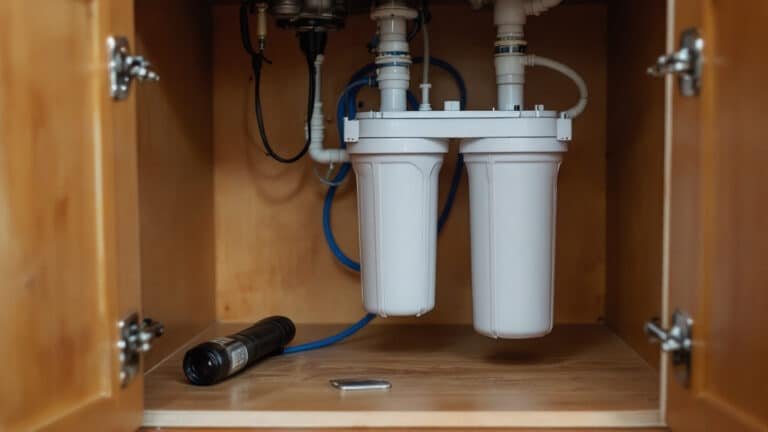
The number on a filter box names a test category, and only the contaminant claim listed with it tells you what was actually verified.
NSF/ANSI 42 covers aesthetic claims such as chlorine and taste. 53 covers health-effect claims such as lead and cysts. 58 covers reverse osmosis systems. 401 covers trace emerging compounds such as ibuprofen and BPA. 372 only limits the lead content of the product’s own materials. No standard certifies a product for everything. What counts is the standard plus a named contaminant claim, on a current listing in the certifier’s database, for your exact model.
NSF says the numbers only reflect the order in which the standards were developed. They are not a ranking, so 53 is not a step up from 42.
The standards side by side, with where to verify each
| Standard | What it certifies | What it does NOT cover | Where to verify |
|---|---|---|---|
| NSF/ANSI 42 | Aesthetic effects. NSF’s page lists chlorine, taste and odor, chloramine, particulate, iron, manganese, zinc and TDS. Which ones a product holds varies by model. | Contaminants with a health effect. A 42 listing on its own supports no lead, cyst or PFAS claim. | NSF database, standard 42. IAPMO R&T and WQA list the same standard under their own marks. |
| NSF/ANSI 53 | Health-effect reduction claims. NSF says over 50, including lead, cysts, VOCs and chromium. PFOA, PFOS and Total PFAS are named claims in NSF’s database list for 53. | Any claim not on the listing. Fluoride and nitrate/nitrite appear in NSF’s claim list under 58, not 53. Cyst-reduction filters do not remove viruses or bacteria (Health Canada). | NSF database, standard 53, then filter by the exact reduction claim. Or the IAPMO R&T or WQA directory if that is the mark on the box. |
| NSF/ANSI 58 | Point-of-use reverse osmosis systems. TDS reduction is the only required claim. Optional claims include fluoride, arsenic, nitrate/nitrite, lead, cysts and VOCs. Also efficiency and recovery ratings. | Optional claims that are not on the listing. Whole-house (point-of-entry) systems, since the standard covers point-of-use RO. A PFAS claim must be confirmed on the listing itself (see the PFAS section). | NSF database, standard 58. IAPMO R&T and WQA directories for their marks. |
| NSF/ANSI 401 | Reduction of named trace compounds, up to 15 per NSF’s page: prescription and over-the-counter drugs, herbicides, pesticides and chemicals such as BPA. NSF’s FAQ points to 401 for microplastics. | PFAS, lead, fluoride, arsenic or chlorine. None of those appear in the 401 claim list in NSF’s database. NSF frames these compounds as affecting perception of water quality. | NSF database, standard 401, then the specific compound. |
| NSF/ANSI/CAN 372 | Lead content of materials that touch drinking water. Maximum weighted lead content is 0.25% for most components and 0.2% for solder and flux. | Reduction of anything in your water, including lead. It is a materials requirement, not a performance claim. Leaching tests are separate standards. | Not a search option in NSF’s filter database. NSF lists it inside the material-safety testing for 42, 53, 58 and 401, so verify through those listings. |
| NSF P473 (former protocol) | NSF’s earlier test protocol for PFOA/PFOS reduction. NSF says it moved into 53 and 58 and that P473 references were removed. | A standalone P473 certification. NSF says products and references to P473 were replaced by 53 or 58. | Look for PFOA, PFOS or Total PFAS reduction as a claim on a 53 or 58 listing. |
What each standard actually certifies
These are voluntary standards. NSF’s own explainer says no federal regulations exist for residential water treatment filters, purifiers and reverse osmosis systems, and that the standards set minimum requirements for safety and performance.
NSF/ANSI 42, aesthetic effects. This standard covers contaminants that are not health-related, for point-of-use systems (under the sink, pitchers) and point-of-entry systems (whole house). NSF’s page lists chlorine, taste and odor, chloramine, particulate, iron, manganese, zinc and total dissolved solids as the claims available. A given product holds only some of them.
NSF/ANSI 53, health effects. This standard covers reduction of contaminants with a health effect, which NSF says are set by reference to what EPA and Health Canada regulate. NSF says it offers over 50 reduction claims and names lead, Cryptosporidium, VOCs and chromium among the most popular. Carbon filters are NSF’s example of the adsorption and filtration products it covers.
NSF/ANSI 58, reverse osmosis. This standard covers point-of-use RO systems. NSF’s page says TDS reduction is the only required claim. The optional ones include cysts, chromium, arsenic, nitrate/nitrite, lead, barium, fluoride, copper, VOCs, perchlorate, radium and selenium. The standard also sets efficiency and recovery ratings.
NSF/ANSI 401, emerging compounds and incidental contaminants. This standard covers up to 15 individual compounds that have been detected in drinking water supplies at trace levels. NSF describes them as compounds that can shape how some consumers perceive their water, and lists prescription drugs, over-the-counter medications, herbicides, pesticides and chemical compounds as the popular categories. The claim list in NSF’s database names atenolol, BPA, carbamazepine, DEET, estrone, ibuprofen, linuron, meprobamate, metolachlor, microplastics, naproxen, nonylphenol, phenytoin, TCEP, TCPP and trimethoprim. That is 16 entries when we counted in November 2026, one more than the page’s stated maximum of 15, so use the database as the current list.
NSF/ANSI/CAN 372, lead content. This is not a reduction standard. NSF says it addresses lead content only, with a maximum weighted lead content of 0.25% for most components and 0.2% for solders and fluxes. It applies to parts that touch drinking water, from valves and faucets to water filters, softeners and RO systems. NSF’s pages for 42, 53, 58 and 401 each list material safety, including lead content under 372, as part of their testing. In other words, 372 is one part of the testing under each of those standards, not a separate performance claim. A “372” on a box says nothing about what the filter takes out of your water, lead included.
Why the claim has to name a contaminant
Each standard is a menu of separate claims. A product is certified for the claims on its listing and nothing else. NSF’s explainer says certification to a standard does not mean a filter will reduce all possible contaminants, and tells readers to confirm it is certified for the contaminants that concern them. Health Canada says the same from the other side: certification verifies the performance claims that the standard covers, and a manufacturer may also make claims outside the standards, which the certifier has not verified.
A claim that means something has three parts:
- The standard, for example NSF/ANSI 53.
- A named contaminant claim, for example “Lead Reduction,” “Fluoride Reduction” or “Total PFAS Reduction.”
- The certifier’s mark, and a listing for that exact model in that certifier’s database.
On PFAS claims, EPA says a filter may list them on the outer packaging, on a performance data sheet inside the package, or on the manufacturer’s website. If the contaminant you care about shows up only in advertising copy and not on the packaging, a data sheet or the manufacturer’s site, treat it as unverified until you find it in a database.
Who certifies, and where each database is
The standards are developed through NSF’s ANSI-accredited process, and more than one body can certify a product against them. EPA says five ANSI-accredited bodies certify home filters for PFAS reduction: CSA Group, IAPMO R&T, NSF, UL and WQA. Each has its own registered mark and its own product directory. A product certified by IAPMO R&T or WQA will not be in NSF’s database unless NSF certified it too, so an empty NSF search is not proof that a claim is false.
- NSF International: info.nsf.org/Certified/DWTU/. Search by manufacturer (at least three letters), brand, trade name or model, standard, product type, facility location, or a specific reduction claim. The claim search can return products certified for any of the claims you pick, or only for all of them.
- IAPMO R&T: pld.iapmo.org. The search box takes a file number, listee name, product description, standard or listed model. The directory says files are updated daily.
- Water Quality Association (WQA): wqa.org/find-products. WQA says it maintains a complete listing of products and components that earned its Gold Seal, and that listed products pass testing and annual manufacturing facility audits. For chromium-6, WQA’s search asks you to choose the hexavalent chromium claim.
EPA’s page also links the CSA Group and UL directories. Use whichever matches the mark printed on the product.
How to verify a claim, step by step
- Start with your water. NSF suggests reading your local water quality report first, then choosing a filter for what is in it. If you are on a private well, Health Canada advises regular testing and says local public health services can tell you what to test for.
- Write down the claim as printed. Find it on the box, the performance data sheet or the manufacturer’s page. Note the standard number, the contaminant claim, the certifier’s mark and the model number.
- Open the database for that mark. The previous section lists the three main ones.
- Search the exact model. NSF’s database lists replacement elements and components as their own product types, so if you are buying a replacement cartridge, search for that cartridge and not just the system it fits.
- Read the listing, not the badge. Confirm the standard, confirm the contaminant claim you need is listed, and confirm the product is currently certified. NSF’s FAQ tells consumers to check the certifier’s site for exactly that.
- If it is missing, widen the search before you conclude anything. Try the other databases, and try the brand and model spelled differently. If you still cannot find it, EPA’s PFAS filter guidance says you can contact the certification body directly through its website. You can also ask the seller for the certifier’s file number, which IAPMO’s directory accepts as a search term.
- Replace on schedule. EPA and NSF both say a certified filter only works if it is maintained to the manufacturer’s instructions.
Common marketing tricks, and how to check each
These are patterns we see in how certification is described, not accusations about any one brand. Each one is checkable in under five minutes.
- “NSF 42/53/401” as one string. Those are separate certifications with different claims. Three numbers in a row do not tell you which contaminants each one covers. Only the listing does.
- A 401 badge presented as proof of safety. The compounds in 401 are real, but they are a narrow list of trace contaminants, and none of the claim names in NSF’s database for 401 is lead, fluoride, arsenic, chlorine or a PFAS compound. A filter certified for ibuprofen reduction has not shown anything about lead.
- “372” or “lead-free” presented as filtration. It limits lead in the product’s own parts. It is not a claim that the product removes lead from your water. That claim is “Lead Reduction” under 53 or 58.
- “NSF certified” with no standard and no contaminant. NSF’s FAQ says the marks on packaging are explained further on the manufacturer’s website, and that you should confirm in the certifier’s database. Without a standard and a named claim there is nothing to confirm.
- “Tested to,” “meets” or “complies with” NSF standards. That wording is not a certification mark. Health Canada tells consumers to look for a certification mark plus a statement that the device conforms to the standard. It also notes that false or misleading claims about these devices are prohibited under the Consumer Packaging and Labelling Act and the Competition Act.
- A certified component, or a different model. NSF’s database lists components such as filter cartridges, media, housings and membranes as separate product types from complete systems. A listing for one part or one model does not carry over to a similar-looking one.
- The right standard with the wrong claim. In NSF’s database, fluoride reduction is in the reverse osmosis claim list (58) and not the 53 list. A carbon filter advertising fluoride reduction next to a 53 badge deserves a database check.
- Independent lab results shown beside a certification badge. A lab report can be real, but per Health Canada a claim outside the standard has not been verified by the certifier. Check which claims the listing actually contains.
PFAS and NSF P473, folded into 53 and 58
NSF’s history of its PFAS standards goes like this. After EPA set a 70 ppt health advisory for combined PFOA and PFOS in 2016, NSF developed Protocol P473 to test whether point-of-use filters could reduce them to that level. In 2017 NSF’s joint committee formed a task group to move the P473 methods into the NSF/ANSI standards: 53 for activated carbon and anion exchange resin, and 58 for reverse osmosis. NSF says that resulted in all products and references to P473 being removed and replaced by 53 or 58.
The current versions of 53 and 58 reflect 2022 updates. A “Total PFAS” reduction claim was added that includes PFHpA, PFHxS, PFNA and PFBS alongside PFOA and PFOS, and the combined limit was lowered from 70 ppt to 20 ppt.
In practice, look for PFOA, PFOS or Total PFAS reduction as a named claim. NSF’s database claim list for 53 includes all three. NSF’s FAQ says filters certified to 53 or 58 that carry a PFAS designation help filter out PFAS. When we checked in November 2026, the 58 claim list in NSF’s database and on NSF’s 58 standard page showed no PFAS entry, so for a reverse osmosis system, confirm the PFAS claim on the specific listing instead of assuming it from the 58 number. None of the 16 claims in the 401 list is a PFAS compound, so a 401 badge does not stand in for a PFAS claim.
One limit to know. EPA’s pages say that as of April 2024, filter certifications focus on PFOA and PFOS and do not yet indicate that a filter removes PFAS down to the levels EPA set in its drinking water standard, and that EPA is working with the standard-setting bodies to update them. NSF’s September 2024 article says its committees were working on proposals to align 53 and 58 with the EPA rule, which sets 4.0 ppt for PFOA and for PFOS. That is the rule as NSF described it in 2024, and we did not check for later changes to it. We did not find a newer revision in the pages we read, so ask for the current listing and read the stated claim.
If you are in Canada
Health Canada does not recommend specific brands. It strongly recommends buying a device certified to the applicable NSF/ANSI standard, and says certification bodies are authorized by the Standards Council of Canada. Its page names CSA Group, NSF International, Water Quality Association, UL LLC, Bureau de normalisation du Québec (French only), Truesdail Laboratories and IAPMO as bodies that keep online databases, and points to the Standards Council of Canada for the current accredited list.
The Health Canada page we read lists six standards: 42, 44, 53, 55, 58 and 62. It does not list 401. The page does not say why 401 is absent, and that does not make a 401 certification false, since 401 listings sit in NSF’s database. Where a standard 53 or 58 claim exists for the contaminant you care about, that is the claim to look for. NSF’s database also searches a CSA standard, CSA B483.1, for drinking water treatment systems.
Frequently asked questions
Does “NSF certified” mean a filter removes everything?
No. NSF says certification to a standard does not mean a filter will reduce all possible contaminants. A product is certified only for the specific claims on its listing, so check that the contaminant you care about is named there.
Is NSF/ANSI 53 better than 42, or 401 better than 53?
No. NSF says the numbers reflect the order in which the standards were developed and are not a ranking or rating system. They cover different things: 42 aesthetic effects, 53 health effects, 58 reverse osmosis, 401 emerging compounds.
Does NSF/ANSI 401 cover PFAS or lead?
Not according to the claim list in NSF’s own database, which names compounds such as ibuprofen, naproxen, BPA, DEET and microplastics. PFAS and lead reduction are claims under 53 and 58.
What does NSF/ANSI/CAN 372 on a filter mean?
It means the product’s wetted parts meet the lead content limits in that standard: 0.25% weighted lead content for most components and 0.2% for solder and flux. NSF lists it inside the testing for 42, 53, 58 and 401. It is not a claim about reducing lead in your water.
The box says NSF/ANSI 53 but I cannot find the product on NSF’s website. Is it fake?
Not necessarily. IAPMO R&T, WQA, CSA Group and UL also certify to these standards and keep their own directories. Check the directory that matches the mark on the box. If it is in none of them, contact the certifier through its website, as EPA’s PFAS filter guidance suggests.
How often should I recheck a certification?
Check it at purchase, and again when you buy replacement cartridges. NSF’s FAQ says to confirm with the certification body that the product is currently certified, and EPA says filters only work when replaced on the manufacturer’s schedule.