 Inspire
Are Aftermarket Refrigerator Water Filters Safe? (2026)
The honest answer, by certification: when the cheaper filter is exactly as good, and the two times it isn’t.
Updated July 2026 · 7 min read · ✓ Fact-checked · Includes affiliated links
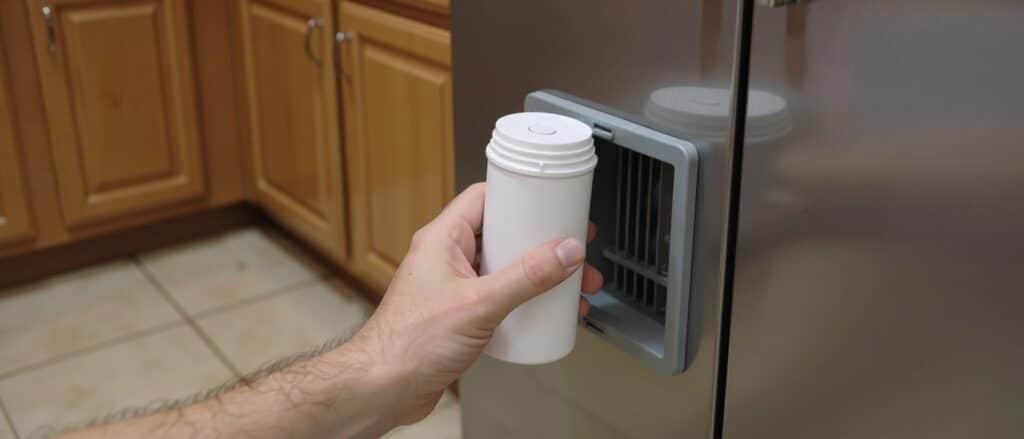
Aftermarket refrigerator filters are safe when the specific model carries a real NSF/ANSI certification — the risk isn’t the aftermarket part, it’s buying one that was never certified at all.
Yes, if the specific model is NSF/ANSI certified for what you care about. For chlorine and taste on municipal water, a certified aftermarket filter at roughly half the OEM price does the same job. Stick with the brand-name filter in two cases: you’re filtering out lead, or your fridge is still under warranty and you’d rather not think about it.
Key takeaways
- A certified aftermarket filter (look for NSF/ANSI 42 and 53 on the specific model, not just the brand) removes the same taste and health contaminants as the OEM filter, usually for about half the price.
- Skip anything only labeled “reduces contaminants” with no NSF/ANSI number. That’s a marketing claim, not a certification.
- In the US, a manufacturer generally can’t void your fridge warranty just for using a non-OEM filter (Magnuson-Moss Warranty Act, 16 CFR 700.10) unless they can show it caused the damage. Canada doesn’t have one clean equivalent law yet.
- A handful of GE and Frigidaire models use an RFID chip that rejects non-OEM cartridges outright, so check your model before buying a multi-pack of generics.
What we’d actually buy
The three tiers, not two
“Aftermarket” sounds like a downgrade. It isn’t, automatically. The real split isn’t brand-name vs. generic. It’s certified vs. uncertified, and a lot of cheap filters blur that line on purpose.
| OEM / Brand | Certified Aftermarket | Uncertified Generic | |
|---|---|---|---|
| Price | ~$55 | ~$29 | $8-15 |
| NSF/ANSI 42 (taste) | Yes | Yes | Unverified |
| NSF/ANSI 53 (lead) | Yes | Yes | No |
| Best for | Lead concerns, in-warranty fridges | Municipal water, saving money | Not recommended |
How to tell a safe one in 10 seconds
Look for the certification on the specific model number, not the brand’s promise.
- NSF/ANSI 42: chlorine, taste, and odor. The basics most people actually want.
- NSF/ANSI 53: health effects, including lead, cysts, and other contaminants. The one that matters for safety.
- NSF/ANSI 401: emerging contaminants, including some pharmaceuticals.
“Reduces 20+ contaminants” with no NSF/ANSI number means nothing; it’s not an independent claim. A real certification is searchable by model in NSF’s own public database. If you can’t find your filter there, treat it as taste-only and don’t rely on it for lead.
A specific example, and an honest caveat: the Waterdrop WDP-MWF (one of the more popular certified GE MWF-compatible options) is listed in NSF’s database under 42, 53, and 401. Retail listings also advertise NSF 372 (lead-free construction) for it. We checked NSF’s own listing directly and couldn’t independently confirm that specific standard there as of publishing, so we’re not counting it in this comparison. The 42/53/401 certifications are the ones that are independently verifiable.
The warranty myth
Many people buy OEM because they’ve heard a third-party filter voids the fridge’s warranty. In the US, that’s mostly a sales line: the Magnuson-Moss Warranty Act (specifically 16 CFR 700.10, the FTC’s “prohibited tying” rule) says a manufacturer generally can’t condition your warranty on using only their branded parts, unless they provide that part free or got a specific FTC waiver. They can still deny an individual claim if they can show the aftermarket filter actually caused the damage, but they can’t void the whole warranty just because you used one.
Canada is genuinely less settled here. There’s no single codified law that plays the same role as Magnuson-Moss. The federal Competition Act’s tied-selling provision (section 77) is a market-competition rule, not a personal consumer-warranty right, and it’s a high bar to meet. Ontario has a Right to Repair bill (Bill 91) that would explicitly ban voiding a warranty over a non-OEM part, but as of this writing it’s still in first reading, not law. If you’re in Canada, check your specific fridge’s written warranty terms rather than assuming a federal protection covers you the way it does in the US.
Two gotchas nobody mentions
Flush it first. Cheap filters often taste faintly like plastic for the first glass or two. Run about a gallon through before you judge it. OEM filters are usually pre-flushed at the factory; generic ones usually aren’t.
Check for an RFID chip. A few fridge lines read a chip in the filter and simply won’t recognize a non-OEM cartridge, and the dispenser can flash a false “leak detected” error and shut off water entirely. GE’s RPWFE and current XWFE lines are the best-documented case of this (GE will send a bypass plug if you register), along with Frigidaire’s EPTWFU01. Most other major lines (mainstream Samsung, LG, and Whirlpool/everydrop-branded fridges) don’t lock you out this way, but it’s worth checking your exact model before stocking up on a multi-pack of generics.
Frequently asked questions
Are aftermarket refrigerator water filters safe?
Yes, when the specific model is NSF/ANSI certified for what you need. For taste and chlorine on municipal water, a certified aftermarket filter performs like the OEM at roughly half the price. For lead or an in-warranty fridge, an OEM filter is the more conservative choice.Will an aftermarket filter void my warranty?
In the US, the Magnuson-Moss Warranty Act (16 CFR 700.10) generally prevents a manufacturer from voiding your whole warranty just for using a third-party filter, unless they can show it caused the damage. Canada doesn’t have one clean equivalent law yet, so check your specific written warranty terms.Why does my new filter taste like plastic?
Generic filters often aren’t pre-flushed at the factory. Run about a gallon of water through before drinking and it should clear up. OEM filters usually arrive pre-flushed, which is part of what you’re paying extra for.Why won’t my fridge recognize the new filter?
A handful of models (GE’s RPWFE and current XWFE lines, Frigidaire’s EPTWFU01) use RFID chip recognition that only accepts OEM cartridges and can trigger a false leak-detected error with anything else. Check whether your model uses this before buying a generic multi-pack.The Bottom Line
For most municipal-water households, a certified aftermarket filter like the Waterdrop WDP-MWF gets you the same taste and health-contaminant reduction as the OEM for about half the cost. Check the NSF/ANSI number on the specific model, not the brand’s marketing copy, and flush a gallon through on first use. If your water report flags lead, or the fridge is new and under warranty, spend the extra money on the OEM filter instead and don’t think twice about it.