 Inspire
Mini-Split BTU Sizing Calculator: A Real Starting Point, Not a Guess
Most online mini-split calculators add a ceiling-height and insulation adjustment that sounds official and isn’t. Here’s a calculator built only on numbers that are actually sourced, with the gaps flagged instead of filled in.
Updated July 18, 2026 · 10 min read · ✓ Fact-checked · Includes affiliated links
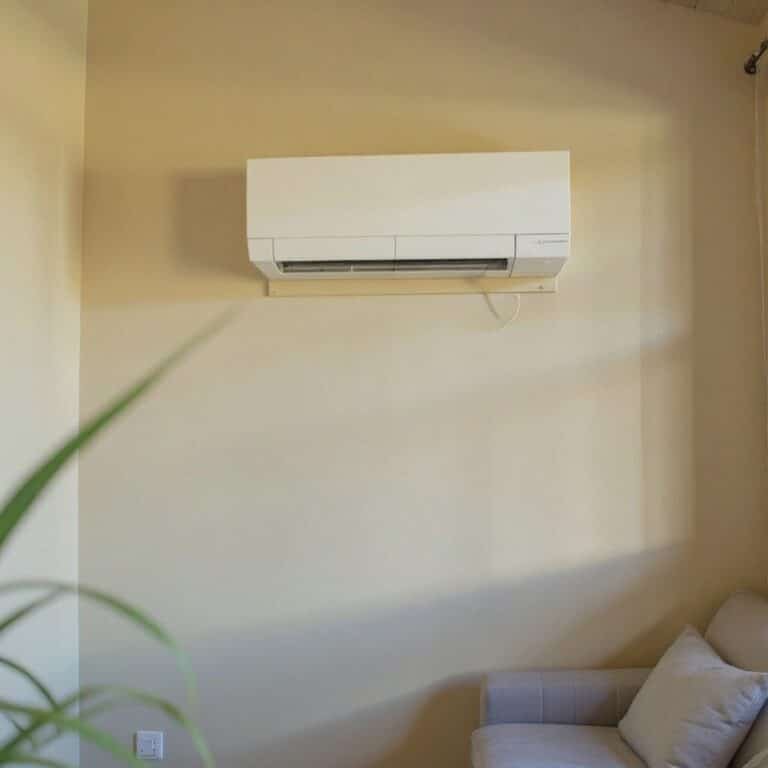
Every mini-split BTU calculator online, including this one, is really ENERGY STAR’s window-AC sizing table wearing a different label. That table (plus its sun, occupancy, and kitchen adjustments) is real and citable. The “ceiling height” and “insulation quality” multipliers almost every calculator bolts on, ours included until we checked, aren’t backed by ENERGY STAR, any manufacturer, or ACCA’s Manual J. We built this one to flag that gap instead of quietly filling it with a made-up number.
- The BTU range below comes from ENERGY STAR’s actual published sizing table, not an invented formula.
- No authoritative source publishes a ceiling-height or insulation-quality BTU adjustment; we say so instead of guessing.
- This tool is for a single supplemental room. Whole-home systems, multiple zones, and new construction need a real Manual J or CSA F280 load calculation.
Key takeaways
- ENERGY STAR’s real sizing table isn’t a flat BTU-per-square-foot number, it’s tiered, and small rooms need proportionally more capacity per square foot than large ones.
- Sun exposure (±10%), occupancy (+600 BTU per person past 2), and kitchens (+4,000 BTU flat) are ENERGY STAR’s own real adjustments.
- Ceiling height and insulation quality have no validated BTU adjustment from ENERGY STAR, any manufacturer, or ACCA, despite showing up on nearly every calculator online.
- Oversizing a mini-split causes short-cycling and worse dehumidification, not better comfort; ACCA’s own material calls oversized systems a mold and humidity risk, not just a waste of money.
- Cold-climate performance is a unit-selection question (look for ENERGY STAR Cold Climate certification), not something a sizing calculator can fix with a bigger number.
🧮Calculate a starting range
Answer six quick questions. We’ll calculate a real, sourced BTU range, and flag anything the math can’t honestly account for.
🎭The two numbers most calculators make up
Most mini-split calculators quietly borrow ENERGY STAR’s window-AC sizing chart, then bolt on two more adjustments that sound just as official. They’re not real.
Here’s the part that IS real: a 14-tier chart running from 5,000 BTU/h (100–150 sq ft) up to 34,000 BTU/h (2,000–2,500 sq ft), plus four adjustments: shaded rooms get 10% less, sunny rooms get 10% more, +600 BTU per person past two occupants, +4,000 BTU flat for a kitchen. It’s technically a window-AC standard, not mini-split-specific, but it’s the closest real, citable number out there, so it’s what we built this calculator on too.
The ceiling-height and insulation numbers are the made-up part. We checked several calculator sites: one uses 10% per foot of ceiling height, another uses 12.5%, a third doesn’t even match its own stated formula. None trace back to ENERGY STAR, a manufacturer, or ACCA’s Manual J.
Manual J does account for ceiling height, just not as a flat percentage, it uses actual room volume in a full air-change calculation, too complex for a homeowner to type into a form. So instead of inventing a number, our calculator just flags a tall ceiling as a reason to lean toward the higher end of the range.
📉Why oversizing backfires, not just costs more
Rounding up “to be safe” is exactly backwards with a mini-split. Oversizing doesn’t just waste money, it makes the room less comfortable, not more.
ACCA, the trade group that owns Manual J, is blunt about it: oversized equipment causes “degraded humidity control” and raises the risk of mold, allergic reactions, and respiratory problems. Not a minor footnote.
Here’s the actual mechanism. A compressor’s coil needs 10–15 minutes of continuous running before it starts pulling real moisture out of the air. An oversized unit satisfies the thermostat and shuts off before that happens, so the room ends up cool but clammy, whatever moisture briefly condensed just evaporates right back.
Even inverter-driven mini-splits have a floor. A Mitsubishi model rated at 6,000 BTU still has a minimum output around 1,700 BTU. If the room’s real load is only 1,500 BTU, the unit still short-cycles instead of running low and steady. NYSERDA puts a number on the damage: up to 25% efficiency loss starting around 120% of actual load, “severe” above 150%.
❄️Cold climate is a unit-selection problem, not a sizing-math problem
A colder climate doesn’t mean plugging in a bigger multiplier. It means picking a unit that’s actually rated to hold its capacity at that temperature.
The real benchmark is ENERGY STAR’s Cold Climate Heat Pump spec: a unit has to hold at least 70% of its rated capacity at 5°F, with a COP of at least 1.75. Real units vary a lot: one Mitsubishi H2i Plus model actually gets stronger at 17°F and 5°F before eventually derating at −13°F, while several Fujitsu XLTH models hold a full 100% all the way to 5°F.
🇨🇦 Natural Resources Canada builds its whole sizing method around this idea: size to the unit’s actual capacity at your local winter low, not its 47°F nameplate number with a penalty subtracted.
Bottom line: the range from the calculator above still works for cooling and mild-weather heating. For deep winter, just check the specific unit’s rated capacity at your coldest expected temperature instead of trusting the headline BTU number.
📐When this calculator isn’t enough
↓
existing system stays as backup
new construction, or a permit
ACCA doesn’t mince words about square-footage shortcuts: its own Manual J materials call “500 ft²/ton”-style rules “inappropriate and inadequate.” An audit of 40 real Manual J calculations found the actual average closer to 1,431 sq ft per ton, nearly triple the old rule of thumb. In practice, that means rule-of-thumb sizing tends to oversize modern, well-insulated homes, not undersize them.
NEEP draws a useful line here: a simplified estimate like this one is fine for one supplemental room where an existing system stays as backup. Anything bigger, a whole-home system, multiple zones, new construction, a permit, calls for a full Manual J or CSA F280 calculation instead.
None of the major manufacturers, Mitsubishi, Daikin, Fujitsu, LG, publish their own DIY sizing chart either. They all route anything beyond one room back to a professional.
📋The whole thing as one cheat sheet
What’s real and what’s not, at a glance.
| Factor | Source | Status |
|---|---|---|
| Base BTU by square footage | ENERGY STAR published table | Real, cited |
| Sun exposure (±10%) | ENERGY STAR | Real, cited |
| Occupancy (+600 BTU/person past 2) | ENERGY STAR | Real, cited |
| Kitchen (+4,000 BTU) | ENERGY STAR | Real, cited |
| Ceiling height adjustment | No authoritative source found | Flagged, not applied |
| Insulation quality multiplier | No authoritative source found | Flagged, not applied |
| Cold-climate capacity | ENERGY STAR Cold Climate spec, manufacturer data | Real, cited, unit-specific |
Frequently asked questions
Is this calculator as accurate as a professional Manual J calculation?
No, and it isn’t meant to be. It’s a starting-point estimate for a single supplemental room, built only from ENERGY STAR’s published sizing table and its own real adjustment factors. A full Manual J (or CSA F280 in Canada) accounts for actual insulation values, window count and orientation, and air infiltration room by room, this tool doesn’t and can’t.
Why doesn’t this calculator ask about my insulation or ceiling height?
It does ask about ceiling height, but it won’t invent a percentage adjustment for it. We checked ENERGY STAR, ACCA’s Manual J materials, and every major mini-split manufacturer’s published guidance, none publish a validated ceiling-height or insulation-quality BTU adjustment. Calculators that show you one specific number for these are estimating, not citing anything.
Should I round up to the next size to be safe?
No. Oversizing a mini-split causes short-cycling and worse dehumidification, a room that feels cool but clammy, not better comfort. ACCA specifically links oversized systems to mold and humidity problems. Sizing toward the lower-to-middle of the estimated range generally performs better than rounding up.
Does a mini-split lose heating capacity in cold weather?
It depends entirely on the specific unit, not on a universal cold-weather penalty. Look for ENERGY STAR Cold Climate certification, which requires at least 70% of rated 47°F heating capacity to still be available at 5°F. Some cold-climate-rated units actually exceed their 47°F rating at moderately cold temperatures before eventually derating at extreme cold.
When do I actually need a professional load calculation instead of a calculator like this?
For anything beyond one supplemental room: a whole-home system, multiple zones, new construction, or any installation requiring a permit. NEEP’s own sizing guidance draws this exact line, simplified estimates are reasonable for an isolated single-zone add-on, and a full Manual J or CSA F280 calculation is the right call for everything bigger.
The bottom line
The range this calculator gives you is a genuinely sourced starting point for one room, not a final answer. Size toward the lower half of the range rather than the top, an oversized mini-split performs worse, not better. If you’re heating or cooling more than one room, planning new construction, or need a permit, the honest next step is a real Manual J or CSA F280 load calculation from a contractor, not a bigger number from this or any other online tool.
Related reading
-
 Power & EnergyHeat Pump & Battery Rebates by Province (2026): What’s Actually AvailableEvery Canadian province’s heat pump and home battery rebates for 2026, federal and provincial, side by side.
 -
 Water & AirWhole-House Water Filter vs. Water Softener: Which One Do You Actually Need?A decision framework for whole-house water filters vs. water softeners: what each actually does, when you need one, both, or neither, and the one contaminant a whole-house filter can make worse.
 -
 Water & AirWhat’s Wrong With Your Well Water? A Symptom-by-Symptom Diagnostic GuideA symptom-by-symptom diagnostic tool for well water problems: what causes the smell, stain, or taste, and what actually treats it.