 Inspire
Japanese Beetle Control: What Actually Works (and the Trap Mistake)
Skeletonized leaves in July mean the beetles found you. The honest playbook, including the trap mistake that makes damage worse.
Updated July 3, 2026 · 9 min read · ✓ Fact-checked
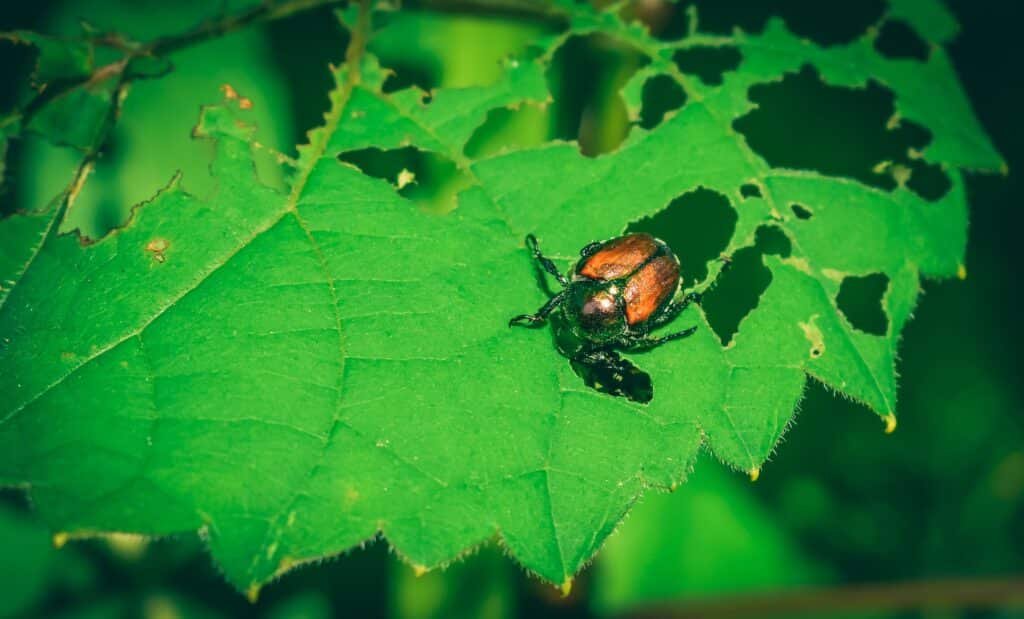
Start with the free move: knock beetles into soapy water in the early morning, daily during the 6-week flight. Net your highest-value plants with fine mesh. Traps do catch beetles by the thousand, but the lure pulls them in from well past your yard, so hang yours at least 30 feet downwind from anything you care about. Then treat the lawn with nematodes in late summer so far fewer grubs hatch into next July’s swarm.
Beetle season runs roughly late June through August in southern Canada and the northern US. If you’re seeing damage outside that window, it’s something else.
Key takeaways
Adults fly for about 6 weeks, late June to August, and everything you do during that window is damage control, not a permanent fix. Hand-picking into soapy water in the early morning, when beetles are sluggish, is genuinely effective and free, so do it daily. Traps work and backfire: the pheromone lure attracts beetles from hundreds of feet away, so a trap next to your roses feeds them first, keep yours at least 30 feet away and downwind from anything you’re protecting. Fine mesh netting (not bird netting) is the more reliable option for plants you can cover, just uncover any flowering crops that need bees.
The lasting fix happens in the lawn afterward. Beetles feeding in July mean grubs by September, and beneficial nematodes applied in late summer cut down next year’s population before it hatches, they’re also the option that’s actually sold in Canada.
Japanese beetles don’t nibble politely. A feeding cluster strips a rose or bean leaf to a brown lace skeleton in a day or 2, and once a few start feeding, their scent draws more. The good news: this is one of the most studied garden pests in North America, and what works is settled. The catch: the most popular product, the bag trap, backfires the way most people use it.
Japanese Beetle Control: What we’d buy
This section contains affiliate links — we may earn a commission at no extra cost to you. See our full evaluation policy at the end of this guide.
3 different jobs: knock down a heavy infestation, protect what you can’t afford to lose, and shrink next year’s swarm.
The 3 compared
| Pick | Job | When | Rating |
|---|---|---|---|
| RESCUE! Beetle Trap | Mass knockdown | During the 6-week flight | 4.2★ |
| Garden Tailor Netting | Protect what’s covered | Before and during flight | 4.5★ |
| Nema Globe Grub Busters | Cut next year’s swarm | Late Aug to early Sept | 3.7★ / 3.8★ |
Know the beetle: a 6-week problem with a 46-week setup
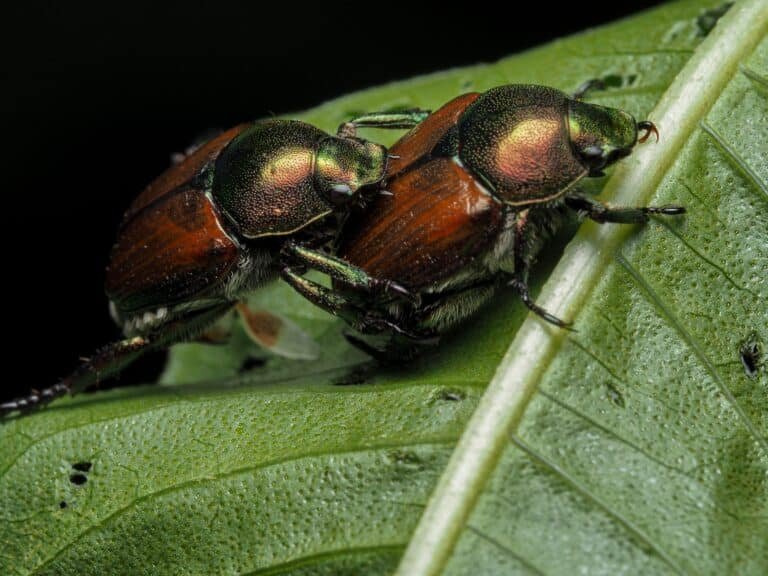
Japanese beetles (the metallic copper-and-green ones, about 1 cm long) emerge from lawns in late June to early July, feed and mate for roughly 6 weeks, and are gone by late August. Each female lays 40 to 60 eggs in turf. Those hatch into white grubs that eat grass roots through fall, overwinter deep in the soil, and surface as next summer’s beetles.
That lifecycle is why a 2-front approach beats any single product: manage the adults during the flight so this year’s garden survives, and treat the lawn in late summer so far fewer adults emerge next year. Skip the second half and you restart from zero every July.
One more quirk shapes everything below. Feeding beetles release a scent that recruits more beetles, so damage snowballs. An early, daily routine beats a big cleanup 2 weeks in.
The trap mistake almost everyone makes
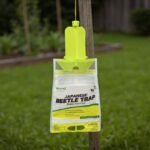
Bag traps genuinely catch staggering numbers of beetles. That part of the marketing is true. The problem is the lure: a floral scent plus sex pheromone that beetles detect from several hundred feet. A trap doesn’t just collect your beetles; it invites the neighbourhood’s. University extension trials found that traps placed beside garden plants increase damage to those plants, because not every recruited beetle ends up in the bag.
One long-term Canadian reviewer put it bluntly: it caught beetles by the bagful, but “brought every beetle from miles away” to their fruit trees. The trap wasn’t defective. It was doing its job in the wrong spot.
Hang it at least 30 feet from anything you’re protecting: a back fence line or an unused corner of the lawn, downwind if you can.
Hang it about 4 feet off the ground on a stake or post, not in a tree you like.
Empty it every day or 2 during peak flight. A full bag stops catching and starts smelling, and the smell of dead beetles keeps new ones away.
Small city lot with no 30-foot buffer? Skip the trap entirely. Hand-picking plus netting will serve you better than a lure you can’t place far enough away.
Netting: the boring option that just works
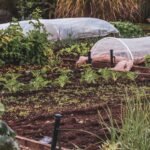
For plants you can physically cover, like roses, beans, basil, and young fruit trees, fine mesh is the most reliable defence there is. No attractant, no chemistry, no timing. 3 rules make the difference between netting that works and netting that frustrates:
- Use insect mesh, not bird netting. Japanese beetles walk straight through 1/4-inch bird net. You want mesh around 0.03 inches, about as fine as a mosquito screen.
- Leave growing room and seal the edges. Drape over hoops or a frame where you can, and pin the skirt to the ground with pegs or boards. Beetles land and crawl, so an open hem is a door. Wind is the other enemy; unpinned netting ends up in the neighbour’s yard.
- Uncover bee-pollinated crops during bloom. Squash, cucumbers, melons, and berries need pollinators more than they need beetle protection. Cover them again once fruit has set, or hand-pollinate under the net.
Fix next year: treat the grubs, not just the adults
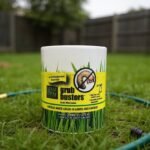
Every beetle you saw this July started as a grub in somebody’s lawn last fall, and plenty of them were in yours. Skunks and raccoons tearing up turf in September is the classic sign. Breaking that cycle is where beneficial nematodes come in: microscopic soil organisms that seek out and kill white grubs, then die off when the grubs are gone. They’re harmless to people, pets, bees, and earthworms.
In Canada this is effectively the grub treatment, since synthetic options like chlorantraniliprole (GrubEX) aren’t registered for home use here. The catch is that nematodes are alive, and applying them like a chemical kills them. Here’s the playbook from the most successful long-term users:
Time it for late August to mid-September, when this year’s eggs have hatched into small grubs near the surface. (A spring application in May or June targets the survivors, but late summer is the higher-value window.)
Apply in the evening or on an overcast day. UV light kills nematodes in minutes.
Water before and after. Soak the lawn first, spray the nematodes, then keep the soil moist for 2 to 3 days so they can swim down to the grubs.
Steep the pouches like tea bags. Don’t tear them open. The gel inside clogs sprayers; the pouch mesh is designed to release nematodes, not gel.
Frequently asked questions
Do Japanese beetle traps attract more beetles than they catch?
Placed next to your plants, yes. That’s the well-documented failure mode. Placed 30+ feet away from what you’re protecting, the math flips and the trap becomes a useful mass-removal tool. Placement is the whole game.
What’s the best free method?
A bucket of soapy water, early in the morning while beetles are cold and sluggish. Hold it under the branch and tap. They drop straight in and drown. 10 minutes a day during the flight window genuinely keeps damage manageable.
When should I apply nematodes in Canada?
Late August to mid-September, when new grubs are small and near the surface. Apply in the evening, onto pre-watered soil. Spring (late May to June) works as a follow-up but is the weaker window.
Why not milky spore?
Milky spore isn’t registered for sale in Canada, and even in the US it has been inconsistent in cooler northern climates. It can also take several years to establish. Nematodes act the same season and are available in both countries.
Will companion planting or coffee grounds repel them?
There’s no good evidence for coffee grounds, and repellent plantings like garlic or chives haven’t held up in trials. Physical removal, exclusion, and grub control are what reliably work.
Do Japanese beetles bite or sting?
No. They have chewing mouthparts built for leaves and can barely pinch skin. They’re a plant problem, not a people problem.
RESCUE! Japanese Beetle Trap
Best for genuinely heavy infestations, hung 30+ feet from the plants you’re protecting
Want zero-risk protection for your highest-value plants? Fine mesh netting covers them with zero downside beyond uncovering blossoms for the bees.
Want next July to start quieter? Nema Globe Grub Busters nematodes treat the lawn in late August, before this year’s eggs become next year’s beetles.
Related reading
-
 CanadaBest Mosquito Control for Standing Water in Canada (Homeowner Guide)Best mosquito control for standing water in Canada: 5 tested options ranked by effectiveness, safety near wildlife, and value. Includes biocontrol and chemical picks.
 -
 CanadaMYKOS vs DYNOMYCO: Which Mycorrhizae Is Worth Buying in 2026?MYKOS vs DYNOMYCO: which mycorrhizal inoculant is worth buying? We compare species count, application method, price per application, and real transplant results.
 -
 Plant Care & GardeningBest Mycorrhizae for Tomatoes in Containers (2026): MYKOS vs DYNOMYCOBest mycorrhizae for tomatoes in containers: our top picks after testing in grow bags and pots. Only the ones that actually improved root uptake — no filler products.