 Inspire
OPC-3 for Seasonal Allergies in Canada: What the Real Research Found
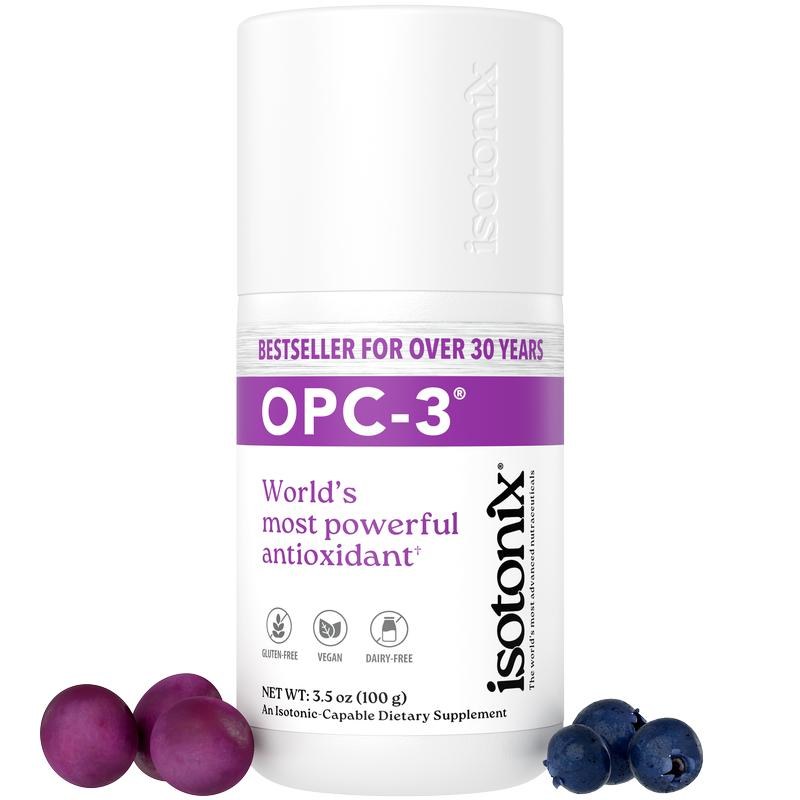
Every spring, the same question shows up from Isotonix customers across Canada: is it normal that pollen season feels easier this year? A real clinical trial, run in Ontario during actual birch pollen season, measured almost that exact effect from one of OPC-3’s four antioxidant sources.
Key takeaways
- A placebo-controlled trial run in Ontario, Canada found people taking Pycnogenol — one of OPC-3’s four antioxidant sources — had notably lower eye and nasal allergy scores through birch pollen season. Only 39 people took part, so it’s a real, measured signal, not statistical proof.
- Timing was the biggest factor in that trial. Starting 5 to 8 weeks before pollen season made the difference; an earlier, smaller round that started just 3 weeks out found nothing.
- Separate lab research found Pycnogenol calms specific inflammatory signals involved in allergic reactions, a plausible reason for that result — though that particular study was done in rats, not people.
- Long-time customers regularly tell us, unprompted, that pollen season feels different once OPC-3 is part of their spring routine. That is a genuine pattern we hear every year, not a clinical claim.
- This is antioxidant support, not an allergy medication. It does not replace antihistamines, and it has nothing to do with food allergies, which work through a completely different part of the immune system.
Is this worth trying for your allergies?
Worth trying if…
- You get seasonal eye or nasal symptoms every spring and want a daily antioxidant habit alongside your normal routine, not instead of it
- You are willing to start weeks before your local pollen season, since timing was the biggest factor in the real research below
- You already take an antioxidant supplement, or were considering one, and want to know what the allergy-specific evidence actually says
Look elsewhere if…
- You want something to replace antihistamines or a medication your doctor prescribed. This is not that, and we will not pretend otherwise
- You have a diagnosed food allergy, such as a peanut or tree-nut allergy. That runs through a different immune mechanism entirely, and nothing below applies to it. Keep using your prescribed epinephrine and your allergist’s plan
- You take blood thinners or blood-pressure medication and have not yet checked with a pharmacist, since OPC sources can have mild effects there (more on that further down)
- You want a guaranteed fix. No supplement is that, and the research below is honest about its own limits
What the Ontario allergy study actually found
In 2008 and 2009, a research team working with KGK Synergize in London, Ontario ran a double-blind, placebo-controlled trial on Pycnogenol, the pine bark extract that is one of OPC-3’s four antioxidant sources. They picked a real, hard-to-fake test: birch pollen season, when allergy symptoms are predictable enough to measure.
The first round, in 2008, started 19 people on Pycnogenol just 3 weeks before the season began. The result was unremarkable: some improvement in eye and nasal symptoms, but nothing that beat the placebo group by a meaningful margin.
✕ 2008: started 3 weeks early
- 19 people
- Some improvement, but not enough to beat placebo
- Researchers suspected: not enough lag time
✓ 2009: started 5–8 weeks early
- 39 people
- Eye and nasal scores both clearly lower than placebo
- Best results: the ones who started earliest
Instead of dropping it there, the researchers changed one variable: timing. In 2009, 39 people started taking Pycnogenol 5 to 8 weeks before birch season instead of 3. That time, the difference showed up:
| What was measured (2009, 39 people) | Pycnogenol group |
|---|---|
| Eye symptoms | 35% lower than placebo |
| Nasal symptoms | 20.5% lower than placebo |
| Birch-specific IgE (allergy marker), rise over the season | +19.4% (vs +31.9% placebo) |
We want to be straight about what that does and doesn’t prove. With 39 people, the study itself says a statistically airtight conclusion wasn’t possible; the researchers were candid about that limitation in their own writeup. What it does show is a consistent, measured pattern, and a strong hint that when you start matters as much as whether you start at all.
The mechanism: why an antioxidant would touch an allergic reaction at all
Here is the plausible biology behind that result. In a 2016 lab study, researchers triggered allergic rhinitis in rats (an ovalbumin model, a standard way to study allergic inflammation in animals, not people) and then treated them with Pycnogenol. The measurements were specific: Pycnogenol significantly reduced IL-4, one of the core signaling molecules that drives an allergic reaction, along with TNF-α and IL-1β in the nasal tissue, and it reduced mucosal swelling in a dose-dependent way.
That is not folklore. It is a measured anti-inflammatory effect, on the exact pathway allergies run on, published in a peer-reviewed journal. It is also, importantly, a rat study. It cannot prove Pycnogenol does the same thing in a human immune system. What it can do is offer a real, lab-verified explanation for why the Ontario trial above might have found what it found: a plausible mechanism sitting behind a measured human result, rather than either one standing alone.
What OPC-3 customers tell us
We hear this every spring, unprompted, in customer messages and reorders: people who keep a daily OPC-3 habit going into pollen season telling us that April and May feel different than they used to. We are not going to dress that up as a clinical finding. It is not a substitute for the trial above, and we cannot promise it for everyone who tries it.
But it is a consistent, independent pattern, year after year, from people with no reason to tell us anything except what they noticed. Put that next to a real clinical trial that measured a similar effect, backed by a lab-verified mechanism for why it might happen, and you have three separate lines of evidence pointing the same direction. That combination, more than any single data point, is a real part of why OPC-3 has stayed a flagship product through two decades of allergy seasons instead of fading after one.
What the research doesn’t show yet (so you know the real limits)
It is worth being upfront about how early this specific research still is. A 2020 Cochrane review, the strictest bar in evidence medicine, examined pine bark extract (the ingredient category Pycnogenol belongs to) across ten different chronic conditions, from asthma to diabetes to osteoarthritis, and found most of the available trials were small and low-certainty. Allergic rhinitis was not even one of the ten conditions that review covered, which says something about how young this particular angle still is.
A 2024 systematic review looked specifically at that gap, pooling 29 clinical trials on single medicinal plants for allergic rhinitis, including the same Ontario Pycnogenol trial described above. Its conclusion: evidence across the whole category is still “very-low-to-low certainty,” and clear proof of benefit is, in the reviewers’ own words, “still lacking” industry-wide. That is a sober line, and we are not going to pretend it says something stronger than it does. What we can say is that OPC-3’s allergy signal sits inside a real, if early-stage, body of research, rather than standing apart from it.
Blood pressure, blood thinners, and other things to check first
If allergies are not the only thing on your mind this season, you are not alone. OPC-3’s antioxidant sources are also studied for circulation and blood-pressure markers, which is enough of its own topic that we are building a dedicated article on it. The short version for now: if you take blood thinners or blood-pressure medication, check with a pharmacist before adding OPC-3, since OPC sources can have mild effects in both areas. That is not a reason to avoid it outright. It is a five-minute conversation, and then you know.
When to start, if you are going to try it
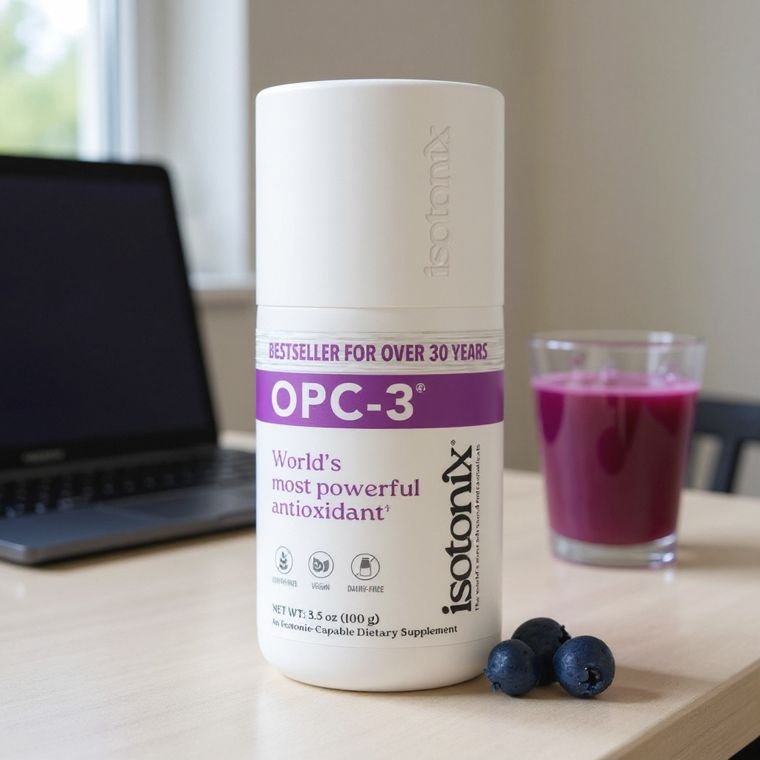
The Ontario trial’s clearest lesson was not about the ingredient. It was about timing. The group that started 5 to 8 weeks ahead of birch season saw a real difference; the group that started 3 weeks out did not. Waiting until your eyes are already watering is, based on this research, close to the least effective time to start.
In most of Canada, tree pollen ramps up through April, though the exact timing shifts by region and year. Provincial allergy-tracking resources and your local weather service are the most reliable way to check what is typical where you live, so you can count backward from there. For the how-to-take-it details, mixing ratio, and common mistakes, see our mixing guide.
Frequently asked questions
Some links on this page are affiliate links: if you buy through them we may earn a commission at no extra cost to you. All links go to the official regional store.
Does OPC-3 actually help with seasonal allergies?
Why does timing matter so much?
Is that animal research or human research?
Can OPC-3 replace my antihistamine?
What about food allergies, like peanuts or tree nuts?
Does OPC-3 affect blood pressure or interact with medication?
Where should I buy it, and how do I avoid fakes?
“A small but real Ontario trial found lower allergy scores with one of OPC-3’s four antioxidants, timed right, and two decades of customers keep telling us the same thing every spring in their own words. That is genuine supporting evidence, not a cure, and we are not going to tell you otherwise.”
Worth trying alongside your normal allergy routine, especially if you start weeks ahead of pollen season. Full ingredient breakdown and value verdict in our complete OPC-3 review; new customers get 15% off with 15OFFMA.

Sources
- Wilson D, Evans M, Guthrie N, Sharma P, Baisley J, Schonlau F, Burki C. “A randomized, double-blind, placebo-controlled exploratory study to evaluate the potential of pycnogenol for improving allergic rhinitis symptoms.” Phytotherapy Research, 2010. PubMed.
- Günel C, et al. “Inhibitory Effect of Pycnogenol on Airway Inflammation in Ovalbumin-Induced Allergic Rhinitis” (animal study). Balkan Medical Journal, 2016. PubMed.
- Robertson NU, Schoonees A, Brand A, Visser J. “Pine bark (Pinus spp.) extract for treating chronic disorders.” Cochrane Database of Systematic Reviews, 2020. PubMed.
- Lim XY, et al. “Medicinal plants for allergic rhinitis: A systematic review and meta-analysis.” PLoS One, 2024. PubMed.
- Grape seed & Pycnogenol research overview: Examine.com.
- General antioxidant and supplement background: NIH Office of Dietary Supplements.
Related reading
-
 ReviewIsotonix OPC-3 reviewOur full hands-on review: value, taste, and whether the premium over a capsule is worth it.
 -
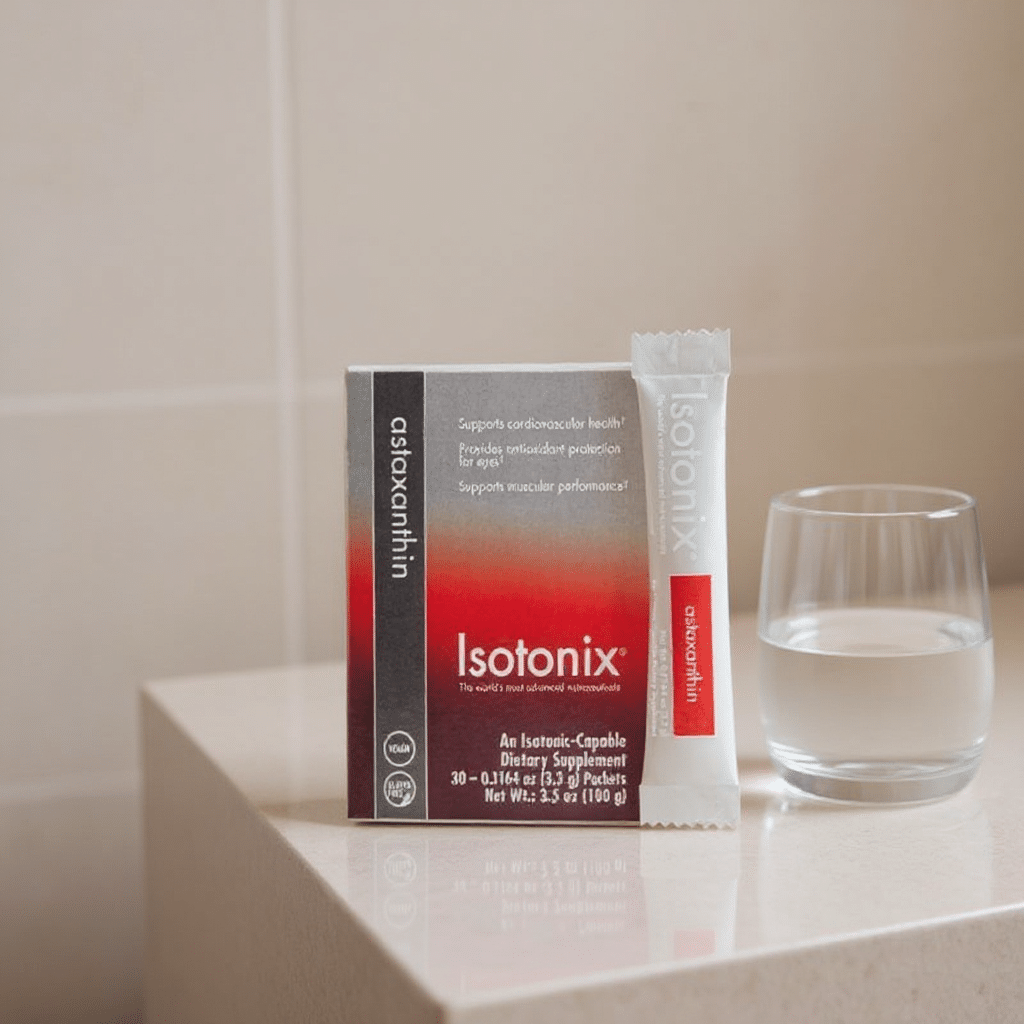 ReviewIsotonix Astaxanthin ReviewA different real antioxidant, examined the same honest way: what the label claims versus what backs it up.
 -
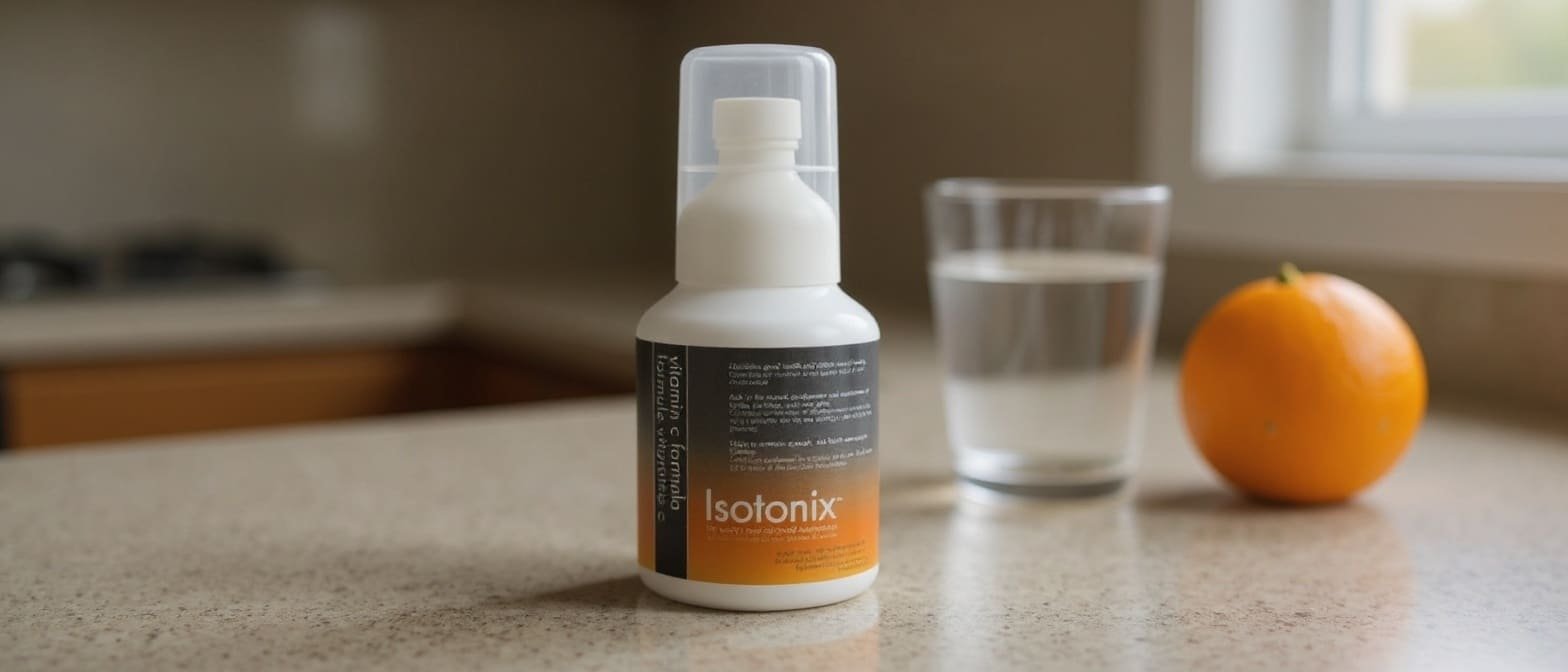 ReviewIsotonix Vitamin C ReviewThe same isotonic delivery story, applied to the vitamin already part of OPC-3’s own formula.