 Inspire
Does Your City Even Accept Compostable Green Bin Bags? Canada Rules by City (2026)
Calgary says to look for a certified compostable logo if you bag. Halifax won’t collect a cart with a compostable plastic bag in it. Here’s what happens after pickup, city by city.
Updated November 17, 2026 · 7 min read · ✓ Fact-checked · Includes affiliated links
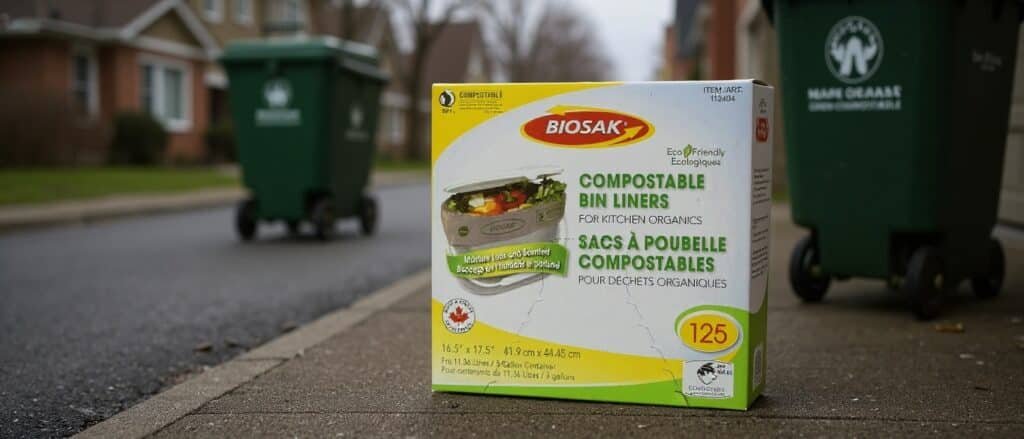
Buy the wrong bag for your program and one of two things happens. Nothing, because every bag gets stripped out before composting starts, compostable or not. Or your whole cart gets left at the curb. Which one applies to you depends entirely on your city, and there’s no national standard behind any of it.
Calgary says to look for a certified compostable logo and that plastic bags are not accepted in the green cart. Toronto removes compostable bags during pre-processing and sends them to landfill, so one buys you nothing in the actual bin; check Ottawa’s page for its rules. Halifax will not collect a cart that contains plastic, including compostable plastic bags. Check your city’s own waste page before you buy a case of anything.
The one place a compostable bag earns its keep no matter what your city does: the kitchen caddy under your sink, where it’s holding scraps for a few days, not going through an industrial composter.
Key takeaways
Certified compostable isn’t one universal pass. Canada has two certification marks in circulation: the U.S.-based BPI logo and Quebec’s BNQ 0017-088 standard. Niagara Region asks for the BPI or COMPOSTABLE logo and also lists paper bags as an acceptable liner.
Whether a compostable bag does anything in your actual outdoor bin depends on how your city processes organics, not on the bag itself. Toronto uses anaerobic digestion and removes compostable plastic bags in pre-processing, sending them to landfill. Calgary says to look for a certified compostable logo when buying bags and does not accept plastic bags.
A compostable bag is never wasted at the kitchen caddy stage. That’s a few days of countertop storage, not a trip through a municipal facility, and the rules below don’t touch it.
If your city takes certified bags
This section contains affiliate links, so we may earn a commission at no extra cost to you. See our full evaluation policy at the end of this guide.
What 6 Canadian programs actually do
| City / region | What happens to the bag | Compostable bag needed? |
|---|---|---|
| Calgary | Look for a certified compostable logo when buying bags. Plastic bags are not accepted in the green cart, and bagging is not always required. | Optional, must be certified if used |
| Niagara Region, ON | Certified compostable bags with the BPI or COMPOSTABLE logo, or paper bags, are listed as acceptable liners. | Optional, must be certified if used |
| Toronto | Anaerobic digestion. Compostable plastic bags are removed in pre-processing and sent to landfill. You can line the bin with any plastic bag, and compostable bags are not necessary. | No benefit |
| Ottawa | Check Ottawa’s green bin page for its current bag rules before you buy. | Check the city page |
| Halifax | Green carts that contain plastic, including “biodegradable” or “compostable” plastic bags, will not be collected. The plastic must be removed before the next collection day. | Banned |
| Metro Vancouver | Most municipal food scraps programs in Metro Vancouver do not accept plastic items labelled biodegradable or compostable. If plastic bags are spotted, the entire load may be rejected and sent to landfill. | Risk of rejection |
What the certification logo actually promises
Two logos show up on Canadian compostable bags. The BPI (Biodegradable Products Institute) mark means a product passed ASTM D6400 testing: it has to break down within 180 days under commercial composting conditions, sustained high heat and controlled moisture that a municipal facility provides, not a backyard bin. BNQ 0017-088 is the Quebec-specific version of roughly the same test, run to ISO 17088 and 18606 standards. Biosak carries both.
Neither logo means “biodegradable.” That word has no testing requirement behind it at all. “Oxo-degradable” bags are worse: they’re regular plastic with an additive that makes them fragment into smaller pieces, which just means invisible microplastic instead of a visible bag. If a bag doesn’t carry the BPI or BNQ logo, don’t assume it composts anywhere.
How to check your own city in 2 minutes
Search “[your city] green bin what goes in” and open the .gov result, not a retailer page.
Look for the word certified. If the page doesn’t mention a certification logo by name, treat compostable bags as unreviewed there, not automatically approved.
Still unsure? Call the waste info line. Every city runs one. A 5-minute call beats guessing with a $20 case of bags.
The one use case where the rules don’t matter
None of this affects your kitchen counter. A caddy liner holds scraps for a day or three before you empty it, whatever your city requires, into the outdoor bin, a backyard pile, or a paper bag for pickup. It never goes through a composting facility itself, so certification rules that govern outdoor bins don’t apply to it.
That’s the split worth remembering: the 3-gallon kitchen liner is a safe buy in any city. The 24 x 30 outdoor liner is only worth it if your program actually takes certified bags in the bin itself.
Frequently asked questions
What’s the actual difference between "biodegradable" and "compostable"?
“Compostable” has a testing standard behind it (ASTM D6400 for the BPI logo, ISO 17088/18606 for BNQ): break down within 180 days under commercial composting heat, with no toxic residue left behind. “Biodegradable” has no required testing or timeline. A plastic bag will technically “biodegrade” over enough centuries. That doesn’t make it compostable.
My city doesn’t accept compostable bags in the green bin. Is buying them pointless?
Not entirely. They still work as a kitchen caddy liner, where the appeal is odor and leak control on your counter, not what happens to the bag after pickup. If your city screens out every bag anyway, empty the caddy into your outdoor bin loose, or use whatever your city’s own page recommends for the actual cart. If you want bags that hold up to wet scraps, see our best compost bags in Canada that do not leak.
Are BPI and BNQ the same certification?
They test for the same outcome, commercial compostability, through similar standards (ASTM D6400 vs ISO 17088/18606), but they’re separate certification bodies. Some cities recognize one and not the other by name, which is part of why checking your specific city’s page matters more than assuming any certified bag qualifies.
What happens if I use a regular plastic bag in a city that requires certified compostable?
In Calgary, plastic bags are not accepted in the green cart because they interfere with the composting process. The City’s page does not say what happens to a cart that contains one, so check with the City before you try it.
The bottom line
Don’t buy a case of anything before you check your own city’s page. If you’re in Calgary, Niagara Region, or a program with a similar certified-bag requirement, the BIOSAK 24 x 30 is a safe, dual-certified pick for the outdoor bin. If you’re in Toronto, Halifax, or Metro Vancouver, or you have not confirmed Ottawa’s rules, save your money on the outdoor liner and put it toward the kitchen caddy instead, where it does something regardless of what your city’s facility does with the bag afterward.
Related reading
-
 Home Care & DIYWhat Not to Use Bar Keepers Friend On (7 Surfaces to Avoid)What not to use Bar Keepers Friend on: 7 surfaces the oxalic acid formula can damage, including some that surprised us. Know these before you grab the can.
-
 Home Care & DIYBar Keepers Friend Soft Cleanser vs Bon Ami: Which Is Safer for Glass?Bar Keepers Friend Soft Cleanser vs Bon Ami: which is safer for glass surfaces? We compare abrasive level, ingredients, and real results on stove tops and shower doors.
-
 Home Care & DIYHow to Clean Glass Without Scratching (Safe, Foolproof Method)How to clean glass without scratching: rinse off grit first, use clean microfiber, keep pressure light. Most scratches come from friction, not from the cleaner itself.