 Inspire
Blossom End Rot on Tomatoes: Why It Happens (and the Fastest Fix)
That dark, sunken spot on the bottom of your tomato isn’t a disease. It’s a calcium delivery problem, and it’s fixable.
Updated July 3, 2026 · 9 min read · ✓ Fact-checked
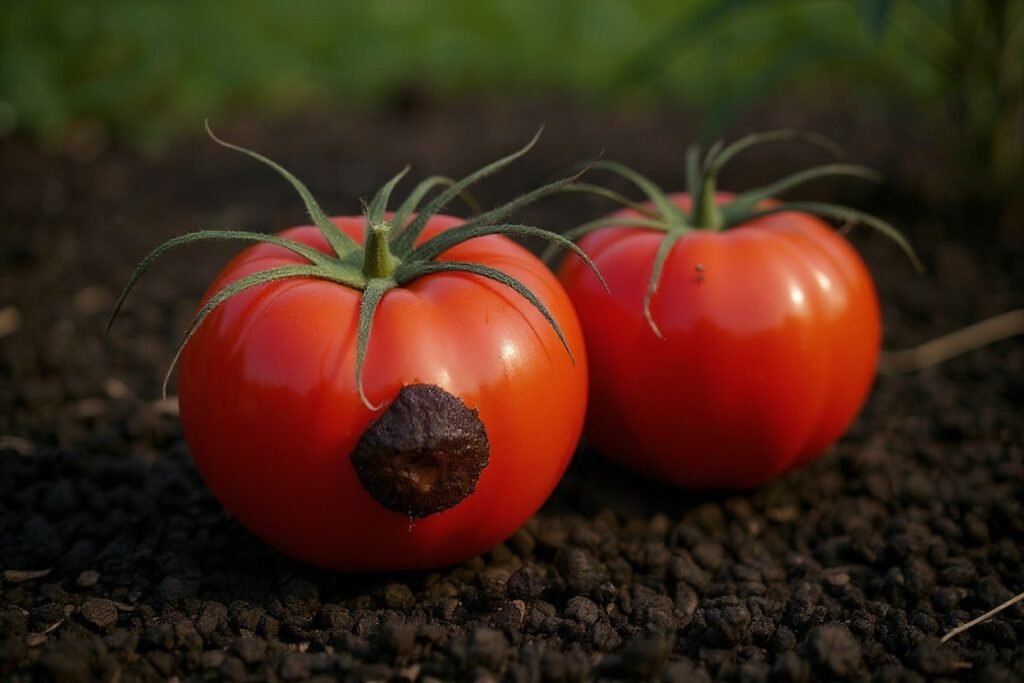
Blossom end rot is usually a watering problem, not a soil problem. The dark, leathery spot means the plant couldn’t move calcium into the fruit fast enough, almost always because watering was inconsistent. Fix the watering first. A cal-mag supplement helps most in containers, raised beds, or fast-draining soil, where moisture swings are hard to avoid.
Already seeing spots on ripening fruit? That damage won’t reverse, but fixing the watering now stops it from spreading to the next cluster.
Key takeaways
- Blossom end rot is a calcium delivery problem, not usually a calcium shortage. Most garden soil already has plenty.
- Inconsistent watering is the number one cause. Dry spells followed by heavy watering interrupt calcium’s only route into the fruit, which is moving water.
- Mulch plus a steady watering schedule fixes it for most in-ground gardens in about 2 weeks.
- Containers, raised beds, and coco or hydro setups dry out faster, so they get the most benefit from a cal-mag supplement.
- Don’t confuse it with poor fruit set. Flowers dropping or fruit that won’t ripen is usually heat stress or pollination, a different problem.
Blossom end rot shows up as a flat, dark, sometimes leathery patch on the bottom of an otherwise healthy-looking tomato. It ruins more first harvests than any garden bug does. And the frustrating part is that it’s rarely about how much calcium is in your soil. It’s about whether the plant can get that calcium to the fruit, and that comes down to water.
Our cal-mag picks
None of these fix bad watering. Nothing will. They’re for containers, raised beds, and fast-draining soil where even a good watering schedule still leaves swings.
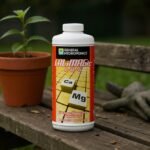
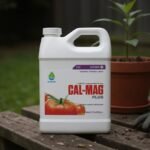
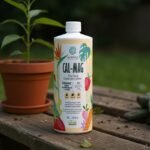
The 3 compared
| Supplement | Best for | Format | Rating |
|---|---|---|---|
| General Hydroponics CALiMAGic | Most gardens, soil or hydro | Concentrate, 1:1000 | 4.7★ / 4.8★ |
| Botanicare Cal-Mag Plus | Containers & yellowing leaves | Liquid + iron, drench or spray | 4.6★ / 4.7★ |
| MARPHYL Organic Cal-Mag | Organic gardens | Liquid, 1:20 | 4.4★ / 4.5★ |
What’s actually happening inside the plant
Calcium doesn’t move through a tomato plant the way sugars or water do. It travels one direction only, dissolved in water moving up through the stem, and it goes wherever that water is moving fastest. Usually that’s the leaves. A fast-growing tomato, especially the first big fruit of the season, needs a steady supply of that calcium-laden water delivered right to the fruit.
When the soil dries out and then gets soaked, or a heat wave spikes water loss through the leaves, the plant pulls water toward the leaves and away from the fruit. The fruit’s cells run short on calcium just as they’re expanding fastest. The tissue at the blossom end, farthest from the stem, breaks down first. That’s the lesion.
Why it’s rarely your soil
Most garden soil, even sandy soil, has more calcium than a tomato plant needs. A soil test will confirm a true deficiency, but it’s an uncommon finding. The usual culprits are all about delivery, not supply:
- Inconsistent watering. Letting soil dry out between waterings, then flooding it, is the single biggest cause.
- Root damage. Aggressive hoeing or cultivating close to the stem cuts the roots that pull water and calcium.
- Too much nitrogen, too early. It pushes fast leafy growth that outpaces what the roots can deliver to fruit.
- High salts. Over-fertilizing, especially with potassium- or ammonium-heavy blends, can tie up calcium in the soil.
How to fix it this season
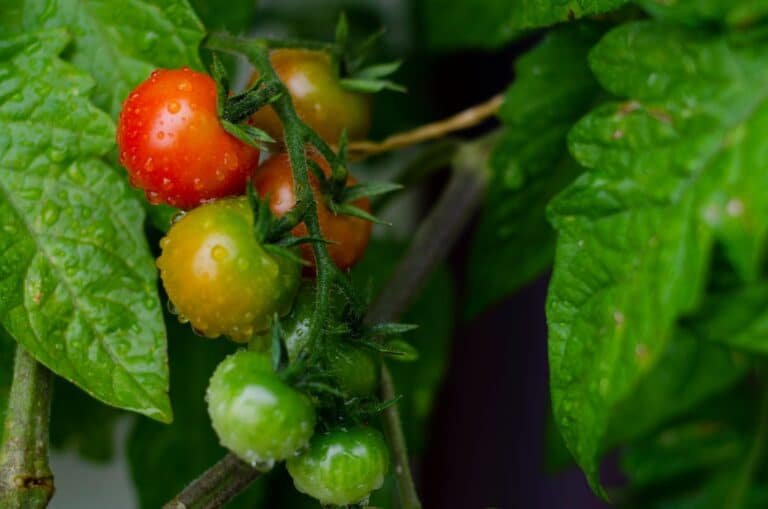
Water on a schedule, not a feeling. Aim for 1 to 1.5 inches a week, delivered consistently rather than in one big soak after the soil’s gone dry.
Mulch 2 to 3 inches deep. Straw, shredded leaves, or bark buffers the soil against the swings that cause the problem in the first place.
Ease off high-nitrogen fertilizer once fruit sets. Let the plant put energy into fruit, not more leaves.
In containers, raised beds, or fast-draining soil, add a cal-mag supplement. These dry out faster than garden soil no matter how well you water. That’s where our picks below actually help.
Don’t panic about fruit that’s already affected. Pick it off (it won’t heal) and keep the next cluster’s watering consistent. Most gardens see clean fruit again in about 2 weeks.
Is it even blossom end rot?
Not every tomato problem near harvest is BER. If flowers drop before fruit even forms, or fruit stays small, pale, and never ripens, that’s usually pollination or heat stress. It gets common once daytime temperatures pass 32°C (90°F), and a cal-mag supplement won’t fix it. Blossom end rot specifically shows up as a sunken, discolored patch on fruit that already set and was growing normally. If the fruit looks fine but there’s barely any fruit at all, the fix is shade cloth and patience for the heat to break, not a fertilizer change.
Frequently asked questions
Will blossom end rot go away on its own?
The damage on affected fruit won’t heal, but new fruit can come in clean once watering evens out, usually within about 2 weeks.
Does Epsom salt fix blossom end rot?
No. Epsom salt is magnesium sulfate, not calcium. Adding more magnesium can actually make BER worse, because magnesium competes with calcium for uptake. Skip it for this problem.
Can I still eat a tomato with blossom end rot?
Yes. Cut away the affected patch. The rest of the fruit is normal and safe to eat.
Does this happen to peppers and squash too?
Yes. Peppers, squash, zucchini, and cucumbers rely on the same calcium delivery process and develop the same kind of lesion under the same watering swings.
How fast does a cal-mag supplement work?
Paired with consistent watering, most gardeners see improvement in new fruit within 1 to 2 weeks. It won’t do much on its own if the watering stays inconsistent.
Bottom line
For most in-ground gardens, fix the watering schedule and add mulch first. That clears blossom end rot for the majority of home growers in about 2 weeks, no product required. If you grow in containers, raised beds, or coco and hydro setups where moisture swings are hard to avoid, General Hydroponics CALiMAGic is the easiest all-around cal-mag to keep on hand.
Related reading
-
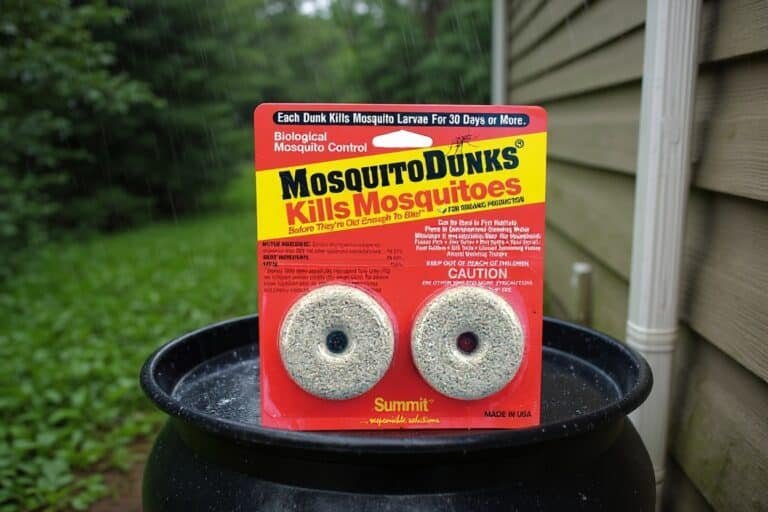 CanadaBest Mosquito Control for Standing Water in Canada (Homeowner Guide)Best mosquito control for standing water in Canada: 5 tested options ranked by effectiveness, safety near wildlife, and value. Includes biocontrol and chemical picks.
 -
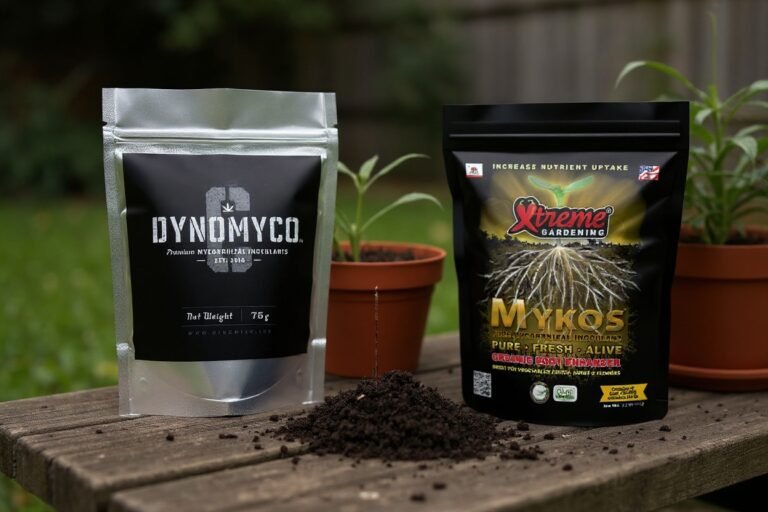 CanadaMYKOS vs DYNOMYCO: Which Mycorrhizae Is Worth Buying in 2026?MYKOS vs DYNOMYCO: which mycorrhizal inoculant is worth buying? We compare species count, application method, price per application, and real transplant results.
 -
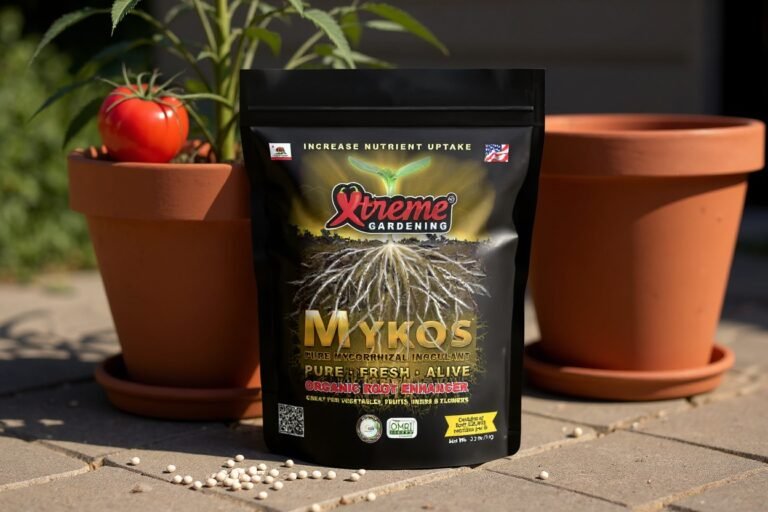 Plant Care & GardeningBest Mycorrhizae for Tomatoes in Containers (2026): MYKOS vs DYNOMYCOBest mycorrhizae for tomatoes in containers: our top picks after testing in grow bags and pots. Only the ones that actually improved root uptake — no filler products.