 Inspire
Webber Naturals Probiotic 30 Billion Review (2026)
Every bottle on the shelf wants you to look at one number: the billions. That’s not actually the number that matters most.
July 14, 2026 · 10 min read · Contains affiliate links
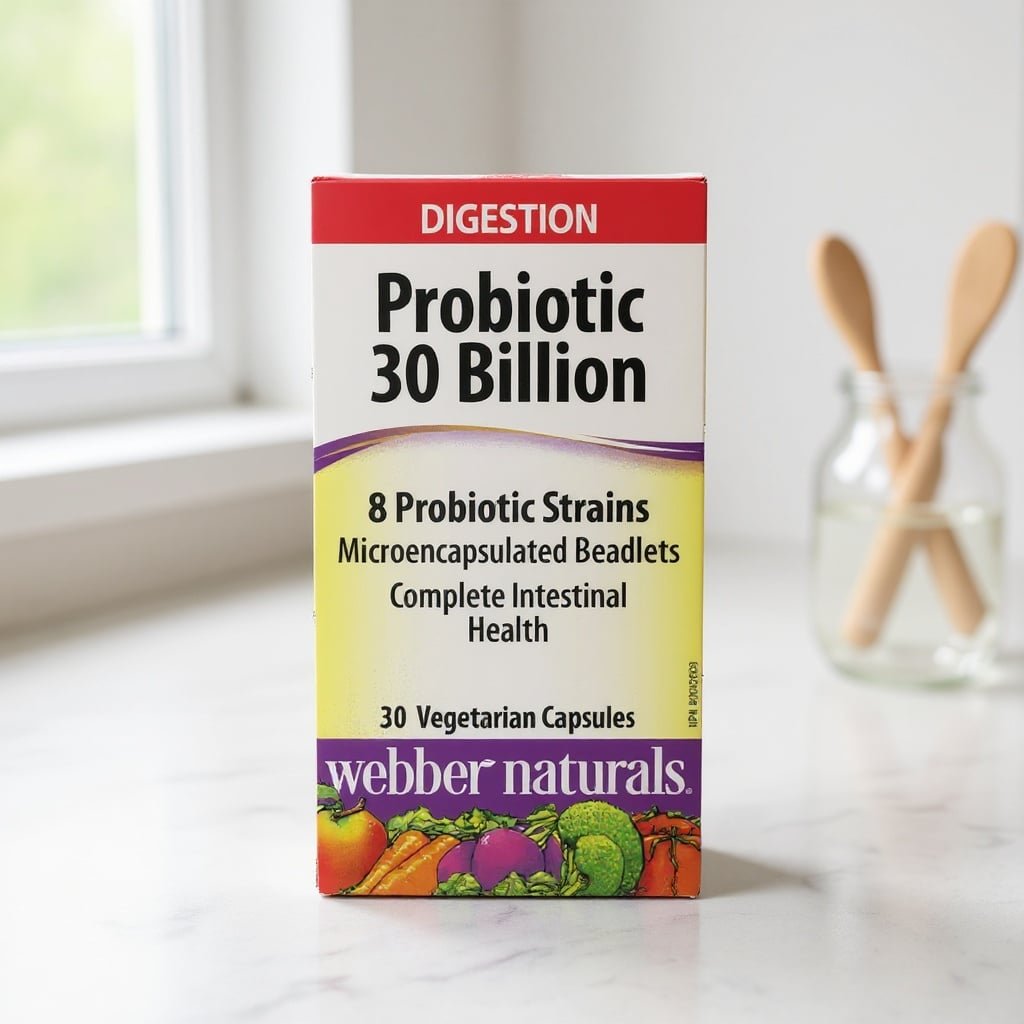
Webber Naturals’ own label discloses two numbers most competitors only give you one of: 75 billion active cells at manufacture, 30 billion guaranteed at expiry. That gap exists on every shelf-stable probiotic, whether or not the box tells you about it. It’s a small detail that says a lot about which brands are willing to show their work.
CFU count is a manufacturing spec. The strain name is the health claim. Pick based on what you actually need, not the biggest number on the box.
- Webber Naturals Probiotic 30 Billion: our pick for most people. 8 documented strains, honest expiry-date disclosure, best price.
- Align Probiotic: the pick if you want the single most clinically-studied strain, specifically for IBS-type symptoms.
- Bio-K+ ANTIBIO PRO: the pick if you’re currently on antibiotics, the only one of the four with a Health Canada-approved risk-reduction claim.
Some links below pay us a referral fee. Doesn’t change our picks.
Key takeaways
Webber Naturals Probiotic 30 Billion is a real, NPN-registered, Canadian-made probiotic built from eight documented strains supplied by Lallemand Health Solutions (the HA-series codes on the label trace back to a specific, named manufacturer, not a generic ingredient). What most reviews skip: the “30 billion” in the name is the guaranteed count at expiry, not an inflated at-manufacture number, the actual manufacture-date count is 75 billion. That’s a more honest way to state potency than most of the category defaults to. It’s also a broad, general-support blend rather than a single mega-dosed strain, which is the right tool for daily maintenance but not the right tool if you’re solving one specific problem (IBS symptoms, antibiotic recovery) that has its own specifically-studied strain. We’ve included both kinds of alternative below.
Compare all 4
| Product | CFU / Strains | NPN | Capsules | Price (CAD) |
|---|---|---|---|---|
| Webber Naturals Probiotic 30 Billion | 30B guaranteed (75B at mfg), 8 strains | 80042609 | 30 | ~$23.29 |
| Align Probiotic | 1 strain (B. longum 35624), dose not CFU-labeled | 80014418 | 14 | ~$17.47 |
| Renew Life Ultimate Flora Extra Care | 50B active cultures, 12 strains | 80105569 | 60 | ~$34.99 |
| Bio-K+ ANTIBIO PRO | 3 strains (CL1285, LBC80R, CLR2) | 80015104 | 15 | ~$36.48 |
Prices fluctuate; figures above are a recent snapshot, not a locked-in claim.
The number most labels don’t show you
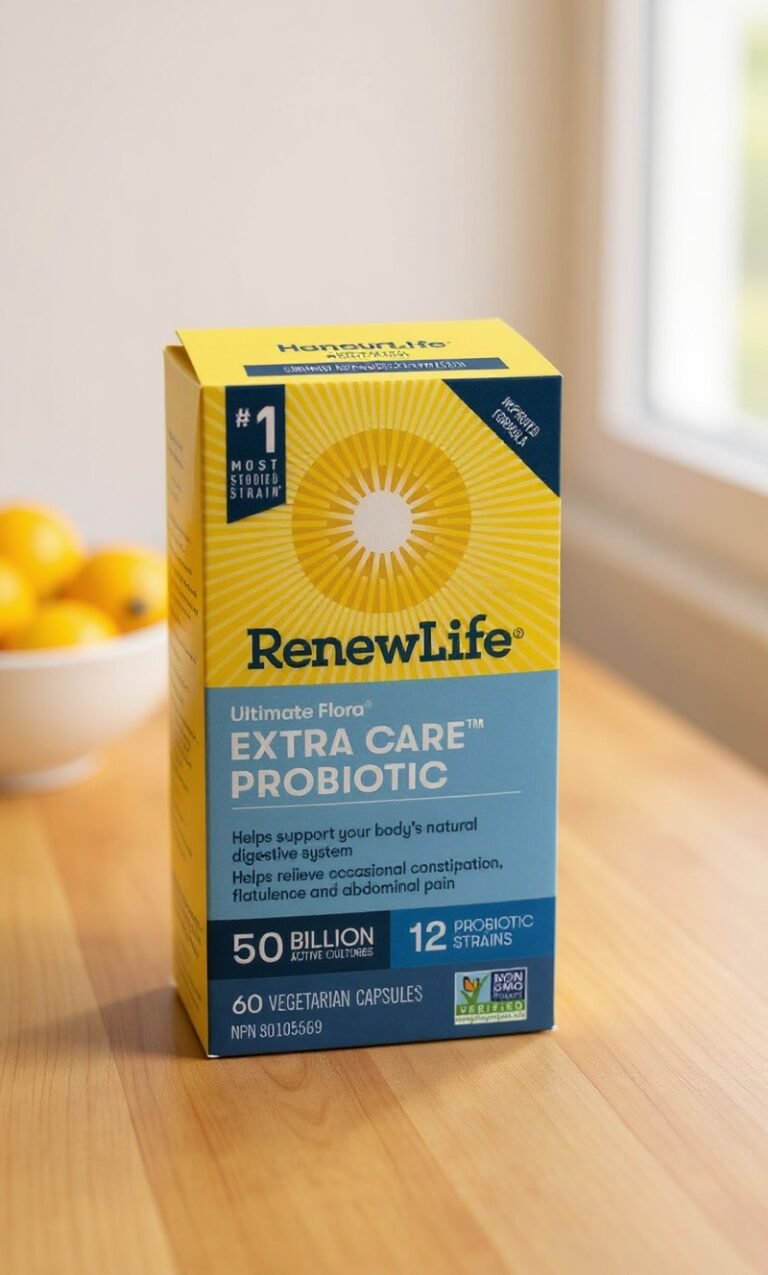
Probiotic capsules contain living organisms. From the day they’re manufactured to the day you swallow one, near the end of a shelf life that can run a year or more, some of those organisms die off. That’s just biology, not a defect. The question is which number a brand chooses to put on the label: the count at manufacture (always the bigger, more impressive number) or the count it actually guarantees you’ll still get on the day printed as the expiry date.
Webber Naturals’ own supplement-facts table states both, in writing: “Guaranteed minimum 30 billion active cells per capsule at expiry date. Guaranteed minimum 75 billion active cells per capsule at manufacture date.” The more conservative, verifiable number is the one in the product name. We checked the other three boxes in this comparison for the same at-expiry vs. at-manufacture breakdown and couldn’t find it stated either way on any of them, which isn’t the same as saying they don’t guarantee it, only that it isn’t disclosed on the box the way Webber’s is.
Practical takeaway: when you’re comparing raw CFU numbers across brands, ask whether that number is a guarantee through the expiry date or a snapshot from manufacture day. It’s a fair, useful question to bring to any brand that only prints one number.
CFU count vs. strain-level evidence
The bigger, more useful question than “how many billion” is “which named strain, and is there research behind that specific strain for what you’re trying to fix.” Probiotic research doesn’t generalize well across a whole species, let alone the whole word “probiotic.” A strain like Bifidobacterium longum 35624 and a different strain of the same species aren’t interchangeable just because they share a genus and species name, the strain-level identifier (the number or code after the name) is what ties a product to actual clinical evidence, if any exists.
This is the real difference between Webber’s approach and Align’s. Webber’s eight strains (all carrying Lallemand’s HA-series codes, a legitimate, traceable ingredient supplier) are dosed for broad general-maintenance support, no single strain dominates the blend. Align uses one specific, heavily-studied strain at a dose that’s been through 20-plus years of clinical research, concentrated on one job: easing IBS-type symptoms. Neither approach is wrong, they’re built for different goals. A big multi-strain number on a box isn’t automatically “better” than a smaller single-strain count, it depends what you’re actually trying to solve.
Bio-K+ ANTIBIO PRO is the clearest example of strain-specific evidence in this comparison: its three named strains (CL1285, LBC80R, CLR2) carry an actual Health Canada-approved claim, specifically for reducing the risk of antibiotic-associated diarrhea and C. difficile-associated diarrhea in hospitalized patients. That’s a narrow, specific, regulator-approved claim, not general “supports gut health” marketing language, and it’s the reason this product costs more per capsule than the other three: it’s not built for daily maintenance, it’s built for one specific, higher-stakes situation.
Our picks
This section contains affiliate links — we may earn a commission at no extra cost to you. See our full evaluation policy at the end of this guide.
Webber Naturals is our featured pick for most people; the alternatives solve for specific needs.
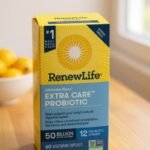
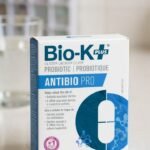
Frequently asked questions
Is a higher CFU count always better?
Not automatically. CFU is a manufacturing spec, how many live organisms are in the capsule, not a measure of how effective the product is for your specific goal. A well-studied single strain at a clinically-tested dose (like Align’s) can outperform a bigger multi-strain number for the specific symptoms it was researched for. Match the strain to the goal first, then compare CFU within that category.
What does “guaranteed at expiry” actually mean?
Probiotic organisms die off gradually over shelf life. “Guaranteed at expiry” is the count the manufacturer promises you’ll still get on the last day the product is meant to be used, a more conservative and verifiable number than an at-manufacture count, which only reflects day one. Webber Naturals discloses both numbers on its own label (30B at expiry, 75B at manufacture); we couldn’t confirm whether the other three brands compared here do the same.
Should I take a probiotic while on antibiotics?
This is exactly the use case Bio-K+ ANTIBIO PRO is built and approved for, its Health Canada-approved claim specifically covers reducing the risk of antibiotic-associated diarrhea. If you’re currently taking antibiotics or have recently been hospitalized, talk to your pharmacist about timing, probiotics and antibiotics are typically spaced a few hours apart, not taken simultaneously.
Do I need to refrigerate these?
All four products in this comparison are shelf-stable and don’t require refrigeration, a genuine advantage over older-generation probiotics that needed a fridge. Store them somewhere cool and dry regardless.
Does Webber Naturals ship outside Canada?
This specific affiliate program and product line is Canada-focused. If you’re outside Canada, Align, Renew Life, and Bio-K+ are all more broadly available internationally.
Webber Naturals Probiotic 30 Billion
8 documented strains, honest expiry-date disclosure, best value for daily general support
Fighting IBS symptoms specifically? Align has 20+ years of research behind one studied strain.
Currently on antibiotics? Bio-K+ ANTIBIO PRO has the only Health Canada-approved claim here.
Related reading
-
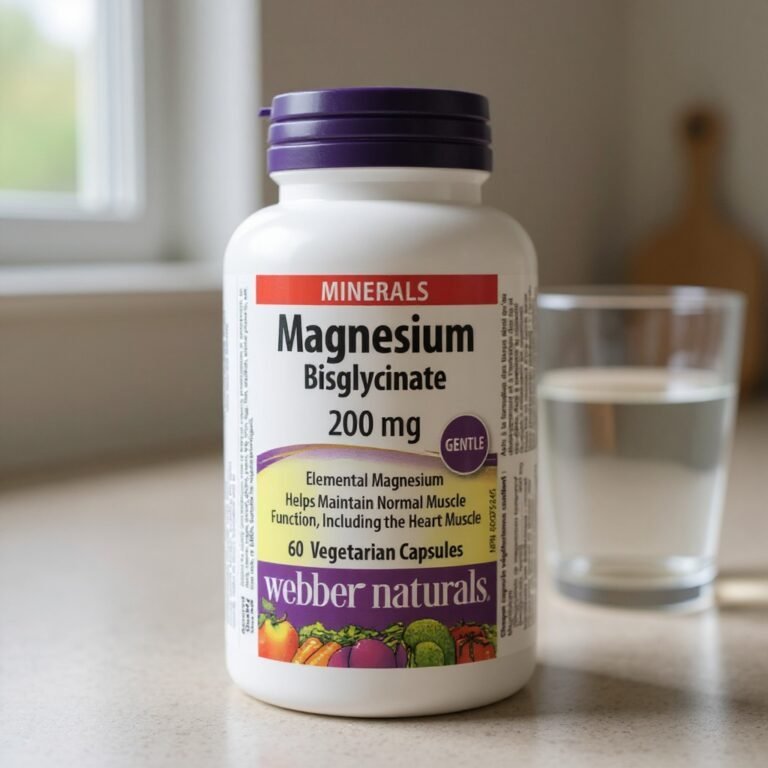 Supplements & NutritionWebber Naturals Magnesium Bisglycinate Review (2026)Supplements & Nutrition · Canada Webber Naturals Magnesium Bisglycinate Review (2026) The front label says bisglycinate. The ingredient panel says something more specific, and it’s not just a Webber thing. H Hilaire C. · Inspire DistributionJuly 13, 2026 · 9 min read · Contains affiliate links Webber Naturals’ own ingredient panel lists this as “buffered […]
 -
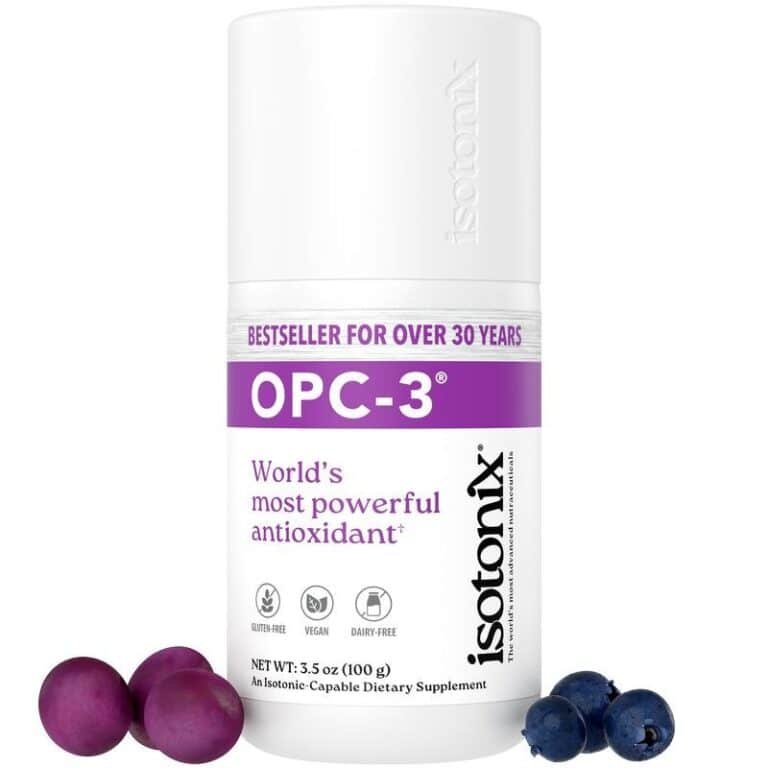 Supplements & NutritionWhat Is OPC-3? Benefits, Ingredients & Side Effects (2026)What is OPC-3? The four antioxidant ingredients (grape seed, pine bark, red wine, bilberry), the real benefits, honest side effects, and how to take it.
 -
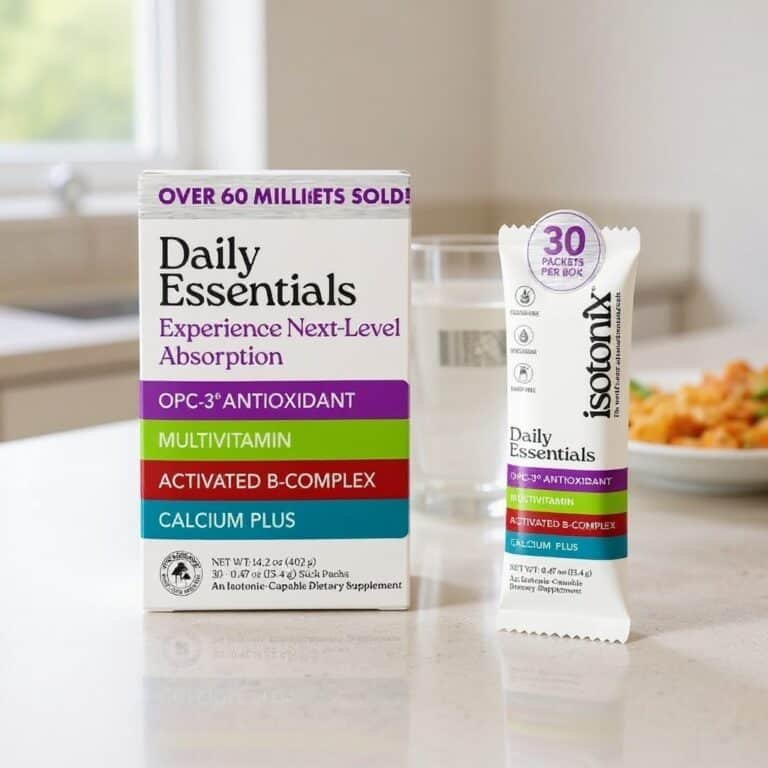 Supplements & NutritionWhere to Buy Isotonix in Canada (2026): Official Store & CAD PricesWhere to buy Isotonix in Canada: the official ca.isotonix.com store, real CAD prices for OPC-3, B-Complex and more, and how to make sure you buy genuine product.
Last updated July 14, 2026 — we re-check specs and prices regularly.
As an Amazon Associate we earn from qualifying purchases.