 Inspire
Jackery Explorer 2000 v2 vs 3000 Pro: 2026 Comparison
The 3000 Pro is being phased out. Here’s what that actually means for which one to buy, and what replaced it.
July 13, 2026 · 10 min read · Contains affiliate links

Buying new today, it’s really 2000 v2 vs. HomePower 3000, not vs. 3000 Pro.
- Jackery Explorer 2000 v2: best for portability, camping, and single-appliance backup. Currently sold, LFP battery.
- Jackery HomePower 3000: the 3000 Pro’s actual replacement. Best if you need to run 2-3 major appliances at once.
- Jackery Explorer 3000 Pro: discontinued direct from Jackery. Still findable refurbished or via third parties, but not the current flagship.
Some links below pay us a referral fee. Doesn’t change our picks.
Key takeaways
The 2000 v2 and 3000 Pro get compared constantly because they were both current at the same time, and that search demand hasn’t caught up with Jackery’s own lineup change yet. The real comparison today is between the 2000 v2 (still current, LFP battery, built for portability) and the HomePower 3000 (the 3000 Pro’s actual successor, also LFP now, built for bigger simultaneous loads). The 3000 Pro used an older NMC lithium-ion battery, and that’s very likely why it got replaced, not just a marketing refresh.
Compare all three
| Spec | Explorer 2000 v2 | Explorer 3000 Pro | HomePower 3000 |
|---|---|---|---|
| Status | Current | Discontinued (refurb/3rd-party only) | Current, the 3000 Pro’s replacement |
| Capacity | 2,042 Wh | 3,024 Wh | 3,072 Wh |
| Battery chemistry | LiFePO4 (LFP) | NMC lithium-ion | LiFePO4 (LFP) |
| Rated cycle life (to 70%) | 4,000+ | ~2,000 | Not yet independently confirmed; Jackery markets “built to last a decade+” |
| Continuous AC output | 2,200 W | 3,000 W | 3,600 W |
| Peak/surge output | 4,400 W | 6,000 W | 7,200 W |
| Weight | 39.5 lb / 17.9 kg | ~64 lb / 29 kg | Not yet confirmed against 3000 Pro; similarly large-format |
| AC recharge time | ~2 hrs | ~2.4 hrs | ~1.7–2.2 hrs |
| Price (typical sale) | ~$799 USD | Discontinued; refurb pricing varies | ~$2,124–2,499 USD |
Prices fluctuate and Jackery runs frequent flash sales; figures above are a recent snapshot, not a locked-in claim.
The spec that actually explains the discontinuation
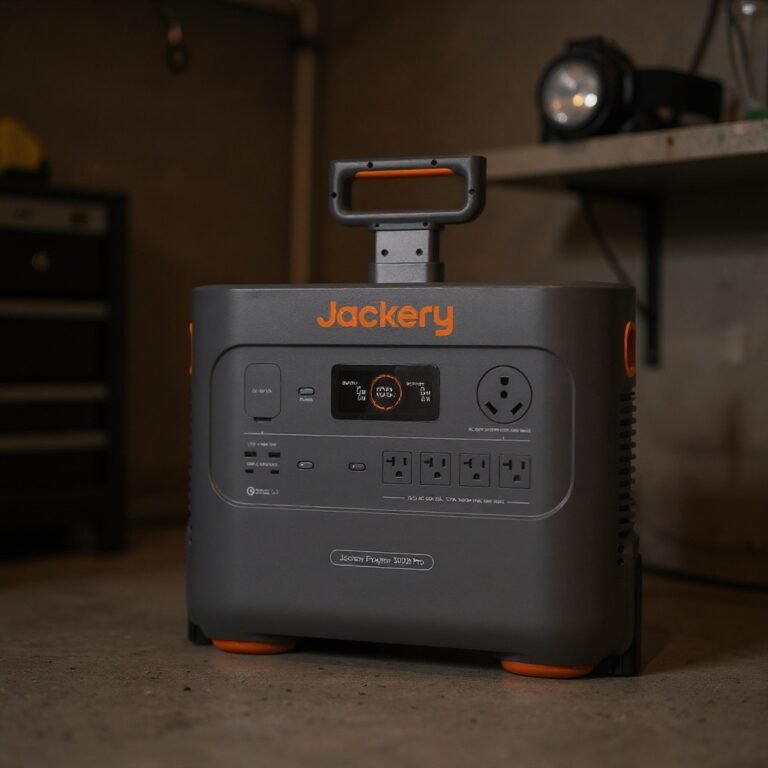
Despite “Pro” outranking “v2” in the name, the 3000 Pro actually used the older battery chemistry of the two. It runs NMC (nickel manganese cobalt) lithium-ion, rated for roughly 2,000 cycles to 70% capacity. The smaller, cheaper 2000 v2 already had LiFePO4 (LFP), rated for 4,000+ cycles, roughly double the service life under repeated charging.
Jackery’s own announcement for the HomePower 3000 specifically frames the upgrade as a chemistry switch, moving the big-capacity tier onto LFP too. That’s a real, substantive change, not a cosmetic rename: for storm-season-only backup use, cycle life differences barely matter since you’re not charging and draining it often. For near-daily off-grid or RV use, it’s a real 2x difference in how long the battery lasts before it noticeably degrades.
What each one can actually run at once
Wattage math using typical published appliance figures (your actual appliances may draw more or less, check the nameplate):
Fridge alone (~600W running, up to ~2,400W starting): Both units handle this comfortably on their own.
Fridge + furnace blower (~600W + ~800W = ~1,400W running): The 2000 v2’s 2,200W continuous rating handles this with some headroom. So does the HomePower 3000, with much more to spare.
Fridge + furnace blower + sump pump (~2,200W running): This is where the 2000 v2 runs out of headroom, it’s right at its 2,200W ceiling with nothing left for anything else, and simultaneous startup surges risk its 4,400W peak. The HomePower 3000’s 3,600W continuous / 7,200W surge handles this combination with real room to spare.
The practical difference isn’t really about total runtime, it’s about how many major appliances you can run at the same time before you hit the ceiling. If your backup scenario is one appliance at a time, the smaller unit is genuinely enough.
Our picks
This section contains affiliate links — we may earn a commission at no extra cost to you. See our full evaluation policy at the end of this guide.
Between what’s actually available to buy new today.

Frequently asked questions
Is the Jackery Explorer 3000 Pro still available?
Not as a new unit direct from Jackery in most cases, their own product page marks it discontinued and points buyers to the HomePower 3000. A refurbished version and some third-party retailers (Amazon Renewed, a few other stores) still carry stock, but it’s no longer the current flagship in that capacity tier.
Why did Jackery discontinue the 3000 Pro?
Not officially stated as the reason, but the most likely explanation is the battery chemistry: the 3000 Pro used NMC lithium-ion (rated ~2,000 cycles), while the HomePower 3000 that replaced it uses LiFePO4 (much longer rated cycle life, matching what Jackery already used in the smaller Explorer 2000 v2). That’s a meaningful upgrade, not just a rebrand.
Is the Jackery Explorer 2000 v2 enough for a full power outage?
For one major appliance at a time (fridge, or a sump pump, or a furnace blower), yes, comfortably. For running 2-3 of those simultaneously, you’ll hit its 2,200W ceiling. Size up to the HomePower 3000 if you need multiple major appliances running at once.
What’s the real difference between LFP and NMC batteries?
LiFePO4 (LFP) batteries generally last far more charge cycles before their capacity noticeably degrades (4,000+ cycles is common) and are considered more thermally stable. NMC batteries are often lighter for the same capacity but degrade faster with cycling, roughly 2,000 cycles is typical. For occasional storm-backup use, the difference barely matters. For frequent daily use, it adds up fast.
Should I buy a used/refurbished 3000 Pro instead of a new HomePower 3000?
Only if the price gap is large and you understand you’re buying the older NMC battery chemistry with roughly half the rated cycle life. For occasional emergency backup, that tradeoff may be worth the savings. For frequent use, the HomePower 3000’s LFP battery will likely outlast it by a wide margin.
Jackery Explorer 2000 v2
For most households, one major appliance at a time is the real scenario, and this covers it at a third of the price
Need to run 3 major appliances at once? The HomePower 3000 is the current flagship, not the discontinued 3000 Pro.
Comparing against a used or refurbished 3000 Pro? Now you know what you’d be trading for the lower cycle life.
Related reading
-
 CanadaBest Portable Power Station Canada 2026: Storm-Ready PicksThe full roundup this comparison zooms in from, includes EcoFlow and BLUETTI too.
 -
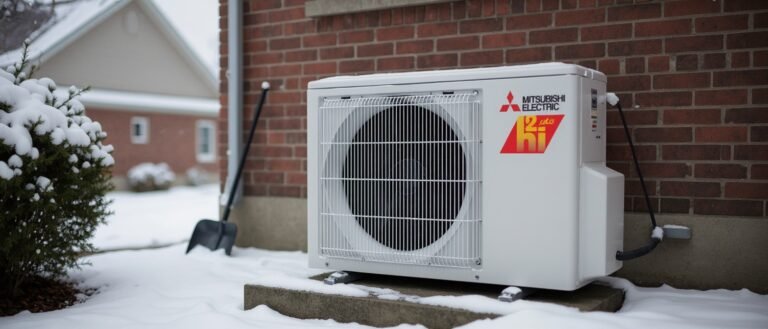 CanadaBest Cold-Climate Heat Pump Canada: Ranked for Ontario WintersWhich cold-climate heat pumps hold their output in an Ontario winter, and which one to skip.
 -
 CanadaOil to Heat Pump Affordability Program: Applications Closed July 31, 2026The $10,000 federal grant for oil-heated homes, and where it stands now the intake has closed.
Last updated July 13, 2026 — Jackery runs frequent flash sales, re-check current pricing before buying.
As an Amazon Associate we earn from qualifying purchases.