 Inspire
Powdery Mildew on Squash and Cucumbers: What Actually Stops It
It’s the one fungus that doesn’t need wet leaves to spread. Here’s what actually causes it and what stops it before it takes the whole plant.
Updated July 6, 2026 · 8 min read · ✓ Fact-checked
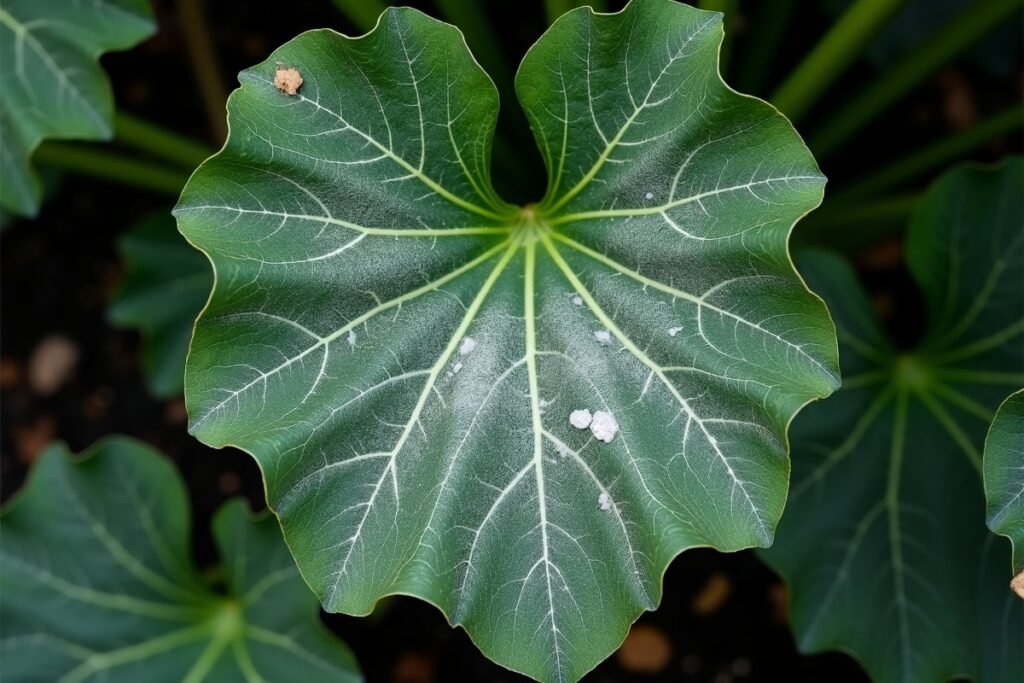
Squash leaves go white and the reflex is to grab a spray, hit it once, and call it handled. It doesn’t work that way. Powdery mildew takes repeat treatment over several days, and once it’s spread past a leaf or two, a single spray won’t touch it at all. Catch it early, or reach for the stronger stuff instead.
Powdery mildew squash and cucumber plants get each season spreads fastest in warm, humid air, not wet leaves. That’s backward from most garden advice, and it’s why watering less doesn’t fix it. Thin crowded growth for airflow, pick a resistant variety next season, and treat early with a light spray. Once white patches cover more than a leaf or 2, switch to a full-strength sulfur treatment and remove the worst leaves so the plant can put energy into what’s left.
Squash, cucumbers, melons, and pumpkins are the most susceptible garden vegetables to this fungus. If you grow any of them, expect it by mid to late summer most years.
Key takeaways
- Powdery mildew spores germinate in humid air, not standing water. Wet leaves can actually slow it down a little, so cutting back on watering doesn’t help.
- It thrives in the 15 to 27°C (60 to 80°F) range, which is most of a normal growing season, especially in shaded or crowded plantings.
- Squash, cucumbers, melons, and pumpkins are more susceptible than almost anything else in a vegetable garden.
- Airflow is the real prevention lever: spacing, pruning, and morning sun do more than any spray applied early.
- Sulfur is the most effective home treatment, but it can scorch leaves if applied within 2 to 3 weeks of an oil spray or above 29°C (85°F).
Powdery mildew looks like someone dusted your squash leaves with flour. It’s one of the most common garden fungus problems, and one of the most misunderstood. Most fungal diseases need wet leaves to get started. This one doesn’t. It thrives in dry air with high humidity, which is exactly the opposite of what most watering advice assumes.
What actually works
2 products, 2 different jobs: a light multi-purpose spray for early prevention, and full-strength sulfur for an outbreak that’s already spreading.

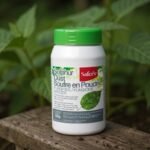
The 2 compared
| Product | Best for | Strength | Rating |
|---|---|---|---|
| Safer’s 3-in-1 Spray | Early prevention, also treats bugs | 0.4% sulfur | 4.1★ / 4.2★ |
| Safer’s Sulphur Dust | Active outbreaks | 92% sulfur | 4.1★ / 4.6★ |
What’s actually happening on the leaf
Powdery mildew is a fungus, and several closely related species cause it depending on the plant. On squash and cucumbers, the culprit is almost always Podosphaera xanthii. The white dust is the fungus itself: a mat of spores and threadlike growth sitting right on top of the leaf surface, feeding on the cells underneath without ever breaking through the skin.
That surface-level growth is why it looks so dramatic so fast. It’s not inside the leaf tissue causing rot. It’s coating the outside, blocking light and disrupting photosynthesis. Left alone, affected leaves yellow, turn brittle, and die, and the plant loses the energy it needs to keep making fruit.
Powdery Mildew Squash and Cucumber Problems: Why These Crops Suffer Most

Cucurbits (squash, cucumbers, melons, pumpkins, zucchini) grow big, broad leaves fast, and those leaves shade each other and trap humid air underneath the canopy almost by design. That’s the exact environment powdery mildew spores need. Add the fact that most home gardens plant cucurbits closer together than their mature size really allows, and the airflow problem compounds as the season goes on.
Most fungal spores need a film of water on the leaf to germinate. Powdery mildew spores are the opposite: too much free water actually kills them. What they need is high humidity in the air around the leaf, which is why it often shows up worst during a stretch of warm, muggy weather with no rain at all. This is the detail that trips up a lot of gardeners: cutting back on watering doesn’t slow this disease down, because water was never the trigger.
How to stop it spreading

Thin crowded growth. Prune out a few older or overlapping leaves, especially low ones that stay shaded all day. It looks aggressive. It works.
Water at soil level in the morning. This isn’t about wetting the leaves less to fight the fungus directly. It’s about not adding extra humidity right as temperatures drop in the evening.
Treat at the first white spot, not after it’s spread. A light spray applied early stops a few spots from becoming a whole leaf. Waiting means reaching for the stronger option below.
Remove badly affected leaves once more than half a leaf is covered. They’re not photosynthesizing much anyway, and cutting them out reduces the spore load spreading to healthy growth.
Plant resistant varieties next season. Seed catalogs mark this clearly, usually as “PM” or “PMR” in the variety description. It’s the single biggest lever for next year.
Is it even powdery mildew?
2 other cucurbit problems get mistaken for it. Downy mildew causes yellow, angular patches on top of the leaf with a fuzzy gray-purple growth underneath, not the white dust on top. It also needs wet leaves to spread, the opposite of powdery mildew, and it’s a faster-moving, more serious disease that usually needs a different fungicide entirely. Squash bug or spider mite damage can leave a stippled, dusty-looking leaf too, but there’s no actual coating you can rub off with a finger. Powdery mildew wipes off as a fine white residue. If nothing comes off on your hand, look for insects instead.
Frequently asked questions
Does milk spray actually work on powdery mildew?
There’s real research behind it, mostly using a 1-part-milk-to-9-parts-water dilution sprayed weekly. Results are inconsistent, and it works best as prevention on a plant that isn’t infected yet, not as a cure once mildew has spread.
What about baking soda?
Weaker than most people expect. Baking soda itself (sodium bicarbonate) can help a little, but repeated use builds up sodium in the leaf and can cause its own damage. Potassium bicarbonate products work on the same principle without that buildup, which is why commercial fungicides use potassium bicarbonate, not baking soda.
Can I still eat squash or cucumbers from an infected plant?
Yes. Powdery mildew affects leaves, not fruit directly, though a badly infected plant often produces smaller or fewer fruit because it’s lost so much leaf area to photosynthesize with.
Will it spread to my tomatoes or other vegetables?
Rarely. Most powdery mildew species are host-specific to one plant family. The strain on your squash almost never jumps to tomatoes, peppers, or beans, though other powdery mildew species can affect those crops separately.
Is it too late once the whole plant is white?
Usually not fatal, but yield drops fast. Cut the worst leaves, treat what’s left with a full-strength sulfur product, and expect a smaller final harvest. Removing the plant at season’s end and rotating cucurbits to a different bed next year matters more at that point than any spray.
Bottom line
Airflow and spacing prevent more powdery mildew than any product ever will, so start there. Catch it early with Safer’s 3-in-1 spray and most plants recover fully within a couple of weeks. Once it’s spread past a leaf or 2, switch to full-strength sulfur and remove the worst-affected leaves so the plant’s energy goes to what’s left of the season.
Related reading
-
 CanadaBest Mosquito Control for Standing Water in Canada (Homeowner Guide)Best mosquito control for standing water in Canada: 5 tested options ranked by effectiveness, safety near wildlife, and value. Includes biocontrol and chemical picks.
 -
 CanadaMYKOS vs DYNOMYCO: Which Mycorrhizae Is Worth Buying in 2026?MYKOS vs DYNOMYCO: which mycorrhizal inoculant is worth buying? We compare species count, application method, price per application, and real transplant results.
 -
 Plant Care & GardeningBest Mycorrhizae for Tomatoes in Containers (2026): MYKOS vs DYNOMYCOBest mycorrhizae for tomatoes in containers: our top picks after testing in grow bags and pots. Only the ones that actually improved root uptake — no filler products.