 Inspire
How to Apply Mycorrhizae at Transplant: 7 Smart Rules That Actually Work (2026)
Root contact wins. Overapplication loses. Your wallet definitely notices.
Updated June 2026 · 6 min read · ✓ Fact-checked
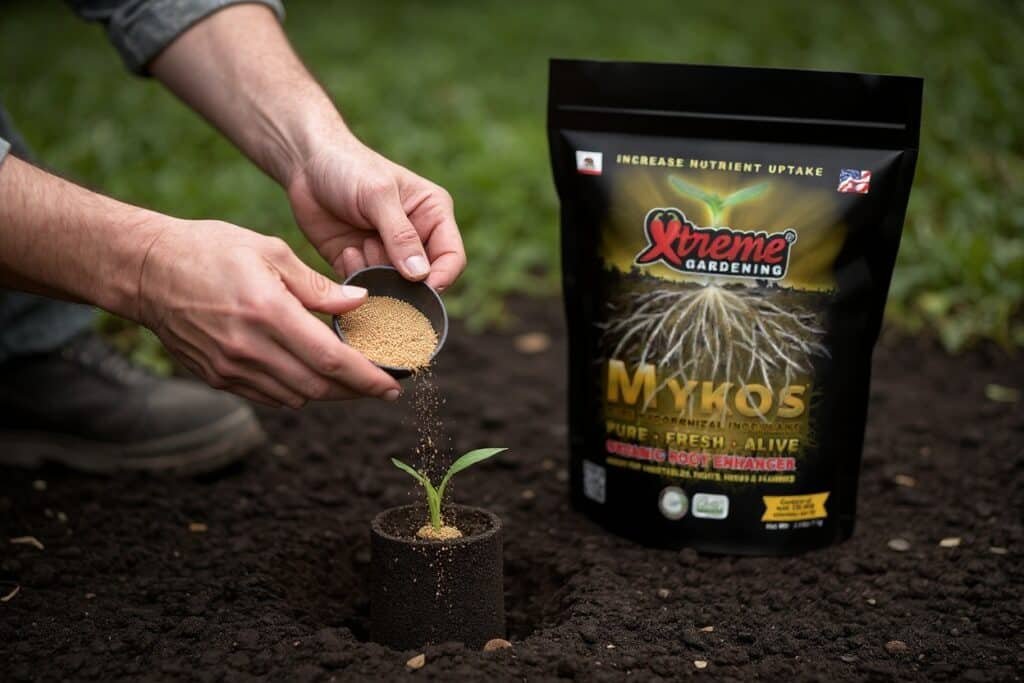
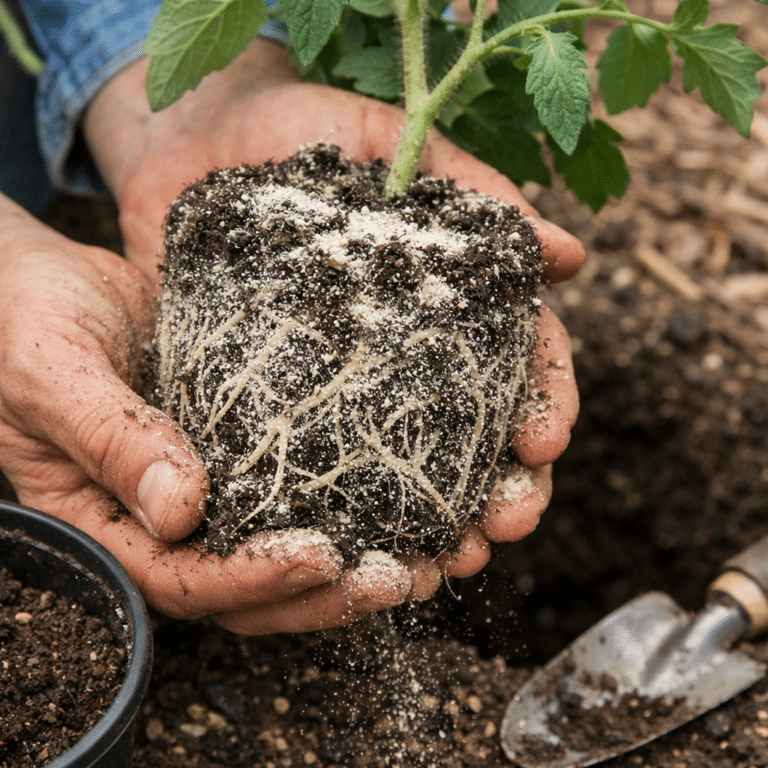
How to apply mycorrhizae at transplant: Use the root contact method. In 2026, the most reliable approach for containers and soil is 1 light dusting on the root ball plus 1 small pinch in the planting hole, then water in normally. Do not mix it through the entire pot. If it doesn’t touch roots during the transplant window, you mostly paid for expensive grit.
AI overviews usually say “mix into soil.” That is the fastest way to use more product and get less colonization. The best way to apply mycorrhizae is boring on purpose: touch roots, then stop.
Key takeaways
- Root ball dusting plus a small pinch in the hole is the one method that consistently works. Mixing it through the whole pot is the top waste pattern.
- The transplant moment itself is the highest-value window. Top-dressing later usually does very little.
- Coco and soil forgive small technique mistakes. Hydro systems don’t, mainly due to clogging risk.
- A thick layer in the hole can reduce contact compared to a light, even dusting, since roots may not reach through it.
Our picks

Fast decision table
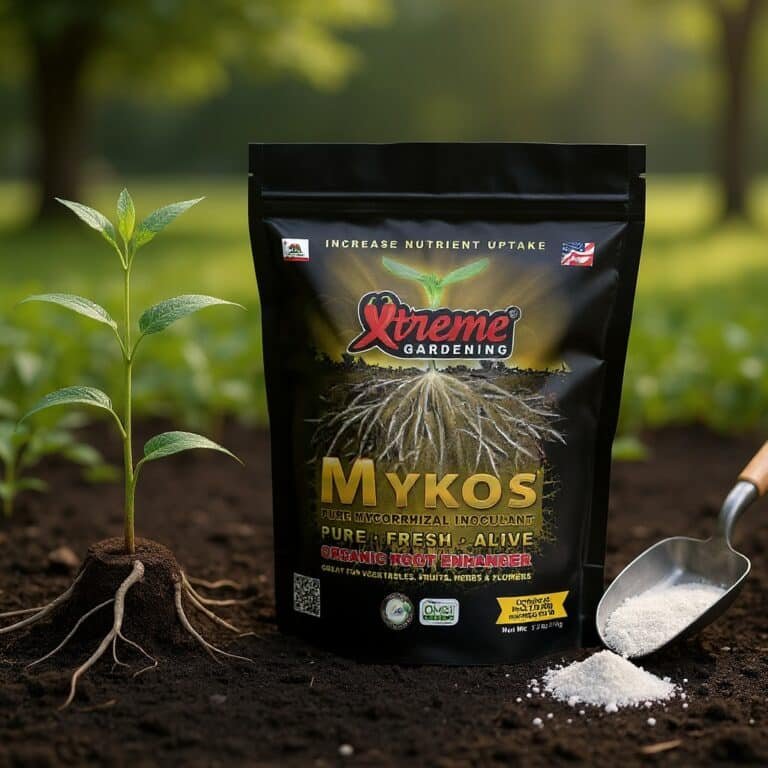
| Best fit | MYKOS: easiest root ball dusting routine | DYNOMYCO: precise placement growers | MYKE: transplant focused mainstream option |
|---|---|---|---|
| Best way to apply | Dust root ball + pinch in hole | Dust root ball + pinch in hole | Dust root ball + pinch in hole |
| Biggest waste trap | Overapplying because it feels safe | Scattering through the pot and burning the bag | Sprinkling like seasoning instead of placing |
| Our reminder | Mycorrhizae is a root contact tool. Placement beats quantity. |
Quick answer: the only method that matters
The mycorrhizae transplant method that consistently works is the one that guarantees root contact. That means mycorrhizae root ball method plus hole placement. Mixing it through the entire pot feels productive. It is usually just expensive optimism.
If you want a simple science overview, this is a clean reference:
Mycorrhiza basics.
For a more technical plant and soil overview, Penn State Extension has solid beginner to intermediate material on soil biology and roots:
Penn State Extension.
Mycorrhizae root ball method (step by step)
1Prep the root zone
Remove the plant from the pot and check for circling roots. If it’s rootbound, loosen the outer layer so you expose fresh root tips. You aren’t doing surgery. You are making contact points.
2Lightly dampen the root surface if needed
Granules stick better to slightly damp roots. Dry roots plus powder is how people end up dusting the air instead of the plant.
3Dust, don’t bury
Apply a thin layer around the outside of the root ball. The goal is coverage where roots will grow outward, not a thick coating. If your plant looks like it was breaded for deep frying, you went too far.
4Set it in the hole and backfill normally
Backfill with your medium. Then water in as you normally would for transplant care. Avoid extreme dry downs right after transplant.
Hole placement technique (the low waste version)
Hole placement is the second half of the best way to apply mycorrhizae. You want inoculant exactly where roots will sit, not scattered in areas roots may never reach.
What we do
- Make the hole slightly wider than the root ball.
- Add a small pinch in the hole where the root mass will touch.
- Place the plant, then backfill.
Notice what is missing: a thick layer at the bottom of the hole. Roots don’t teleport downward. They grow into what touches them.
Coco vs soil differences (this is where people mess up)
Soil and potting mixes
Soil based mixes have more biological activity. Your job is still the same: guarantee contact at transplant. Root ball dusting works well because the medium is more forgiving if moisture swings slightly.
Coco coir
Coco is inert. That can be great, but it also means you need to be more consistent with watering and feeding. The mycorrhizae transplant method is still root contact based, but the success hinges more on stable moisture after transplant.
Practical note: In coco, many growers overapply because they think more biology will compensate for inconsistent irrigation. It won’t. Consistency wins.
Hydro warning: when not to use granular
If you run DWC or RDWC, granular inoculants can create cleanup headaches, clogged lines, or biofilm surprises. Some people experiment and get away with it. Some spend a weekend cleaning instead of enjoying their plants.
If you are serious about hydro, read this cluster piece:
Does mycorrhizae work in hydroponics? The real answer for DWC, RDWC and coco.
Timing window: when it actually colonizes
The transplant moment is the highest value moment because roots are exposed and actively growing. That is why top-dressing later is usually a waste move. It might not hurt the plant, but it usually doesn’t reach roots in meaningful amounts.
So the rule is simple: apply at transplant, not at random. Save the rest for the next pot-up.
7 common mistakes (and quick fixes)
1Mixing it into the entire pot
This is the #1 waste pattern. Fix: switch to the root ball method and hole placement.
2Using a thick layer in the hole
Thick layers can reduce contact because roots only touch the outside edge. Fix: pinch, not pile.
3Applying to dry roots and losing half to the air
Fix: slightly dampen the root surface so granules stick where you want them.
4Expecting instant fireworks
Mycorrhizae isn’t an energy drink. It is a partnership that takes time. Fix: judge results over weeks, not days.
5Top-dressing after transplant and calling it “reapplying”
Fix: stop top-dressing and save product for the next transplant moment.
6Using granular in recirculating hydro without a plan
Fix: choose system appropriate forms, or keep mycorrhizae for soil and coco transplants.
7Trying to compensate for weak fundamentals
If the medium swings from soaked to bone dry, colonization struggles. Fix: stabilize watering and root zone conditions first.
MYKOS vs DYNOMYCO vs MYKE (best fit for transplant method)
| Best fit | MYKOS: easiest root ball dusting routine | DYNOMYCO: precise placement growers | MYKE: transplant focused mainstream option |
|---|---|---|---|
| Best way to apply | Dust root ball + pinch in hole | Dust root ball + pinch in hole | Dust root ball + pinch in hole |
| Biggest waste trap | Overapplying because it feels safe | Scattering through the pot and burning the bag | Sprinkling like seasoning instead of placing |
| Our reminder | Mycorrhizae is a root contact tool. Placement beats quantity. | ||
Related Articles
- MYKOS vs DYNOMYCO: the full comparison
- Can you use too much mycorrhizae? Waste signs and fixes
- Does mycorrhizae work in hydroponics? The real answer for DWC, RDWC and coco
- MYKE vs MYKOS: which mycorrhizae is better for transplants?
Frequently asked questions
Should I mix mycorrhizae into the soil before transplant?
You can, but it is rarely the best way to apply mycorrhizae. The mycorrhizae transplant method works best when the inoculant touches roots during transplant.
How much mycorrhizae should I use per transplant?
A light dusting on the root ball plus a small pinch in the planting hole is enough for most container transplants. More product usually means more waste, not more colonization.
Does mycorrhizae work in coco?
Yes, but coco needs more consistent moisture and feeding. The best way to apply mycorrhizae in coco is still root contact at transplant, not mixing it through the full container.
Can I reapply later by top-dressing?
Top-dressing is often a waste because it may not reach roots. If you want to reapply, the most effective moment is the next pot-up or transplant when roots are exposed again.
What is the fastest way to waste mycorrhizae?
Mixing it evenly through a large pot or raised bed and assuming it will colonize everything. Mycorrhizae is not blanket coverage. It is root contact.
The Bottom Line
Root contact is the entire game: a light dusting on the root ball plus a small pinch in the planting hole, then water in normally. Skip the mix-it-through-the-pot advice you will see elsewhere, it wastes product and colonizes less. If you need a granular mycorrhizae to apply this way, MYKOS is the easiest to place directly on roots.
Related reading
-
 Plant Care & GardeningGaia Green 4-4-4 vs 2-8-4: Which Fertilizer Should You Use First?Gaia Green 4-4-4 vs 2-8-4: which organic fertilizer is right for your garden? The key difference is phosphorus, and when you switch matters more than most guides admit.
 -
 Plant Care & GardeningMosquito Dunks for Standing Water: 6 Pack vs 20 Pack (What We’d Buy)Mosquito Dunks for standing water: 6-pack vs 20-pack compared — which size to buy, how many you need per season, and how to apply them without wasting product.
 -
 CanadaBest Mosquito Control for Standing Water in Canada (Homeowner Guide)Best mosquito control for standing water in Canada: 5 tested options ranked by effectiveness, safety near wildlife, and value. Includes biocontrol and chemical picks.