 Inspire
How to Clean Glass Without Scratching (Safe, Foolproof Method)
It’s mostly friction control, remove grit first, use clean microfiber, keep pressure light.
Updated June 2026 · 5 min read · ✓ Fact-checked
Key takeaways
Most scratches come from dragging grit across the glass, not from the cleaner itself. Rinse dusty glass first, always use a clean microfiber cloth instead of paper towels or the rough side of a sponge, and keep pressure light, straight passes instead of aggressive circles.
Cloudy glass is usually just residue, not damage, it changes with viewing angle and often clears up after a rinse and a fresh microfiber dry-buff. Real scratches are thin lines that show under a flashlight and don’t wipe away. Skip abrasives entirely on anti-glare coatings, tinted glass, or any factory-treated specialty finish.
Quick snapshot: the scratch-free checklist
- Rinse first (this is the big one).
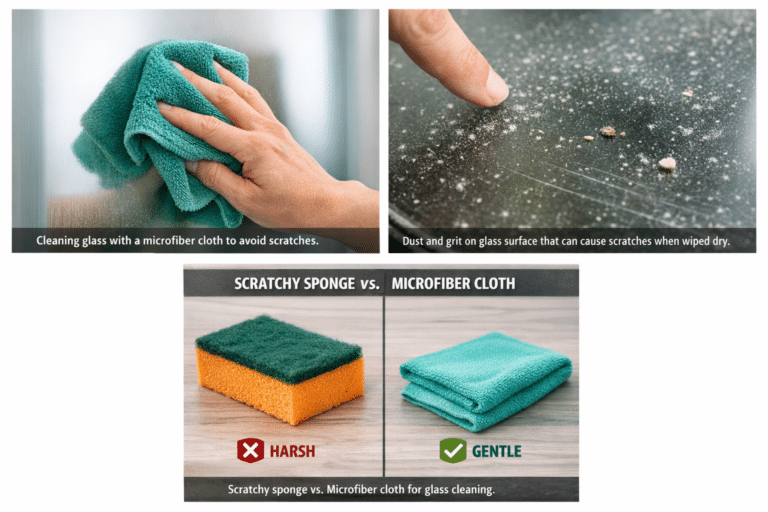
- Microfiber only (clean, no fabric-softener residue).
- Light pressure (scrubbing harder is how scratches start).
- Two-cloth finish: one to clean, one to dry-buff.
- Avoid dry powders on dusty glass.
The safest step-by-step method
This section contains affiliate links — we may earn a commission at no extra cost to you. See our full evaluation policy at the end of this guide.
- Rinse first to remove dust and grit (especially shower glass and outdoor windows).
- Use a clean microfiber cloth, damp (not dripping).
- Apply cleaner lightly and spread it thin (more product doesn’t mean safer).
- Wipe with gentle pressure only, straight passes, no aggressive circles.
- Rinse again if you used any cleanser (this is how you prevent haze).
- Dry-buff with a fresh microfiber, or use a squeegee for shower glass.
What actually causes glass scratches
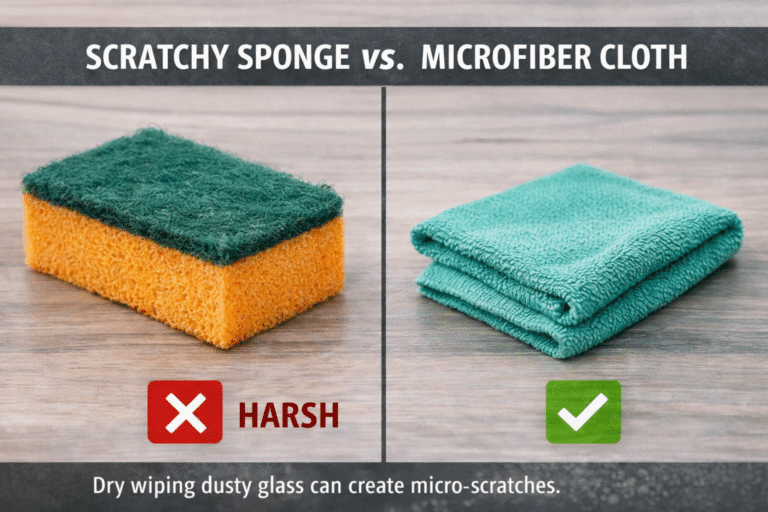
Most scratches are not from “strong cleaners.” They’re from dragging tiny hard particles across glass.
- Dry wiping dusty glass
- Dragging grit with paper towels or rough cloth
- Using the rough side of a sponge
- Using powder cleaners dry, then pressing harder on a spot
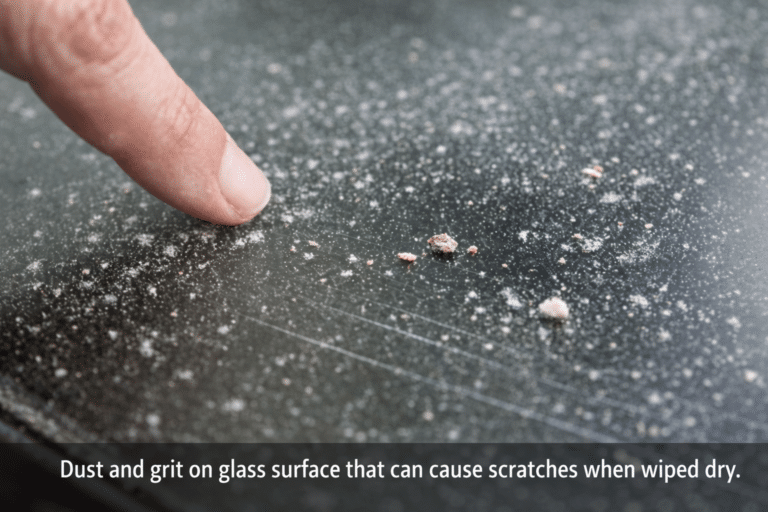
If you remember one thing: never wipe dusty glass dry. That’s the scratch trap.
Best cloth for scratch-free glass
- Microfiber cloth (clean, rinsed well, no fabric softener)
- Squeegee for shower doors and large panes
Quick microfiber tip: if your microfiber has been washed with fabric softener, it can leave residue and cause streaks. We’d rather use a basic clean towel than a “softened” microfiber that smears.
Avoid these if you care about scratches
- Scouring pads
- Steel wool
- Dry powder cleaners
- Paper towels on gritty glass
- Any “magic eraser” style abrasive foam on coated glass (test first)
How to clean shower glass without scratching
- Rinse first to remove mineral dust and loose grit
- Use microfiber + light pressure
- If buildup is stubborn, use a liquid cleanser first (avoid dry powders)
- Finish with a squeegee, then a dry microfiber for edges
How to clean a glass cooktop without scratching
- Wait until the surface is cool
- Remove crumbs before wiping (crumbs are basically tiny rocks)
- Use a soft cloth only
- Don’t grind stuck debris into the surface; loosen it first
If you’re comparing cleaners for glass safety, start here: Bar Keepers Friend Soft Cleanser vs Bon Ami: which is safer for glass?
Cloudy vs scratched: how to tell in 10 seconds
This catches people off guard: cloudy glass is often residue, not damage.
- Residue/haze: looks like a film, changes when you change viewing angle, may improve after rinsing and dry-buffing.
- Scratches: thin lines that show under a phone flashlight and do not wipe away.
When you should avoid abrasives completely
- Anti-glare coatings
- Tinted or mirrored glass
- Factory-treated specialty finishes
If the manufacturer says “no abrasives,” we don’t test it. We switch method, not force. For why microfiber grabs particles instead of dragging them, see this microfiber overview.
Frequently asked questions
Can microfiber scratch glass?
Not when it’s clean. Microfiber is one of the safest options for glass. The real problem is grit trapped in the cloth, so rinse the glass first and use a fresh microfiber for the final wipe.
Do paper towels scratch glass?
Paper towels usually don’t “scratch” glass by themselves, but they can drag dust and leave lint. If the glass is even slightly gritty, microfiber is the safer move.
Can powder cleaners scratch glass?
Yes, especially when used dry or with heavy pressure. If you use a powder, make a thin paste first and keep pressure light. For most people, starting with a liquid cleanser is safer.
Why does my glass look hazy after cleaning?
Haze is usually residue (soap film, minerals, or leftover cleaner), not damage. Rinse thoroughly and dry-buff with a second clean microfiber. If it still looks cloudy, it may be hard-water etching.
What’s the safest one rule to avoid scratches?
Never wipe dusty glass dry. Rinse first, then wipe. Most scratches happen from friction plus grit, not from the cleaner itself.
MR.SIGA Microfiber Cloths
The one tool you need for every glass-cleaning job
Cleaning shower glass or a large window? The OXO All-Purpose Squeegee finishes the job without streaks in a fraction of the time.
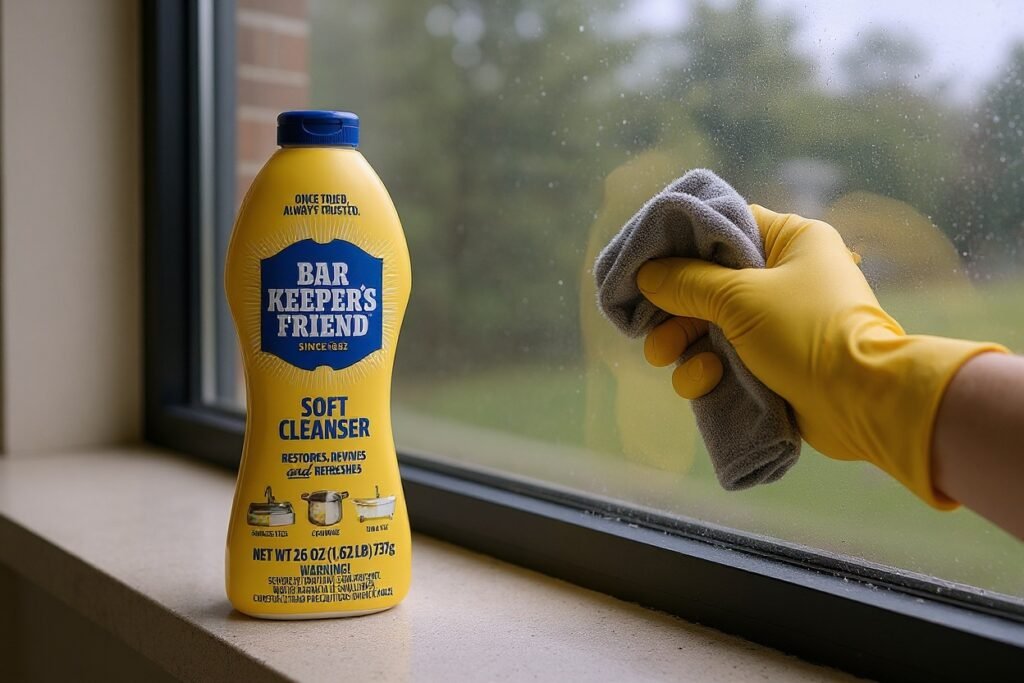
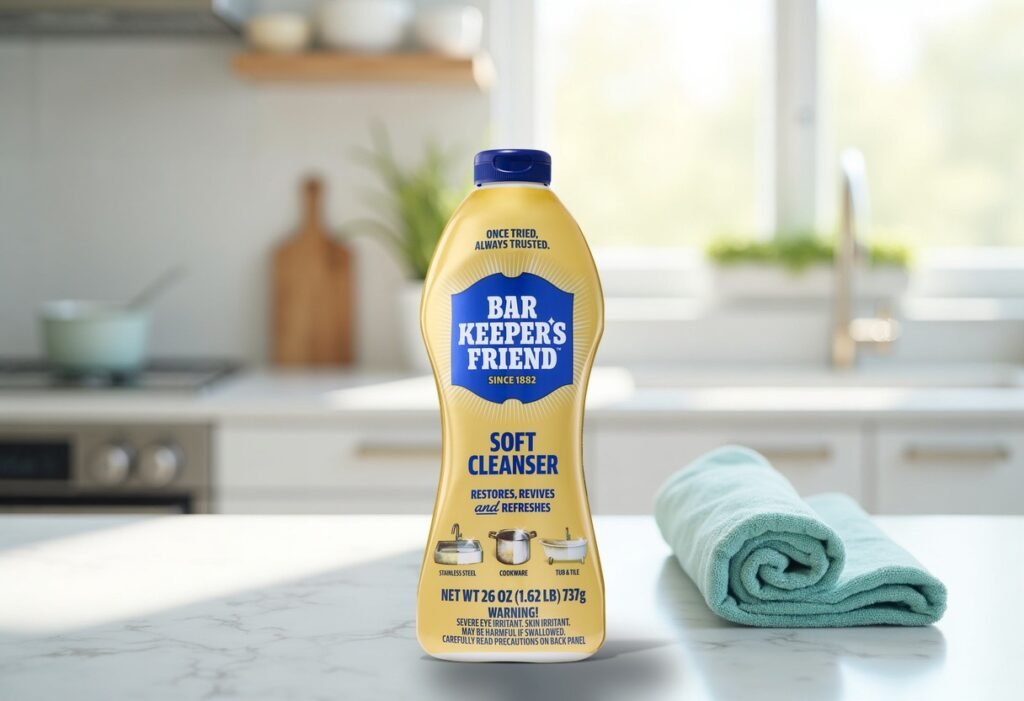
Dealing with stubborn buildup or hard water spots? Bar Keepers Friend Soft Cleanser is the non-abrasive liquid option we reach for before anything abrasive.
Related reading
-
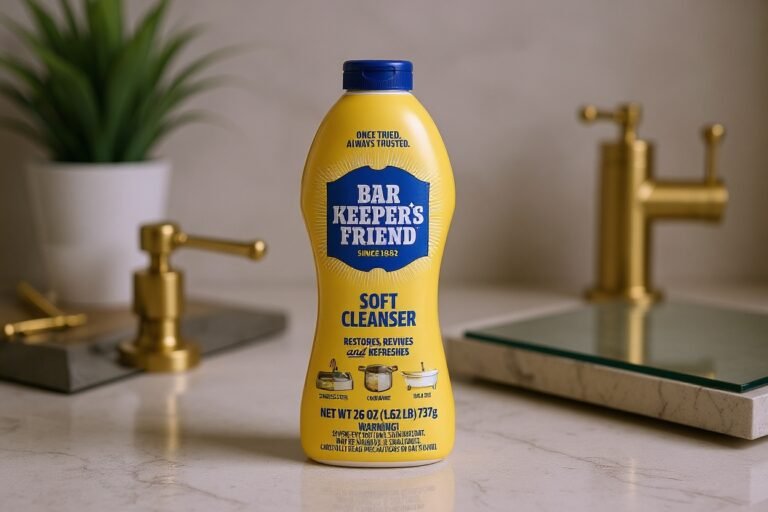 Home Care & DIYWhat Not to Use Bar Keepers Friend On (7 Surfaces to Avoid)What not to use Bar Keepers Friend on: 7 surfaces the oxalic acid formula can damage — including some that surprised us. Know these before you grab the can.
 -
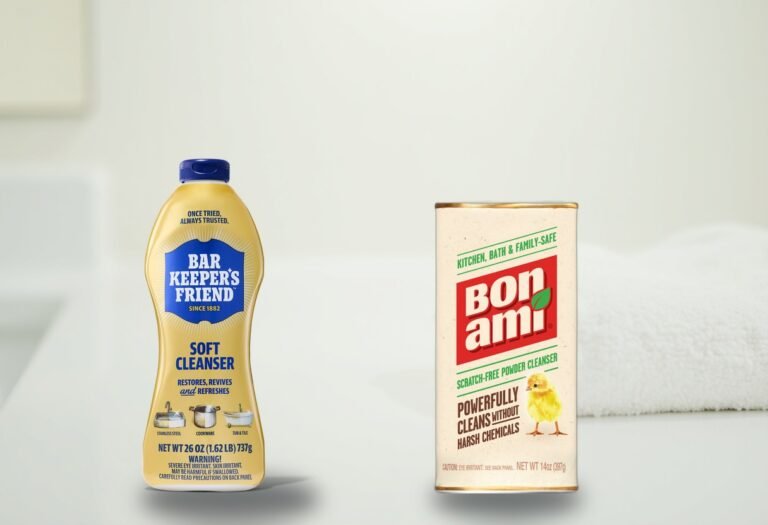 Home Care & DIYBar Keepers Friend Soft Cleanser vs Bon Ami: Which Is Safer for Glass?Bar Keepers Friend Soft Cleanser vs Bon Ami: which is safer for glass surfaces? We compare abrasive level, ingredients, and real results on stove tops and shower doors.
 -
 Pest ControlDo Mosquito Dunks Really Work for Standing Water?Do Mosquito Dunks really work? The honest answer — what the BTI bacteria actually kills, what it misses, and when you need a different approach for standing water.