 Inspire
Gaia Green 4-4-4 vs 2-8-4: Which Fertilizer Should You Use First?
Same brand, two jobs. The trick is timing, not picking a winner. Get the sequence backwards and you’ll feed leaves when you meant to feed flowers.
Updated June 2026 · 6 min read · ✓ Fact-checked
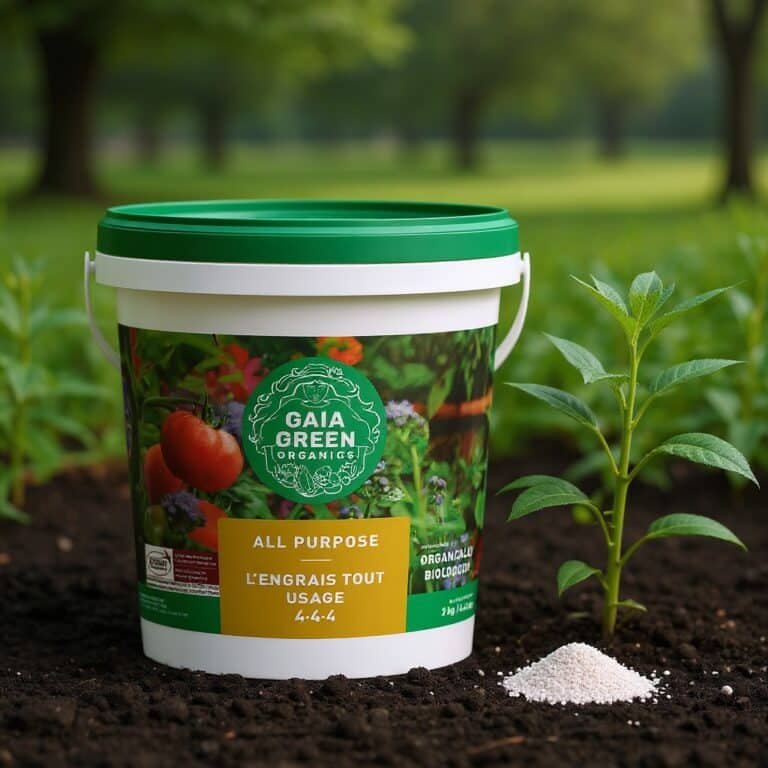
Gaia Green 4-4-4 and 2-8-4 aren’t rivals. They’re the same line built for two different jobs, and most gardeners end up needing both in one season.
Use 4-4-4 for early growth and 2-8-4 once flowering starts. Most gardeners need both in the same season, not one or the other, and switching too late wastes the phosphorus boost 2-8-4 is built to deliver.
Key takeaways
- 4-4-4 (balanced N-P-K) suits early growth. 2-8-4 (lower nitrogen, higher phosphorus) suits flowering and fruiting. Most gardeners use both across one season.
- Both are slow-release, so timing beats dose: apply ahead of the growth stage you’re targeting, not after you notice it’s needed.
- Both are organic amendments that improve soil structure over time, not just feed the plant in the moment.
Our picks
The two formulas at a glance
Both are slow-release organic blends from the same line. The numbers are the N-P-K ratio (Nitrogen, Phosphorus, Potassium). 4-4-4 is balanced for growth and soil; 2-8-4 drops nitrogen and pushes phosphorus for flowers and fruit.
| 4-4-4 (All Purpose) | 2-8-4 (Power Bloom) | |
|---|---|---|
| N-P-K ratio | 4-4-4 | 2-8-4 |
| Best stage | Early growth / veg | Flowering / fruiting |
| Nitrogen | Balanced (4) | Lower (2) |
| Phosphorus | Balanced (4) | Higher (8) |
| Potassium | 4% | 4% |
| Formula type | Slow-release organic | Slow-release organic |
Gaia Green 4-4-4 vs 2-8-4: what is the real difference?
When comparing Gaia Green 4-4-4 vs 2-8-4, the difference comes down to nutrient ratios and plant growth stages. The numbers represent N-P-K (Nitrogen, Phosphorus, Potassium).
- 4-4-4: balanced. Supports leaves, roots, and steady vegetative growth.
- 2-8-4: lower nitrogen, high phosphorus. Designed for blooms and fruit production.
That is the practical difference. Everything else is secondary.
How much to use, and how often
Both formulas use the same measuring method, since they share the same slow-release base. For containers and raised beds, mix in 3 tablespoons per gallon of soil before planting, then top-dress with 1 tablespoon per gallon of soil once a month during the growing season.
Garden bed rates differ between the two products. Gaia Green’s own label lists All Purpose 4-4-4 at up to 18.4 lbs per 500 sq ft per application, with a 73 lbs per 500 sq ft annual maximum. Power Bloom 2-8-4 is rated at up to 28.5 lbs per 1,000 sq ft per application, with a 114 lbs per 1,000 sq ft annual maximum.
Both products ship in the same four package sizes: 500 g, 2 kg, 10 kg, and 20 kg. The size to buy comes down to how much bed or container space you’re feeding, not which formula you pick.
One more thing worth knowing
1Burn risk
Because they are slow-release organic blends, both reduce burn risk compared to synthetic fertilizers.
References
For a broader overview of organic fertilizer standards, see the USDA Organic Program. Application rates and package sizes above are drawn from Gaia Green’s own product labels for All Purpose 4-4-4 and Power Bloom 2-8-4. You can also explore our full organic gardening guide.
Frequently asked questions
Can I use Gaia Green 4-4-4 and 2-8-4 together?
Yes. Most gardeners keep them in sequence, 4-4-4 first and 2-8-4 once flowering begins, but blending small amounts of each is fine while a plant is transitioning between stages.
Is 2-8-4 better for tomatoes?
Yes, especially after flowers appear. The lower nitrogen and higher phosphorus in 2-8-4 help reduce leafy overgrowth and support fruit production.
Should beginners start with 4-4-4?
For most home gardeners, 4-4-4 is the safer starting point. It is balanced and works across vegetables, flowers, and containers before bloom-specific feeding is needed.
Are Gaia Green fertilizers safe for containers?
Yes. Both 4-4-4 and 2-8-4 are slow-release organic blends commonly used in raised beds and container gardens.
Why does the fertilizer seem dusty?
These are dry organic amendments. Some dust is normal. Mixing gently into soil and watering in reduces airborne particles.
The Bottom Line
Gaia Green 4-4-4 All Purpose
Start here for early growth and soil building.
Gaia Green 2-8-4 Power Bloom
Switch to this once flowering or fruiting starts: phosphorus goes up, nitrogen goes down.
Related reading
-
 Plant Care & GardeningMosquito Dunks for Standing Water: 6 Pack vs 20 Pack (What We’d Buy)Mosquito Dunks for standing water: 6-pack vs 20-pack compared — which size to buy, how many you need per season, and how to apply them without wasting product.
 -
 CanadaBest Mosquito Control for Standing Water in Canada (Homeowner Guide)Best mosquito control for standing water in Canada: 5 tested options ranked by effectiveness, safety near wildlife, and value. Includes biocontrol and chemical picks.
 -
 CanadaMYKOS vs DYNOMYCO: Which Mycorrhizae Is Worth Buying in 2026?MYKOS vs DYNOMYCO: which mycorrhizal inoculant is worth buying? We compare species count, application method, price per application, and real transplant results.