 Inspire
What Not to Use Bar Keepers Friend On (7 Surfaces to Avoid)
It’s genuinely great at what it’s built for. The trouble starts when it gets used like an all-purpose cleaner.
Updated June 2026 · ✓ Fact-checked
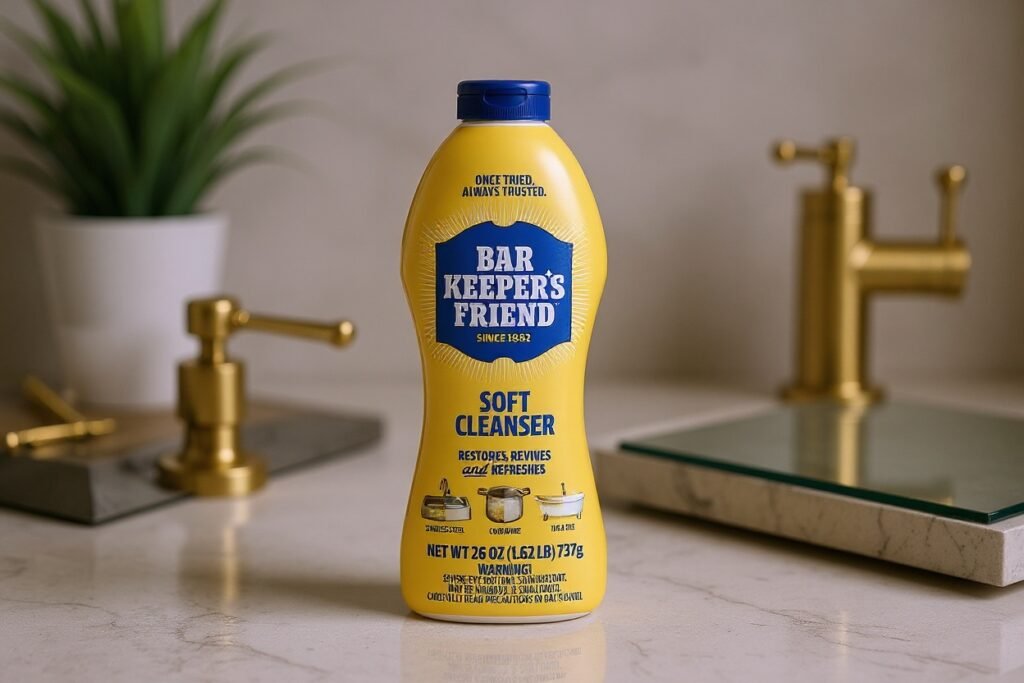
What not to use Bar Keepers Friend on includes granite, marble, wood, cast iron, painted surfaces, fabric, and leather because the cleanser’s chemistry and abrasiveness can permanently dull, haze, or scratch finishes. BKF is best for hard non-porous surfaces like stainless steel and porcelain, where mineral stains and grime need a strong reset.
Key takeaways
This section contains affiliate links — we may earn a commission at no extra cost to you. See our full evaluation policy at the end of this guide.
BKF damages the wrong surfaces for two reasons: it commonly relies on oxalic acid, which reacts with certain minerals and finishes, and even its mild abrasives can haze a glossy surface if you scrub hard enough. Granite, marble, wood, cast iron, painted surfaces, and fabric or leather are the surfaces the manufacturer itself warns against.
The most common mistake is using it on stone “just once,” which can leave a dull spot that’s hard to undo. Make a light paste instead of using it dry, use a soft cloth or non-scratch sponge, rinse within about a minute so residue doesn’t sit longer than needed, and test a small hidden area first if you’re unsure about a surface.
Bar Keepers Friend is genuinely great at what it’s built for, rust stains and mineral buildup on hard surfaces. The trouble starts when people treat it as an all-purpose cleaner and reach for it on stone, wood, or anything with a delicate finish.
Product links in this section are affiliate links.
Quick reality snapshot
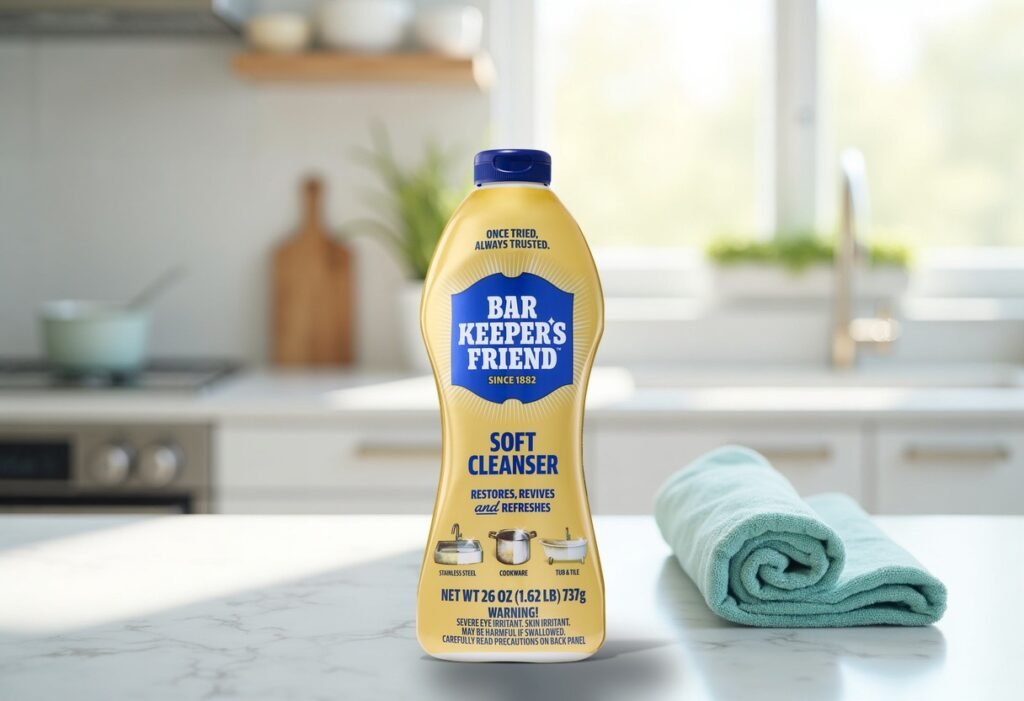
- Best at: rust stains, mineral buildup, dull stainless, soap scum
- Biggest risk: scratching or etching delicate surfaces
- Most common mistake: using it like an “all-purpose” cleaner
7 surfaces to avoid using Bar Keepers Friend on
| Surface | Why to avoid |
|---|---|
| Granite & natural stone | Can dull or haze from the wrong chemistry or abrasion |
| Marble | Etches and dulls easily; damage often looks subtle at first |
| Wood & wood finishes | Can haze, strip, or spot; not made for porous, sealed, or stained wood |
| Cast iron | Abrasive scrubbing and acids can strip the seasoning |
| Painted surfaces | Can scuff, dull, or lift into a patchy, uneven sheen |
| Fabric & leather | Can discolor or weaken; can lock in stains instead of lifting them |
| Delicate / glossy finishes | Can micro-scratch or haze from aggressive scrubbing |
1) Granite and many natural stones
Natural stone often has finishes that can dull or haze when exposed to the wrong chemistry or abrasion. We have seen “one quick scrub” turn into a permanent-looking cloudy patch. If you are unsure what type of stone you have, treat it as delicate and skip BKF.
2) Marble
Marble is especially easy to etch and dull. Even when the damage looks subtle at first, it tends to show more in certain lighting. This is one of those surfaces where we simply do not gamble, even for a small stain.
3) Wood and wood finishes
Wood finishes can haze, strip, or spot when exposed to harsh cleaners. BKF is not meant for porous, sealed, or stained wood surfaces, and it is not worth the risk.
4) Cast iron
Cast iron is typically seasoned to protect it. Abrasive scrubbing and certain acids can compromise that seasoning. If you are trying to remove rust or stuck-on residue, there are safer approaches specifically designed for cast iron care.
5) Painted surfaces
Paint can scuff, dull, or lift depending on the finish and age. We treat painted cabinetry, baseboards, and coated metal as “no BKF” zones because it is too easy to end up with a patchy, uneven sheen.
6) Fabric and leather
Fabric and leather are not appropriate for BKF. These materials can discolor or weaken, and you can lock in stains instead of lifting them. Use products designed for textiles and leather care.
7) Delicate, glossy, or easily-scratched finishes
Even when a surface is technically “hard,” a glossy or delicate finish can micro-scratch or haze if you scrub too aggressively. If you care about keeping a mirror-like finish, treat BKF as a last resort and test a hidden spot first.
What not to use Bar Keepers Friend on (official guidance)
When in doubt, we go straight to the manufacturer’s “don’t do this” list. It is specific for a reason.
Bar Keepers Friend: 8 ways NOT to use BKF (official)
Surfaces the manufacturer explicitly warns against:
- Granite and many natural stones
- Marble (very easy to etch and dull)
- Wood and wood finishes
- Cast iron
- Painted surfaces
- Fabric and leather
- Non-stick cookware (the coating can be scratched off)
- Mirrors, gold, and gold- or silver-plated items (sterling silver itself is fine, but the manufacturer advises against BKF on plated pieces and mirrors)
Why BKF damages some surfaces
Two reasons:
- Chemistry: BKF commonly relies on oxalic acid, which can react with certain minerals and finishes.
- Abrasion: even “mild abrasives” can haze glossy surfaces if you scrub hard enough.
If you want the safety and ingredient documentation:
What BKF is best at (use it here)
- Stainless steel sinks (water spots, discoloration)
- Porcelain sinks and tubs (grime and soap scum)
- Rust staining on appropriate metal surfaces
- Hard-water mineral buildup on suitable non-porous materials
For a practical, editor-style breakdown:
How to use BKF without scratching everything
- Make a light paste (powder + a little water)
- Use a soft cloth or non-scratch sponge
- Gentle pressure (you’re cleaning, not sanding)
- Rinse within about a minute of applying it, then dry (the manufacturer’s FAQ says not to leave it on any longer than that)
- Test a small hidden area first if unsure
Common mistakes (we see these constantly)
- Using it on stone “just once” leads to a dull spot that can be hard to undo
- Scrubbing too hard leads to haze and micro-scratches
- Leaving it sitting adds unnecessary risk
- Mixing cleaners is risky, do not combine household chemicals
The Bottom Line
What not to use Bar Keepers Friend on is the whole reason people get in trouble, especially stone, paint, wood, cast iron, fabric, and leather. Keep BKF on hard non-porous surfaces where it shines, follow the official “do not use” list, and test a small spot first. That one habit prevents a lot of “why is my countertop cloudy?” moments later.
Frequently asked questions
Can I use Bar Keepers Friend on granite or marble?
No. Both are porous natural stones. Oxalic acid in BKF etches and dulls the surface. The manufacturer’s own FAQ says not to use the Cleanser, Soft Cleanser, or Superior Multi-Purpose Cleaner on marble, and recommends its Granite & Stone Cleaner & Polish instead, since that formula is pH-balanced for natural stone.
Can I use Bar Keepers Friend on quartz countertops?
Only with the right product, and only if the quartz is sealed. Bar Keeper’s Friend’s own FAQ says the Soft Cleanser can be used on a sealed quartz counter, but its better recommendation is the Granite & Stone Cleaner & Polish, which is pH-balanced and formulated for natural stone and quartz. The original powder Cleanser is not recommended for quartz.
Is Bar Keepers Friend safe on stainless steel?
Yes, stainless steel is one of the surfaces BKF is designed for. Use Soft Cleanser for a gentler option and always rub with the grain, not against it.
Can I use BKF on my cast iron pan?
No. BKF strips the seasoning layer from cast iron. Use coarse salt and a stiff brush for stuck-on food, then re-season.
Does Bar Keepers Friend scratch glass cooktops?
Soft Cleanser is safe on most glass cooktops, but test a small hidden area first. The powder form is more aggressive and should be avoided on coated glass surfaces.
What surfaces is BKF actually best on?
Stainless steel, porcelain, ceramic tile, glass bakeware, copper, brass, and fiberglass. Hard non-porous surfaces are where it performs without risk.
Related reading
-
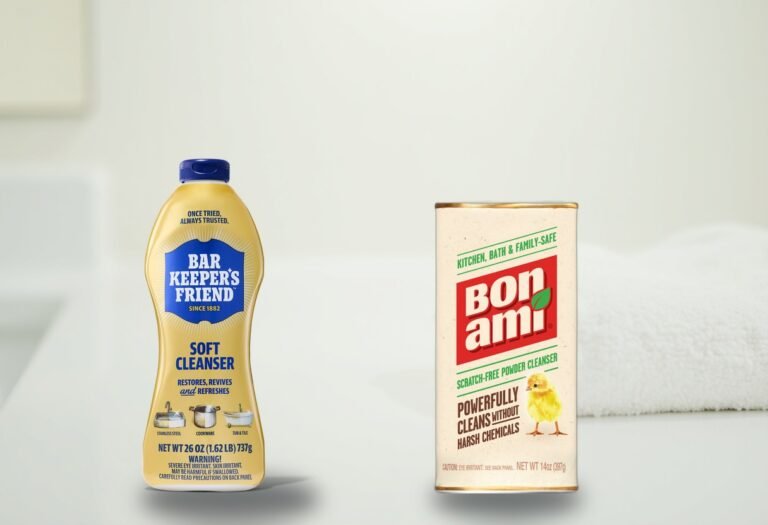 Home Care & DIYBar Keepers Friend Soft Cleanser vs Bon Ami: Which Is Safer for Glass?Bar Keepers Friend Soft Cleanser vs Bon Ami: which is safer for glass surfaces? We compare abrasive level, ingredients, and real results on stove tops and shower doors.
 -
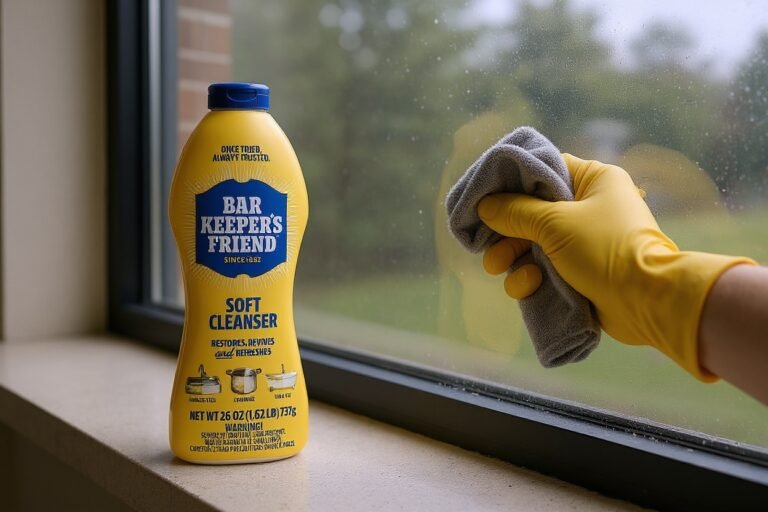 Home Care & DIYHow to Clean Glass Without Scratching (Safe, Foolproof Method)How to clean glass without scratching: rinse off grit first, use clean microfiber, keep pressure light. Most scratches come from friction — not from the cleaner itself.
 -
 Pest ControlDo Mosquito Dunks Really Work for Standing Water?Do Mosquito Dunks really work? The honest answer — what the BTI bacteria actually kills, what it misses, and when you need a different approach for standing water.