 Inspire
Isotonix OPC-3 Review: Is This Isotonic Antioxidant Worth It?
Most antioxidant capsules are largely wasted before they reach your bloodstream. We dug into the research on whether the isotonic form actually changes that, and whether the price is justified.
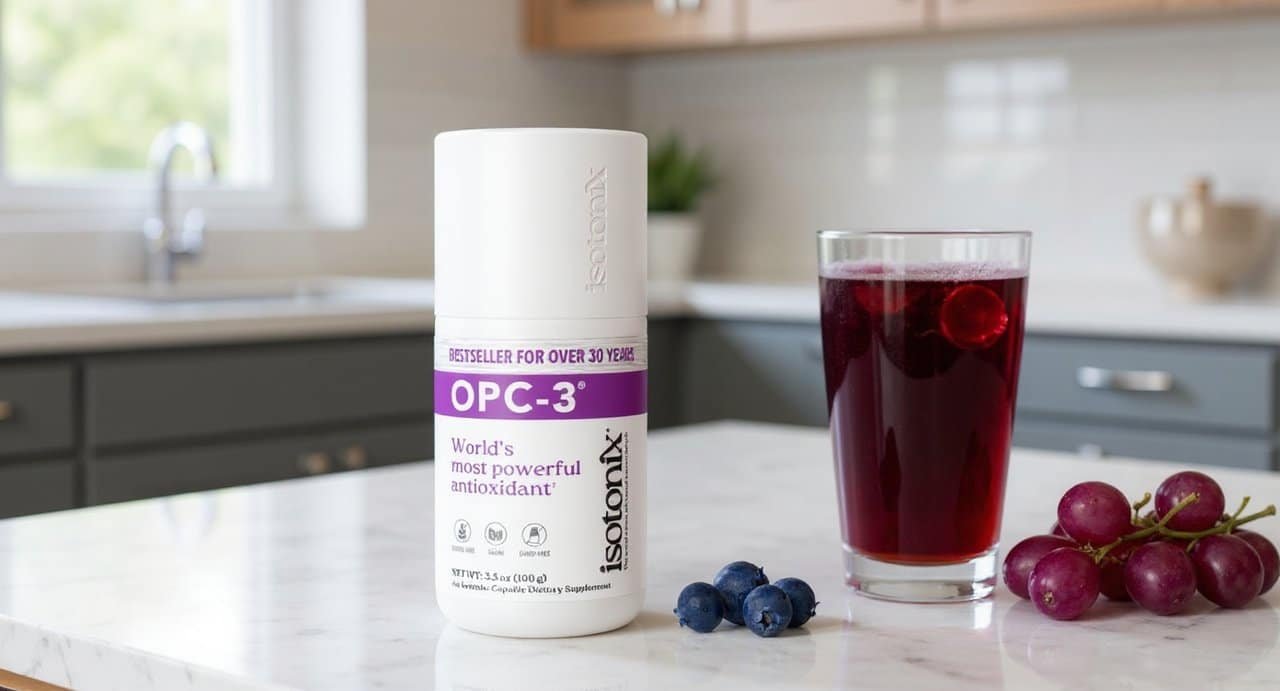
our rating
What we liked
- Four real antioxidant extracts, not one
- Absorbs in roughly five minutes (the isotonic form)
- An easy daily drink. Consistency is simple
- Gentle on an empty stomach for most people
What to know
- Pricier than a standard capsule
- Mildly tart; won’t fully dissolve
- “Faster” absorption is sensible, not a miracle
- Not everyone notices a difference in week one
Key takeaways from this Isotonix OPC-3 review
- It’s four antioxidants in one: grape seed, pine bark (Pycnogenol), red wine, bilberry, plus a citrus bioflavonoid complex.
- It’s built to absorb fast, before stomach acid breaks the antioxidants down — that’s what “isotonic” delivery means.
- The science is real but modest. Absorption speed is well-supported; miracle claims are not.
- It costs more than a basic capsule. Worth it if absorption matters to you.
Who it’s for (and who should skip it)
This Isotonix OPC-3 review breaks down exactly who benefits most, and who can skip it.
Buy it if…
- You want daily antioxidant support
- Absorption quality is what you’re paying for
- A daily ritual suits your routine
Skip it if…
- You only want the lowest price
- You’d rather swallow a capsule
- You’ll skip it half the time anyway
What’s actually in it
Here’s the simple version: antioxidants help mop up the everyday cellular damage your body racks up just from living, and most supplements hand you a single source of them. This one doesn’t. OPC stands for oligomeric proanthocyanidins, the antioxidant compounds this category is named after. Most products give you one source. This one blends four.
A citrus bioflavonoid complex rounds out the blend, adding its own antioxidant contribution alongside the other four.
Why “isotonic” matters
A capsule has to break down in your stomach first, and a chunk of the good stuff is lost in the acid on the way. OPC-3 skips most of that. Here’s the difference, step by step:
| Step | Standard capsule | Isotonic OPC-3 |
|---|---|---|
| ① | Swallowed whole | Mixed with cool water |
| ② | Breaks down in stomach acid, some OPCs lost on the way | Matches your body’s own fluid. Goes straight to the small intestine. |
| ③ | Absorbed, but slower and incomplete | Absorbed quickly with less waste |
| ⌛ | ~30–60 min | ~5 min |
That mechanism is the honest reason it costs more. You’re paying for the delivery, not magic.
Here’s the actual number reviews like this one usually skip: on Isotonix’s own store, the 90-serving bottle is $74.95, which works out to about $0.83 per serving, or roughly $25 for a month of once-daily use. The smaller 30-serving bottle runs $34.95, about $1.17 per serving (isotonix.com, checked September 2026).
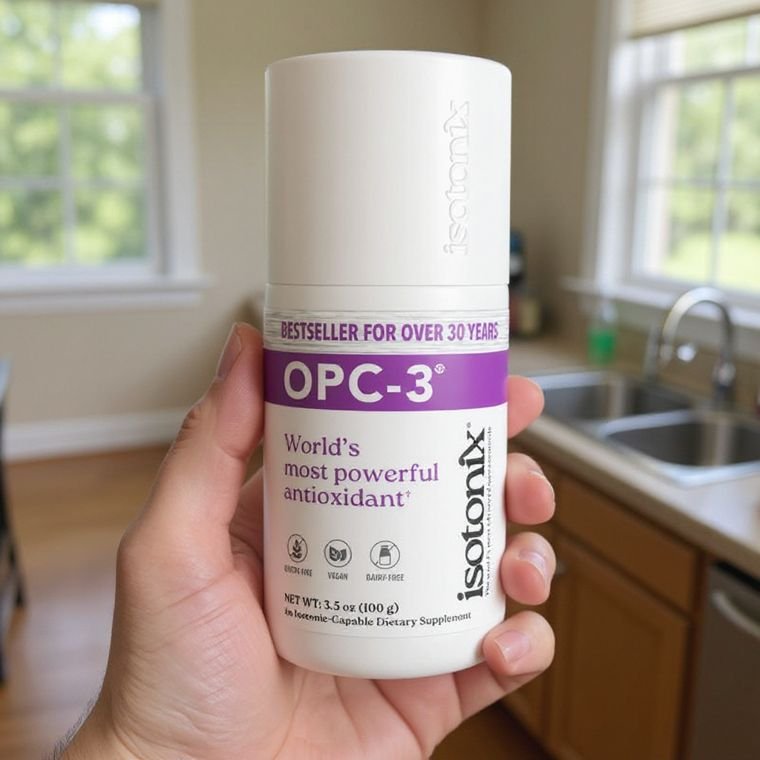
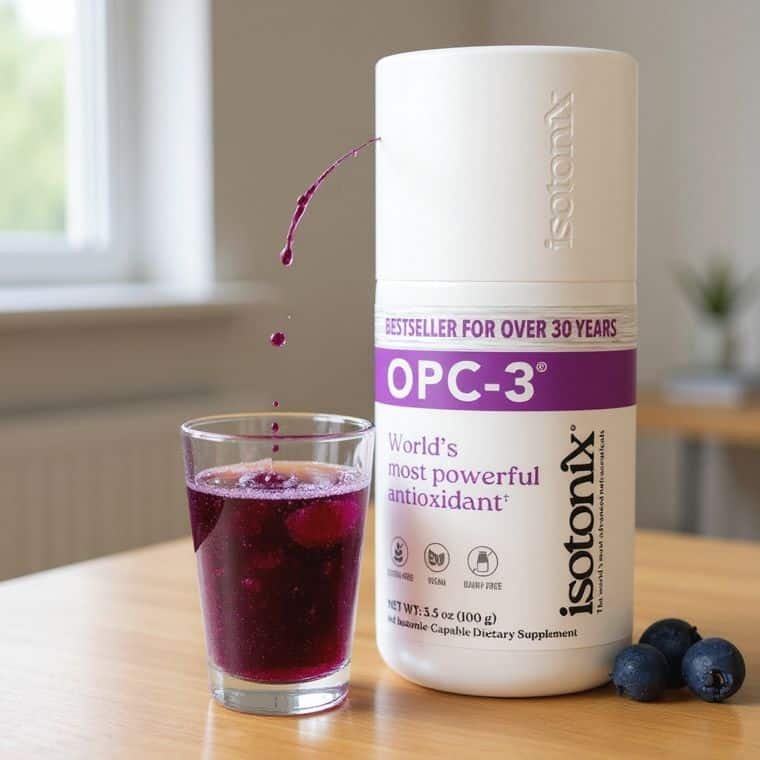
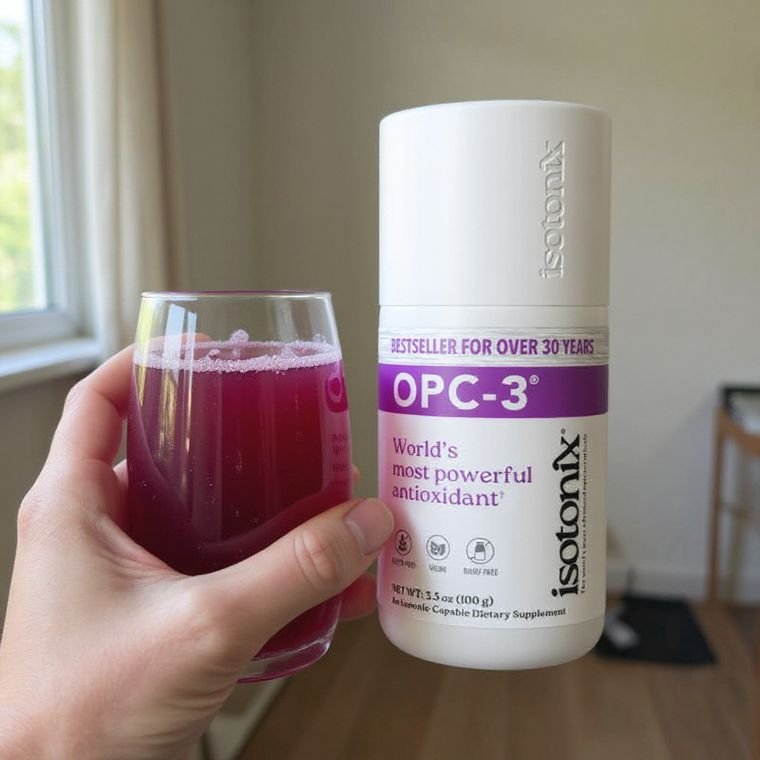
What it’s actually like to use: a level capful stirred into cold water comes together in about ten seconds, tastes mildly tart, and won’t fully dissolve, so a quick stir helps. A bottle lasts most people about a month. Use cool water, since heat damages the actives.
What the research really says
Grape-seed proanthocyanidins and Pycnogenol have solid research behind them for antioxidant activity, circulation, and blood-pressure markers. Bilberry has support for eye comfort and microcirculation.
There’s also research on the OPC-3 formula itself, not just its individual ingredients in isolation. A placebo-controlled study of 61 adults with metabolic-syndrome risk factors found that two months of OPC-3 lowered plasma oxidative stress by about 10% and C-reactive protein by more than 50%, alongside improvements in blood pressure, total cholesterol, and fasting blood sugar (Cesarone et al., Angiology, 2008, PMID 18628275). A separate study from the same research group compared the isotonic drink directly against an OPC-3 tablet and found it lowered a marker of oxidative stress up to six times faster within the first ten minutes (Cesarone et al., Phytotherapy Research, 2009, PMID 19172583).
For context: on Isotonix’s own product page, OPC-3 currently carries a 4.6 out of 5 average from 382 customer reviews (isotonix.com, checked September 2026).
OPC-3 vs a basic grape-seed capsule
| Isotonix OPC-3 | Grape-seed capsule | |
|---|---|---|
| Form | Isotonic powder + water | Capsule |
| Antioxidant sources | 4 extracts + citrus bioflavonoids | Grape seed only |
| Absorption speed | Fast: ~5 min | Standard: 30–60 min |
| Cost | Premium | Lowest |
Frequently asked questions
This section contains affiliate links — we may earn a commission at no extra cost to you. See our full evaluation policy at the end of this guide.
Is OPC-3 worth more than a capsule?
How do I take it, and how much?
Does OPC-3 have side effects?
How is it different from a grape-seed pill?
Where should I buy it, and how do I avoid fakes?
“Four real antioxidant extracts in a form that actually reaches your bloodstream.”
Costs more than a capsule, but the delivery format earns it. Worth paying for if you take it daily. If price is the only thing, a $15 grape-seed capsule does the job.

Related reading
-
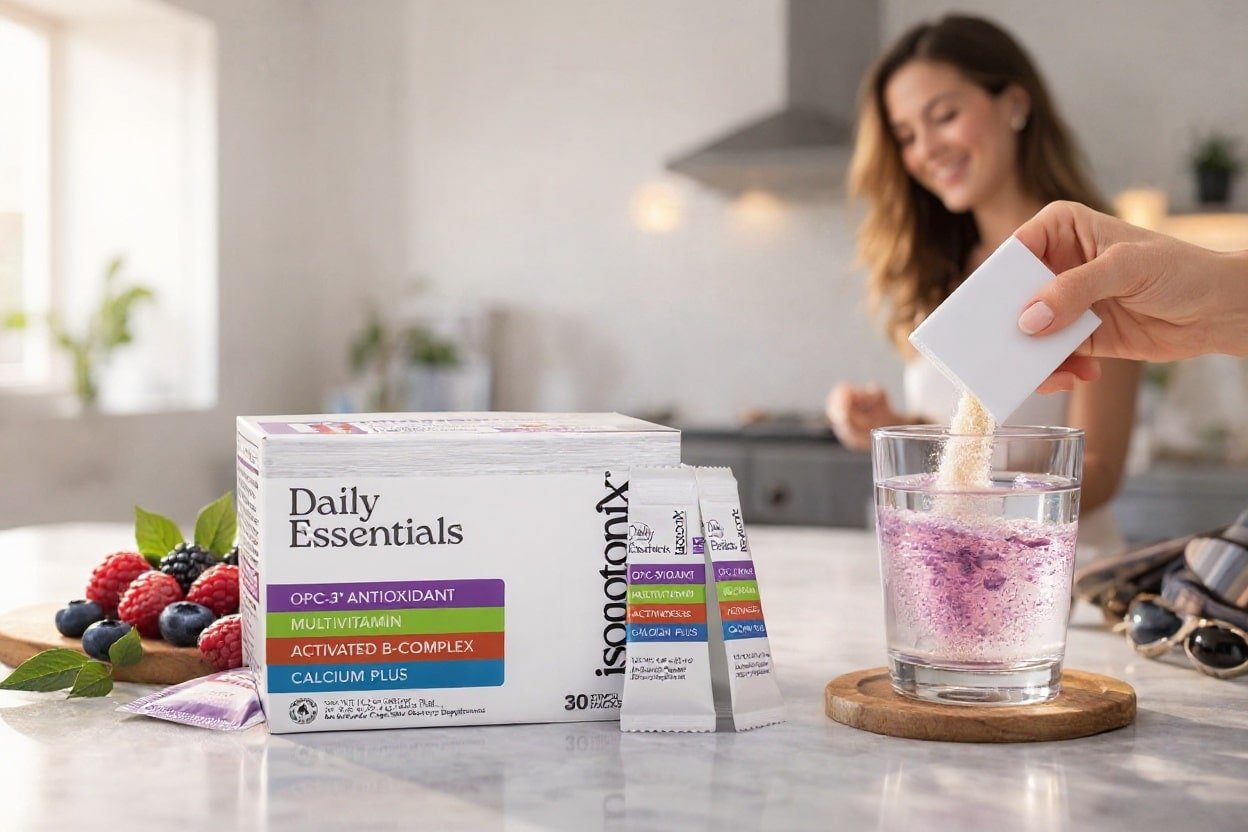 ReviewIsotonix Daily Essentials Packets reviewSame formula as the bottles, in single-serve sachets. Worth the size premium for travel?
 -
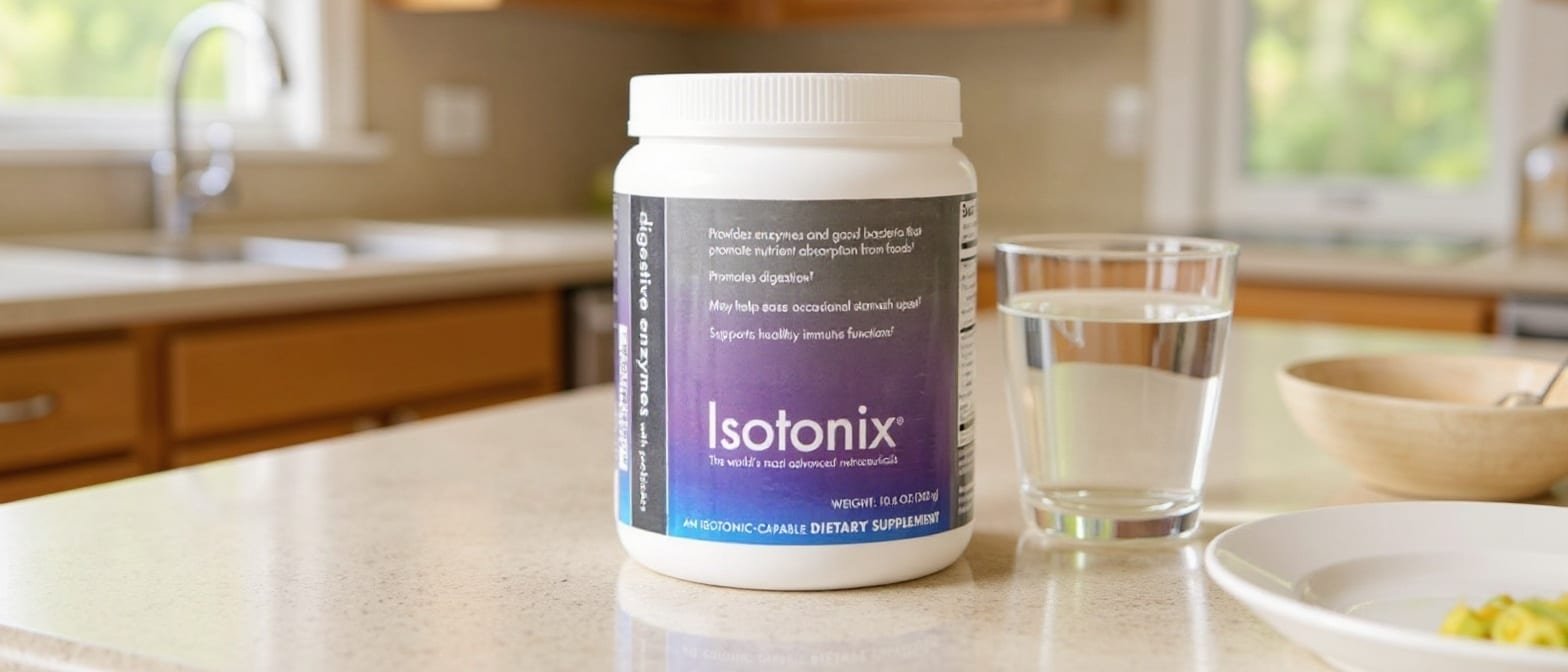 ReviewIsotonix Digestive Enzymes reviewFive enzyme classes in isotonic form. Does the delivery advantage hold up for digestion?
 -
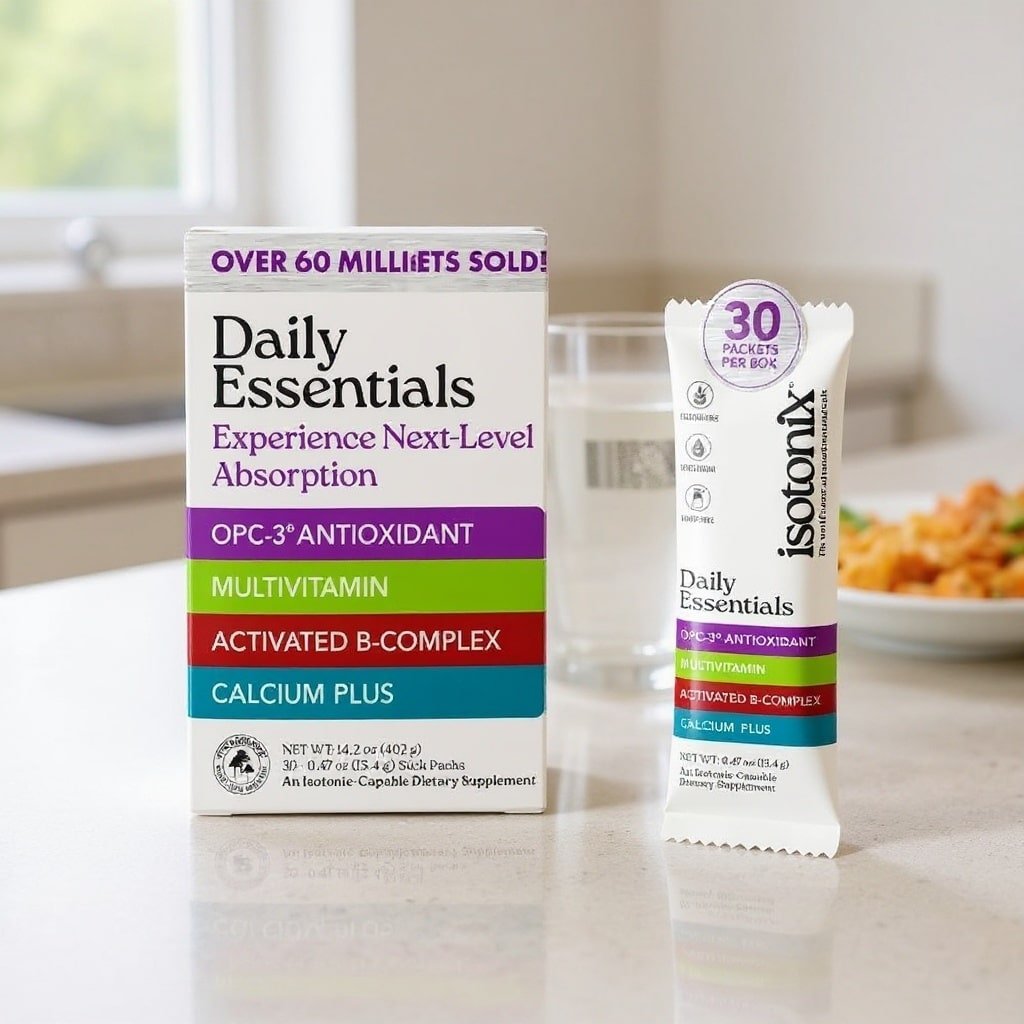 ReviewIsotonix Daily Essentials reviewFour Isotonix products bundled at a 15% discount. Is the stack worth buying together?
 -
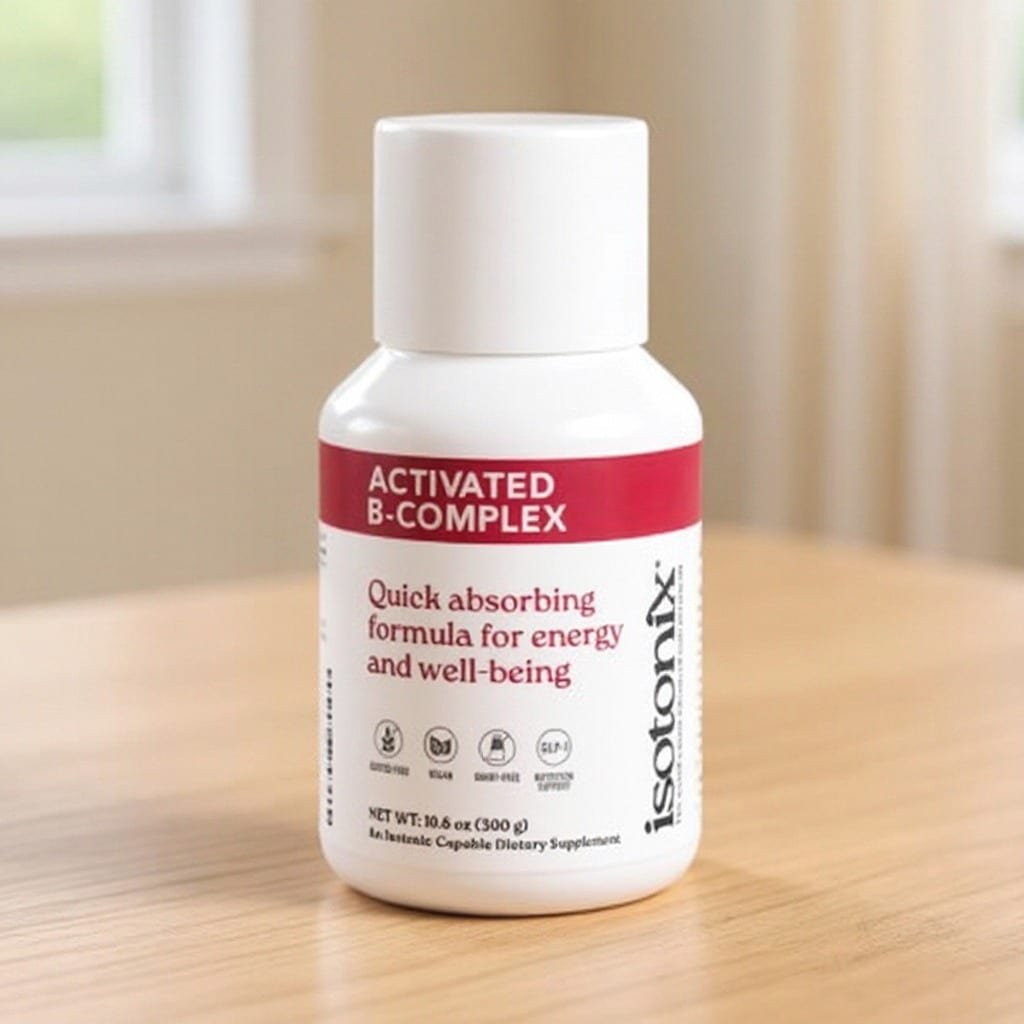 ReviewIsotonix Activated B-Complex reviewEight B vitamins in methylated forms. Are the activated versions worth paying more for?
 -
 ComparisonIsotonix vs capsules: what actually mattersMost capsule buyers absorb less than they paid for. Here's what isotonic actually changes.
 -
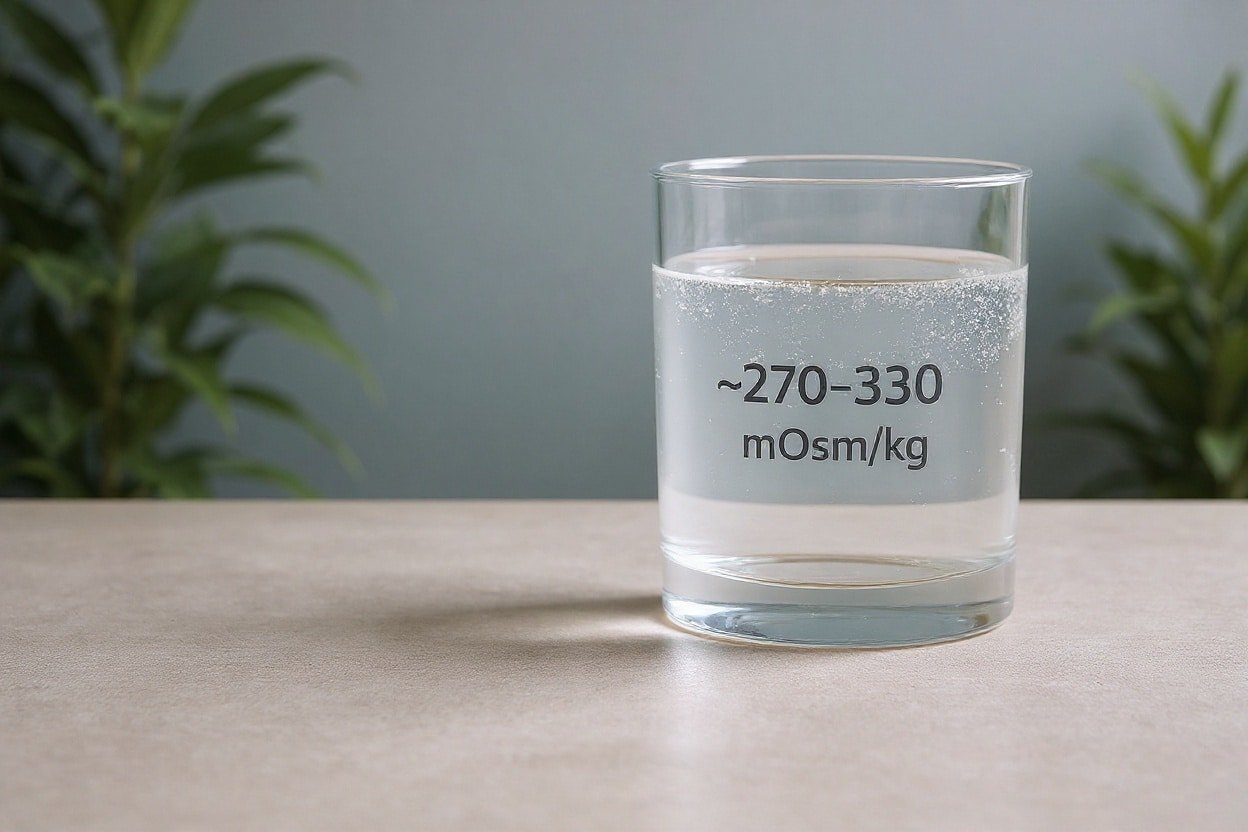 ExplainerWhat is an isotonic supplement?The osmolarity science behind why isotonic delivery is faster — explained simply.
 -
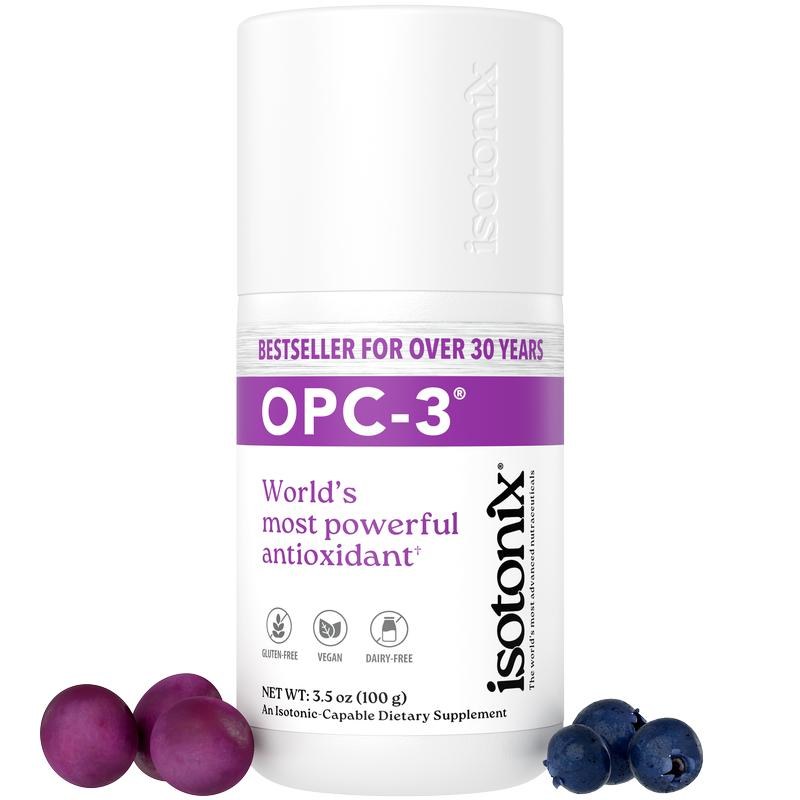 ExplainerIs Isotonix OPC-3 Third Party Tested?What third-party testing actually means for this product, and what to check yourself.
 -
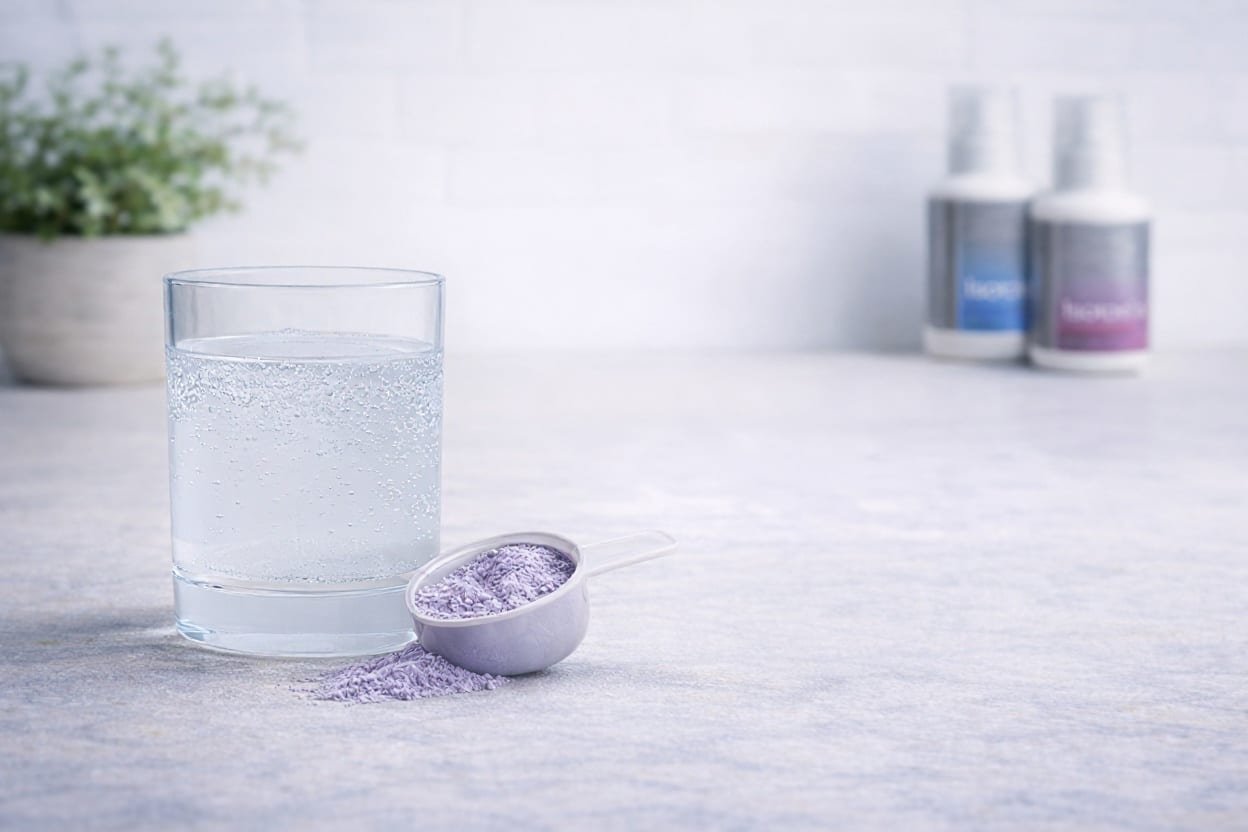 GuideIsotonix Mixing MistakesTemperature, timing, and the 5 most common ways people reduce their own absorption.
 -
中文版 ChineseIsotonix OPC-3 Review (Chinese)This review in Chinese: the full breakdown of the four extract sources and the research basis.
Sources
- Grape seed & Pycnogenol research: Examine.com.
- Antioxidant & mineral fact sheets: NIH Office of Dietary Supplements.
- OPC-3 formula-specific research: Cesarone MR, et al. “Improvement in circulation and in cardiovascular risk factors with a proprietary isotonic bioflavonoid formula OPC-3.” Angiology 59(4):408-14, 2008 (PMID 18628275); and Cesarone MR, et al. “Accelerated antioxidant bioavailability of OPC-3 bioflavonoids administered as isotonic solution.” Phytotherapy Research 23(6):775-7, 2009 (PMID 19172583).
- Pricing, ingredients, and brand ownership: isotonix.com, checked September 2026.