 Inspire
Can You Take OPC-3 Every Day? Dose, Timing and Medication Cautions
You stir OPC-3 into water every morning and wonder whether it’s actually fine to keep doing that, especially if you take a blood thinner or a blood pressure pill. The label allows daily use, and it also tells you to check with your health care provider first if you use prescription drugs. The catch: the page’s directions say once a day, the bottle says up to three, and no study we found covers years of use.
Key takeaways
- Daily use is the intended routine. The US product page says “Enjoy once a day,” and the bottle label says 1 to 3 servings may be taken daily or as directed by your health care provider.
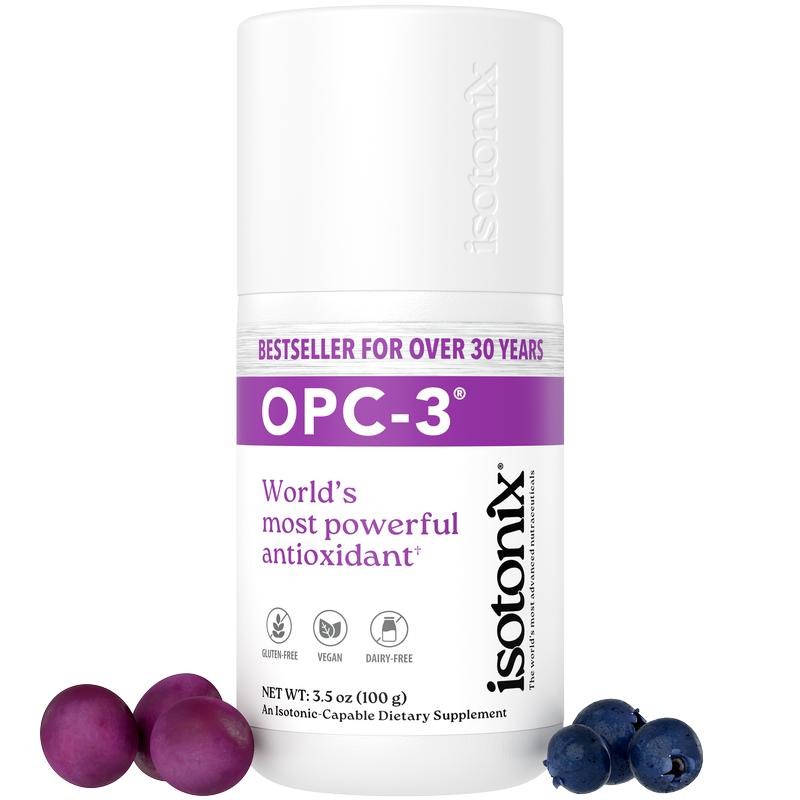
- One serving is 3.3 g with 25 mg each of five extracts, 95 mg of potassium and 2 g of sugar. No vitamin C and no caffeine are listed.
- It isn’t sold as a blood thinner, but Memorial Sloan Kettering says grape seed and pine bark extract may increase bleeding risk. If you take warfarin or a similar drug, ask your prescriber or pharmacist first.
- Pine bark trials in a Cochrane review ran 4 weeks to 6 months. We found no study that tests this blend for years.
- It isn’t a treatment for blood pressure, anxiety or anything else. If something feels wrong, stop and call your provider.
Can you take OPC-3 every day? What the label says about dose
Yes, the directions are written for daily use. The US product page says to stir 1 small capful (3.3 g) into 2 fl. oz/60 mL of water and “Enjoy once a day. For maximum absorption take on an empty stomach.”
The bottle label in that same product gallery is looser: “One to three servings may be taken daily or as directed by your health care provider.” So the brand gives you 1 serving a day in the web page’s directions and 1 to 3 on the bottle (the page’s own children’s FAQ repeats the 1 to 3). We’d start at 1 serving a day and go higher only if your provider says so.
Three servings is a different amount of everything (arithmetic in the table below), and a 30-serving bottle ($34.95 on the US page) lasts 10 days instead of 30. That’s about $1.17 a day at 1 serving versus about $3.50 at 3. Check the current price in the official US store.
If your bottle or an old leaflet reads differently, it may be older. A February 2020 FDA warning letter to Market America described OPC-3 directions of 2 capfuls per 150 lbs of body weight for the first 7 to 10 days, then 1 capful. That part of the letter faulted how the label declared its serving size, and the current page no longer carries a loading routine.
The letter’s first section was about something else: FDA said the company had failed to file serious adverse event reports for two complaints, one of them about a multi-product kit that included OPC-3. The letter doesn’t say OPC-3 caused that event. Follow the directions on the bottle in your hand. We read the US page and label only.
What one serving actually contains
Supplement Facts panel from the 30-serving bottle on the official page, plus our own multiplication for 3 servings.
| 1 serving | 3 servings | |
|---|---|---|
| Powder | 3.3 g | 9.9 g |
| Each of 5 extracts* | 25 mg | 75 mg |
| Potassium (as potassium bicarbonate) | 95 mg | 285 mg |
| Carbohydrate (all of it sugar) | 2 g | 6 g |
| Calories | 10 | 30 |
*Grape seed, red wine, pine bark (the label marks it as Pycnogenol), bilberry and a citrus bioflavonoid complex. The 3-serving column is arithmetic, not a labeled amount.
No vitamin C and no caffeine appear on the label. It also doesn’t say how much of each extract is actual proanthocyanidin (the OPC in the name), so you can’t line 25 mg up against study doses.
Taking it for months or years: what we know and don’t
We found no study that tested this blend for years. The longest trials in our main sources cover about 6 months, for individual extracts rather than OPC-3 itself. The one longer study we found was a 12-month registry study of Pycnogenol in 156 people after a deep vein clot (PMID 22108473). It compared Pycnogenol with compression stockings for post-clot symptoms and wasn’t built to settle long-term safety.
- Pine bark extract (the label marks OPC-3’s as Pycnogenol): a 2020 Cochrane review covered 27 trials (1,641 people) of pine bark extracts that lasted 4 weeks to 6 months. Its authors say small trials and poor reporting mean “no definitive conclusions regarding the efficacy or safety of pine bark extract supplements are possible.” For most comparisons the studies didn’t report serious adverse events as an outcome, so a lack of reports isn’t evidence of safety (PMID 32990945).
- Grape seed: NCCIH (the National Center for Complementary and Integrative Health, part of NIH) calls it “generally well tolerated” by mouth, and says not much is known about its effects beyond cholesterol and blood pressure. The clinician page at Memorial Sloan Kettering (MSK) lists “Gastrointestinal upset” as an adverse reaction.
- Bilberry: NCCIH says bilberry fruit extracts “have been used safely in research studies at doses of up to 160 mg/day for up to 6 months,” while the leaves “may be unsafe when consumed in high doses or for long periods of time.” The label says only “Bilberry Extract,” not which part of the plant. A serving here has 25 mg, but extracts differ in strength, so it’s not a like-for-like comparison.
- OPC-3 itself: the trial we cite ran 2 months in 61 people with metabolic syndrome risk factors (PMID 18628275).
- Red wine extract and citrus bioflavonoids: we found no NIH or NCCIH page on either, so we’re not going to guess.
There’s a fair counterweight. NCCIH says bilberry “has not been clearly shown to be helpful for any health condition,” and the Cochrane authors couldn’t reach firm conclusions on pine bark either. So you’re weighing unknown long-term safety against benefits that aren’t firmly established. Our full OPC-3 review covers value.
Medication cautions: blood thinners, blood pressure, diabetes and surgery
Does OPC-3 thin the blood?
It isn’t sold as a blood thinner, but two of its extracts may raise bleeding risk. Memorial Sloan Kettering’s patient page says: “Grape seed extract may increase your risk of bleeding.” Its pine bark page says the same sentence with pine bark in it. The clinician sections add that in lab studies grape seed “has antiplatelet activity” (“Clinical relevance has yet to be determined”), and that pine bark extract “can inhibit platelet aggregation” and may raise bleeding risk with anticoagulant or antiplatelet drugs.
The other side: in a 23-person crossover trial, 200 mg a day of Pycnogenol for 8 weeks, added to standard heart treatment, left platelet adhesion and blood pressure unchanged (PMID 22240497). One small study, one dose, one condition, and a serving of OPC-3 has 25 mg of pine bark extract, not 200 mg. It doesn’t clear anyone on warfarin.
So the sourced answer is maybe, the effect isn’t settled in people, and it’s serious enough that MSK tells blood thinner users to talk to their provider first. Never skip or change a prescribed blood thinner because of a supplement, and tell the prescriber before your first serving.
| If you take | What the sources say | What to do |
|---|---|---|
| Warfarin or another anticoagulant or antiplatelet drug | MSK: grape seed and pine bark extract may raise bleeding risk | Ask your prescriber first |
| Blood pressure medicine | We did not find an interaction in the NCCIH, MSK or Cochrane material we read, which isn’t proof there isn’t one. Grape seed trials show a small average drop in the lower number. Each serving also has 95 mg of potassium (2% of the Daily Value), and NIH’s Office of Dietary Supplements says people on ACE inhibitors, ARBs or potassium-sparing diuretics should discuss potassium intake with their provider | Tell your pharmacist and keep checking your readings |
| Diabetes medicine | We did not find an interaction in the NCCIH, MSK or Cochrane material we read, which isn’t proof there isn’t one. Pine bark has been tested in people with diabetes; the Cochrane evidence is very low certainty. Each serving has 2 g of sugar | Tell whoever manages your diabetes |
| Drugs with a narrow safety margin (warfarin, digoxin, cyclosporine, carbamazepine, phenytoin) | NCCIH says interactions matter most here. MSK says grape seed affects drug-processing enzymes in lab studies; the clinical relevance isn’t determined | Don’t guess; ask your pharmacist or prescriber |
Surgery
NCCIH says some supplements may cause problems during surgery: they may affect your response to anesthetics, may “increase your risk of bleeding,” and may cause “serious changes in your heart rate or blood pressure.” Some providers, it adds, “will ask patients to discontinue all herbal supplements several weeks before having elective surgery.” None of our sources gives a stop date for OPC-3, so tell your surgeon and anesthesia provider as early as you can.
Does it help with high blood pressure?
It isn’t a treatment for high blood pressure, and the evidence that it moves the numbers is small and mixed. The product page says Pycnogenol helps “maintain healthy circulation, blood pressure and blood vessel function,” and the same page says the product “is not intended to diagnose, treat, cure or prevent any disease.”
NCCIH cites a 2022 review of 19 grape seed extract studies (1,080 people) that found a lower diastolic number but not a lower systolic one; the average diastolic drop was 2.2 mmHg (PMID 34798267). MSK’s pine bark page says a meta-analysis found no benefit on blood pressure, while its grape seed page says meta-analyses suggest grape seed may lower systolic pressure and heart rate, though the 2022 review above found no significant systolic change. The 2-month OPC-3 trial in 61 people reported lower blood pressure, but it’s one trial and the abstract doesn’t say by how much.
NHLBI says high blood pressure usually causes no symptoms until it has done serious damage, and a reading above 180/120 needs medical attention. If a repeat reading is also high and you have a sudden severe headache, trouble breathing, sudden severe chest, abdomen or back pain, numbness or weakness, a sudden vision change or trouble talking, it says to call 9-1-1. Don’t wait for it to settle on its own, and don’t reach for a supplement.
Pregnancy, nursing and children
The bottle label carries this warning: “If you are currently using prescription drugs, have an ongoing medical condition, or if you are pregnant or breastfeeding, consult your health care provider before using this product.” The evidence behind it is thin. NCCIH says “Little is known about whether it’s safe to use grape seed extract during pregnancy or while breastfeeding,” and says much the same of bilberry in amounts above what food provides. We found no pregnancy source for pine bark. Nothing here is a green light.
Children
The US product is now titled “Isotonix OPC-3® for Adults & Children Ages 4+,” and its FAQ says “One to three servings may be taken daily, or as directed by your or your child’s health care provider.” That FAQ says 3 fl. oz. of water per capful, while the page’s own directions and the bottle label in its gallery say 2 fl. oz., so the brand’s own materials don’t match. Follow the bottle and clear it with your child’s pediatrician; NCCIH notes that many supplements haven’t been tested in children.
Timing, storage, fizz and other everyday questions
With meals or on an empty stomach?
The label says “Maximum absorption occurs when taken on an empty stomach.” It doesn’t say food is unsafe. If the drink upsets your stomach (MSK lists gastrointestinal upset for grape seed), ask your pharmacist whether taking it with food is fine for you. Our mixing guide covers the mixing steps.
How long until it works?
There’s no published number we can stand behind. The product page says it’s absorbed quickly, “entering the bloodstream within minutes,” and a 2009 study found a blood marker of oxidative stress dropped about six times more by 10 minutes after the isotonic drink than after an OPC-3 tablet (PMID 19172583). That’s a lab marker, not a feeling, and the OPC-3 trial ran for 2 months. Neither says when you’ll notice anything.
Fridge, packets and the fizz question
The bottle label says “Store in a cool, dry place. Do not use if safety seal is broken or missing.” and “See packaging bottom for lot number and best when used by date.” OPC-3 also comes as one capful in each Daily Essentials Packet. The text on that product page has no storage instructions, but the box shown in its photo gallery says “Store in a cool, dry place. Do not use if packet has been opened.” Neither the bottle nor the packet box mentions refrigerating, so we can’t source a fridge answer either way. Market America support can tell you.
On the fizz: no text on the product page or the label says OPC-3 is effervescent or should bubble, although the page’s own mixing photos show some foam on the stirred drink. So a flat drink isn’t a documented sign that it has gone off or lost strength. Check the best-by date and the seal, and if the powder smells or looks wrong, don’t drink it.
OPC-3 with other supplements
Check for repeats first. Daily Essentials Packets include a capful of OPC-3, and OPC-3 Beauty Blend lists the same five extracts plus vitamins C, D3 and E, biotin, calcium, magnesium and hyaluronic acid. Stack them and you’re repeating the same extracts, and we found no stated upper limit for pine bark or grape seed. Our Beauty Blend review compares the two, and the Burst chew review covers the chew. Then bring your whole list to your pharmacist: NCCIH suggests every medicine and supplement, the doses and how often, or just the bottles.
Risks of taking OPC-3 and when to stop
NCCIH’s rule: “If you have side effects, stop taking the supplement and contact your health care provider.” It adds that you may also want to contact the manufacturer, and it points to the U.S. Health and Human Services Safety Reporting Portal for safety concerns.
Call your provider or pharmacist about:
- Stomach upset that doesn’t settle (MSK lists gastrointestinal upset for grape seed)
- Unusual bruising or bleeding, above all if you take a blood thinner
- Feeling unusually irritable or low on energy (MSK lists both for pine bark extract)
- Any new symptom you can’t explain
Can OPC-3 cause panic attacks?
No source we read lists panic attacks or anxiety as an effect of these extracts, and the label lists no caffeine. MSK’s clinician page does list “irritability and lower energy levels” for pine bark extract, so it isn’t a clean zero.
Panic symptoms overlap with heart problems: MedlinePlus says a panic attack can bring a pounding heartbeat and a feeling of having a heart attack, and that providers may check for unrelated physical problems with an exam, thyroid blood tests and heart tests. Treat it as a medical question first and stop the product while you find out. Chest pain or trouble breathing is an emergency. OPC-3 isn’t a treatment for anxiety.
Frequently asked questions
Should I take OPC-3 every day, and how much is the daily intake?
Does OPC-3 thin the blood, and is it safe with blood thinners?
Does OPC-3 help with high blood pressure?
What are the risks of taking OPC-3?
Is it better to take OPC-3 with meals?
Can OPC-3 packets be refrigerated?
How long does OPC-3 take to work?
My OPC-3 isn’t fizzy. Is it still drinkable?
Can OPC-3 cause panic attacks?
“OPC-3 is built for daily use, but the long-term and medication data are thinner than the marketing, so tell your pharmacist before you start.”
Start at 1 serving a day, don’t layer other OPC-3 products on top, and ask your doctor or pharmacist before your first serving if you take a blood thinner, are pregnant or nursing, or have surgery coming up. We stock and ship OPC-3 and still wouldn’t call it risk-free: the sources say bleeding risk is possible, and we found no long-term safety study of this blend (the OPC-3 supplementation trial we cite ran 2 months).

See the Subscribe and Save option →
Sources
- Official US product page for Isotonix OPC-3® for Adults & Children Ages 4+ (directions, ingredient list, FAQ, prices) and its gallery label images (Supplement Facts, directions, warning, storage), read October 17, 2026: marketamerica.com.
- Official pages for OPC-3 Beauty Blend (ingredient list) and Daily Essentials Packets (contents, directions, and the storage line on the box photo in its gallery), read October 17, 2026: Beauty Blend, Daily Essentials Packets.
- NCCIH, Grape Seed Extract: Usefulness and Safety (last updated February 2025); Bilberry: Usefulness and Safety (last updated November 2024).
- Memorial Sloan Kettering, About Herbs: Grape Seed (last updated February 10, 2022) and Pine Bark Extract (last updated August 3, 2023).
- Robertson NU, et al. “Pine bark (Pinus spp.) extract for treating chronic disorders.” Cochrane Database of Systematic Reviews, 2020 (PMID 32990945).
- Foshati S, et al. The effect of grape (Vitis vinifera) seed extract supplementation on flow-mediated dilation, blood pressure, and heart rate: a systematic review and meta-analysis of controlled trials with duration- and dose-response analysis. Pharmacological Research 175:105905, 2022 (PMID 34798267).
- Enseleit F, et al. Effects of Pycnogenol on endothelial function in patients with stable coronary artery disease: a double-blind, randomized, placebo-controlled, cross-over study. European Heart Journal 33(13):1589-97, 2012 (PMID 22240497); Errichi BM, et al. Prevention of post thrombotic syndrome with Pycnogenol in a twelve month study. Panminerva Medica 53(3 Suppl 1), 2011 (PMID 22108473).
- OPC-3 formula research: Cesarone MR, et al. Angiology 59(4), 2008 (PMID 18628275); Cesarone MR, et al. Phytotherapy Research 23(6), 2009 (PMID 19172583).
- NCCIH, Know the Science: Some Medication-Supplement Interactions Can Be Serious and Talk With Your Health Care Providers; Using Dietary Supplements Wisely.
- NHLBI, High Blood Pressure Symptoms (last updated April 25, 2024).
- MedlinePlus, Panic Disorder and Anaphylaxis.
- NIH Office of Dietary Supplements, Potassium: Health Professional Fact Sheet (updated June 2, 2022).
- FDA warning letter to Market America Inc, CMS # 588959, February 12, 2020: fda.gov.
Related reading
-
ReviewIsotonix OPC-3 Review: Is This Isotonic Antioxidant Worth It?Our full review of the formula, the absorption case and the price.
-
ExplainerWhat Is OPC-3? Benefits, Ingredients & Side Effects (2026)The extracts explained plainly, plus the side-effect notes.
-
 GuideIsotonix Mixing Mistakes: Temperature, Timing, and 5 Ways People Ruin ItWater, timing and storage habits that change how a serving turns out.