 Inspire
Where to Test Your Private Well Water in Ontario, by Public Health Unit
The free test checks for bacteria and nothing else. Here is what it covers, how to get a bottle in your area, and where chemistry testing starts.
Updated November 2026 · 9 min read · ✓ Fact-checked
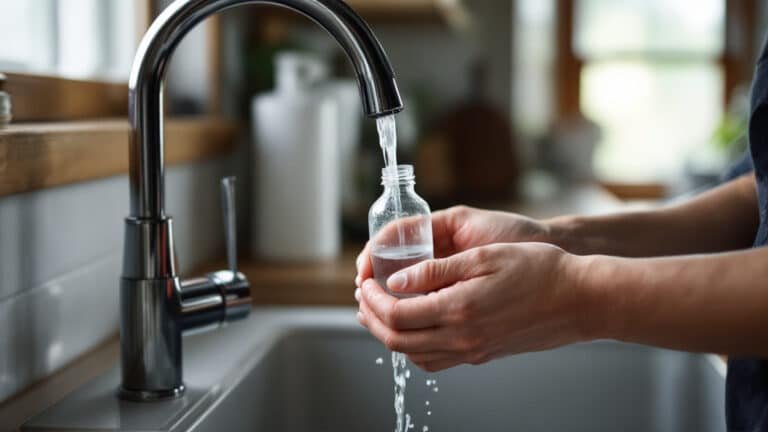
If your water comes from a private well in Ontario, you can have it tested for bacteria for free through Public Health Ontario. That test does not cover nitrate, metals or minerals, and where you pick up the bottle depends on the unit you live in.
Free: E. coli and total coliform bacteria, tested by Public Health Ontario. Bottles come from your local health unit or a pick-up site. Not included: nitrate, sodium, metals and other chemistry. Those need a licensed private lab and a fee. How often: Ontario.ca says at least 3 times a year, including every spring and fall. Some units say more, and one says twice.
This is a reference page with no affiliate links. Each unit’s details come from that unit’s own page, and the units we could not open are marked. Hours and pick-up sites change, so confirm on the unit page before you drive.
Public health units: where to get a bottle
| Public health unit | Bottles and drop-off | What it tests and how often | Official page |
|---|---|---|---|
| Algoma Public Health | Bottles at the Public Health Ontario lab in Sault Ste. Marie, at Algoma Public Health and at other depots. The page says to call its Environmental Health line for the full list. Drop off within 24 hours (its portal page says 48). | Bacteria only, free. At least 3 to 4 times a year. Metals and chemicals go to a private lab. | Unit page |
| Chatham-Kent Public Health | Free kit at CK Public Health Clinic Services or any municipal service centre. Drop off Monday to Thursday 8:30 to 4:30, Friday before 11:00. | The page says bacteria and mentions no nitrate or chemicals. 3 to 4 times a year. | Unit page |
| Durham Region Health Department | Pick up at Region service locations in Whitby, Port Perry, Bowmanville, Uxbridge and Cannington (pick-up only there). Drop-off is Monday to Thursday at most sites, with short Friday morning windows. The lab must get the sample within 24 hours. | Bacteria, free. At least three times a year. No nitrate or chemical testing mentioned. | Unit page |
| Eastern Ontario Health Unit | Pick up a bottle at an EOHU office. Drop off Monday to Thursday only (Alexandria, Hawkesbury, Rockland, Winchester, Casselman, Cornwall). No Fridays or the day before a statutory holiday. | Bacteria only, free. Every 3 months. Other substances go to a private lab. | Unit page |
| Grey Bruce Public Health | Pick up and drop off at 14 locations across Grey and Bruce counties. The page links a PDF with the list and times. | Bacteria only, free, and explicitly not nitrates. At least 3 times a year. It also recommends a nitrate test, especially if an infant will drink the water. | Unit page |
| Hamilton Public Health Services | Kits at Municipal Service Centres, City Hall, the Public Health Lab (Fennell Avenue West) and several rural general stores and post offices. Drop-off only at service centres, City Hall and the lab. | E. coli and total coliform, free. At least 3 times a year. Untreated lake, stream and pond water is not accepted. | Unit page |
| Huron Perth Public Health | Free bottles at the drop-off sites (Clinton, Exeter, Listowel, Milverton, Seaforth, Stratford, Wingham) or your municipal office. Tested within 48 hours of collection. | Bacteria free, at least 3 times a year. Arsenic, fluoride, lead, nitrate and nitrite, sodium and uranium need a private lab; it suggests every 4 to 5 years for those. | Unit page |
| Lakelands Public Health | Many pick-up sites: its offices in Haliburton, Lindsay, Peterborough and Port Hope, libraries, municipal offices and the Public Health Ontario lab in Peterborough. Sample must reach the lab within 48 hours. | Bacteria only, free. At least twice a year. Nitrates and metals need a private lab. | Unit page |
| Lambton Public Health | Point Edward office and the Petrolia hospital for pick-up and drop-off; Forest is drop-off only. The London lab is an alternative. | Free. The page names E. coli and lists no nitrate testing. 3 to 4 times a year. | Unit page |
| Middlesex-London Health Unit | Pick up at its London office, Strathroy dental clinic, the public health lab in London, the Mt. Brydges health centre, and at libraries and municipal offices (pick-up only at those). | E. coli and total coliform, free. It says to test regularly, with no number. Chemicals go to a licensed lab. | Unit page |
| Niagara Region Public Health | Free kits from water testing locations across Niagara. Drop off Monday to Thursday only; wells within 24 hours, cisterns within 12. | Bacteria only. Every season, or three samples one to three weeks apart. Cisterns at least four times a year. | Unit page |
| North Bay Parry Sound District Health Unit | Offices in North Bay and Parry Sound, the Burk’s Falls village office, and the West Nipissing municipal office (Wednesdays only). Same-day drop-off; none Friday to Sunday or around statutory holidays. | The page does not say what is tested or what it costs. Three times a year: spring, summer, fall. | Unit page |
| Northwestern Health Unit | Free bottles at your local NWHU office. Drop-off follows a seasonal shipping schedule by town, or you can ship straight to the Thunder Bay lab. | Bacteria only. Bottles are free, but shipping through NWHU is $3.00 per sample ($2.65 plus HST). At least 3 to 4 times a year. | Unit page |
| Ottawa Public Health | Pick up at the St. Laurent Boulevard lab, 101 Centrepointe Drive, or rural sites open on a single weekday (Tuesday or Wednesday). Deliver within 12 hours and keep it refrigerated. | Bacteria only, free. Every spring, summer and fall. Nitrates and sodium need a licensed lab. | Unit page |
| Peel Public Health | Service Peel desks in Mississauga and Brampton, Caledon locations, or the Public Health Ontario lab in Etobicoke. No Friday drop-offs at Service Peel or Caledon. | No fee. The page does not list nitrate. At least 3 times a year: spring, summer, fall. | Unit page |
| Region of Waterloo Public Health | Rural: municipal offices in North Dumfries, Wellesley, Wilmot and Woolwich. Urban: Public Health in Cambridge or Waterloo. Collect and drop off the same day. | Bacteria free, 3 times a year. Nitrate or fluoride through Public Health is $21.40 each, once a year, accepted on the last Tuesday of the month. | Unit page |
| Renfrew County and District Health Unit | This page points to a separate list of pick-up and drop-off sites. We did not see the locations on it. | Free bacterial testing, at least three times a year. Nitrate, sodium and manganese need a licensed lab. | Unit page |
| Simcoe Muskoka District Health Unit | Pick up in Barrie, Collingwood, Cookstown, Gravenhurst, Huntsville, Midland, or at the Public Health Ontario lab in Orillia. Drop off Monday to Thursday; none on Fridays. | E. coli and total coliform, free. The page gives no schedule beyond regular testing. Chemical and mineral testing needs a private licensed lab. | Unit page |
| Southwestern Public Health | Free kits across Oxford County, Elgin County and St. Thomas: health unit sites, hospitals, township offices, libraries. Sample taken within 24 hours of submission. | E. coli and coliforms, free for now. At least three times a year; for the first test, three samples a week apart. | Unit page |
| Timiskaming Health Unit | Free bottles at the entrance of its New Liskeard, Kirkland Lake and Englehart offices. Drop-off days change twice a year, so call first. | Free. The page mentions bacteria only. At least three times a year, or every three to four months. | Unit page |
| Windsor-Essex County Health Unit | Windsor (Ouellette Avenue) and Leamington (Princess Street). Pick-up Monday to Friday; drop-off Monday to Thursday, and Friday until noon. | Total coliform and E. coli only, free. At least 3 times a year. Cisterns at least once a year. | Unit page |
| York Region Public Health | Pick up at York Region offices in Georgina, Newmarket, Richmond Hill, Vaughan and Markham. Drop off Monday to Thursday mornings, or at the lab in Etobicoke. | Bacteria only, no charge. The page says Public Health Ontario no longer tests nitrates or sodium. Spring, summer and fall. | Unit page |
| Grand Erie Public Health (not verified) | Not verified. We could not open this unit’s page, so we have nothing to report and cannot confirm the link works. Check the unit’s own site or call it. | Not verified. | Unit page |
| Halton Region Public Health (not verified) | Not verified. We could not open this unit’s page, so we have nothing to report and cannot confirm the link works. Check the unit’s own site or call it. | Not verified. | Unit page |
| Porcupine Health Unit (not verified) | Not verified. We could not open this unit’s page, so we have nothing to report and cannot confirm the link works. Check the unit’s own site or call it. | Not verified. | Unit page |
| Public Health Sudbury & Districts (not verified) | Not verified. We could not open this unit’s page, so we have nothing to report and cannot confirm the link works. Check the unit’s own site or call it. | Not verified. | Unit page |
| Southeast Public Health | We could not open this unit’s page ourselves because its site blocks automated checks, so we have nothing to report about bottles or drop-off. The link was supplied on November 4, 2026 by a source water protection official at Quinte Conservation. Check the unit’s own site or call it. | See the unit’s page. | Unit page |
| Thunder Bay District Health Unit (not verified) | Not verified. We could not open this unit’s page, so we have nothing to report and cannot confirm the link works. Check the unit’s own site or call it. | Not verified. | Unit page |
| Wellington-Dufferin-Guelph Public Health (not verified) | Not verified. We could not reach this unit’s website at all, so we have nothing to report. The link goes to the home page because we could not confirm any deeper address. Check the unit’s own site or call it. | Not verified. | Unit page |
What the free test covers, and what it leaves out
The free test is a bacteria test. Public Health Ontario says its lab tests for the bacterial indicators E. coli and total coliforms (Well Water Testing). Its November 2026 reminder says anyone who needs to analyze mineral or chemical content should contact a licensed laboratory (Public Health Ontario news release).
That gap matters. Ontario.ca notes that bacteria tests say nothing about the chemical quality of the water (Testing and treating private water wells). Nitrate, sodium, fluoride, arsenic, lead and uranium all need a different test. Several units say so on their own pages. Grey Bruce states plainly that its samples are not tested for nitrates, and York says Public Health Ontario no longer tests nitrates or sodium.
One exception turned up in our check. The Region of Waterloo lists nitrate and fluoride testing through its own Public Health, at $21.40 each, paid online before drop-off. That is a local arrangement, not something to assume where you live.
The service is meant for private systems such as wells and cisterns. Hamilton says untreated surface water from lakes, streams and ponds will not be accepted, and North Bay Parry Sound says the same about untreated surface water.
Getting a bottle and getting it to the lab
Pick-up sites vary by unit, and the table above links each one. Bottles come from your public health unit, a Public Health Ontario lab, or a designated pick-up site (the unit pages in the table list municipal offices, libraries and some local shops) (Public Health Ontario: Well Water Testing). Use only the bottle you are given. Eastern Ontario states that samples in other containers will not be tested.
The part people get wrong is timing. Public Health Ontario says samples must be tested within 48 hours of collection and kept cool but not frozen. Local units set their own limits on how long you can wait:
- 12 hours: Ottawa, and Niagara for cisterns.
- 24 hours: Algoma, Durham and Niagara for wells. Southwestern asks that the sample be taken within 24 hours before you submit it.
- 48 hours: Huron Perth, Lakelands and Simcoe Muskoka, the same limit Public Health Ontario sets.
Many units take samples Monday to Thursday only, or allow a short window on Friday morning. Niagara explains why: a sample dropped on a Friday will not reach the lab within the 48-hour limit. Eastern Ontario, Simcoe Muskoka, Peel, Niagara and North Bay Parry Sound all refuse or limit Friday drop-offs. Eastern Ontario, Peel and North Bay Parry Sound also close drop-off around statutory holidays. Plan the day you collect around the drop-off hours, not the other way round.
You then register the sample. Public Health Ontario’s Water Testing Portal asks for your last name, the barcode on the bottle, the collection date and time, your address, municipality and public health unit. Keep the barcode, because it is how you look up the result. Reports are typically ready in 2 to 4 business days, by portal, phone, mail, in person or email. Paper forms are still accepted.
How often to test
Ontario.ca says to test private well water “at least 3 times a year, including every spring and fall,” and more often if poor water quality is suspected (Wells on your property). Ontario’s Chief Medical Officer of Health, quoted in Public Health Ontario’s November 2026 reminder, adds that testing matters especially after higher-risk events like spring thaw, heavy rainfall, flooding or well maintenance (Public Health Ontario news release). Huron Perth gives a similar list and also includes long periods without using the well.
Local units do not all use the same number. Lakelands says at least twice a year. Algoma, Lambton, Chatham-Kent and Northwestern say 3 to 4 times. Eastern Ontario says every 3 months. If your unit’s number differs from Ontario.ca, ask the unit which applies to your well.
For chemistry, the guidance is looser and differs more:
- Nitrate and fluoride: Waterloo says once a year.
- Nitrate: Renfrew says at least twice at first (spring and fall), then every 2 to 3 years if none is found, and more often for shallow dug wells under 6 metres or when levels sit near the standard.
- Sodium: Renfrew says at least once every 5 years.
- Arsenic, fluoride, lead, nitrate and nitrite, sodium, uranium: Huron Perth says every 4 to 5 years.
Reading a bacteria result
Public Health Ontario sorts private well results into bands, using counts per 100 mL (Public Health Ontario):
- Total coliform 5 or less and E. coli 0: no significant contamination. Keep testing regularly.
- Total coliform above 5 and E. coli 0: significant bacterial contamination. Stop using the water, contact your health unit and resample.
- E. coli 1 or more: labelled unsafe to drink, evidence of fecal contamination. Same steps.
- No data (NDOGN or NDOGT): the sample was overgrown with other bacteria, so no count was possible. Public Health Ontario says to treat the water as unsafe, stop using it, contact your health unit and resample.
Ontario.ca describes a total coliform count of 5 or fewer as some evidence of bacteria in the well that may not be significant (Ontario.ca). The province’s drinking water quality standards are stricter than those bands. Schedule 1 of O. Reg. 169/03 lists E. coli and total coliforms as not detectable. The bands above are how the health labs report on a private well.
On the chemistry side, Schedule 2 of the same regulation sets a maximum of 10.0 mg/L for nitrate and 1.0 mg/L for nitrite, both expressed as nitrogen. Check your lab report’s wording: the standard is stated as nitrogen, so make sure the number on your report is expressed the same way, and ask the lab or your health unit if it is not clear. Ontario.ca calls nitrate above 10 ppm a health risk for infants (Testing and treating private water wells).
A caution on our own source. The live e-Laws page needs JavaScript and would not load in our checker, so these entries come from a copy printed from e-Laws on October 26, 2023 (consolidation from January 1, 2020, last amendment O. Reg. 457/16), the latest text we could read. Confirm the current schedule before you quote a figure from it.
Chemistry: what a private lab tests
For anything beyond bacteria, Ontario.ca sends you to a licensed laboratory and notes that labs charge a fee (Wells on your property). The Ministry of the Environment, Conservation and Parks keeps a public list of licensed laboratories. The page warns you to contact a lab before submitting, since some do not accept samples from outside clients.
We did not check any private lab’s well-water package or price, so we name none and quote no cost. What the health unit pages do tell you is what to ask about. Huron Perth lists arsenic, fluoride, lead, nitrate and nitrite, sodium and uranium. Renfrew adds manganese. Waterloo says Public Health does not test for hydrogen sulphide, the rotten-egg smell, so that is a private-lab request too.
Ontario.ca’s guidance table says nitrate above 10 ppm is a health risk for infants and lists reverse osmosis or distillation as treatment options (Testing and treating private water wells). For manganese, Renfrew gives Ontario’s aesthetic objective as 0.05 mg/L and Health Canada’s health-based maximum as 0.12 mg/L, and says high levels can be a health risk to infants (Renfrew County and District Health Unit). Ask your lab which guideline it compares your result against.
What to do after a bad result
Ontario.ca’s advice for a bad bacteria result is short (Testing and treating private water wells). Stop drinking the water. Use bottled water or a municipal supply if you can, and contact your public health unit. E. coli is of special concern for infants, seniors and other frail people.
Boiling. Ontario.ca says boiling for at least one minute kills harmful organisms, but it does not remove dissolved contaminants and is not practical long term. Peel notes that boiling will not make chemically contaminated water safe, and Windsor-Essex warns it can concentrate chemicals such as nitrate. It is a stopgap for bacteria only.
Disinfecting the well. The usual next step is shock chlorination of the well and household plumbing (Disinfecting private water wells). That page says to arrange a backup water supply for at least 12 hours before you start. Public Health Ontario’s well disinfection guidance says to wait 48 hours after disinfection before sampling again, and that two consecutive safe tests over one to three weeks will probably show it worked (Well Disinfection Tool). Simcoe Muskoka gives the same 48 hours and the same one-to-three-week spacing.
When it keeps coming back. If the source cannot be found, Ontario.ca advises consulting a licensed well contractor to identify it, and cautions against buying a treatment device before you know the cause. The ministry’s Wells Help Desk is 1-888-396-9355 (wellshelpdesk@ontario.ca), per the same page.
We are not a lab or a health authority. Your health unit can interpret your specific result and tell you what to do next, which is why every row in the table links to its own page.
About the table
We opened each unit’s own page in early November 2026 and summarized what it says. Twenty-two pages loaded. Seven did not open for our checker. Six of those we marked not verified and left with just a link. The seventh, Southeast Public Health, has a link confirmed by a source water protection official at Quinte Conservation on November 4, 2026, and we report nothing else about it. We did not fill the gaps from memory or from search snippets. Toronto Public Health is not in the table because we did not check it.
Hours, drop-off days and pick-up sites change, sometimes for holidays or renovations, so use the table to find the right page and not as a schedule.
Frequently asked questions
Is private well testing really free in Ontario?
The bacteria test is. Public Health Ontario says free testing is available in Ontario for bacterial contamination (Public Health Ontario). Chemical testing through a private lab costs money, and a few units charge for extras, such as Northwestern’s $3.00 shipping fee per sample or Waterloo’s $21.40 per nitrate or fluoride test.
Can I use my own clean bottle?
No. Eastern Ontario says samples submitted in other containers will not be tested. Use the bottle from your health unit or lab.
Does the free test check for nitrate?
No. Public Health Ontario’s test is for E. coli and total coliforms only. Nitrate needs a licensed private lab, apart from local programs such as Waterloo’s paid nitrate test.
Can I test water from a lake or pond?
Not through this program. Hamilton and North Bay Parry Sound both say untreated surface water is not tested.
What about a cistern?
Units differ. Windsor-Essex says to test a cistern at least once a year or after cleaning or repairs. Niagara says a minimum of four times per year.
How do I find my health unit?
Public Health Ontario’s Well Water Testing page links a health unit locator. Your municipality’s website will also name the unit that serves your address.