 Inspire
Best Portable Generator for Canada (2026)
Ontario’s March 2025 ice storm cut power to over 600,000 Hydro One customers, some for more than a week. Here’s what to actually check before you buy backup power.
Updated July 19, 2026 · 10 min read · ✓ Fact-checked · Includes affiliated links
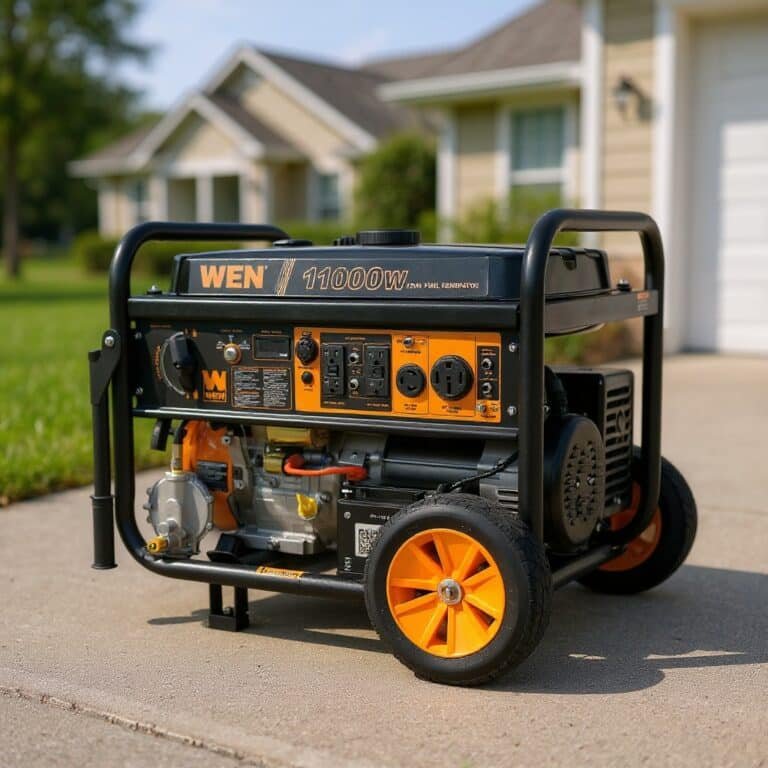
A 30-hour ice storm hit Ontario in March 2025. Hydro One alone reported over 600,000 customers affected, some rural residents went more than a week without power, and the Insurance Bureau of Canada called it Canada’s largest severe-weather event of the year. Most generator guides rank units purely on wattage. This one does too, but it also covers the 2 things that actually kill people with generators: carbon monoxide and illegal backfeeding into your home’s panel.
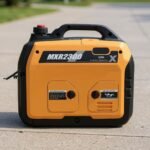
For real home backup (fridge, furnace, well pump, some lights), the WEN DF1100T has the running capacity to cover it and runs on gas or propane, though it has no CO shutoff sensor. If a built-in carbon monoxide shutoff matters more to you than raw capacity, the Champion 201050 has a genuine CO Shield auto-shutoff, just at a smaller 3,000W ceiling. For camping or a few essentials, the quiet Champion 100705 inverter runs at dishwasher-level noise.
Never run a portable generator indoors, in a garage, in a shed, or near a door or window. Never connect one directly into a wall outlet or your home’s panel without a licensed-electrician-installed transfer switch.
Every pick below has a real, verified Amazon.ca listing, price, and review history, checked directly rather than assumed from a US listing. But wattage isn’t where most of the risk is in this category. A 2025 Quebec report found generators were the second-leading cause of CO poisoning during the April 2023 ice storm, and every case traced back to the same fixable mistake: where the generator was placed. Every major utility we checked also warns against backfeeding a generator into a home’s wiring without a transfer switch, since it can electrocute a lineworker restoring power. Both are covered in detail further down.
Our picks
The 2 dangers that matter more than wattage
Carbon monoxide
Health Canada’s guidance is direct: “Make sure it automatically shuts off when carbon monoxide levels are high. You should still never use this type of generator indoors.” A 2025 report from Montreal’s public health department looked specifically at confirmed CO poisoning cases during the April 2023 ice storm and found generators were the second-leading cause, 26 of 173 confirmed cases (15%), across 7 separate incidents, right behind charcoal barbecues. The report is specific about why: every single generator-linked case traced back to poor placement, not equipment failure. In July 2026, a Quebec coroner investigating a generator-related death in Saint-Jean-sur-Richelieu noted 17 total generator-linked CO deaths in the province since 2018, calling them “all preventable deaths.”
A built-in CO shutoff sensor, Champion calls theirs CO Shield, Honda calls theirs CO-MINDER, Generac calls theirs CO-Sense, is a genuinely useful backstop, and we noted which picks above have one. But it’s worth knowing this technology is a voluntary industry feature in Canada, not a legal requirement, and no manufacturer publishes the exact CO concentration that triggers a shutoff. Treat it as a backstop, not a substitute for the basics: run a generator outdoors, well away from doors, windows, and vents, and keep a battery-powered CO alarm inside your home regardless of what the generator itself has built in.
Backfeeding into your home’s panel
Plugging a generator into a wall outlet with a double-male “suicide cord” pushes power backward through your home’s panel and out onto the grid a utility crew may believe is dead. Ontario’s Electrical Safety Authority puts it plainly: “Don’t attach a portable generator directly to your home’s electricity system. It could cause power to flow back into the power grid and electrocute you, your neighbors or a utility worker.” BC Hydro’s warning is nearly identical: “Never plug a portable generator into a regular household electrical outlet.” Nova Scotia Power names its own workers directly: doing this “could allow power to back-feed into our system and result in severe injury or death to our employees.”
The rule every province with clear guidance agrees on: plugging appliances directly into the generator’s own outlets with normal extension cords is fine, no special equipment needed. The moment you want to tie a generator into your home’s fixed wiring so it can power hardwired circuits, you need a transfer switch installed under permit by a licensed electrical contractor. That’s not a suggestion, several utilities describe it as a legal requirement tied to provincial electrical safety law, not just their own house rule.
Does it need to be CSA certified?
Health Canada’s consumer guidance: “Always check for certification marks, such as CSA, cUL, or cETL, before purchasing electrical products that plug into an electrical outlet… Do not buy or use electrical products… without a certification mark.” Having a recognized Canadian mark is a real, provincially-enforced requirement, but it doesn’t have to be CSA specifically, cUL and cETL are equally valid marks from equally accredited certification bodies. Honda Canada actually markets this as a differentiator on its own site: “CSA Approved, not all manufacturers are.”
Here’s the honest part: we could not confirm a CSA, cUL, or cETL mark listed on the specific Amazon.ca product page for any of the 4 picks above. That doesn’t necessarily mean the physical units lack one, certification is applied per unit on the actual nameplate, not always disclosed in online listing copy, and some manufacturers sell separately-numbered, Canadian-certified versions of the same model through other retail channels. What it does mean is you shouldn’t assume Canadian certification from an Amazon listing alone. Check the actual rating plate on the generator itself when it arrives, and don’t rely on box art or brand reputation to answer the question for you.
How loud can it legally run?
There’s no single Canadian dBA number, and claiming one would be an overgeneralization: municipalities regulate this differently, and some don’t attach a decibel figure to generators at all. Ottawa’s noise bylaw specifically names generators with a 50 dB(A) daytime limit, but with a genuinely useful carve-out for this exact use case: “Subsection (1) does not apply to a person using or operating a portable generator in a residential area in an emergency situation.” Toronto and Mississauga instead classify generators under “construction equipment,” which is regulated purely by permitted hours (roughly 7 a.m. to 7 p.m. on weekdays in Toronto’s case) with no decibel number attached at all. Check your own municipality’s bylaw rather than assuming either approach applies where you live.
Frequently asked questions
Can I just plug my generator into a wall outlet during a power outage?
No. That’s called backfeeding, and every major Canadian utility warns against it specifically because it can push power back through your home’s panel and onto the grid, where it can electrocute a lineworker who believes the line is dead. It’s safe to plug appliances directly into the generator’s own outlets with normal extension cords. Powering your home’s fixed wiring requires a transfer switch installed under permit by a licensed electrical contractor, not a cord run to a wall outlet.
Does a generator need to be CSA certified to use in Canada?
It needs to carry some recognized Canadian certification mark, CSA, cUL, or cETL are all equally valid, per Health Canada’s own guidance. It doesn’t have to be CSA specifically. Check the physical rating plate on the unit itself rather than assuming from the online listing or the brand name.
Will a portable generator actually start in a Canadian winter?
Officially, most manufacturers publish surprisingly little on this. Westinghouse is the exception, rating its generators for operation between -15°C and 40°C. “Cold Start Technology” branding from other manufacturers generally just describes the standard manual choke technique, not a distinct engineering feature. Real-world cold-climate accounts consistently point to the same fixes below roughly -20°C: switching to synthetic 0W or 5W oil, and giving the unit a period indoors or under shelter to warm up before starting.
How far from my house should I run a generator?
Health Canada’s guidance is to never run one indoors, in a garage, or in a shed, and to keep it well away from doors, windows, and vents where exhaust can be drawn back inside. A Quebec public health review of ice-storm CO poisoning cases found generator placement, not equipment failure, was the cause in every single generator-linked case reviewed.