 Inspire
Best Melatonin Supplement for Canada (2026)
A 2017 lab study found some melatonin products contained less than a fifth of their labeled dose, others nearly six times over. Here’s what changes when a product actually carries a Health Canada NPN.
Updated July 19, 2026 · 9 min read · ✓ Fact-checked · Includes affiliated links
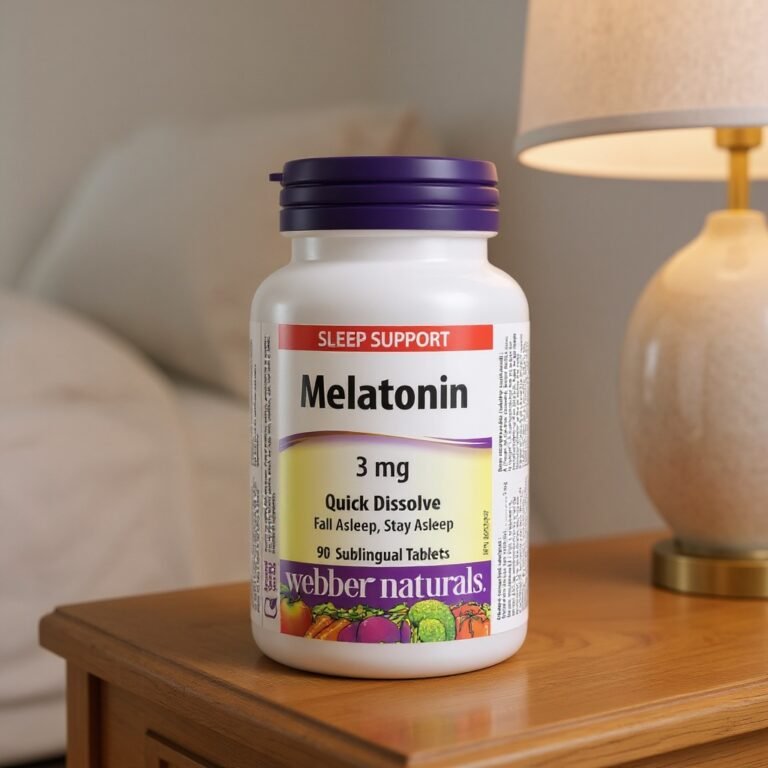
Start low. Health Canada’s own authorized range runs from 0.1 mg up to 10 mg a day, and most adults don’t need the top of that range. Webber Naturals’ 3 mg Quick Dissolve is a sensible, NPN-verified starting point.
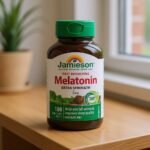
New to melatonin, or sensitive to it? Jamieson’s 1 mg tablet is the lowest licensed dose sold in Canada. For jet lag specifically, Health Canada’s own monograph allows up to 10 mg, covered by Webber Naturals’ Maximum Strength tablet.
Melatonin is not a sedative and doesn’t work the way sleep medication does, it’s a timing signal to your body’s clock. It’s also not authorized for anyone under 18 without a prescription as of June 2, 2026.
Our picks, by dose
Why the pills you get can vary so much
A 2017 study published in the Journal of Clinical Sleep Medicine bought 31 melatonin products from retail stores and independently tested their actual content against the label. The results are the real reason a pre-market review like Health Canada’s NPN system matters:
Content ranged from 83% under to 478% over the labeled dose. A bottle claiming 3 mg could realistically have delivered as little as 0.5 mg or as much as 17 mg.
More than 71% of products fell outside a 10% margin of their labeled content, in either direction, not a rounding error.
26% of products (8 of 31) contained detectable serotonin, an undeclared, biologically active compound with no business being in a melatonin supplement.
Lot-to-lot variability within the same product reached up to 465%. Buying the same bottle twice was no guarantee of getting the same actual dose.
That study wasn’t testing Health Canada NPN-licensed products specifically. Most were sourced from US retailers where pre-market testing isn’t required the same way.
But it’s precisely the failure mode an NPN is meant to catch: Health Canada requires evidence a product actually contains what the label says before it can be legally sold here. Every pick in this guide has its NPN confirmed Active on Health Canada’s own database, not just printed on the bottle.
The new rule for kids
As of June 2, 2026, Health Canada reclassified melatonin for anyone under 18 as prescription-only. Adult melatonin products are unaffected and remain available over the counter with an NPN. But a product that was previously sold as a children’s gummy or chewable off the shelf now requires a prescription for use in a minor.
If you’ve bought melatonin for a child before this date, that option is no longer available without involving a healthcare provider, worth knowing before assuming a past purchase is still an option.
How much dose do you actually need?
Health Canada’s melatonin monograph authorizes a general dose range of 0.1 mg to 10 mg per day, with a narrower 0.5 mg to 10 mg range specifically for jet lag. That’s a wide range, and the honest answer is the science on where within it to land isn’t perfectly clean:
| Use case | Health Canada authorized range |
|---|---|
| General sleep support | 0.1 mg – 10 mg/day |
| Jet lag specifically | 0.5 mg – 10 mg/day |
| Anyone under 18 | Prescription only, as of June 2, 2026 |
What the dosing research actually shows
An early 1996 dose-response study found that very low doses (around 0.3 mg) were effective without the next-day grogginess higher doses can produce. A 2022 meta-analysis and a 2024 meta-analysis both point toward effects plateauing somewhere around 4 mg, more dose past that point showing diminishing return for most people.
But Canada’s own drug review agency, CADTH, reviewed the dose-response evidence directly and concluded there isn’t a clearly established relationship between higher doses and better outcomes at all.
The honest summary: lower doses are a reasonable place to start and are unlikely to be worse, but nobody can promise you a specific dose will work better than another for your particular case. Start low, and only increase if a lower dose genuinely isn’t doing the job.
Frequently asked questions
What is an NPN and why does it matter for melatonin specifically?
A Natural Product Number is an 8-digit code Health Canada assigns after reviewing a product’s safety, quality, and label accuracy, required by law before a natural health product can be legally sold in Canada.
It matters more for melatonin than for some supplements because of exactly what the 2017 Journal of Clinical Sleep Medicine study found: unregulated melatonin products can vary wildly from their labeled dose. Every product in this guide has its NPN independently confirmed Active on Health Canada’s own database.
Does melatonin actually work for insomnia?
It depends what kind. The strongest evidence for melatonin is for circadian rhythm issues, jet lag, shift work, and delayed sleep phase, where it’s genuinely acting as a timing signal rather than a sedative.
For general chronic insomnia, major sleep medicine clinical guidelines are notably more measured and don’t recommend melatonin as a first-line treatment. If ongoing insomnia (not jet lag or shift work) is the issue, that’s worth discussing with a healthcare provider rather than assuming melatonin is the fix.
Can I give melatonin to my child?
Not without a prescription as of June 2, 2026. Health Canada reclassified melatonin as prescription-only for anyone under 18. If a child was previously using an over-the-counter melatonin product, that’s no longer an option without a healthcare provider’s involvement.
Is it safe to take melatonin every night?
Health Canada’s own product labeling calls for consulting a healthcare provider if you’re using melatonin beyond one month. Melatonin is generally considered non-habit-forming, but nightly, indefinite use without a clear reason isn’t what the authorized labeling anticipates, it’s intended for a specific sleep issue, not open-ended daily use.