 Inspire
Best LED Anti-Fog Bathroom Mirror (2026)
Real Amazon listings, ratings, and installation notes for 3 LOAAO mirror sizes, so you can pick by what’s actually confirmed, not just the marketing copy.
Updated July 29, 2026 · 7 min read · ✓ Fact-checked · Includes affiliated links
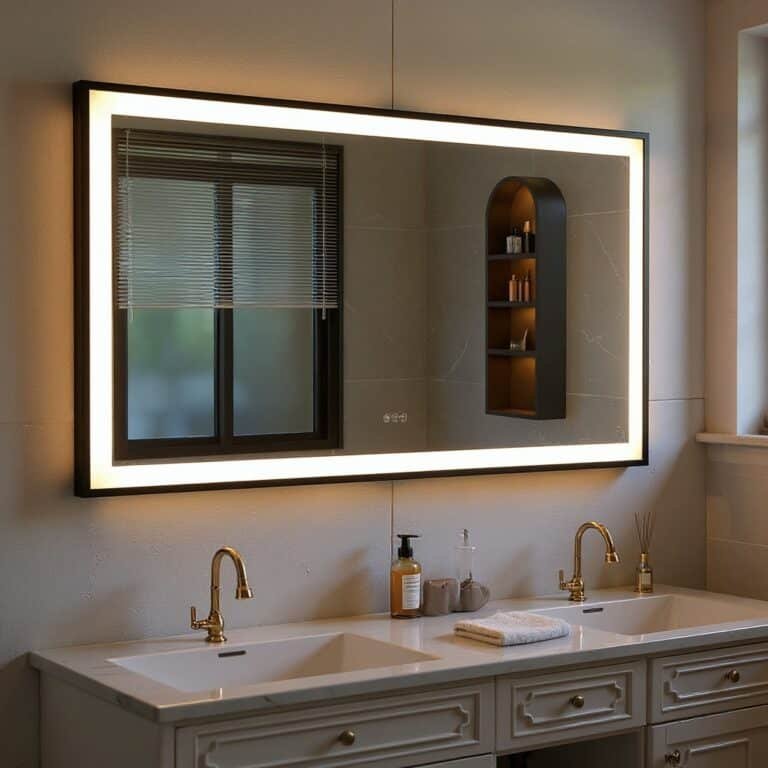
LOAAO’s own installation notes admit the anti-fog heater only warms the center of the glass, not the whole pane, more honesty than most competing listings bother with.
For a single-sink vanity, the LOAAO 24×32 is the brand’s best-reviewed size on Amazon (4.6 stars, nearly 3,000 ratings) and fits a standard vanity without overwhelming a small bathroom.
For a double vanity or a real statement wall, the LOAAO 60×36 runs the same touch-dimmable, 3-color-temperature, anti-fog spec sheet at double-vanity scale.
If you want a defined frame instead of edge-lit glass, the 72×36 black-framed version swaps the frameless edge for a matte black aluminum frame at a similar price to the large frameless model.
All 3 ship wired for either a plug-in or a hardwired connection. Plugging in is simple; wiring one permanently into your bathroom’s circuit is an electrician’s job in most of Canada, not a weekend DIY project.
Our picks
How to size a mirror for your vanity
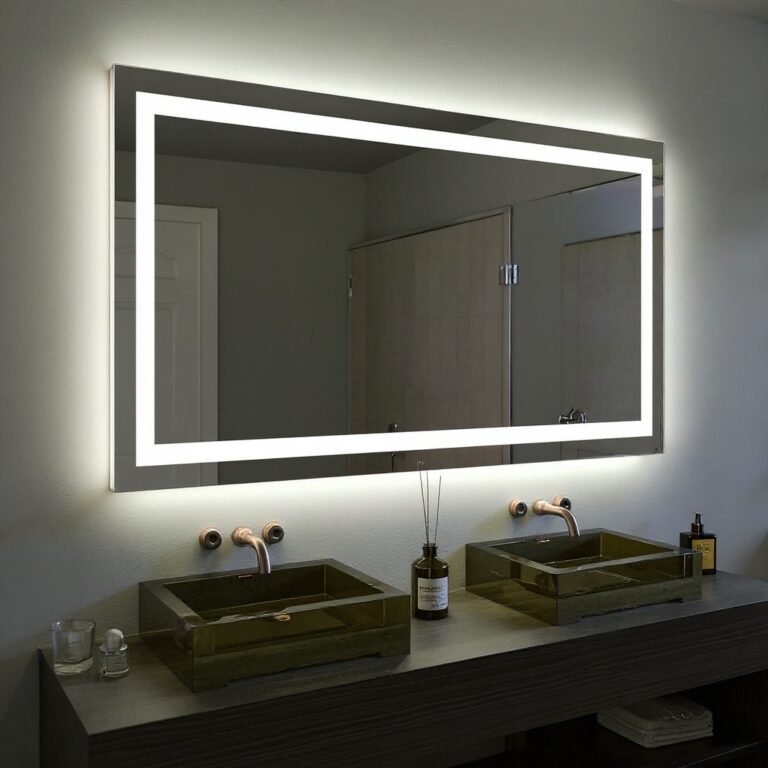
The easy mistake is sizing a mirror to the sink instead of the vanity cabinet. A 36-inch vanity often has a sink bowl that’s only 18 to 22 inches wide, so a mirror sized to the bowl ends up looking small and off-center above a much wider cabinet.
The rule most bath designers use instead: the mirror should span roughly 70 to 90 percent of the vanity’s width, or sit about 2 to 4 inches narrower than the cabinet on each side. As a rough guide, a 36-inch vanity suits a mirror around 28 to 34 inches wide, a 48-inch vanity suits 40 to 46 inches. A 60-inch double vanity suits 52 to 58 inches, or two smaller mirrors centered over each sink.
Most guides also put the bottom edge 5 to 10 inches above the counter, centered around 60 to 65 inches off the floor.
LOAAO’s own size range runs from a compact 24×32 up past 70 inches wide. That at least means the sizing problem is solvable within one product line once you’ve measured your own vanity, instead of hunting across brands.
Hardwired vs. plug-in: do you need an electrician?
Every LOAAO mirror we checked ships wired for both options: plug it into an existing outlet, or hardwire it into a junction box behind the mirror for a cleaner, cordless look. Those two jobs are not the same size of project.
Plugging in is simple. Bathrooms already require GFCI protection on every standard 125-volt outlet under both US and Canadian electrical codes. So as long as you’re using an existing, properly protected outlet, plugging in a mirror is no different from plugging in a hair dryer.
Hardwiring is a different category of job. In Ontario, the Electrical Safety Authority requires almost all electrical work, including adding or changing a wired fixture, to be reported through an ESA notification (commonly called a permit), with the work itself done or signed off by a Licensed Electrical Contractor.
Swapping one hardwired fixture for an identical one on unchanged wiring is treated differently than adding a new hardwired connection where a plug used to be. This is exactly what installing a hardwired mirror over an old plug-in vanity light usually involves. If you’re not sure which category your job falls into, that’s a question for ESA or a licensed electrician, not a guess.
One Amazon reviewer on the 24×32 mirror walked through wiring it into an existing junction box himself, and it’s a genuinely useful read for understanding the scope of the job.
He also wasn’t a licensed electrician, just someone comfortable with basic home wiring. Whether that’s a reasonable DIY project for you depends on your own comfort level and on what your local authority actually requires, not on whether one stranger’s install went fine.
Checking for a recognized safety mark
Either way, check for a recognized safety mark before you buy. The LOAAO listings we checked show a UL mark, and on at least one size, an ETL mark instead. Both are legitimate US safety certifications tested to the same standards, just issued by different labs.
We could not confirm a CSA, cUL, or cETL mark, the ones a Canadian electrician or inspector will actually look for, on any of the Amazon listings themselves. That doesn’t mean the physical unit lacks one; certification is stamped on the product’s actual rating plate, not always spelled out in the online listing copy. Check the plate when it arrives rather than assuming from the Amazon page alone.
3000K, 4000K, or 6000K: which one do you actually want?
Every mirror in this guide offers the same 3 color temperatures, and the touch control remembers whichever one you used last. Here’s what each is actually good for, not just what the spec sheet calls it.
3000K, labeled warm light, reads like a soft incandescent bulb. It’s relaxing and closer to a spa feel than a work light, but it’s also the setting most likely to make true colors, including your own skin tone, look warmer than they really are.
4000K, labeled natural light, is the setting most lighting guides actually recommend for makeup and grooming. It sits close to balanced daylight without the harshness of a much cooler bulb. This is why the 4000K to 5000K range is the one most commonly recommended for applying makeup or shaving with real color accuracy.
6000K, labeled white light, is brighter and cooler than that recommended daylight range, closer to an overcast sky than indoor daylight. It’s genuinely useful for maximum brightness on detail work like tweezing or a close shave, but it runs cooler than what most lighting guides consider flattering for everyday use. Expect skin to look a little flatter and shadows or blemishes a little more obvious, for better or worse.
None of this is a flaw. It’s the same tradeoff every adjustable-color-temperature mirror makes. LOAAO’s version is just labeled with the actual Kelvin numbers instead of vague marketing names, which makes it easier to pick on purpose instead of by trial and error.
A note on the anti-fog heater
One more honest note on the anti-fog side. LOAAO’s own product listing says the heating element runs through the center of the glass and fades toward the edges, not edge to edge. In a small, poorly ventilated bathroom, expect the corners to hold a slight haze after a hot shower even with the defogger running, and know that’s normal, not a broken unit.
Frequently asked questions
Do I need an electrician to install an LED bathroom mirror?
Not if you’re plugging it into an existing outlet. Bathrooms already require GFCI-protected outlets under US and Canadian electrical codes, so a plug-in install is just hanging the mirror and plugging in the cord. Hardwiring it into a junction box is a different job.
In Ontario, that kind of work needs to go through the Electrical Safety Authority and be done or signed off by a Licensed Electrical Contractor. Check your own province or state’s rules before deciding to do it yourself.
What color temperature should I choose on an LED bathroom mirror?
4000K, LOAAO labels it natural light, is the setting most lighting guides recommend for makeup and grooming, since it’s close to balanced daylight without being harsh. 3000K, warm light, suits a relaxed, spa-like feel better than precise color matching. 6000K, white light, is the brightest option and useful for detail work like tweezing, but it runs cooler than what most guides consider flattering for everyday use.
Does the anti-fog feature keep the whole mirror clear?
Not entirely. LOAAO’s own product notes say the heating element is centered on the glass and fades toward the edges rather than heating the whole pane evenly. So the corners are the most likely spot to hold a bit of haze after a hot shower. That’s consistent across the sizes we checked, not a defect in one unit.
Is a LOAAO mirror certified for use in Canada?
The Amazon listings we checked show a UL or ETL mark, both legitimate US safety certifications. We could not confirm a CSA, cUL, or cETL mark, the ones a Canadian electrician or inspector will actually look for, anywhere in the online listing copy.
That doesn’t rule it out; certification is stamped on the unit’s actual rating plate and isn’t always spelled out in the listing itself. Check the plate once it arrives, especially if you’re hardwiring it and a permit inspection is involved.
How big should my bathroom mirror be?
Size it to your vanity cabinet, not the sink bowl. Most bath designers suggest a mirror roughly 70 to 90 percent of the vanity’s width, for example around 28 to 34 inches wide over a 36-inch vanity, or 52 to 58 inches over a 60-inch double vanity.
LOAAO’s range runs from a compact 24×32 up past 70 inches wide, so the sizing problem is solvable within one product line once you’ve measured your own cabinet.