 Inspire
Best Humidifier for Dry Canadian Winters (2026)
Forced-air heat strips humidity fast in a Canadian winter. Here’s what actually keeps up, and how to avoid white dust with hard water.
Updated July 19, 2026 · 8 min read · ✓ Fact-checked · Includes affiliated links
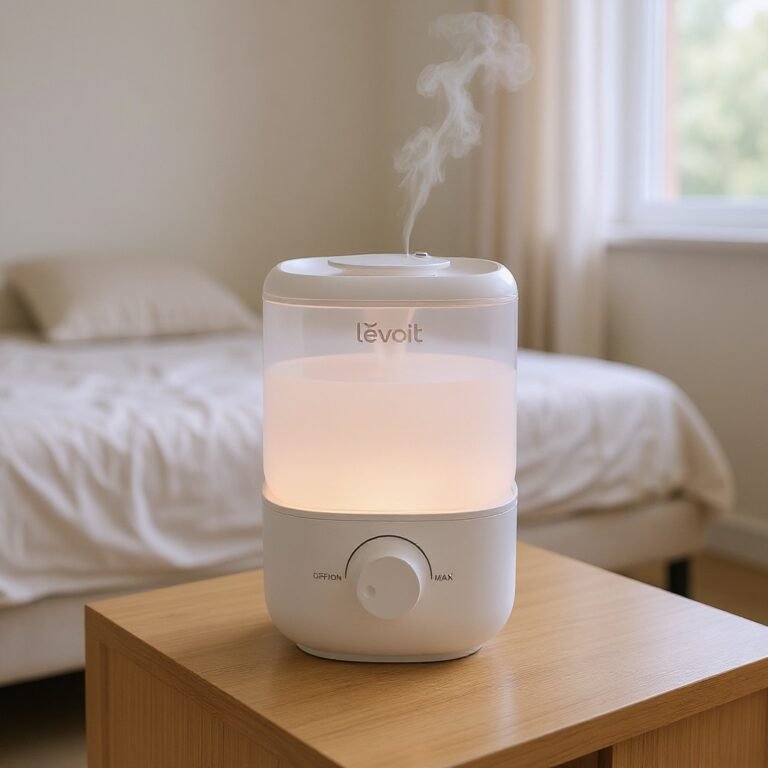
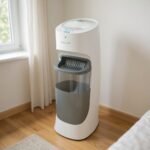
The Levoit Neo Classic 450 is the strongest all-around pick for a bedroom or living room. If hard water leaves white dust on your furniture, skip ultrasonic entirely and get an evaporative model like the Honeywell HEV615WC instead, it physically can’t produce that dust. For a full floor, the AIRCARE 831000 has real coverage most tower units can’t match.
Every humidifier needs cleaning every 2-3 days, not weekly, per CDC, Health Canada, and EPA guidance. Standing water grows bacteria and mould that a cool-mist unit will blow directly into the air.
The biggest split in this category isn’t brand, it’s ultrasonic versus evaporative. Ultrasonic units vibrate water into a fine mist, quieter and cheaper, but hard water (common across Canada) can leave white mineral dust on nearby surfaces. Evaporative units pull air through a wet wick filter instead. They can’t produce that dust, since minerals stay in the filter, but they run an audible fan and need filter changes. Neither is universally better, it depends on your water and how much noise bothers you.
Our picks
What about whole-home humidifiers?
Every pick above is a portable unit built for one room. If your whole house feels dry all winter, not just the bedroom, the other real option is a furnace-mounted humidifier. These install directly on your ductwork and add moisture to the air as your furnace circulates it, so the effect reaches every room on that heating zone instead of just wherever a portable unit happens to sit.
Aprilaire’s whole-house line (models like the 400, 500, 600, and 700) is built to work with the forced-air furnace most Canadian homes already have. It draws water automatically from your home’s plumbing instead of a tank you fill by hand, and evaporates it using your furnace’s own airflow, so there’s no tank to scrub every 2-3 days like a portable unit. Installation means connecting it to your ductwork and a water line, usually done by an HVAC technician, and the water panel (the evaporator pad) still needs periodic replacement as it collects mineral buildup from your water. If a portable unit keeps losing the battle against a dry whole house, this is worth pricing out with an HVAC contractor before buying a second one.
Why cleaning matters more than the spec sheet
Three separate agencies, the CDC, Health Canada, and the EPA, independently converge on the same guidance: clean a portable humidifier every 2-3 days, not weekly, and never let water sit in the tank when the unit is off.
Standing water grows things you don’t want in the air. The CDC specifically names Legionella, Pseudomonas aeruginosa, and nontuberculous mycobacteria as bacteria that can live in humidifier biofilm and aerosolize into your room.
Cool-mist (ultrasonic) units don’t kill what’s growing in the tank. Health Canada notes these units don’t boil water, so restarting one after it’s sat can send bacteria or mould spores directly into the air.
The EPA’s cleaning method: a 3% hydrogen peroxide solution if your manufacturer doesn’t specify one, followed by a thorough rinse, every third day.
Target 30% humidity in winter, not higher. Health Canada’s guidance caps winter humidity around 30% specifically to avoid condensation and mould growth on cold windows and walls, more isn’t automatically better.
Frequently asked questions
Why does my humidifier leave white dust on furniture?
That’s mineral content from hard water becoming airborne. Ultrasonic humidifiers vibrate water into a fine mist without filtering out dissolved minerals first, so whatever is in your tap water ends up in the air and settles as dust. Health Canada describes this as generally harmless to health but confirms the mechanism. Using distilled water reduces it, or switch to an evaporative model, which can’t produce it at all since the minerals stay behind in the wick filter.
What humidity level should I actually target in winter?
Around 30% is the commonly recommended winter target, higher than that risks condensation on cold windows and walls, which can lead to mould growth. In summer, up to 50% is fine since outdoor air is already more humid.
Is a bigger tank always better?
Not necessarily, a larger tank means fewer refills but also a heavier unit to lift and clean, and if it’s oversized for your room you may be over-humidifying. Match the coverage rating to your actual room size first, tank size second.