 Inspire
Best Cordless Mattress Vacuum and Steam Mop for a Cleaner Home (2026)
Dust mites live inside your mattress, not just on top of the sheets. Here’s what a cordless mattress vacuum and a steam mop can each actually do about it, checked against real specs and real owner reviews, not marketing copy.
Updated July 29, 2026 · 8 min read · ✓ Fact-checked · Includes affiliated links
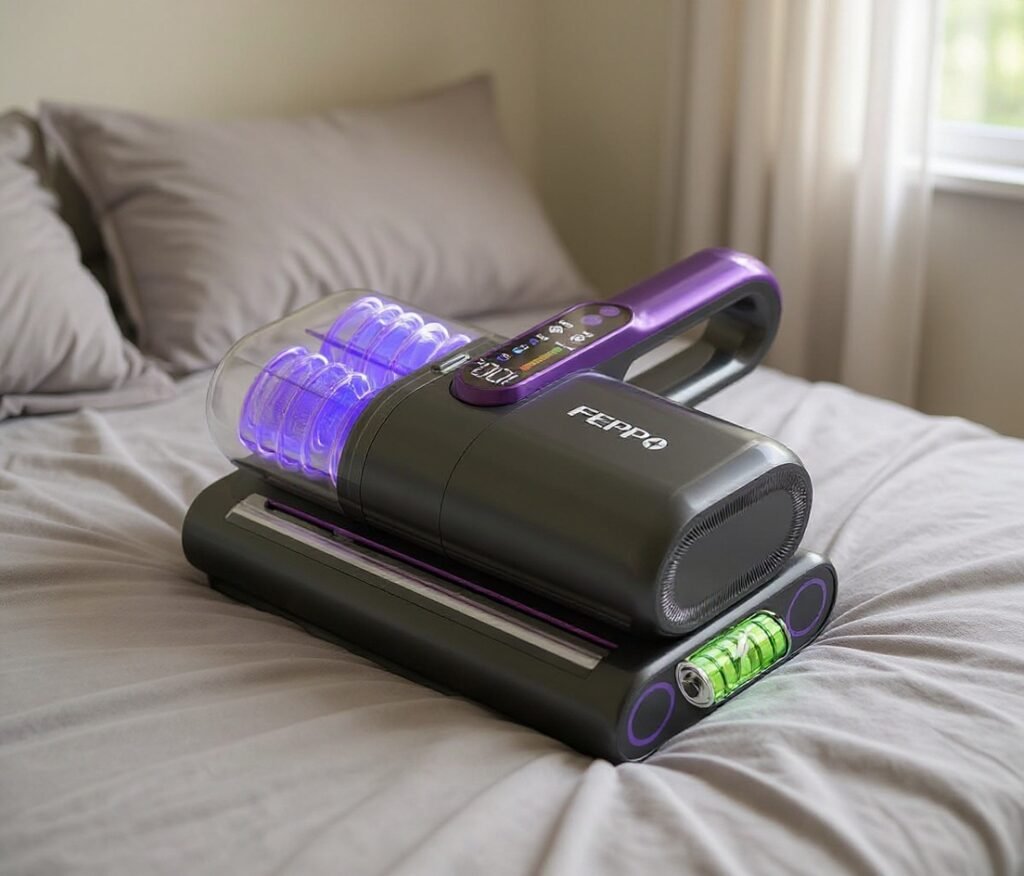
Dust mites live inside the mattress, not on top of the sheets, which is the entire reason a mattress vacuum is a different tool than the upright in your closet.
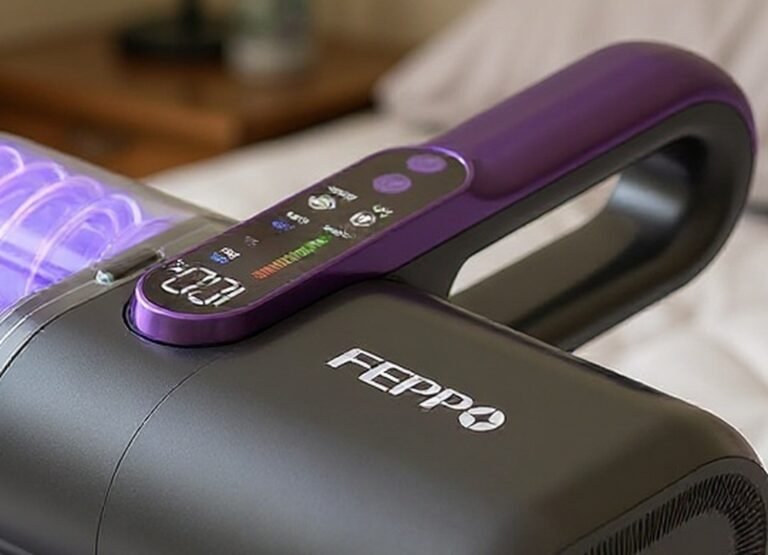
For an actual dust-mite and allergen deep-clean on a mattress, couch, or car seat, FEPPO’s Cordless Mattress Vacuum Cleaner (18kPa suction, UV-C plus ultrasonic, fully cordless) is the strongest real pick here. Amazon’s own search algorithm tags it an “Overall Pick” for this category, and it carries a genuine 4.6 stars across 117 reviews.
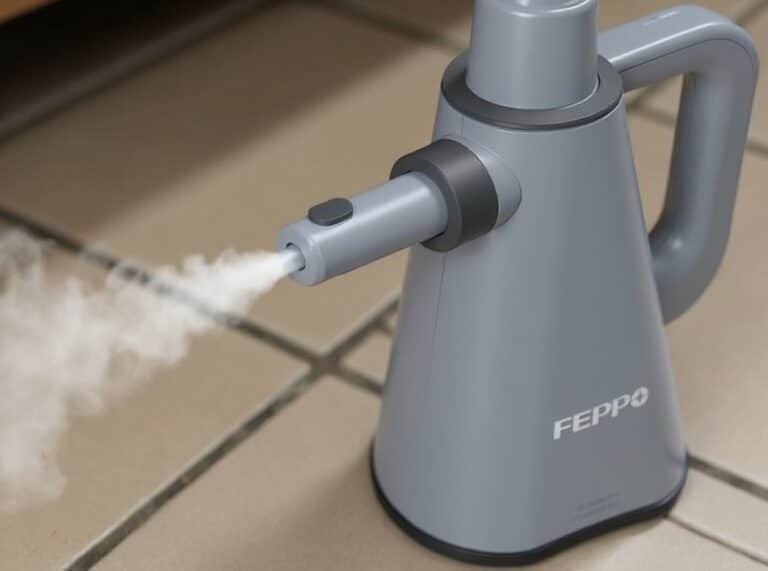
For everyday chemical-free floor cleaning, FEPPO’s Steam Mop heats to 230°F in 15 seconds and detaches into a handheld steamer for tile, grout, and furniture, though it’s brand new on Amazon with zero reviews yet despite strong early sales. These are two separate tools for two separate jobs (bedding and upholstery vs. hard floors), not competing options.
FEPPO’s own listing says the mattress vacuum isn’t built for pet hair, and a verified Canadian owner review found its UV-C light doesn’t activate on black or very dark fabric. Both caveats are covered in detail below.
Our picks
Suction, UV-C, and runtime: what a mattress vacuum’s spec sheet actually tells you
Dust mites don’t live on the surface of your sheets. They live down inside the stuffing of your mattress, pillows, and upholstered furniture. That’s exactly why a dedicated mattress vacuum is a different tool than the upright in your closet.
The Asthma and Allergy Foundation of America (AAFA) recommends:
- Vacuuming a mattress every 1 to 3 months (more often if it isn’t already wrapped in a fully enclosed allergen-barrier cover)
- Using a vacuum with a genuine HEPA filter so the mites and their waste don’t just get stirred back into the air
- Washing sheets and blankets weekly in water at 130°F or hotter, hot enough to actually kill the mites themselves
AAFA is also direct that vacuuming alone won’t remove the whole population; a lot of it lives too deep in the stuffing for any vacuum to reach.
FEPPO’s cordless mattress vacuum checks the HEPA box (99.97% capture at 0.3 microns, per its own listing), and its 18kPa dual-cup suction is a real, specific number rather than a vague “powerful suction” claim. Where it gets more marketing-forward is the UV-C claim: FEPPO says its 253.7nm UV-C light removes “99.9% of unseen substances.”
That’s the manufacturer’s own figure, not an independently verified lab result. It’s worth knowing what UV-C disinfection actually depends on before taking a number like that at face value.
The FDA’s own guidance on consumer UV-C devices is that effectiveness comes down to dose (intensity multiplied by exposure time), plus distance, shadows, and how much direct surface contact the light actually gets, and that many consumer UV products on the market haven’t been tested against a real efficacy standard. A single quick pass over a mattress is a very different dose than a lab test run under controlled conditions.
What a real owner review found on dark fabric
That caveat isn’t hypothetical here. A verified Canadian owner review of this exact vacuum found that its UV-C module uses an infrared sensor to detect the surface underneath it, and that sensor never activated on a black rug.
This meant the UV light likely did nothing at all on that pass, even though the suction and the 52,800-tap/min vibration motor kept working normally. If your mattress protector, sheets, or upholstery run dark or black, assume the UV-C feature may be inactive and rely on the suction and tapping to do the actual work.
Runtime is the other real tradeoff. Running a brushless motor, a UV-C emitter, and an ultrasonic tapping mechanism all at once draws real power.
This is almost certainly why FEPPO caps this unit at 30 minutes on a charge and why real owners report Boost mode draining noticeably faster than Eco mode. A 30-minute ceiling is plenty for a mattress and a couch in one sitting. It’s tight if you’re planning to do every mattress and every piece of upholstered furniture in a house in one pass.
What actually makes a steam mop sanitize, not just mop
“Chemical-free” is the easy part of a steam mop’s pitch to verify: if the only thing going into the tank is tap water, there are no cleaning chemicals involved, full stop. “Sanitizes” is the part worth reading more carefully. Heat genuinely does kill common household bacteria.
Where a consumer steam mop’s real limits show up
Public-health guidance on heat disinfection generally puts the threshold for killing many common pathogens at around 165°F sustained for a few seconds (the same basic principle behind, for example, USDA’s minimum poultry cooking temperature). Steam at 200°F or hotter is often cited as capable of killing the large majority of everyday household bacteria without any chemical assist. FEPPO’s steam mop heats to 230°F in 15 seconds, which sits well inside that range on paper.
The part that doesn’t show up on a spec sheet is contact time and pressure. Consumer-grade steam mops (this one included, since it’s a standard atmospheric-pressure design, not a sealed high-pressure system) are generally very effective against everyday bacteria on a sealed hard floor.
But they don’t sustain the pressure or dwell time needed to kill hardier organisms like bacterial spores or some non-enveloped viruses. In plain terms: a steam mop is a legitimate chemical-free upgrade over a mop and bucket for everyday floor grime and common germs, not a substitute for an actual disinfectant when that level of kill is what you actually need.
FEPPO doesn’t publish independent lab verification of a specific kill rate for this exact unit, which is normal for a mop at this price point but worth knowing rather than assuming.
What we can confirm directly from the listing:
- A 370ml tank good for up to 25 minutes of continuous steam
- A 16.4 ft cord
- A 10-piece attachment set that turns the same unit into a handheld steamer for grout, tile, upholstery, and windows once you detach it from the floor-mop body
Electric warming devices: the safety basics worth knowing
A towel warmer and a mug warmer are both, at the core, small electric heating appliances, and the same basic safety rules that apply to any electric heater apply to them too.
The U.S. Consumer Product Safety Commission’s (CPSC) guidance on electric heating appliances generally comes down to a short list:
- Don’t leave one running unattended for long stretches
- Keep it away from anything flammable
- Check the cord and plug for damage before each use
- Check SaferProducts.gov for any recalls on the specific model you own
The auto-shutoff feature on both warmers
Both FEPPO warming picks here build in a real auto-shutoff, which is the single feature that does the most to address that “don’t leave it running unattended” guidance automatically.
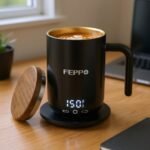
The towel warmer’s inner wall triggers a visible warning (the power button turns red) above 122°F, and the mug warmer shuts itself off after 2 hours of inactivity on its own. Neither feature is a substitute for basic common sense, but they’re real, confirmed features, not just a line in the marketing copy.
Reliability is a separate question from safety, and it’s worth being honest about what we found.
The towel warmer’s own review history shows 13% of ratings at 1 star, with a recurring, specific complaint: the power button becoming hard to press or failing outright within a couple of months of daily use. That’s not a safety defect on the evidence we could find, more of a durability flag worth knowing about before you buy, especially since it’s the higher-priced of the two warming picks here.
Frequently asked questions
Will the FEPPO mattress vacuum’s UV-C light work on black or dark-colored bedding?
Maybe not. A verified owner review found the UV-C module’s infrared sensor never activated on a black rug, which suggests the light likely stays off on dark surfaces generally. The suction and the 52,800-tap/min vibration motor both keep working regardless, so the vacuum still cleans on dark fabric, just possibly without the UV-C pass doing anything.
Is the FEPPO cordless mattress vacuum good for pet hair?
FEPPO’s own product listing says plainly it’s “not suitable to absorb pet hair,” even though some of its marketing shows it used near pets. At least one owner review describes using it successfully on light pet hair on furniture, but if heavy shedding is your main problem, a vacuum built specifically for pet hair is the safer bet.
Does the FEPPO steam mop need any cleaning chemicals?
No. It runs on tap water only, heated to 230°F. That’s genuinely chemical-free, and hot enough to kill many common household bacteria given enough contact time. It isn’t a substitute for an actual disinfectant against hardier organisms like bacterial spores or some viruses, the same limitation every atmospheric-pressure consumer steam mop shares.
How long does one water-tank fill last on the steam mop?
Up to 25 minutes of continuous steam from the 370ml tank, per FEPPO’s own listing. That’s enough for most single rooms in one pass; larger whole-home jobs may need a refill partway through.
Will the FEPPO mug warmer reheat coffee that’s already gone cold?
No. It maintains the temperature of an already-hot drink for hours; it doesn’t warm up a cold one from scratch. Start with hot coffee or tea and it holds that temperature at whatever setting you pick (120°F to 150°F). Pour in a cold drink and it stays cold.