 Inspire
Best Mask for Wildfire Smoke in Canada (2026)
Toronto hit AQHI 10+ this July, among the worst air quality of any major city in the world that day. Here’s what Health Canada actually says a mask can and can’t do about it.
Updated July 25, 2026 · 8 min read · ✓ Fact-checked · Includes affiliated links
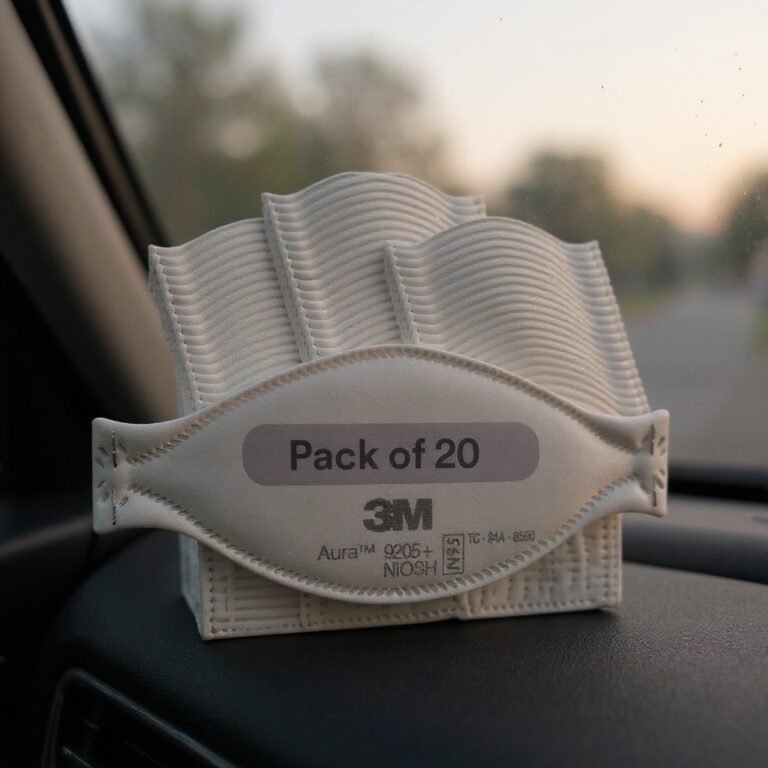
Health Canada’s own guidance: masking is a backup plan, not the main defense, reducing time outdoors and filtering indoor air matter more. When you do need one, 3M’s Aura 9205+ is the straightforward NIOSH-certified pick. Want Canadian-made and NIOSH-certified, the Vitacore CAN99 is both. Glasses fog up with most masks, BreatheTeq’s aluminum nose piece is built specifically for that.
Cloth and surgical masks don’t filter wildfire smoke particles. Health Canada’s own words: they “don’t fit the face well and the materials may not be effective filters against wildfire smoke.”
Our picks
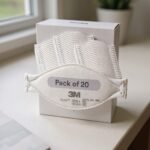
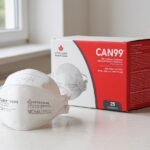
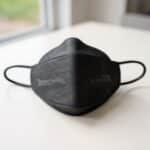
What Health Canada actually says about masking
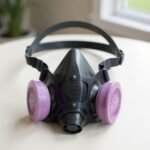
Health Canada’s own guidance draws a clear line: “A respirator is different from a cloth, medical or surgical mask. These other masks don’t fit the face well and the materials may not be effective filters against wildfire smoke.” For an actual respirator, the guidance is direct too: “A well-fitting and properly worn NIOSH-certified N95 or equivalent respirator (KN95 or KF94) mask can help reduce your exposure to fine particles if you must spend time outdoors.”
Canada also has its own certification standard, CSA Z94.4.1, which creates CA-N95 and CA-N99 marks. Health Canada’s recognized-standards list treats NIOSH N95, CSA CA-N95/CA-N99, KN95, KF94, and FFP2 as equivalent options, it isn’t NIOSH-only.
Worth taking seriously: a CBC Marketplace investigation tested 14 KN95 and KF94 masks sold in Canada, and half failed to meet their own stated filtration claim. That’s a real, documented reason to favor a mask from an established, licensed manufacturer over an anonymous import, not just a preference.
And Health Canada is honest about masking’s actual role: it’s a backup for when you have to be outside, not the primary defense. Reducing time outdoors and filtering indoor air do more of the real work. If indoor air quality during smoke season is your bigger concern, our wildfire smoke air purifier guide covers that side of it.
When the AQHI actually calls for a mask
Environment Canada’s Air Quality Health Index runs from 1 to 10+:
| AQHI | Risk level |
|---|---|
| 1-3 | Low |
| 4-6 | Moderate |
| 7-10 | High Risk (this is when a Special Air Quality Statement gets issued) |
| 10+ | Very High Risk |
Being straightforward about a real gap: there’s no official Health Canada rule stating a specific AQHI number where you should put a mask on. The guidance is risk-tiered, not a bright line. What is official is the 7-10 threshold that triggers a Special Air Quality Statement, and that’s a reasonable real-world cue to have a respirator on hand for time outdoors, even without a numbered rule attached to it.
Frequently asked questions
Are cloth or surgical masks enough for wildfire smoke?
No. Health Canada states this directly: cloth and surgical masks “don’t fit the face well and the materials may not be effective filters against wildfire smoke.” They’re built to stop droplets, not the fine particulate matter in smoke. A NIOSH N95 or an accepted equivalent (KN95, KF94, or Canada’s own CSA CA-N95) is what’s actually rated for this.
Does it have to be NIOSH N95 specifically, or is KN95 fine?
Health Canada’s own guidance names KN95 and KF94 as accepted equivalents to NIOSH N95, so no, it doesn’t have to be NIOSH specifically. The real caveat: a CBC Marketplace investigation found half of the KN95/KF94 masks it tested in Canada failed to meet their own stated filtration claim, so buying from an established or Health Canada licensed manufacturer matters more in this category than most.
Is there a real N95 mask made for kids?
Not a NIOSH-certified one, no. There’s no NIOSH-approved child-sized N95 on the market. For older kids or teens, the smallest adult size may fit well enough to seal properly, worth checking fit carefully. For younger children, the honest answer is limiting outdoor exposure and filtering indoor air rather than relying on a mask that isn’t sized or certified for a small face.
Do these masks protect against carbon monoxide or other wildfire gases, not just particles?
No. N95, KN95, and CA-N95 respirators filter particulate matter, the fine particles in smoke, not gases. They don’t filter carbon monoxide or other combustion gases. That’s a physical filtration mask’s limit regardless of certification.