 Inspire
Which EV Charger Should You Buy? Connectors, Wattage, and Real Picks
J1772 vs. NACS explained without the automotive-industry jargon, and what to actually buy for home charging.
Updated July 2026 · 7 min read · ✓ Fact-checked · Includes affiliated links
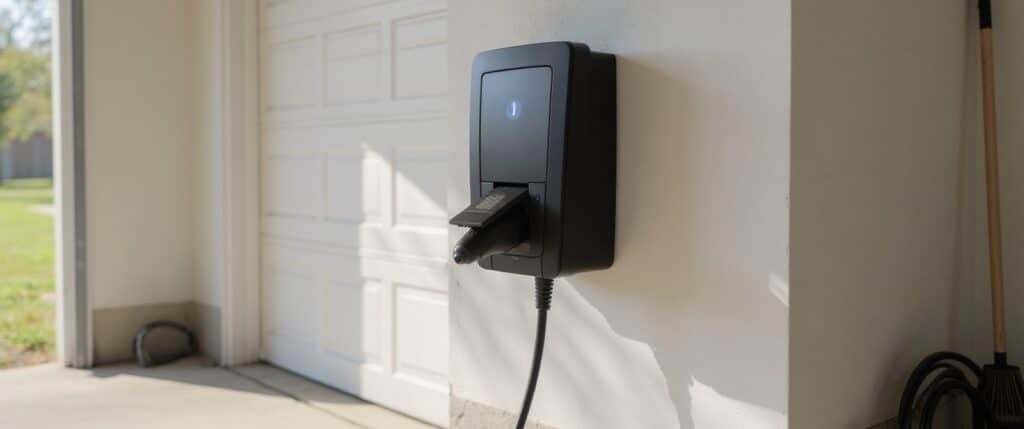
Connector type (J1772 vs. NACS) is a cheap adapter away from being a non-issue — the number that actually decides your charging experience is amperage.
Connector type matters much less than people assume. A home charger is hardwired to your own house, not shared publicly, so a J1772-to-NACS adapter (about $40-150) is a small, cheap fix if you need one. Buy based on amperage instead: a 40A charger covers most daily driving comfortably without paying for capacity you won’t use.
Key takeaways
- Tesla’s NACS connector became the official SAE J3400 standard in September 2024, and many other automakers now ship 2025+ models with native NACS ports.
- J1772 still covers the larger installed base of home chargers and pre-2025 non-Tesla EVs, and will stay relevant for years.
- Buy for amperage, not connector type — a 40A charger covers most homes, with a $40–150 adapter available either direction if you need one.
Real picks
J1772 vs. NACS, in plain English
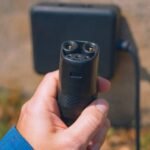
For decades, non-Tesla EVs charging at home in North America used a connector called J1772. Tesla used its own different connector. In September 2024, Tesla’s connector was formally standardized as SAE J3400, generally called NACS, and automakers including Ford, GM, Hyundai, Kia, Rivian, Toyota, and BMW have since announced or already shipped 2025+ models with native NACS ports instead of J1772.
What this means for buying a home charger: J1772 still covers the huge existing base of home chargers and older EVs, and isn’t going away soon. Adapters between the two connectors typically run $40-150 and are common, some new vehicles even ship with one included. Since a home charger is hardwired to your own garage rather than shared with the public the way a road-trip fast charger is, connector choice is a smaller decision than it looks. Buy the charger that fits your amperage and budget needs, and treat an adapter as a normal, inexpensive accessory if you need one, not a reason to pay extra for a “universal” unit up front.
What to actually look for
Beyond connector type, three things matter for a home charger: amperage (covered in our cost guide, a 40A setup covers most daily driving), whether it’s hardwired or plugs into an outlet (a hardwired install is generally more reliable long-term but needs an electrician either way), and smart-charging features (app control, scheduling for off-peak electricity rates) if that matters to you. None of these are as consequential as people assume, most mid-range Level 2 chargers from an established brand do the core job the same way.
Frequently asked questions
Do I need a NACS charger if I don’t drive a Tesla?
Not necessarily. J1772 still covers the larger installed base of home chargers and non-Tesla EVs. If your specific vehicle has switched to a native NACS port (some 2025+ models have), match your charger to your car’s actual port, or plan on a roughly $40-150 adapter either direction.
Does a Tesla need an adapter for a J1772 home charger?
Yes, unless you buy a charger with a native NACS connector. The adapter is a normal, inexpensive accessory, not a sign you bought the wrong charger.
What amperage home EV charger should I buy?
40A comfortably covers most daily driving with an overnight charge. Only step up to 48A or higher if you have a large-battery vehicle, multiple EVs at home, or need a fast daytime top-up rather than overnight charging.
The Bottom Line
Autel AC Lite Home 40A EV Charger
Covers most daily driving without paying for capacity you won’t use.
Autel AC Lite Home 50A 12kW EV Charger (NACS)
Skips the adapter for Tesla or newer NACS-equipped EVs, and charges faster.
Related reading
 Home Care & DIYWill a “Certified Compostable” Bag Actually Break Down in Your Backyard Pile? (2026)The BPI logo means a lab tested it at sustained commercial-facility heat. Your backyard pile almost never gets that hot.
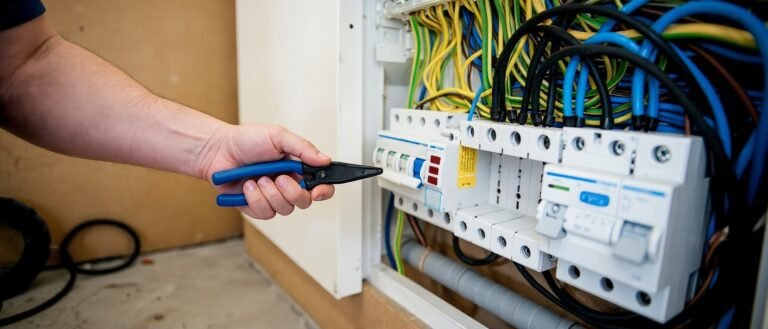 Home Care & DIYEV Charger Costs in Ontario: Rough-In vs. Retrofit, and What It Actually CostsWire gauge and wattage explained without an electrical engineering background, plus the real cost math on that builder “finish the rough-in” fee.
 Home Care & DIYDo You Need a Permit for an EV Charger in Ontario? The Real RulesMarkham, Richmond Hill, and the GTA: what’s actually required by law, what’s a rumor, and where the real gray areas are for condos, townhouses, and freehold homes.