 Inspire
EV Charger Costs in Ontario: Rough-In vs. Retrofit, and What It Actually Costs
Wire gauge and wattage explained without an electrical engineering background, plus the real cost math on that builder "finish the rough-in" fee.
Updated July 2026 · 8 min read · ✓ Fact-checked · Includes affiliated links
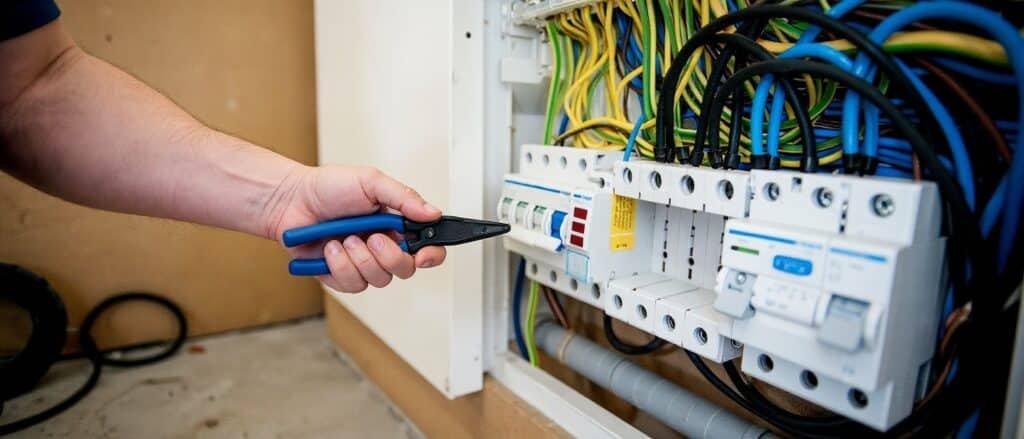
A simple EV charger install runs $1,500-3,000 CAD in the GTA when your panel already has spare capacity nearby — a panel upgrade or long wire run can push that past $7,000.
Budget $1,500-3,000 CAD for a simple install, more for anything complex. A straightforward job, where the panel has spare capacity near the garage, runs roughly $1,500-3,000 CAD in the GTA. A detached garage, long wire run, or panel upgrade can push that to $3,500-7,000+. If your new-build home already has EV rough-in wiring, finishing it is much cheaper — hiring your own electrician for that finish work is often meaningfully cheaper than a builder’s finish fee.
Key takeaways
- Wire gauge is just wire thickness. Lower number means thicker copper, which carries more current and costs more, since copper is priced by weight.
- Most homeowners don’t need the highest-amperage charger available. A 32A or 40A circuit fully charges most daily driving overnight; 48A+ mainly matters for very high mileage or large-battery vehicles.
- There’s no reliable “per meter” wiring cost. Installers quote the whole job, and the real cost drivers are labor rate, whether the run is open or has to go through finished walls or concrete, and permit fees.
- If your home already has EV rough-in wiring, finishing it is a much smaller job than a full retrofit, and it’s worth pricing out an independent electrician against whatever your builder quotes.
Wire gauge, in plain English
“Gauge” is just a number for how thick a wire is. It comes from an old wire-drawing process, more times the wire gets pulled through a die, the thinner it ends up, so counterintuitively, a lower gauge number means a thicker wire. Thicker copper carries more electrical current safely, and since copper is priced by weight, thicker wire costs more per foot, roughly double the material for each meaningful step down in gauge.
For home EV chargers, the two gauges you’ll actually see quoted are 8 AWG and 6 AWG. An 8 AWG copper wire is generally the minimum for a 32A charger (on a 40A breaker); many electricians step up to 6 AWG for a 40A charger (50A breaker) both to stay safely inside code de-rating rules for the breaker’s own terminal rating, and to limit voltage drop on longer runs. You don’t need to memorize the code table, just know that a bigger number on your quote for “heavier wire” isn’t your electrician padding the bill, it’s a real cost driven by physical copper.
What wattage do you actually need
Three things determine your real charging speed: the circuit’s amperage (most home installs run 30-50A), the charger’s own amperage rating (many are adjustable: 16A, 24A, 32A, 40A, 48A), and your car’s own charging limit. Power is amps times 240 volts, so a 32A charger delivers about 7.7kW, a 40A charger about 9.6kW.
| Circuit | Approx. power | Roughly adds per hour | Good for |
|---|---|---|---|
| 32A | ~7.7kW | ~35-45km/hr | Most daily drivers, overnight charging |
| 40A | ~9.6kW | ~40-50km/hr | Longer commutes, faster top-ups |
| 48A+ | ~11.5kW+ | ~50-60km/hr | Large-battery vehicles, multi-EV households, quick top-ups |
Most people default to buying the biggest number on the shelf. For most daily driving under about 80km a day, a 32A or 40A setup fully replenishes the battery overnight, and going bigger mainly buys heavier wire, a bigger breaker, and sometimes a panel upgrade you didn’t actually need.
Rough-in vs. retrofit: what’s the real difference
Rough-in means the conduit and wire path from your panel to the garage was installed during construction, ending in a capped or blank junction box, no outlet, no charger, nothing usable yet. Retrofit means running that same wiring after the house is already built, through finished walls, ceilings, or concrete, which is why it costs more.
Real GTA/Ontario cost ranges we could source: a straightforward retrofit (panel has spare capacity, reasonably close to the garage) typically runs $1,500-3,000 CAD. A complex retrofit, a detached garage, a long or obstructed run, a panel upgrade, can run $3,500-7,000+. Rough labor rates for Ontario electricians run about $50-150/hour, and permits add roughly $50-500 depending on the job.
The builder finish-fee question: is it worth it?
If your rough-in is already done, someone still has to make the final connection: pull wire if it wasn’t already pulled, install a receptacle or hardwire the charger, connect the breaker, and get it inspected. Some GTA buyers and real estate agents report builders quoting around $1,500 CAD just for that finishing step, on top of buying the charger itself separately. We looked for a standardized, published source for that exact number and couldn’t confirm it as a general norm, treat it as a real figure some buyers have reported, not a fixed industry price.
Here’s the actual math worth doing before you pay it: finishing an already-roughed-in garage circuit is a much smaller job than a full retrofit, since the expensive part, running new wire through a finished house, is already done. We found GTA pricing reports for finishing a simple garage outlet in that $250-530 range when done independently. That’s the number worth getting a second quote against before assuming your builder’s price is the only option.
| What you get | Typical cost | |
|---|---|---|
| Builder finish fee | Connection point finished, charger not included | ~$1,500 (reported, unconfirmed as standard) |
| Independent electrician, finish only | Same connection work, charger not included | ~$250-530 (reported) |
| Full retrofit, no existing rough-in | Full wire run plus connection | $1,500-3,000+ (well-sourced range) |
Does the permit still apply if you go the independent-electrician route? Yes, as far as we can tell, this is genuinely still new electrical work resulting in a live circuit, so the same ESA Notification of Work applies regardless of whether the builder finishes it or your own electrician does. We didn’t find a source specifically addressing whether a pre-roughed-in circuit changes this, so treat that as the logical expectation rather than a separately confirmed fact, and ask whichever electrician you hire to confirm they’re filing it.
Frequently asked questions
How much does it cost to install an EV charger in Ontario?
A simple retrofit with spare panel capacity typically runs $1,500-3,000 CAD. A complex job, detached garage, long wire run, or panel upgrade, can run $3,500-7,000 or more. If your home already has EV rough-in wiring, finishing it is usually cheaper than a full retrofit.Is it cheaper to have my builder finish the EV rough-in, or hire my own electrician?
Get a second quote before assuming the builder’s price is the only option. We found reports of independent electricians finishing an already-roughed-in garage circuit for roughly $250-530, meaningfully less than the ~$1,500 some builders reportedly charge for the same finishing work.What amperage EV charger do I actually need?
Most daily drivers are well served by a 32A or 40A circuit, which fully charges overnight. Higher amperage (48A+) mainly benefits large-battery vehicles, multi-EV households, or people who need a fast daytime top-up rather than an overnight charge.The Bottom Line
Know what you’re actually paying for before you sign off: a builder’s rough-in finish fee and a full retrofit are very different jobs with very different price tags, and it’s worth a second quote from an independent electrician either way. Most homeowners don’t need the biggest charger on the shelf, a 32A or 40A setup covers typical daily driving, and buying bigger mainly adds cost without adding much real-world benefit.