 Inspire
Do You Need a Permit for an EV Charger in Ontario? The Real Rules
Markham, Richmond Hill, and the GTA: what’s actually required by law, what’s a rumor, and where the real gray areas are for condos, townhouses, and freehold homes.
Updated July 2026 · 9 min read · ✓ Fact-checked · Includes affiliated links
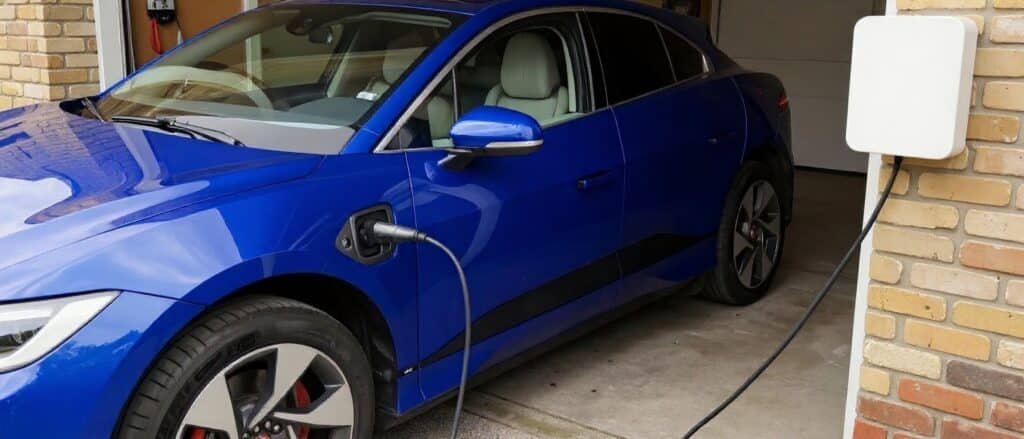
Ontario does require a permit for a Level 2 EV charger — an ESA “Notification of Work” costing about $92-93 — and the “$50,000 fine” people cite online is a mix-up with an unrelated law.
Yes, and it’s cheaper and less scary than the internet makes it sound. Ontario requires an ESA “Notification of Work” (essentially a permit) before a Level 2 EV charger install, about $92-93, filed by your electrician or by you as the homeowner. The widely-repeated “$50,000 fine” figure is a mix-up with an unrelated law — real penalties for skipping it run roughly $750-5,000. We found no credible basis for the rumor that utilities like Alectra inspect garages after spotting an EV.
Key takeaways
- An ESA electrical permit (“Notification of Work”) is legally required before installing a Level 2 home charger in Ontario, about $92-93, filed by your electrician or by you as the homeowner.
- The “$50,000 fine” number going around online is a mix-up with Ontario’s Employment Standards Act, a completely different law. Real electrical-permit penalties run roughly $750-5,000.
- We found no credible evidence utilities inspect garages for EV ownership. Alectra’s real EV program (SmartCharge) is a small, opt-in pilot you apply to, not an enforcement scheme.
- Condo owners already have a legal right to apply for an EV charger in their own parking spot, settled since 2018, not a pending bill. Freehold townhouses generally don’t need board approval at all.
- Ontario does not require new homes to come with EV charger rough-in wiring. If your builder included it, that was their own choice, not a building code requirement.
The permit, and what it actually costs
The Electrical Safety Authority (ESA) is Ontario’s electrical regulator, and its rule is straightforward. Before a licensed electrician (or a homeowner working on their own home) starts a Level 2 charger install, they file a Notification of Work with the ESA.
As of the 2026 fee schedule, that’s about $92 if your contractor files it, $93 if you self-file as the homeowner, plus a small per-additional-charger fee if you’re doing more than one. A panel or service upgrade, if your home needs one, is billed separately.
This isn’t a separate city building permit in most cases. We checked Markham’s own building-permit FAQ directly: electrical work is explicitly listed as something that does not need a City of Markham building permit, the ESA process covers it.
Richmond Hill’s building-permit page doesn’t address electrical work either way, which is consistent with the normal pattern (electrical is ESA’s jurisdiction, not the municipality’s). But if you want it confirmed in writing for your specific job, call Richmond Hill’s Building Division directly.
What actually happens if you skip it
Start with the number you’ve probably seen floating around: a $50,000 fine for an unpermitted EV charger. That figure comes from a completely different law, Ontario’s Employment Standards Act, which also happens to abbreviate to “ESA.” Two unrelated things sharing an acronym. Don’t use that number to scare yourself into anything.
The real consequence: the ESA runs an administrative penalty system, and “failing to file a notification of work” is a real violation category, with documented penalties in roughly the $750 to $5,000 range. In 2023, the ESA ran a compliance sweep in Toronto and found 400+ unpermitted EV charger installs, so this isn’t just a theoretical rule.
The gray area: does skipping the permit actually void your home insurance or complicate a future sale? What we could confirm is narrower than the rumor. Insurers can deny claims tied to unlicensed electrical work, that part is real.
But “a licensed electrician did the work, the permit just wasn’t filed” is a different, more specific scenario. And we couldn’t find a documented Ontario case of an insurance claim denied on that basis alone.
Filing the permit is cheap enough, about the cost of a nice dinner, that it’s a strange thing to skip regardless of how the risk shakes out.
The Alectra rumor, addressed directly
Some version of this claim keeps circulating: that Alectra or another Ontario utility inspects garages, or somehow flags homes, after noticing a resident driving an EV. We looked for this directly, real statements, news coverage, documented cases, and found nothing credible backing it up.
What Alectra does actually run is called SmartCharge, a small opt-in pilot (capped at 50 participants as of this writing). You apply, get a site assessment, and receive a discounted smart charger in exchange for enrolling in a demand-response program. That’s an application process you choose to start, not something that happens to you.
Our best guess for where the rumor comes from: people mixing up Alectra (the utility that bills you for electricity) with the ESA (the regulator that actually did run that 2023 Toronto compliance sweep on unpermitted installs). Both organizations have “electricity” in their name, in a sense, and it’s an easy mix-up.
Worth knowing: modern smart meters can technically infer charging patterns from load data, that’s real, published technical territory. But we found nothing tying that capability to Alectra actually acting on it against non-enrolled customers.
Condos, townhouses, and freehold: the real ownership gray areas
This is where most of the genuine confusion lives, because the rules depend on what you actually own, not just what your home looks like from the street.
| Ownership type | Board/corporation approval? | ESA permit? |
|---|---|---|
| Freehold house or townhouse | No, you own it outright | Yes |
| Standard condo (unit + assigned spot) | Yes, but a 2018 regulation guarantees your right to apply | Yes |
| Condo townhouse (driveway is common element) | Yes, same 2018 regulation applies | Yes |
| POTL / Common Elements Condo | Likely no, gray area, see below | Yes |
What applies to each ownership type
Condo owners already have a legal right to apply. This surprises people: it’s not a pending bill, it’s been settled Ontario regulation since May 2018 (an amendment to O. Reg 48/01 under the Condominium Act). A board can only refuse on narrow grounds backed by a professional report (real code violations, structural risk, safety issues), and otherwise has to approve within 60 days.
Freehold townhouses work exactly like a detached house for this purpose, you own the driveway and garage outright, no board involved, just the ESA permit.
The genuine gray area: POTL (Parcel of Tied Land) / “Common Elements Condominium” townhomes. These are common in new GTA developments, and they’re a hybrid. You hold freehold title to your own house, garage, and driveway, while a corporation only owns shared roads and amenities, not your parking spot.
Logically, that should mean no board approval is needed for your own charger, just the ESA permit, the same as a regular freehold home. But we couldn’t find a source addressing this exact scenario directly, so treat that as our reasoned inference, not a confirmed rule.
The practical catch: some new-build “freehold” townhomes marketed that way are actually POTL underneath, with monthly fees that give it away. Check your status certificate or ask your lawyer rather than assuming from how a listing describes it.
One more thing worth knowing if you’re buying: this article is mostly written for houses, townhouses, and semis. If you’re in a high-rise condo specifically, loop in your property manager before you buy a charger. Shared-garage installs usually mean a longer wire run back to the electrical room and a more involved approval process than a driveway install.
Frequently asked questions
Is it actually illegal to install an EV charger without a permit in Ontario?
You’re required to file an ESA Notification of Work before the install. Skipping it is a real violation with documented penalties in the $750-5,000 range, not the $50,000 figure sometimes cited (that number comes from an unrelated law). The permit itself costs about $92-93.Does Alectra or another utility inspect garages for EV chargers?
We found no credible evidence of this. Alectra’s real EV program, SmartCharge, is a small opt-in pilot you apply to for a discounted charger, not an inspection or enforcement program.Can my condo board refuse to let me install an EV charger?
Only on narrow, professional-report-backed grounds. Since a 2018 Ontario regulation, condo owners have the right to apply, and boards must generally approve within 60 days absent a real documented issue.Does my new home need to come with EV charger rough-in wiring?
No. Ontario has no current requirement for this in new construction. A bill that would add one (the EV-Ready Homes Act) hasn’t passed. Any rough-in in a new build is the builder’s own choice.The Bottom Line
The permit is real, cheap, and easy to get, about $92 and a phone call or online filing away. So there’s little reason to skip it regardless of how the enforcement risk actually shakes out. The scarier rumors, the $50,000 fine and utilities inspecting garages, don’t hold up under a real check.
If you own a condo or condo townhouse, you already have a legal right to apply for a charger. If you’re in a freehold house, townhouse, or unsure whether your new-build townhome is really freehold or POTL underneath, that’s worth confirming before you assume either way.