 Inspire
Will a “Certified Compostable” Bag Actually Break Down in Your Backyard Pile? (2026)
The BPI logo means a lab tested it at sustained commercial-facility heat. Your backyard pile almost never gets that hot.
Updated July 2026 · 6 min read · ✓ Fact-checked · Includes affiliated links
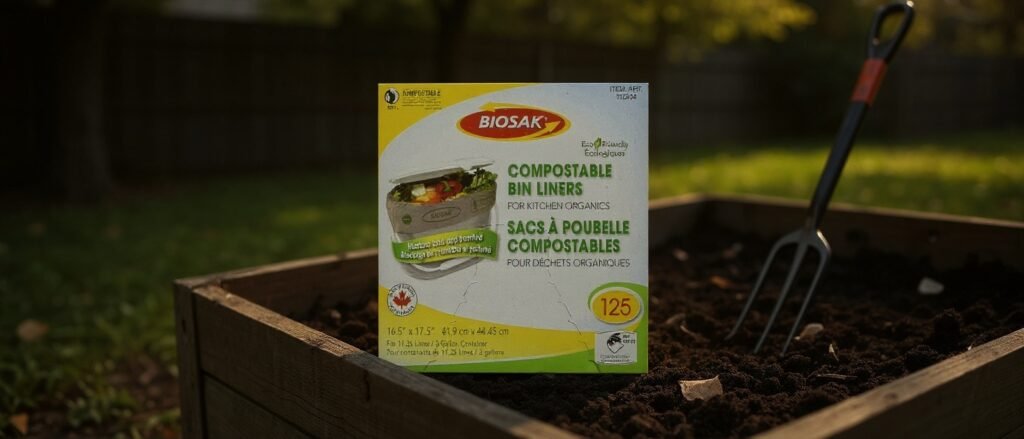
Standard BPI and BNQ certification is validated for commercial facility conditions: sustained heat around 140°F, controlled moisture, turned regularly. A backyard pile rarely holds that heat consistently, so a bag rated for 180 days commercially can take much longer at home, or stall out as a half-buried scrap of plastic-like film. A separate “home compostable” certification exists for bags actually tested at backyard temperatures. Check for it by name; don’t assume the standard logo covers it.
None of this matters for the kitchen step. A caddy liner just needs to hold scraps for a few days before you empty it, bag and all or scraps only, into whatever you’re actually composting in.
Key takeaways
BPI‘s standard certification and Quebec’s BNQ 0017-088 are both built around commercial facility conditions: sustained heat, engineered moisture and airflow, active turning. That’s a controlled environment most backyard setups don’t replicate.
BPI now runs a separate home-compostable certification track, tested against backyard temperatures specifically. A bag needs that additional logo, not just the standard BPI mark, to be verified for a home pile. As of this writing, Biosak’s packaging lists BPI and BNQ, the commercial standards, not a home-compostable certification.
The practical fix for backyard composters: empty the bag into the pile and bin the bag itself with your regular waste or municipal organics, rather than tossing the whole bag in and hoping.
What to buy for which setup
This section contains affiliate links — we may earn a commission at no extra cost to you. See our full evaluation policy at the end of this guide.
What the standard certification actually tested
ASTM D6400, the standard behind the BPI logo, requires 90% of the material to break down within 180 days under conditions matched to a commercial composting facility: sustained temperatures around 140°F, moisture kept in a specific range, and regular mechanical turning to keep oxygen moving through the pile. Facilities that do this professionally can hit those numbers reliably. A backyard pile, turned with a pitchfork every week or two if you’re diligent, usually can’t.
Home compost piles typically run 90°F to 120°F at the core on a good day, cooler at the edges, and cycle up and down with the weather. That’s enough heat to break down food scraps, leaves, and grass clippings. It’s often not enough, or not sustained long enough, to fully break down a bioplastic film tested for facility conditions.
The separate certification to actually look for
BPI launched a distinct home-compostable certification program, tested against real backyard conditions across different North American climates rather than a controlled facility. A bag carrying that specific home-compostable mark, alongside or instead of the standard commercial logo, is the one with backyard testing behind it. A handful of brands now carry both marks.
Check the actual packaging, not the category description on a retail listing. “Compostable” in a product title usually means the commercial standard by default unless a home-compostable logo is called out specifically.
Commercial cert vs. home-compostable cert
| Standard / commercial (BPI, ASTM D6400) | Home-compostable cert | |
|---|---|---|
| Tested under | Facility conditions: ~140°F, moisture-controlled, mechanically turned | Real backyard piles across North American climates |
| Time to break down | 90% within 180 days | No fixed facility timeline |
| Your backyard pile actually runs | 90–120°F at the core — usually too cool and inconsistent for this cert | This is exactly what it’s tested for |
| Where the bag itself goes | A facility, or a curbside program that accepts it directly (e.g. Calgary) | Your own backyard bin |
| Look for | The standard BPI/compostable logo | A separate home-compostable mark on the same package |
What this means for your kitchen caddy
None of this is an argument against using a compostable liner in the kitchen. The caddy step is about keeping a few days of scraps from leaking or smelling up your counter, and any BPI or BNQ certified bag handles that fine regardless of where the scraps end up after.
The distinction matters at the transfer point. If you’re backyard composting, empty the scraps out and put the bag itself in regular waste or your municipal organics stream (if your city accepts it there, see our city-by-city breakdown for that). If you’re on a curbside program that specifically takes certified bags in the actual bin, like Calgary’s, the bag can go in whole, because that’s the facility condition it was actually tested for.
Frequently asked questions
Will a compostable bag eventually break down in my backyard pile, even without home certification?
Probably, eventually, if your pile gets warm enough and you’re patient. It’s just not guaranteed within any tested timeframe. Expect it to outlast your food scraps by months, and check under it before assuming a batch of finished compost is bag-free.
Does it matter if I just bury the whole bag in the pile?
It matters for how long that spot stays unfinished. A buried bag without home-tested certification can sit there long after everything around it has broken down, which is more of an annoyance than a hazard, but it means that section isn’t ready to use yet.
Is there a compost bag actually certified for home use in Canada?
Look specifically for a home-compostable logo, separate from the standard BPI or BNQ commercial mark, on the packaging. Availability is more limited than standard certified bags, and price is usually higher. Check the product listing’s certification section, not just the word “compostable” in the title.
What’s the actual downside if a bag doesn’t fully break down in my pile?
Mostly cosmetic. You’ll find a stretched, thinned film when you turn the pile or harvest finished compost. Pull it out and toss it. It’s not the microplastic risk of a bag that was never compostable at all, just one tested for a hotter environment than yours provided.
The bottom line
A BPI or BNQ certified bag is a real, tested claim, just not the claim most people assume. It’s tested for commercial facility heat, not your backyard bin. Use it in the kitchen caddy without a second thought. If you’re composting at home, empty the scraps out at the pile and bin the bag separately unless you’ve specifically confirmed a home-compostable logo on the box.
Related reading
-
 Home Care & DIYWhat Not to Use Bar Keepers Friend On (7 Surfaces to Avoid)What not to use Bar Keepers Friend on: 7 surfaces the oxalic acid formula can damage — including some that surprised us. Know these before you grab the can.
 -
 Home Care & DIYBar Keepers Friend Soft Cleanser vs Bon Ami: Which Is Safer for Glass?Bar Keepers Friend Soft Cleanser vs Bon Ami: which is safer for glass surfaces? We compare abrasive level, ingredients, and real results on stove tops and shower doors.
 -
 Home Care & DIYHow to Clean Glass Without Scratching (Safe, Foolproof Method)How to clean glass without scratching: rinse off grit first, use clean microfiber, keep pressure light. Most scratches come from friction — not from the cleaner itself.