 Inspire
Motives Liquid Powder Mineral Foundation Review
“Liquid powder” sounds like a contradiction until you understand the format. Here’s what that actually means, the full ingredient list pulled independently, and why this one skips an irritant that shows up in a lot of mineral makeup.
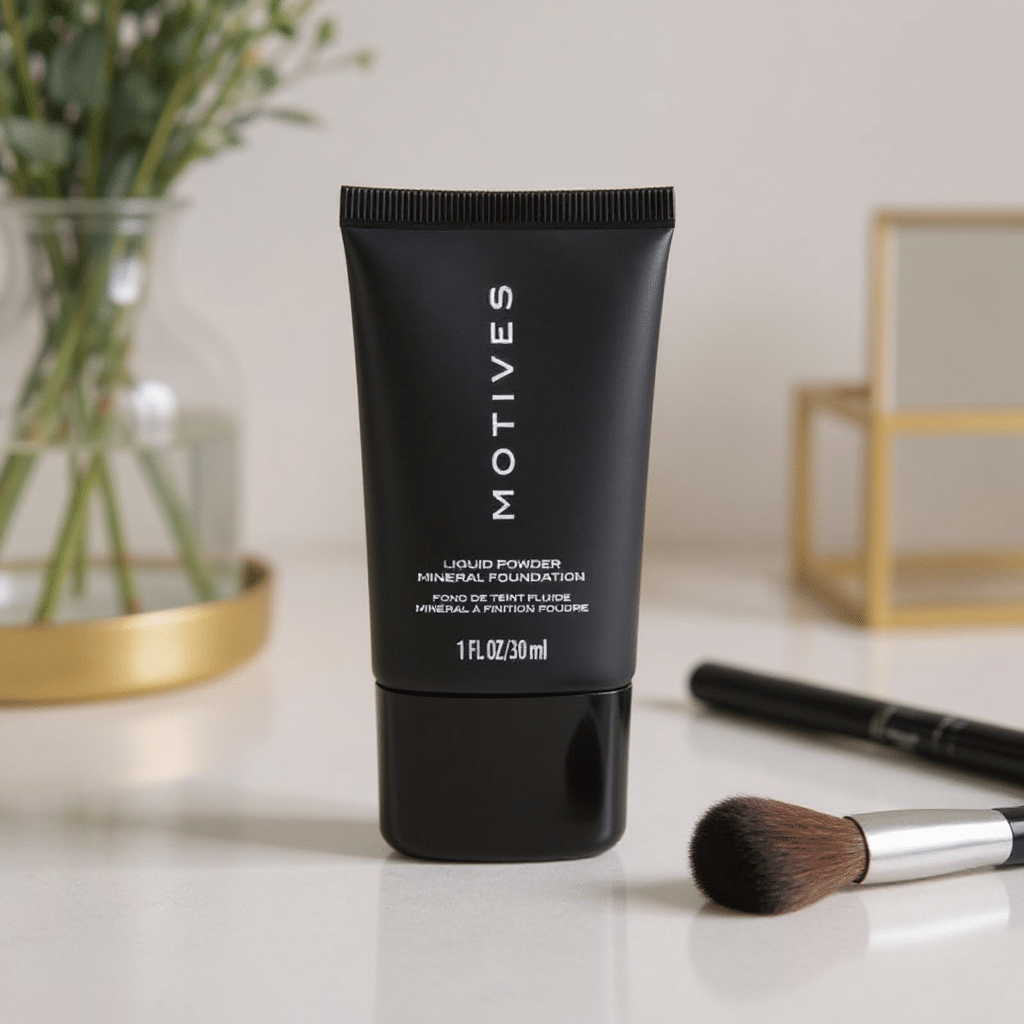
our rating
What we liked
- Genuine liquid-to-powder hybrid: blends on wet, sets to a breathable matte-ish finish
- Mineral UV filters (titanium dioxide + zinc oxide) instead of chemical sunscreen actives
- Independently confirmed: no bismuth oxychloride, a common mineral-makeup irritant
- Contains a stabilized vitamin C derivative and sodium hyaluronate, not just pigment
What to know
- SPF 15 is modest — not a substitute for a dedicated daily sunscreen
- Shade range (7 shades) skews light to medium; we couldn’t confirm deep shade options
- We couldn’t independently verify an FDA “broad spectrum” label claim — check the physical Drug Facts panel
- Like most mineral/hybrid formulas, thick layers can oxidize or shift tone faster than thin ones
Key takeaways
- This is a real, established hybrid format: it goes on as a blendable liquid, then sets to a powder-like matte finish — which means touch-ups throughout the day don’t cake the way powdering over pure liquid foundation usually does.
- The UV filters are titanium dioxide and zinc oxide — physical/mineral filters, generally lower-irritation than chemical sunscreen actives, and they protect immediately with no wait time.
- Independently confirmed via ingredient-database parsing: this formula does not contain bismuth oxychloride, an irritant with a documented, sharp crystalline structure common in mineral makeup.
- At $39.95, it sits above drugstore pricing and at the lower end of prestige — a fairly typical spot for a direct-sales beauty brand.
Who it’s for (and who should skip it)
Format matters more than brand name with foundation. Here’s the practical breakdown for this specific liquid-to-powder hybrid.
Buy it if…
- You like touching up during the day and hate how powder cakes over pure liquid foundation
- You have sensitive or acne-prone skin and want mineral UV filters instead of chemical ones
- Your skin tone falls in the light-to-medium range this shade set covers
Skip it if…
- You need a deep shade match — the confirmed range skews light-to-medium
- You’re relying on the SPF 15 as your main sun protection — pair it with a real sunscreen instead
- You prefer a full-coverage matte liquid over a buildable, lighter-feeling formula
What “liquid powder” actually means
Here’s the simple version: liquid foundation is pigmented liquid that stays liquid, good coverage and hydration but touch-ups over it can look cakey. Powder foundation is milled pigment, breathable and easy to touch up, but can look flat or dry. A liquid-to-powder hybrid tries to get the best of both: it goes on wet so it blends evenly like a liquid, then sets down to a powder-like matte finish on skin.
The real, practical advantage is touch-ups. Because the formula is designed to set to powder, going over it later in the day with more product doesn’t build up the same cakey texture that touching up a pure liquid foundation with a powder on top usually creates.
The full ingredient list, independently pulled
Rather than repeat the marketing copy, here’s what an independent ingredient-database parse actually shows on the label, in order:
Cyclopentasiloxane, Water, Dimethicone Crosspolymer, Octyldodecyl Neopentanoate, Butylene Glycol, Cetyl PEG/PPG-10/1 Dimethicone, Polyglyceryl-4 Isostearate, Aluminum Hydroxide, Stearic Acid, Dimethicone, Hexyl Laurate, Silica, Tocopherol, Tetrahexyldecyl Ascorbate, PEG/PPG-18/18 Dimethicone, Phytantriol, Nylon-12, Sodium Chloride, Polyvinylalcohol Crosspolymer, Magnesium/Potassium/Zinc Chloride, Lysine, Methicone, Triethoxycaprylylsilane, Sodium Hyaluronate, Potassium Sorbate, Disodium EDTA, Caprylyl Glycol, Hexylene Glycol, Phenoxyethanol; colorants Mica, Titanium Dioxide, Iron Oxides.
Two ingredients worth calling out specifically: Tetrahexyldecyl Ascorbate is a stabilized vitamin C derivative, meaning this isn’t purely a pigment-and-SPF product, there’s a real (if minor, at makeup-level concentration) antioxidant ingredient in the mix. Sodium Hyaluronate is the salt form of hyaluronic acid, added for a hydration boost. Neither is going to do the heavy lifting a dedicated serum would, but their presence is a genuine formulation choice, not filler.
Also independently confirmed: no bismuth oxychloride. That ingredient has a documented sharp, crystalline structure that can cause micro-abrasion and irritation in mineral cosmetics, particularly for sensitive, acne-prone, or rosacea-prone skin — so its absence here is a real, checkable point in this formula’s favor, not just a marketing claim.
The SPF 15, honestly
The active UV filters are titanium dioxide and zinc oxide — both physical/mineral sunscreen ingredients. Dermatology sources generally note these protect from the moment you apply them (no 20-minute wait like some chemical filters need) and tend to carry a lower irritation risk, which is part of why mineral formulas get recommended for sensitive skin.
Frequently asked questions
What does “liquid powder” foundation actually mean?
Is this good for sensitive or acne-prone skin?
Is the SPF 15 enough sun protection?
How many shades does it come in?
Does it contain any skin-benefit ingredients beyond pigment?
“A genuine liquid-to-powder hybrid with mineral UV filters and no bismuth oxychloride — just don’t lean on the SPF 15 alone.”
The format delivers on its real promise: easy touch-ups without the cakey buildup of powdering over a pure liquid. The ingredient list backs up the “gentle, mineral-based” positioning. Where it falls short of a 5: the modest SPF, the unconfirmed shade depth, and the unverified broad-spectrum claim.

Related reading
-
 ReviewLumière de Vie Skincare ReviewA 6-product map through the 29-SKU anti-aging line.
 -
 ReviewBest Motives Cosmetics Products to Buy Right NowThe full brand roundup, from foundation to lip.
 -
 ReviewPentaxyl reviewA peptide recovery crème, 8 to 12 weeks of real use.
Sources
- FDA’s GRASE status for zinc oxide and titanium dioxide: FDA.gov Q&A on sunscreen.