 Inspire
Best Dehumidifier for a Basement in Canada (2026)
4 units ranked for real Canadian basements, plus the AHAM standard change nobody explains that makes “70-pint” and “50-pint” claims both true at once.
July 10, 2026 · 10 min read · Includes affiliated links
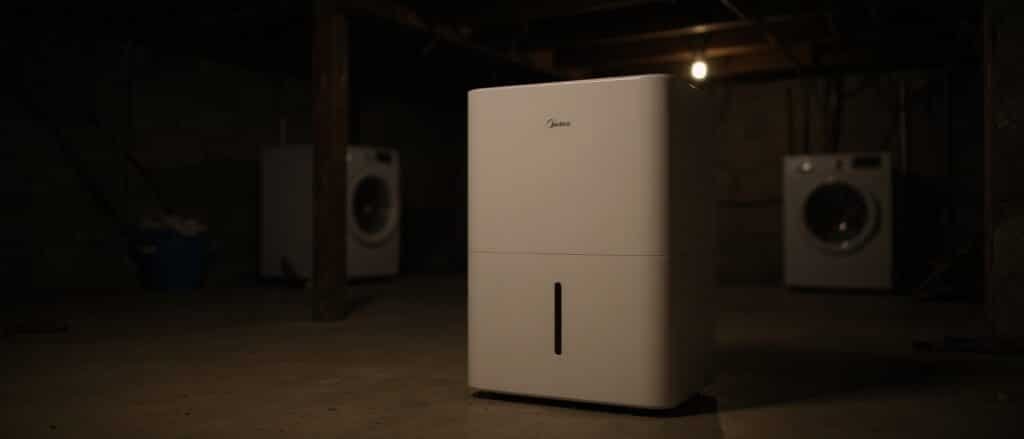
Check whether a “pint” rating is old-standard or new-standard before comparing two listings.
- Midea 50 Pint (no pump): best overall for a typical basement.
- Waykar 80 Pint: best for a large or genuinely damp basement.
- Midea 22 Pint: best budget, for a smaller space.
- Midea 50 Pint with pump: best if you don’t have a floor drain nearby.
Some links below pay us a referral fee. Doesn’t change our picks.
Key takeaways
The DOE finalized new dehumidifier testing standards in June 2019, dropping the test temperature from 80°F to 65°F, closer to what a real basement actually feels like. Cooler air holds less moisture, so the same physical machine reports a lower pint number under the new test, even though nothing about it changed. ENERGY STAR’s own correlation table puts an old 70-pint unit closer to a new 40-45 pint rating, though manufacturers commonly round up to 50 in their marketing, which is why you’ll see both “80 pint” and “50 pint” claims that turn out to be nearly the same machine.
Health Canada and the CHBA both point to 30-50% relative humidity as the target range for a basement. Below that and you’re wasting electricity; above it and you’re growing mold.
Best Dehumidifier Basement Canada: The AHAM 2019 change, explained properly
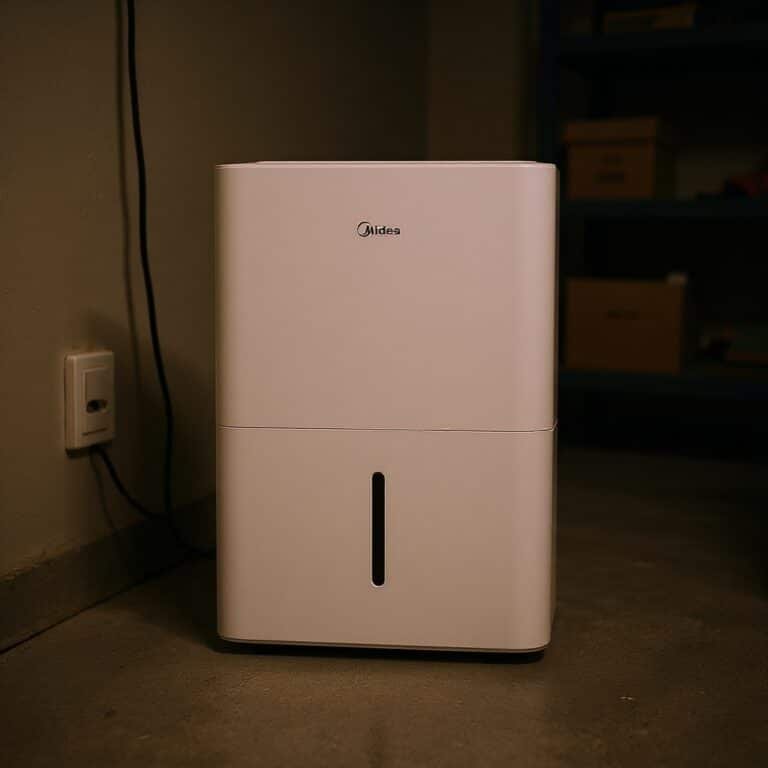
Before 2019, dehumidifiers were tested at 80°F and 60% relative humidity, warmer and more humid than most real basements ever get. The DOE’s updated standard tests at 65°F and 60% RH instead, closer to what a basement actually feels like most of the year.
Cooler test air holds less moisture, so a machine that removed 70 pints a day under the old test removes noticeably fewer under the new one, even though the compressor and coils inside haven’t changed at all. ENERGY STAR’s own published correlation table puts that old 70-pint rating at roughly a new 40-45 pints. In practice, though, manufacturers often round the marketing number up: Midea, for one, sells the identical unit labeled “50 Pint 2019 DOE (Previously 70 Pint),” not 40 or 45.
The practical takeaway: when you’re comparing two listings, check which standard each one is tested under before assuming a bigger number means a stronger machine. A new-standard 50-pint unit and an old-standard 70-pint unit can be roughly the same real-world performer.
Our picks
This section contains affiliate links — we may earn a commission at no extra cost to you. See our full evaluation policy at the end of this guide.
Picked for real pint rating (with standard noted), pump availability, and low-temperature operation.
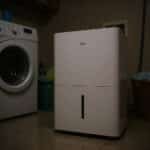
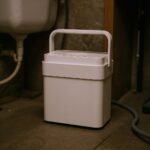
The 4 compared
| Model | Rating | Coverage | Pump | Price (CAD) |
|---|---|---|---|---|
| Midea 50 Pint | 50pt (2019 DOE) | 4,500 sq ft | No | ~$270 |
| Waykar 80 Pint | 80pt (see caveat) | 5,500 sq ft | No | ~$362 |
| Midea 22 Pint | 22pt (2019 DOE) | 1,500 sq ft | No | ~$210 |
| Midea Cube 50 Pint | 50pt (2019 DOE) | 4,500 sq ft | Yes | ~$333 |
Amazon.ca prices fluctuate; figures above are a recent snapshot, not a locked-in claim.
Moisture sources most guides skip
A dehumidifier fixes air humidity. It doesn’t fix the source. Two Canada-specific culprits show up constantly in older basements: condensation forming directly on cold water pipes and ductwork in summer, which drips onto the floor and reads as a “leak” when it’s really just humid air meeting a cold surface, and bare or poorly sealed concrete floors, which wick moisture up from the ground steadily regardless of how well you seal the walls.
A dehumidifier set to the right humidity target handles both, but if you’re seeing standing water or a specific recurring wet spot rather than general dampness, that’s a foundation or drainage issue a dehumidifier won’t solve on its own.
Across Canada, this looks different
Ontario and Quebec basements deal with the biggest seasonal swing, humid summers and bone-dry winters from forced-air heating, which means auto-defrost matters in winter and real capacity matters in summer. Coastal BC runs damp for more of the year, so continuous operation matters more than peak capacity. The Prairies run drier overall, meaning a smaller unit is often genuinely sufficient rather than just cheaper.
What this costs per season
A 50-pint unit run continuously through a humid Ontario summer costs roughly $25-40 CAD in electricity over the season at typical rates, not a large number next to the price of the unit itself. The real cost difference between these four is upfront price and whether you’re paying for pump convenience, not ongoing operating cost.
When a dehumidifier won’t fix it
Standing water after rain, not just general dampness. That’s a grading or foundation drainage problem.
A specific recurring wet spot in the same location every time. Likely a crack or a failed seal, not an air-humidity issue.
Visible mold covering more than a small patch. Get a professional assessment before just running a dehumidifier and hoping.
Musty smell with no visible dampness. Could be behind a wall or under flooring, worth a moisture meter check before assuming a bigger dehumidifier is the fix.
Frequently asked questions
Why do some dehumidifiers say “70 pint” and others say “50 pint” for what looks like the same machine?
The DOE changed its testing standard in 2019, dropping the test temperature to better match real basement conditions. The same physical machine reports a lower number under the new test. ENERGY STAR’s own table puts old 70-pint at closer to a new 40-45 pint rating, though manufacturers often round up to 50 in their marketing.
What humidity level should I target in my basement?
Health Canada and the CHBA both point to 30-50% relative humidity. Most dehumidifiers let you set a target percentage directly rather than guessing.
Do I need a dehumidifier with a built-in pump?
Only if you don’t have a floor drain or a gravity-drain path nearby. A pump lets you drain uphill into a laundry sink instead, at a real price premium over a non-pump model of the same capacity.
Will a dehumidifier work in an unheated basement in winter?
Only if it has auto-defrost and a stated low-temperature operating range. Below that range, the coils ice up and the unit stops dehumidifying effectively, sometimes without an obvious warning.
Can a dehumidifier fix a musty smell or mold?
It helps prevent new mold growth by keeping humidity in range, but it doesn’t remove existing mold or fix the moisture source causing it. A specific recurring wet spot or visible mold needs its own fix first.
Midea 50 Pint (2019 DOE)
The right size for a typical Canadian basement, no pump premium
Large or genuinely damp basement? The Waykar 80 Pint has the most real capacity here.
No floor drain nearby? The Midea Cube with pump drains uphill to a sink instead.
Related reading
-
 CanadaBest Air Purifiers for Wildfire Smoke Season in Canada (2026)A damp basement and a smoky summer are different air problems. Here’s the one for smoke.
 -
 CanadaBest Portable Power Station Canada 2026: Storm-Ready PicksA sump pump needs power during an outage too. Here’s how much backup you’d actually need.
Related reading
-
 CanadaWhat Ontario’s Free Well Water Test Actually Checks (and What It Doesn’t)Ontario’s free well water testing program checks for E. coli and coliform bacteria only. Here’s what it doesn’t cover, how to test for the rest, and how to protect your water either way.
 -
 CanadaDoes Waterdrop, SpringWell, or Epic Water Ship to Canada? (2026)Waterdrop doesn’t ship to Canada at all. SpringWell and Epic Water do, with some catches. Here’s what we confirmed for each brand and where to buy instead when direct shipping isn’t an option.
 -
 CanadaBest Air Purifiers for Wildfire Smoke Season in Canada (2026)3 real air purifiers picked specifically for wildfire smoke: CADR smoke rating, true HEPA filtration, and real owner reviews, not just square footage claims on the box.
Last updated July 10, 2026. We re-check specs and prices regularly.
As an Amazon Associate we earn from qualifying purchases.