 Inspire
Best Portable Power Station Canada 2026: Storm-Ready Picks
5 units ranked for actual Canadian outages, both kinds. Real watt-hour math, furnace-specific wattage, and the one nobody else tells you about ice storms.
July 9, 2026 · 11 min read · Includes affiliated links
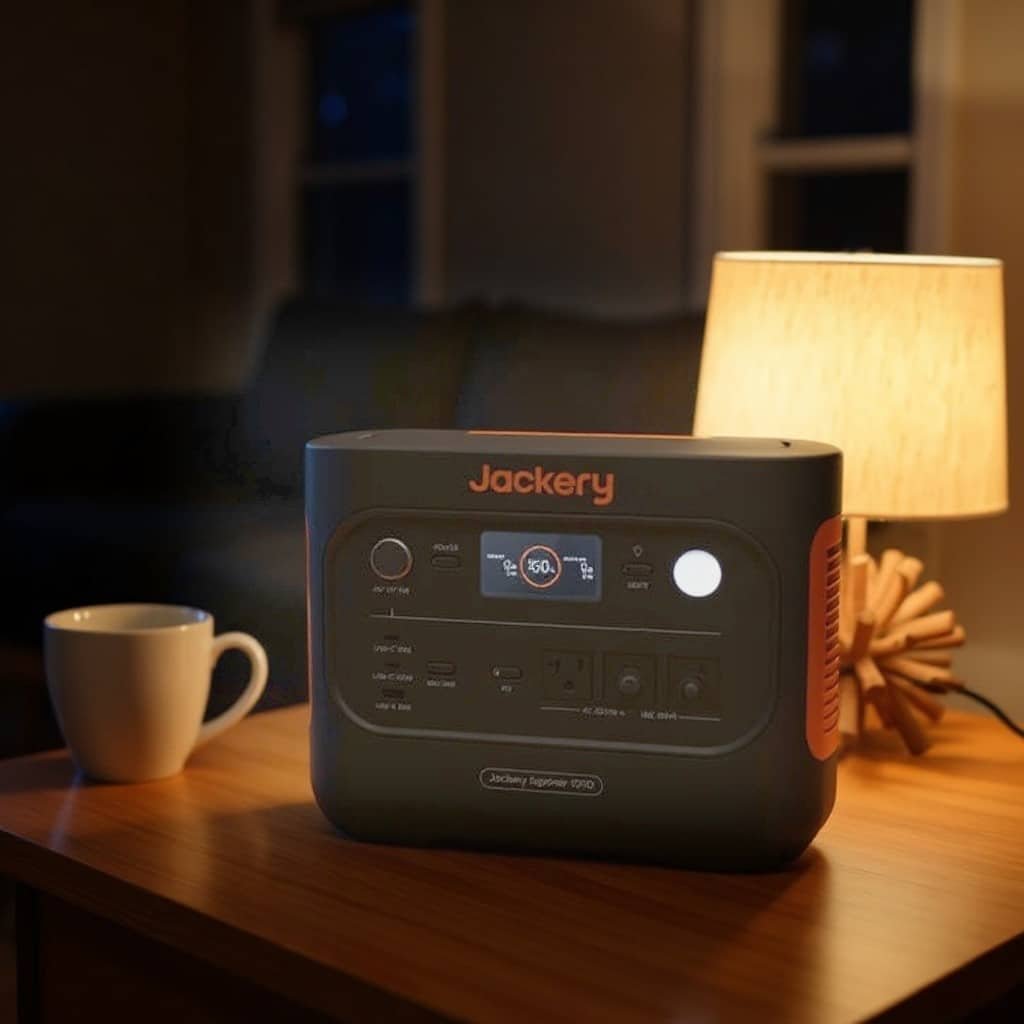
Match watt-hours to what you actually need to run, not the biggest number you can afford.
- Jackery Explorer 2000 v2: best overall, enough for a fridge and a furnace blower through a normal outage.
- EcoFlow Delta Pro 3: best for a multi-day outage running a furnace, fridge, and freezer together.
- BLUETTI AC180: best portable option, cottage-to-camping sized.
- Jackery Explorer 300 Plus: best budget, enough for lights, phones, and a router.
Some links below pay us a referral fee. Doesn’t change our picks.
Key takeaways
This guide gets straight to it: Every one of these 5 uses LiFePO4 battery chemistry, which matters twice: it handles Canadian cold better than the lithium-ion in cheaper units, and it’s rated for 3,000-4,000 charge cycles, meaning a decade or more of occasional-outage use before it degrades. The real sizing question isn’t “how much power,” it’s watts (can it start your fridge or sump pump) against watt-hours (how long it can keep running them). Most buying guides only mention one.
None of the roundups we checked cover both summer storm outages and winter ice storms in the same article, and none give you furnace-specific numbers. A gas furnace’s blower motor draws 500-600 running watts, well inside what every pick here handles. The question is always runtime, not whether it can start.
Best Portable Power Station Canada: Size it: how much power do you actually need
Check what you’d want to keep running
Real running-watt figures for common Canadian household loads. Startup surge is higher for the fridge, freezer, and sump pump, but all 5 picks below handle typical surges.
Here’s what matters most: Estimates assume typical inverter efficiency losses (~10-15%) already factored in. Real runtime varies by ambient temperature and exact appliance model.
Our picks
This section contains affiliate links, and we may earn a commission at no extra cost to you. See our full evaluation policy at the end of this guide.
Picked for real Wh/W specs and confirmed LiFePO4 chemistry, cross-checked against 5 independent roundups.
The 5 compared
| Model | Capacity | Continuous AC | Battery | Price (CAD) |
|---|---|---|---|---|
| Jackery Explorer 2000 v2 | 2,042Wh | 2,200W | LiFePO4 | ~$1,199 |
| EcoFlow Delta Pro 3 | 4,096Wh | 4,000W (6,000W boost) | LiFePO4 | ~$3,299 |
| BLUETTI AC180 | 1,152Wh | 1,800W (2,700W peak) | LiFePO4 | ~$699 |
| Jackery Explorer 300 Plus | 288Wh | 300W (600W peak) | LiFePO4 | ~$229 |
| GROWATT HELIOS 3600 | 3,600Wh | 3,600W (7,200W w/ 2nd unit) | LFP (LiFePO4) | ~$1,599 USD |
This is the detail that matters: Amazon.ca prices fluctuate; figures above are a recent snapshot, not a locked-in claim. The GROWATT row is priced in USD from its US Amazon listing, there’s no Canadian storefront through this program yet, so it isn’t directly comparable to the CAD prices above. Check the live price before buying.
Winter ice storms: what actually changes
Cold is the one variable most “best power station” roundups skip entirely, because most are written for a US audience where a Canadian ice storm doesn’t register.
LiFePO4 handles cold better than older lithium-ion chemistry, but every unit here still slows or pauses charging below freezing. If the power’s out and it’s -15°C outside, don’t leave the unit in an unheated garage expecting full charging speed. Bring it inside, even just a mudroom or unheated-but-enclosed porch above 0°C, between uses. Discharging (actually running your furnace off it) is far less temperature-sensitive than charging is.
Worth repeating: the other winter-specific number that matters: a furnace blower motor is what you’re really powering, not the furnace itself (gas/oil supply doesn’t need electricity to burn, just to circulate air and ignite). That’s 500-600W continuous, which is why even the smallest pick that can start a fridge can generally also run a furnace blower.
Summer storms: what actually changes
Summer outages are shorter on average but hit different priorities: keeping a fridge and freezer cold enough that you don’t lose the contents, and running a sump pump if the storm brought heavy rain.
A fridge cycles on and off, it doesn’t draw its running wattage constantly, so real-world runtime is longer than the naive Wh-divided-by-watts math suggests. A sump pump is the opposite: it can surge to 1,300W+ on startup even though it only draws ~800W running, which is why a cheap sub-500W unit can technically “have enough Wh” on paper and still fail to start the pump at all.
EcoFlow vs Jackery vs BLUETTI
A quick note worth flagging: all three are legitimate LiFePO4 brands and the three most-recommended names across independent roundups we checked. The real differences: Jackery has the widest size range and the most polished app experience. EcoFlow wins on raw continuous wattage for whole-home-adjacent backup, at a real price premium. BLUETTI is consistently the best value at the mid-size tier, with the tradeoff of a thinner Canadian retail and support presence than the other two.
Pick by the capacity and continuous-watt numbers for what you actually need to run first. Brand is a tiebreaker, not the primary decision.
Frequently asked questions
How big a power station do I need for a furnace during an outage?
A gas furnace’s blower motor typically draws 500-600 running watts, well within reach of any of these 5 units. The real limit is runtime, not power: a 1,000Wh unit runs a furnace blower for roughly 1.5-2 hours before recharging, a 4,000Wh unit for 6-8 hours.
Does cold weather affect power station performance?
Yes, but mostly for charging. All 5 picks use LiFePO4 batteries, which handle cold better than older lithium-ion, and charging still slows down or pauses below freezing. Discharging (actually running a furnace blower or fridge off the unit) is far less temperature-sensitive, so a unit sitting in a cold room keeps delivering power even when it can’t recharge quickly. Keep it somewhere above 0°C between charges when you can, and expect a slower recharge, not a shorter runtime, in an unheated garage during a winter storm.
How long does a portable power station last (battery lifespan)?
The 3,000-4,000 charge-cycle rating doesn’t mean the battery fails after that many charges, it means it’s still holding 80% of its original capacity at that point. A home outage draws the battery down occasionally, not daily, which is why that cycle count works out to a decade or more of real use before you’d notice any drop in runtime.
Jackery Explorer 2000 v2
Enough for a fridge and furnace through a normal outage
Multi-day outage with a furnace, fridge, and freezer? The EcoFlow Delta Pro 3 has the headroom.
Splitting time between home and a cottage? The BLUETTI AC180 travels well and still covers a real outage.
Related reading
-
 Power & EnergyHeat Pump & Battery Rebates by Province (2026): What’s Actually AvailableEvery Canadian province’s heat pump and home battery rebates for 2026, federal and provincial, side by side.
 -
 Power & EnergyJackery Explorer 2000 v2 vs 3000 Pro: 2026 ComparisonHome Energy · Buyer’s Guide Jackery Explorer 2000 v2 vs 3000 Pro: 2026 Comparison The 3000 Pro is being phased out. Here’s what that actually means for which one to buy, and what replaced it. H Hilaire C. · Inspire DistributionJuly 13, 2026 · 10 min read · Contains affiliate links Most comparisons of these […]
 -
 Water & AirMini-Split BTU Sizing Calculator: A Real Starting Point, Not a GuessA mini-split BTU sizing calculator using ENERGY STAR’s real published sizing table, with an honest flag for the popular ceiling-height and insulation multipliers that no manufacturer or standard actually backs.
Last updated July 29, 2026. We re-check specs and prices regularly.
As an Amazon Associate we earn from qualifying purchases.