 Inspire
Bar Keepers Friend Soft Cleanser vs Bon Ami: Which Is Safer for Glass?
Same abrasive family, very different scratch risk. Technique matters more than the brand.
Updated June 2026 · ✓ Fact-checked
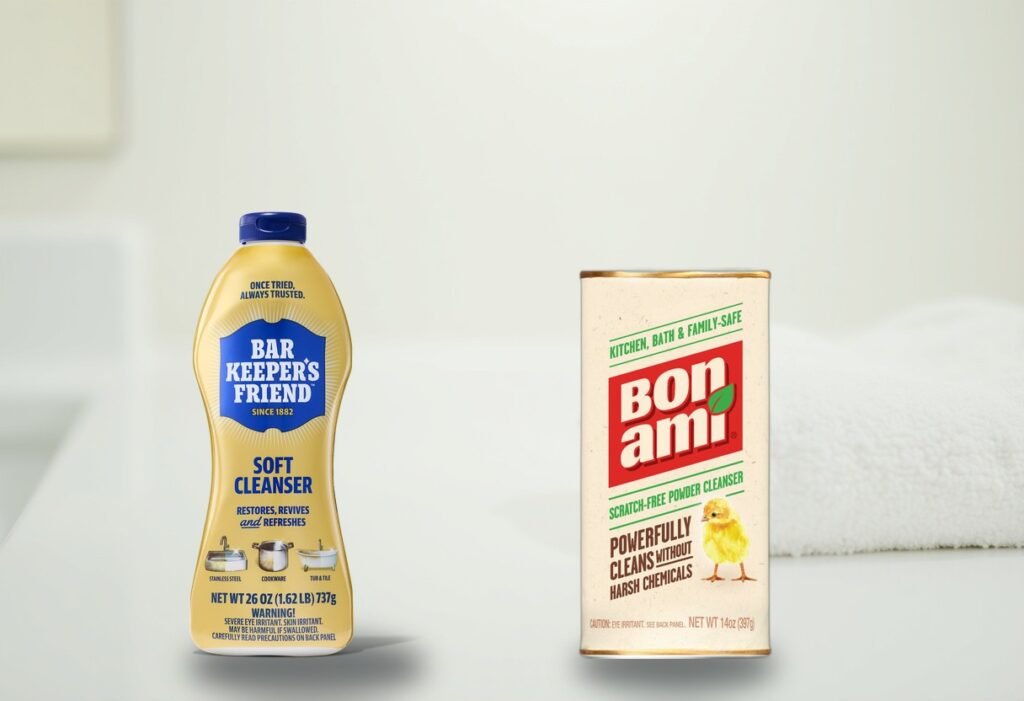
Bar Keepers Friend Soft Cleanser vs Bon Ami (glass safety): for most household glass, BKF Soft Cleanser (the liquid) is the safer choice. It is easier to control and less likely to cause accidental scratching than a powder. Want a fair test? Give it 2 to 5 minutes on the surface, use light pressure, and wipe with a microfiber cloth.
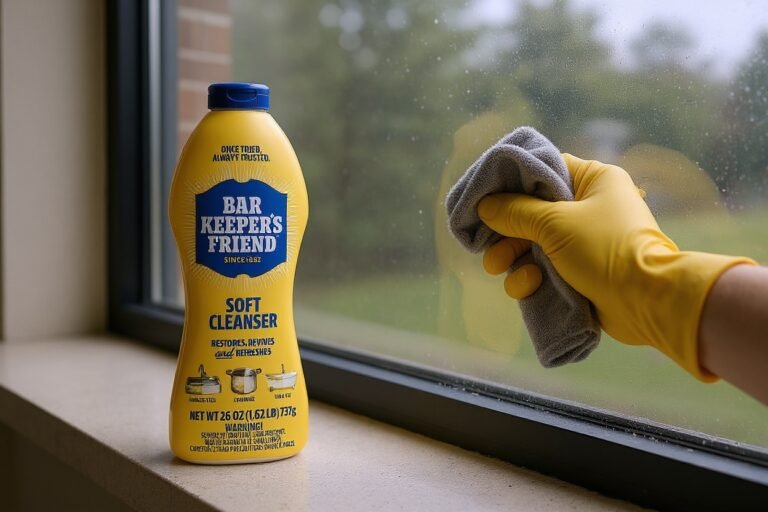
Safest method: rinse the grit off first, use a damp microfiber cloth, apply light pressure, and test a hidden corner. Avoid dry scrubbing with any powder.
Key takeaways
Most glass damage happens when tiny hard particles get dragged across the surface, and powders make that easier to do by accident, especially if you start scrubbing before you rinse. Liquid cleansers spread evenly and give you more control over pressure and coverage, which is why BKF Soft Cleanser carries the lowest scratch risk of the three.
Technique matters more than the product label. We’ve seen scratches happen with gentle powders simply because someone skipped the rinse step or used paper towels instead of microfiber, and we’ve seen liquid cleansers leave haze from not rinsing thoroughly enough. If your glass already has mineral etching, no cleaner reverses it, prevention matters more than switching products.
The 3 cleansers, ranked for glass safety
This section contains affiliate links — we may earn a commission at no extra cost to you. See our full evaluation policy at the end of this guide.
Quick version: BKF Soft Cleanser (liquid) is the safest overall. Bon Ami is a gentler powder but still technique-sensitive. Any powder used dry with heavy pressure is the highest scratch risk. The fast rule that beats all of it: rinse first, then clean, then rinse again before the final wipe.
Product links in this section are affiliate links.
Bar Keepers Friend Soft Cleanser vs Bon Ami: glass-safety comparison
| Scratch risk | BKF Soft Cleanser (liquid): lowest | Bon Ami (powder): medium | BKF Powder: medium to high |
|---|---|---|---|
| Best for | Shower glass, everyday film | Light buildup | Heavy buildup |
| Safe use | Microfiber plus light pressure | Make a paste, never dry scrub | Paste, and rinse grit first |
| Fast rule | Rinse first, then clean, then rinse again before the final wipe. | ||
What the ingredient labels actually say
The scratch-risk ranking above traces back to what each product actually uses to clean, not just its packaging. Bar Keeper’s Friend lists oxalic acid as an active ingredient in both the Soft Cleanser and the original Powder Cleanser, alongside a fine mineral abrasive. Oxalic acid is a mild acid that dissolves rust, tarnish, and hard-water mineral deposits chemically, so part of the cleaning happens before any scrubbing does.
Bon Ami works differently. Its manufacturer’s own California ingredient disclosure lists feldspar and calcium carbonate (calcite) as the two abrasives in Bon Ami Cleanser, plus soap-based surfactants, with no acid in the formula. On the Mohs hardness scale, which ranks how well a mineral resists being scratched, calcite sits at 3 and feldspar sits around 6 to 6.5, while household glass falls somewhere in the 4 to 7 range depending on the type. That puts feldspar close to, or above, the hardness of some glass, which is the mechanical reason a dry, hard-pressed powder can mark a surface that a liquid tends to glide over. It also explains why Bon Ami pairs its harder feldspar with the much softer calcite rather than using feldspar alone.
Why liquid usually wins on glass
That hardness gap is what tips the balance toward liquid: feldspar’s grains sit close to, or above, glass’s own hardness, so a liquid that spreads thin and rinses clean carries less scratch risk than a powder that has to be pressed and dragged across the surface. The biggest improvement, though, usually is not switching products. It’s switching to a rinse-first routine and using microfiber instead of paper towels.
When Bon Ami can still be a good pick
Bon Ami works well for light film, particularly for anyone who prefers a powder cleanser. The catch is that powders demand better technique. Rinse first, work it into a thin paste, and reach for microfiber, and it cleans without drama; dry-scrub it, and glass safety turns into a lottery.
Where BKF powder fits, and why it is riskier on glass
BKF powder shares the same oxalic acid and mineral abrasive as the Soft Cleanser, just without a liquid to spread it thin, which is exactly what makes it strong on stubborn buildup and easier to misuse on glass. Rinse first, work it into a paste, and keep the pressure light if you do use it on glass. Most scratches happen when people treat it like sandpaper and chase one spot harder and harder.
What about glass cooktops?
None of the three products above is Bar Keeper’s Friend’s cooktop-specific formula. The company sells a separate Cooktop Cleaner built for glass and ceramic stovetops, with a different ingredient list than the Soft Cleanser or Powder: it swaps oxalic acid for a milder micro-abrasive polish, since a cooktop deals with baked-on grease rather than rust or hard-water scale. Bar Keeper’s Friend’s own product page describes the Cooktop Cleaner as “formulated specifically for glass-ceramic cooktops, not stainless steel,” and points to the Powder Cleanser or Soft Cleanser instead for stainless steel. If the glass you’re cleaning is a stovetop rather than a shower door or tabletop, the cooktop-specific cleaner is the closer match, not the two products compared in this guide.
The simple safe method we would actually follow
- Rinse first: remove grit and dust before any cleaner touches the surface.
- Use microfiber: paper towels can drag particles and leave lint.
- Light pressure: let the cleaner do the work. Scrubbing harder is what creates scratches.
- Rinse again: remove residue, then do a final wipe with a clean microfiber.
- Test a corner: especially on older glass or unknown coatings.
Expectations vs reality
Most people expect a product’s label to determine safety. In practice, as the ranking above shows, technique swings the outcome more than the brand does. A skipped rinse or a paper towel causes more damage than most people assume, regardless of which of the three you picked up.
That is also why mineral etching is a dead end once it is there: no cleaner reverses it, so the method matters more than which product you reach for next time.
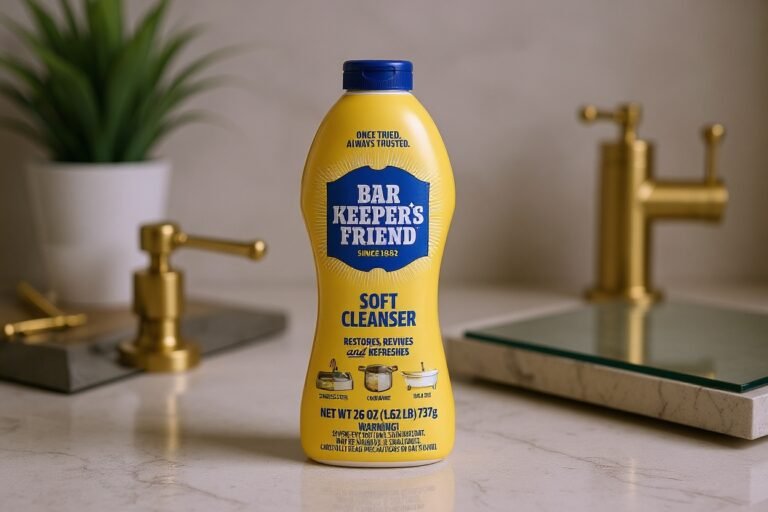
BKF Soft Cleanser (Liquid)
The safer default for most household glass
Prefer a powder for light buildup? Bon Ami Powder Cleanser works fine if you rinse first and never scrub dry.
Dealing with heavy, stubborn buildup? Bar Keepers Friend Powder has more cleaning power, just keep it off glass unless you’re careful.
Frequently asked questions
Does Bon Ami scratch glass?
It can, mainly when it is used dry, with heavy pressure, or before the surface grit is rinsed off. Its feldspar abrasive sits around 6 to 6.5 on the Mohs hardness scale, close to or above household glass’s own 4 to 7, which is the mechanical reason a dry, hard-pressed powder can mark glass that a liquid tends to glide over. Rinse first and work it into a thin paste, and the risk drops a lot.
Is Bar Keepers Friend Soft Cleanser safe for shower doors?
For most standard shower glass, yes. Part of that is the formula itself: its oxalic acid dissolves hard-water mineral deposits chemically before you ever pick up a cloth, so you are not relying on abrasion alone. Use microfiber and light pressure, and test a hidden corner first if the glass is coated or treated.
Can Bar Keepers Friend powder be used on glass?
Only carefully. It carries the same oxalic acid and mineral abrasive as the liquid Soft Cleanser, just as dry grains instead of a liquid suspension, which makes the pressure much harder to control. Use it as a paste, not dry, and keep the pressure light; for the lowest scratch risk, the liquid is usually the safer starting point.
If my glass looks cloudy, is it scratched?
Not always. Cloudiness is often soap film or hard water haze. True scratches usually show fine lines under a phone flashlight and will not wipe away.
Related reading
-
 Home Care & DIYWhat Not to Use Bar Keepers Friend On (7 Surfaces to Avoid)What not to use Bar Keepers Friend on: 7 surfaces the oxalic acid formula can damage — including some that surprised us. Know these before you grab the can.
 -
 Home Care & DIYHow to Clean Glass Without Scratching (Safe, Foolproof Method)How to clean glass without scratching: rinse off grit first, use clean microfiber, keep pressure light. Most scratches come from friction — not from the cleaner itself.
 -
 Pest ControlDo Mosquito Dunks Really Work for Standing Water?Do Mosquito Dunks really work? The honest answer — what the BTI bacteria actually kills, what it misses, and when you need a different approach for standing water.